Your selection gave 116 results.

A group of four altars from the Mithraeum at Borcovicium (modern Housesteads): two found in 1822 bearing inscriptions Nos. 863 and 864, and two more found in 1898, one dedicated to Mars and Victoria (No. 865) and one to Cocidius (No. 866), the last possibly belonging to an adjacent shrine…
The inscription on the altar No. 858 from the Mithraeum at Borcovicium (modern Housesteads), recording a vow willingly and with merit fulfilled by Herion to Sol.
An altar found in the north-east corner of the main room of the Mithraeum at Borcovicium (modern Housesteads) in 1822, bearing on its capital the bust of Sol in a crown of seven rays and the inscription No. 859.
A limestone statue from the Mithraeum at Borcovicium (modern Housesteads), depicting Cautes in Eastern attire and cross-legged, raising his torch.
A limestone statue from the Mithraeum at Borcovicium (modern Housesteads), depicting Cautopates in Eastern attire standing cross-legged on a base and pointing his torch downwards, with head lost.
A limestone statue from the Mithraeum at Borcovicium (modern Housesteads), representing a standing male figure in short tunic with bare legs and feet, arms held tight along the body with clenched fists once holding attributes now lost, with part of a snake on his right arm…
A large limestone tauroctony relief in several fragments from the Mithraeum at Borcovicium (modern Housesteads), the vaulted main fragment showing Mithras slaying the bull with Cautes raising his torch beside the bull's foreleg, a crescent of Luna in the upper corner…
Ritual vessels and iron objects from the Mithraeum at Procolitia (modern Carrawburgh), including containers for votive offerings, cups, cooking-pots, platters, mortaria and jars, and iron implements comprising an altar-shovel, thatch-hook, mounting and candlestick…
A sandstone bowl and a large part of a stone laver or washing bowl from the Mithraeum at Walbrook in London, ritual vessels forming part of the sanctuary's furnishings.
A small marble statuette of naked Mercury from the Mithraeum at Walbrook in London, sitting on a rock with the stumps of wings in his hair and a purse in his left hand, with a ram lying at his feet beside which is a tortoise.
A marble head of a woman from the Mithraeum at Walbrook in London, originally crowned with a diadem.
A fragment of a circular plaque from the Mithraeum at Walbrook in London, showing the Danubian horsemen and leaping dogs.
A marble torso of a male figure from the Mithraeum at Walbrook in London, flattened at the back, probably one of the attendant deities of Mithras, which would have stood about 2 ft. in complete height.
A relief fragment from the Mithraeum at Walbrook in London, preserving the lower part of a cross-legged figure of Cautopates pointing his torch downwards.
A fragment of a white marble statue from the Mithraeum at Walbrook in London, preserving the naked torso of a reclining figure with long hair and beard, with the end of a staff visible near his left shoulder, identified as Oceanus.
A white marble statue from the Mithraeum at Walbrook in London, depicting Bonus Eventus standing in a long hanging cloak, leaning on a ship's stem, holding a cornucopia against his shoulder and a patera above a burning altar from the back of which a…
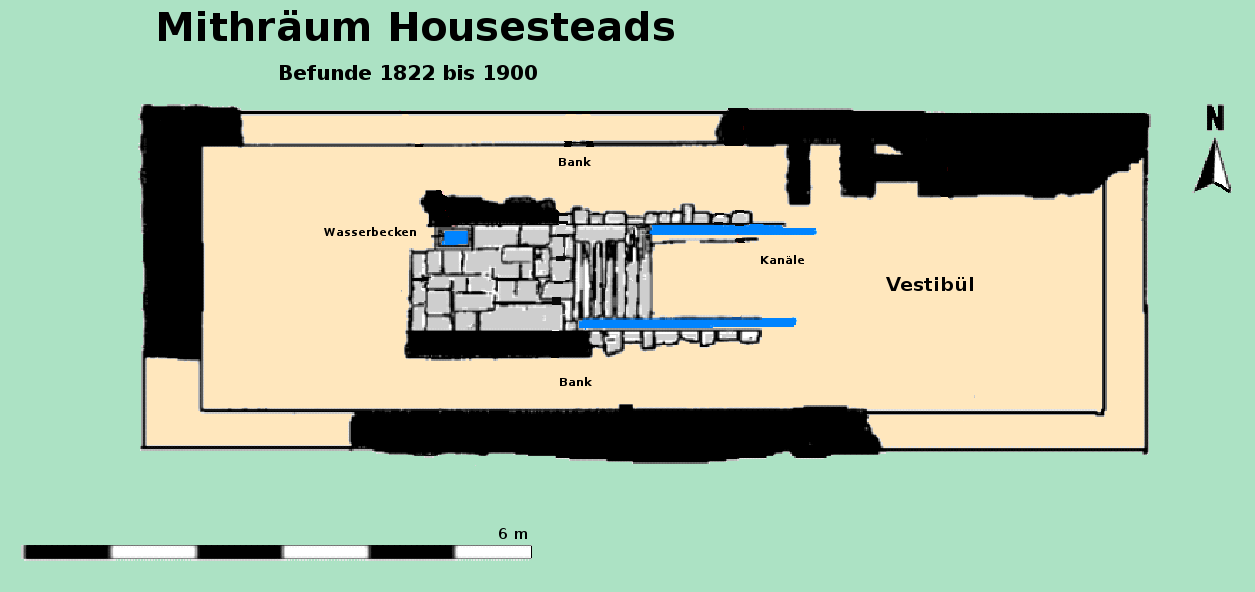
The Housesteads Mithraeum is an underground temple, now burried, discovered in 1822 in a slope of the Chapel Hill, outside of the Roman Fort at the Hadrian's Wall.

Housesteads Roman Fort is the remains of an auxiliary fort on Hadrian's Wall, at Housesteads, Northumberland, England, south of Broomlee Lough.
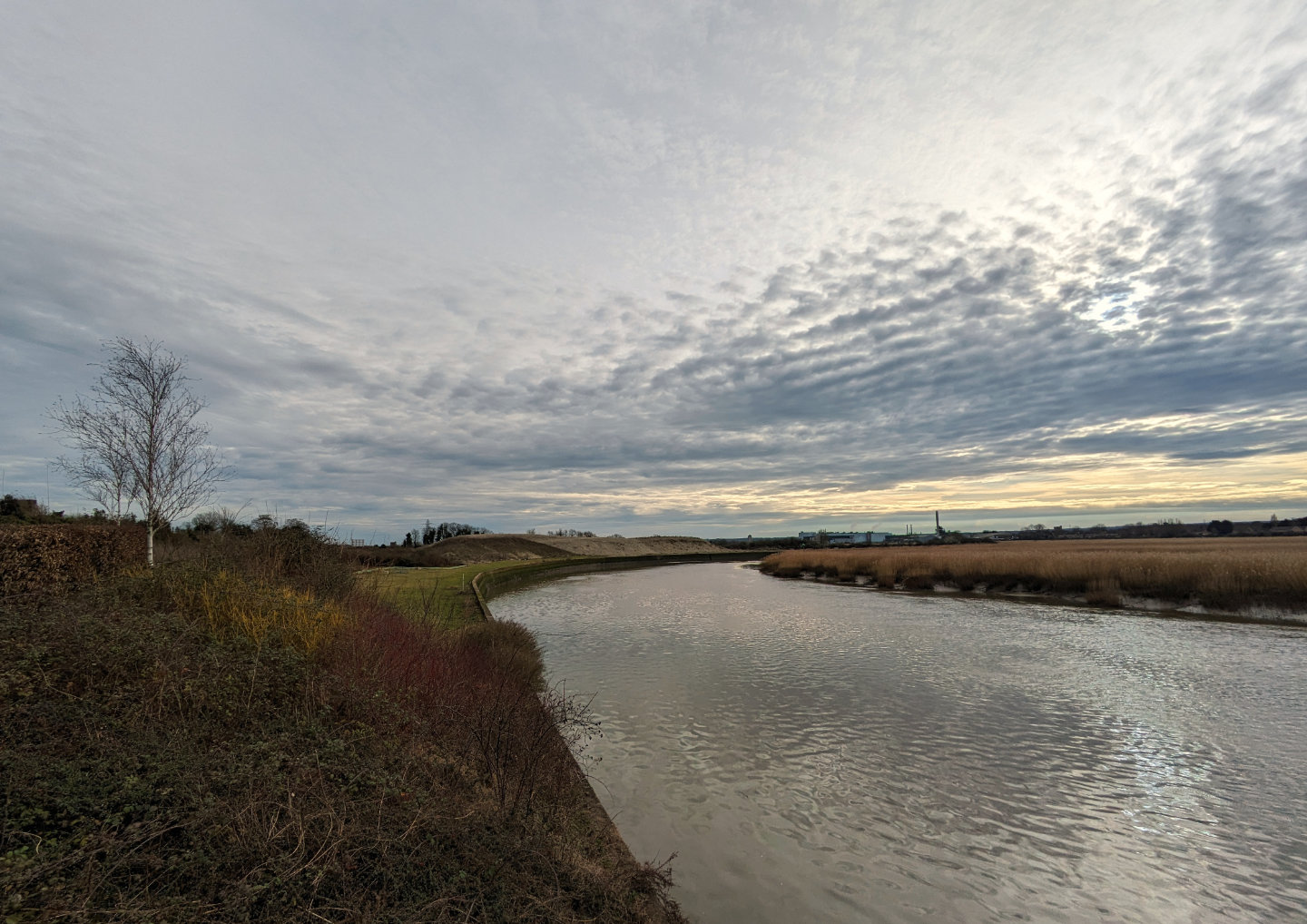
To date, there is no evidence that the so-called Mithraeum of Burham was ever used to worship the sun god.
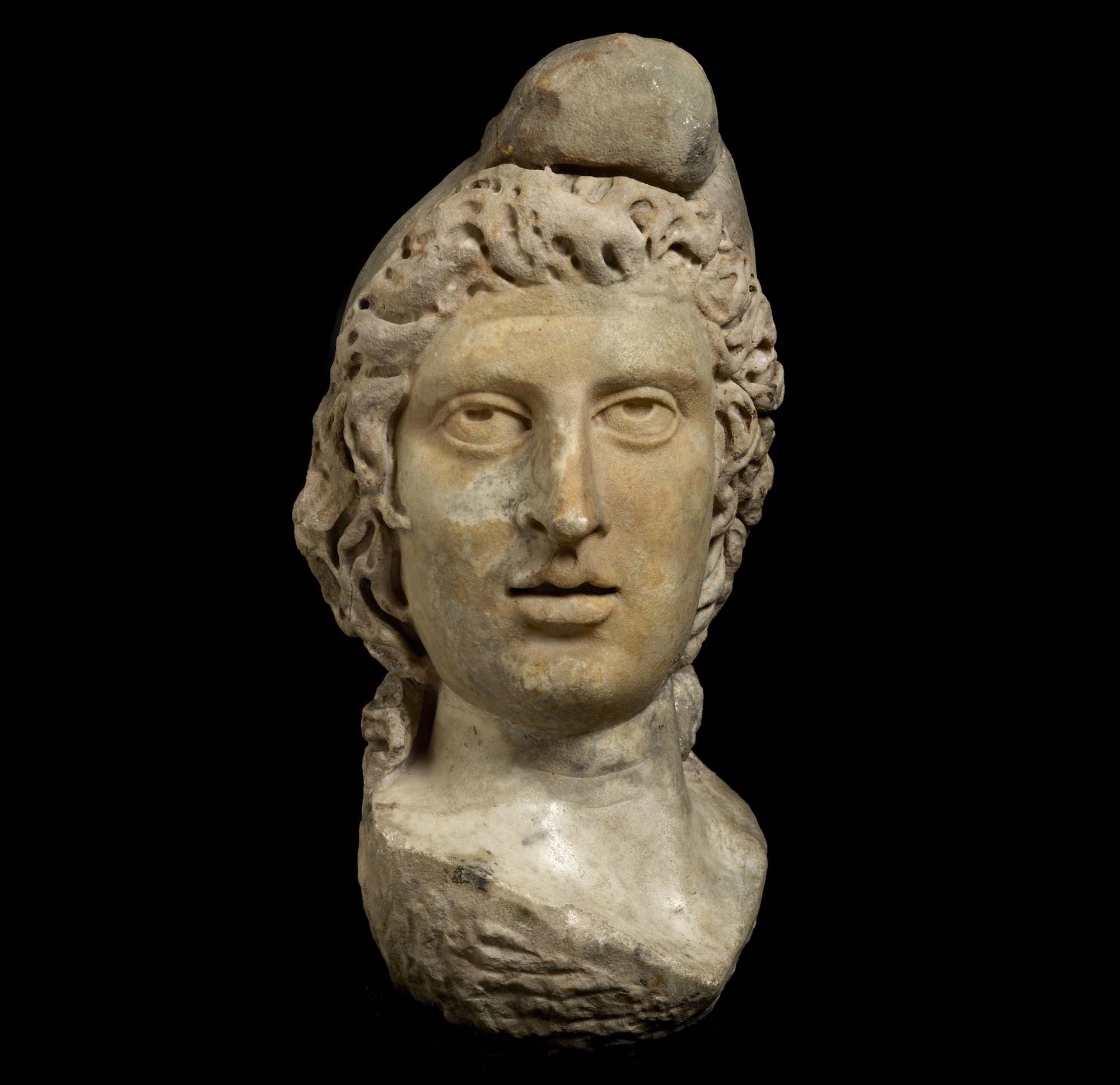
The Mithras's head of Walbrook probable belonged to a life-size scene of the god scarifying the bull.
