Your selection in monuments gave 113 results.

Fragmentary inscription from Viminacium, Moesia Superior, preserving only the opening of a dedication to Mithrae Soli invicto ex voto.
Small white marble relief from Kostolac, ancient Viminacium in Moesia Superior, depicting the sacred repast of Mithras and Sol: two reclining figures behind a three-legged table (tripod), in an arched niche.
Right portion of a limestone Cautes relief from Kostolac, ancient Viminacium in Moesia Superior, depicting Cautes standing on an elevation in Oriental dress — not cross-legged — with a semicircle above him, probably Sol's nimbus.
Inscription from Viminacium, Moesia Superior, dedicated to Deo invicto Mithrae by a decurio and aedilis of the Colonia Viminacii ex voto.
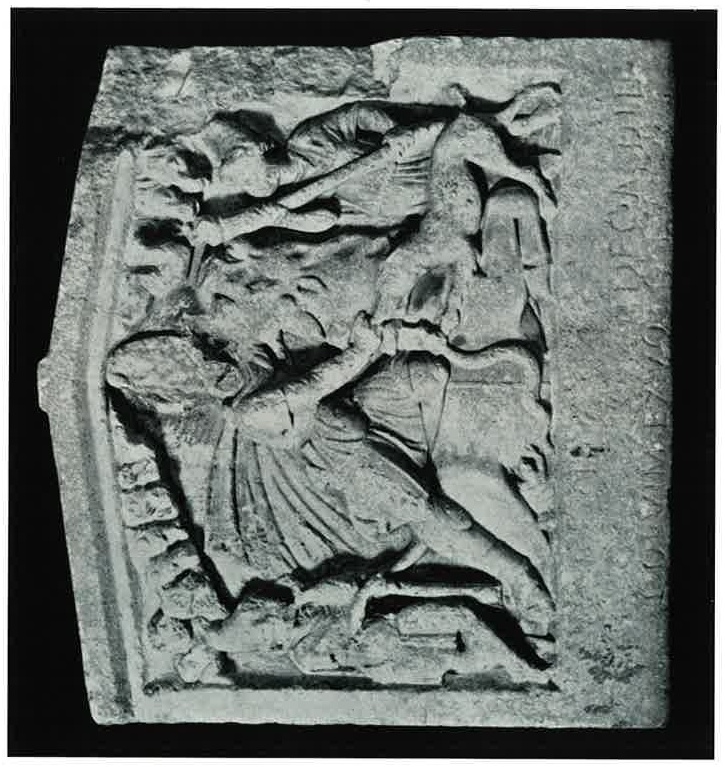
White marble tauroctony relief from Kostolac, ancient Viminacium in Moesia Superior, formerly walled into the Castle of George Branković at Smederevo, depicting the standard bull-slaying.
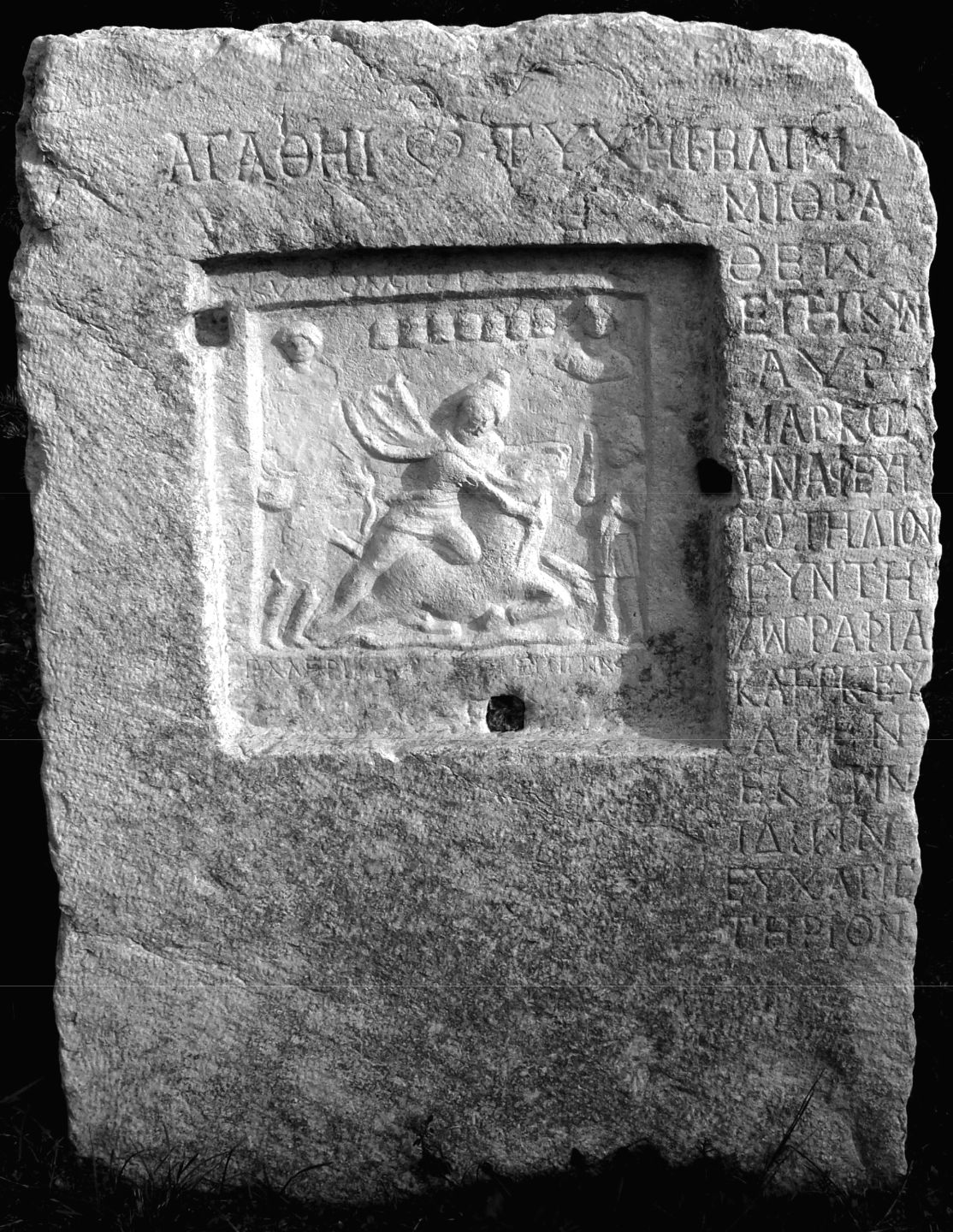
The Tauroctony of Nicopolis ad Istrum is unique as it is the only Mithraic stele befitting a Greek donor.
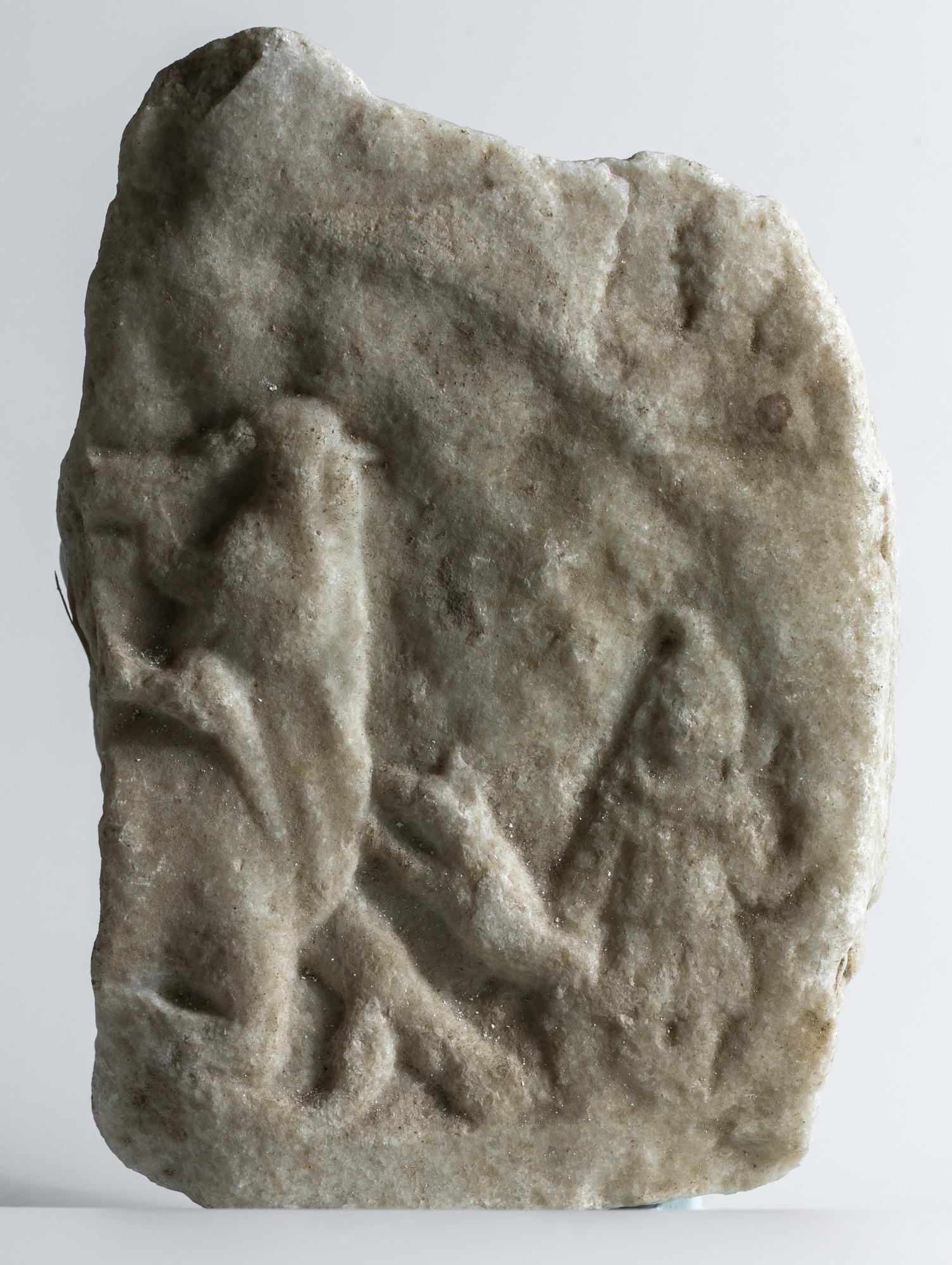
This weathered marble fragment from Viminacium preserves part of a tauroctony with Luna, Cautopates, the serpent, and the dog.
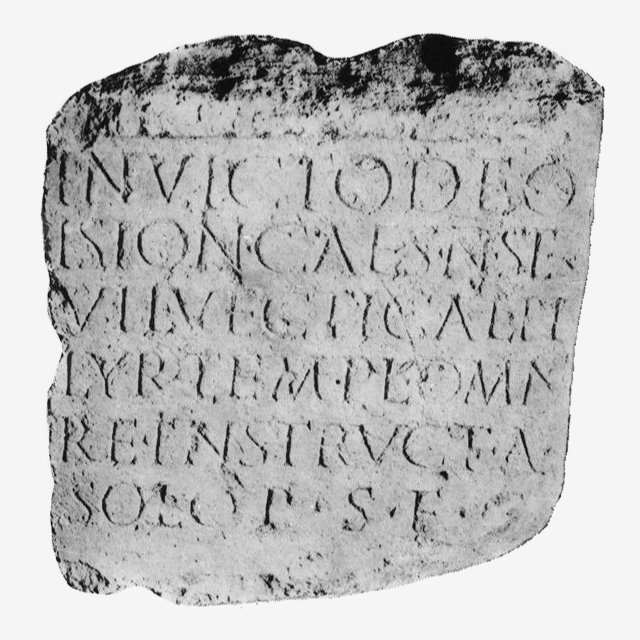
In this monument, the imperial slave Ision claims the completion of a new temple to Mithras in Moesia.
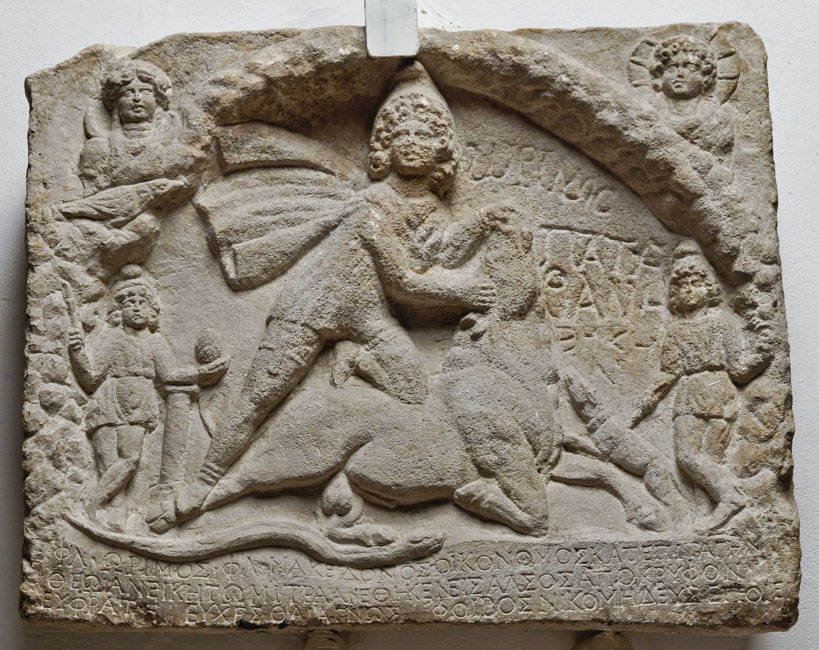
This limestone relief of Mithras killing the bull bears an inscription by a certain Flavius Horimos, consecrated in a ’secret forest’ in Moesia.

Coin of Istrus, Moesia Inferior, showing Caracalla on one side and a god on horseback (Mithras ?) on the other.
In the altar that Titus Tettius Plotus dedicated to the invincible God, he called himself pater sacrorum.
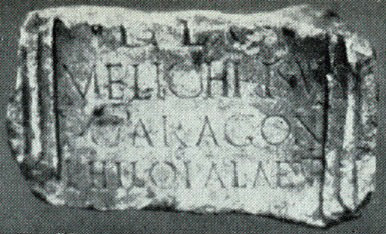
An unusual feature of this very ancient relief is that Cautopates carries a cockerel upside down, while Cautes carries it right-side up.
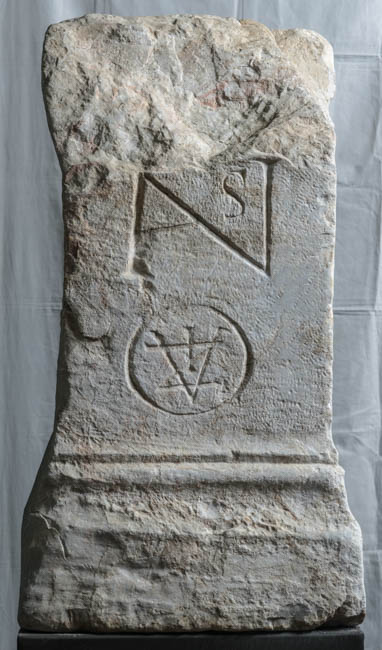
The limestone altar at Klechovtse in North Macedonia bears an inscription to the invincible Mithras.
