This site uses cookies to offer you a better browsing experience.
Find out more on how we use cookies in our privacy policy.

 
Regio

Mithras in Asia

Roman Asia preserves a rich and diverse body of Mithraic evidence connected to the major cities of western Anatolia.

The Mithraic material documented in the province of Asia reflects the integration of the cult within some of the most urbanised and interconnected environments of the eastern Mediterranean. The evidence illustrates the circulation of Mithraic practices through commercial, administrative and cultural networks linking Anatolia to the wider Roman world.
Mithraic monuments of Asia


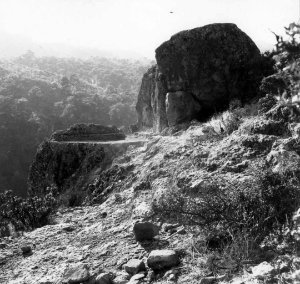
Mithraeum of Kapıkaya

Mithras became the main deity worshipped in the sanctuary of Meter in Kapikaya, Turkey, in Roman times, at least until the fourth century.


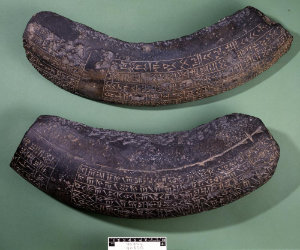
Fragments of a column base from Hamadan

The base of the column bears an inscription that records the rebuilding of a palace at Ectabana ’by the favour of Ahuramaza, Anahita and Mithra’.

CIMRM 7


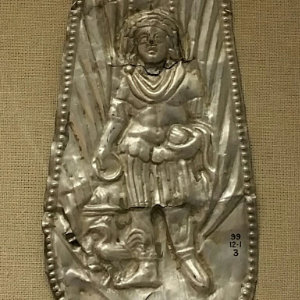
Votive plaque from Ballıhisar

This votive silver plaque depicting Mithras was found at the site of Pessinus, Ballıhisar, in Turkey.


Base with bust of Mithras from Savçilar

Limestone base bearing a dedication to Helios Mithras by Midon son of Solon, with a bust of Mithras in Phrygian cap, found at Savçilar on the border of Phrygia and Mysia, 78/77 A.D.

CIMRM 23


Dedication to Mithras from Colophon

Latin dedication to the invincible Mithras reportedly discovered north of ancient Colophon in Lydia.

CIMRM 24B


Frescoes from Susa

Sassanian-period frescoes discovered at Susa whose possible Mithraic interpretation remains uncertain.

CIMRM 7b


Funerary stele of Aurelius Lucanus from Amasya

Marble funerary stele dedicated to the soldier Aurelius Lucanus, a devotee of Mithras, found at Amasya (ancient Amasia), Pontus.

CIMRM 15


Inscription of Bergama

Dedication to Helios by Kle. Nikomedes, torch-bearer at Pergamum.

CIMRM 24


Possible Mithraeum from Uruk

Large apsidal hall with podium discovered at Uruk-Warka, once interpreted as a possible Mithraic sanctuary.

CIMRM 7c


Stele of the Mithrakana from Amorium

Limestone stele recording endowments for the feast of the Mithrakana by Antipater and his son Gaios, found at Amorium (modern Hisarköy), Phrygia.

CIMRM 22

Provinces of Asia


Asia

Asia formed one of the most urbanised and interconnected provinces of the eastern Roman world where Mithraic cults circulated widely.


Chersonnesus Taurica

Ancient region of the Crimean Peninsula associated with the Greek colonies and Roman presence in Taurica.

Places in Asia


Amasia

Amasya is a city in northern Turkey, in the Black Sea Region.


Amorium

Amorium, also known as Amorion, was a city in Phrygia, Asia Minor which was founded in the Hellenistic period, flourished under the Byzantine Empire, and declined after the Arab sack of 838.


Ariaramneia

A settlement of Cappadocia located within the inland communications network of central Anatolia during the imperial period.


Iconium

Iconium, modern Konya, became one of the principal urban centres of Lycaonia and an important crossroads of central Anatolia.


Pergamum

Pergamon or Pergamum, also referred to by its modern Greek form Pergamos, was a rich and powerful ancient Greek city in Aeolis.


Pessinus

Pessinus was an Ancient city and archbishopric in Asia Minor, a geographical area roughly covering modern Anatolia.


Susa

Susa was an ancient city in the lower Zagros Mountains about 250 km east of the Tigris, between the Karkheh and Dez Rivers in Iran.


Uruk

Uruk, the archeological site known today as Warka, was an ancient city in the Near-East or West-Asia, located east of the current bed of the Euphrates River, on an ancient, now-dried channel of the river in Muthanna Governorate, Iraq.


Ἀφροδισιάς

Aphrodisias was a small ancient Greek Hellenistic city in the historic Caria cultural region of western Anatolia, Turkey.

Inscriptions from Asia

Fragments of a column base from Hamadan

Saith Artaxerxes the Great King, King of Kings, King of Countries, King in this earth, son of Darius the King, of Darius [who was] son of Artaxerxes the king, of Artaxerxes [who was] son of Xerxes the King, of Xerxes who was son of Darius the King, of Darius who was son of Hystaspes, an Achaemenian. By the favour of Ahuramazda, Anahita and Mithra, this palace [apadana] I built. May Ahuramazda, Anahita and Mithra protect me from all evil, and that which I have built may they not shatter or harm.

Dedication to Mithras from Colophon

Deo sancto invicto Mit(h)rae.
To the holy unconquered god Mithras.
Back to Top