Global Gods in Local Contexts
The international conference Global Gods in Local Contexts will take place in
Vienna and Hainburg from 28 to 30 September 2026, bringing together archaeologists, historians and specialists in ancient religion to explore the transmission, adaptation and local development of the so-called “Oriental cults” across the Danubian and Balkan provinces of the Roman Empire.
Mithraic studies feature prominently in the programme. Among the scheduled speakers are
Csaba Szabó (Mithras in Roman
Dacia),
Lucinda Dirven (the Dura-Europos mithraeum),
Nirvana Silnović (double-sided Mithraic reliefs from Roman
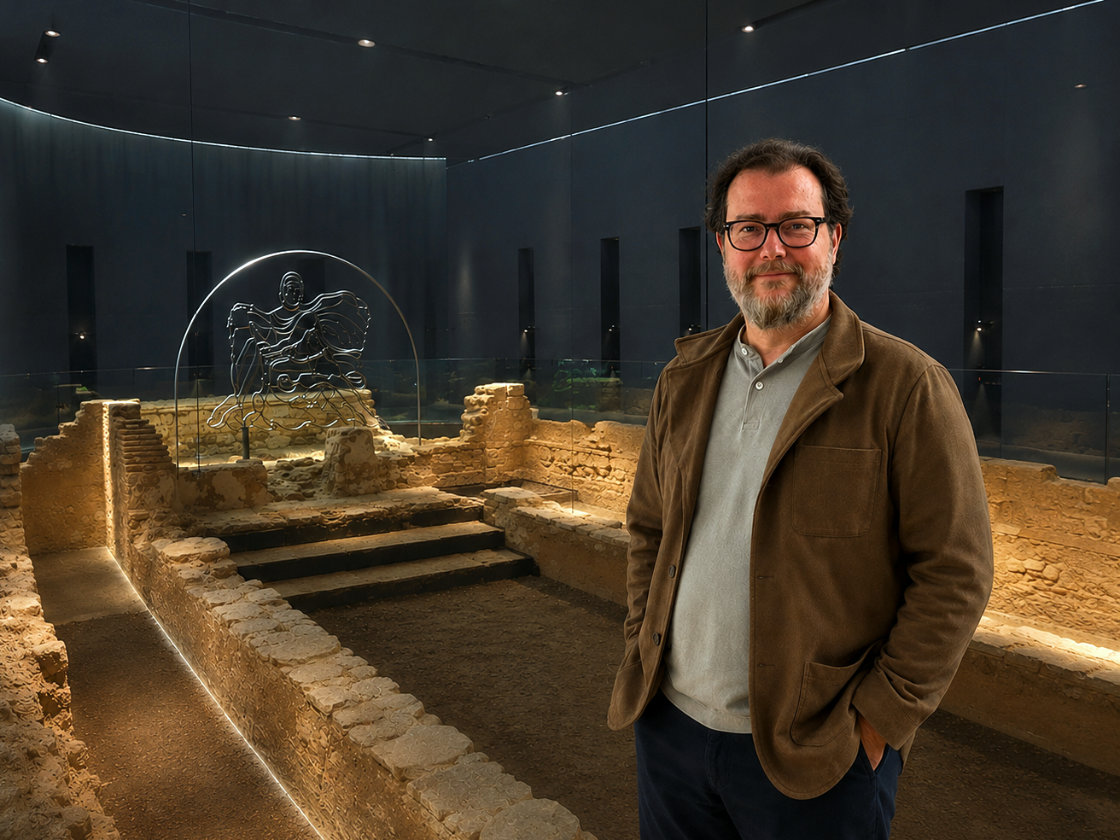
Dalmatia), Tamás Milbich (the newly discovered sixth mithraeum at
Aquincum),
Matthew M. McCarty (Mithraic built environments), Blanka Misic (ritual experience and learning in the cult of Mithras), and
Aleš Chalupa and Tomáš Glomb, who will present new spatial analyses of Mithraic cult diffusion across the Roman Empire.
The conference will also include the announcement of a new exhibition on the cult of Mithras in Bosnia and Herzegovina.
Download the full programme here:
Global Gods in Local Contexts: ’Oriental Cults’ between the Danube and the Adriaticoeaw.ac.atGlobal Gods in Local Contexts: ’Oriental Cults’ between the Danube and the Adriatic 

![*Global Gods in Local Contexts*
The international conference Global Gods in Local Contexts will take place in Vienna and Hainburg from 28 to 30 September 2026, bringing together archaeologists, historians and specialists in ancient religion to explore the transmission, adaptation and local development of the so-called “Oriental cults” across the Danubian and Balkan provinces of the Roman Empire.
Mithraic studies feature prominently in the programme. Among the scheduled speakers are Csaba Szabó (Mithras in Roman Dacia), Lucinda Dirven (the Dura-Europos mithraeum), Nirvana Silnović (double-sided Mithraic reliefs from Roman Dalmatia), Tamás Milbich (the newly discovered sixth mithraeum at Aquincum), Matthew M. McCarty (Mithraic built environments), Blanka Misic (ritual experience and learning in the cult of Mithras), and Aleš Chalupa and Tomáš Glomb, who will present new spatial analyses of Mithraic cult diffusion across the Roman Empire.
The conference will also include the announcement of a new exhibition on the cult of Mithras in Bosnia and Herzegovina.
Download the full programme here: [ref:6a52842f056f2]](https://www.mithraeum.eu/album/post/f5d266a691eedee6.jpg)


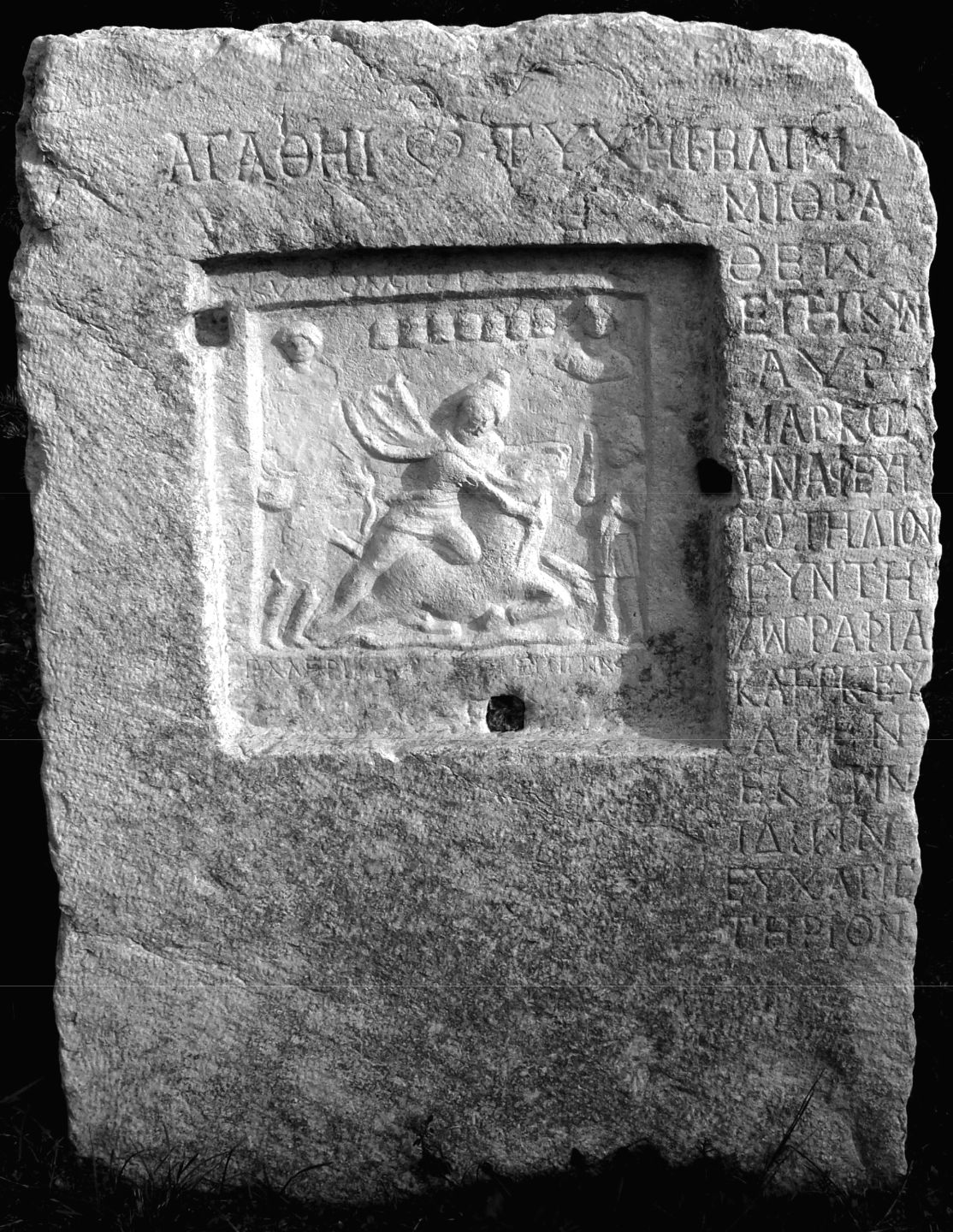


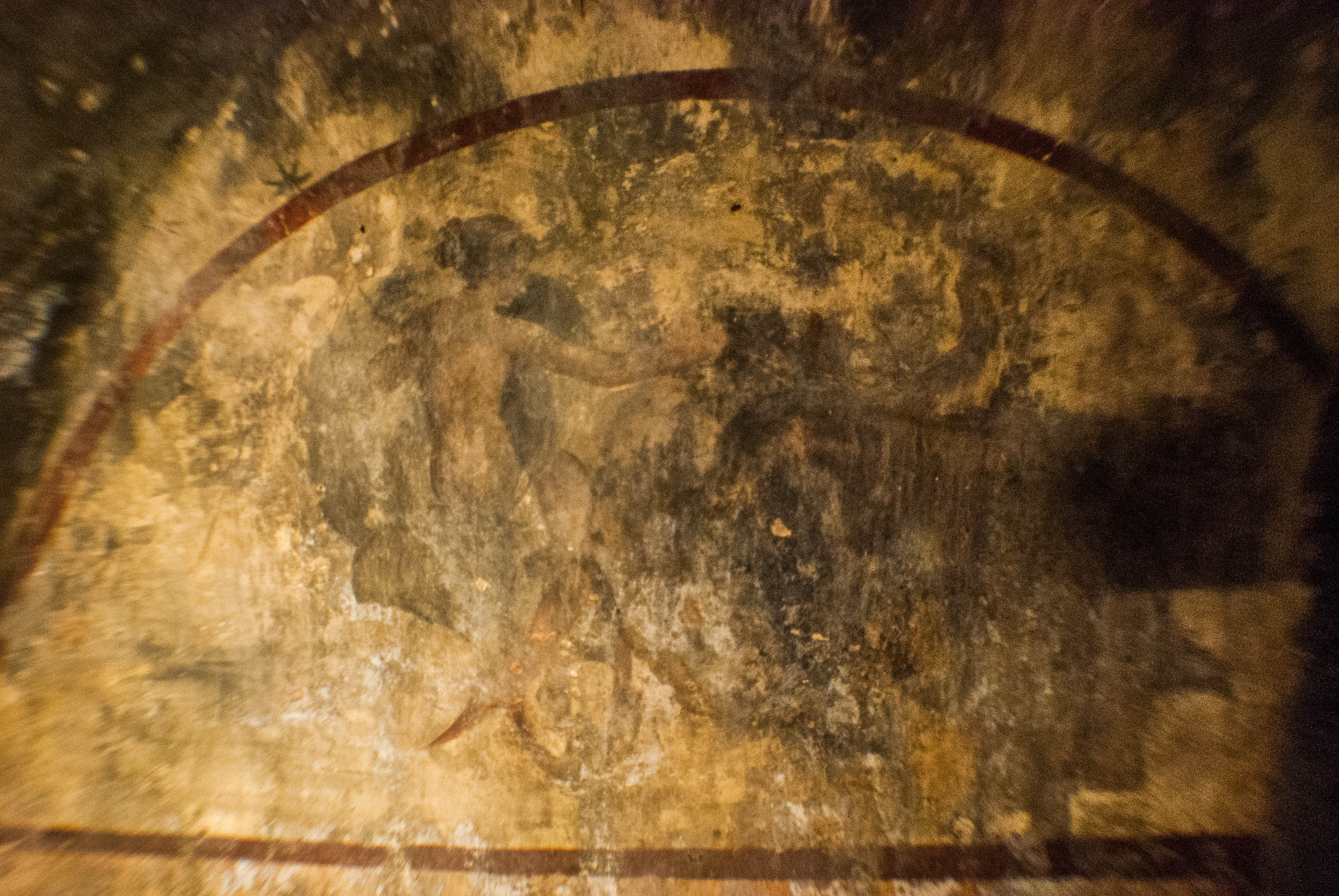
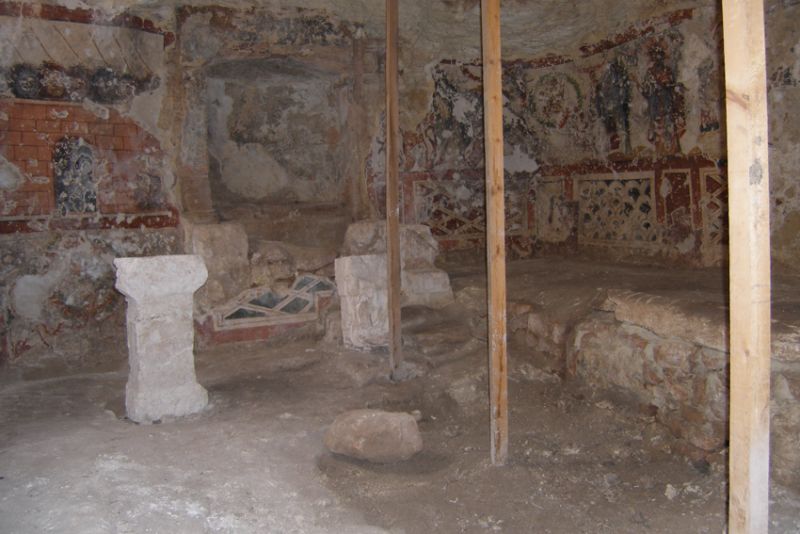






For good fortune.
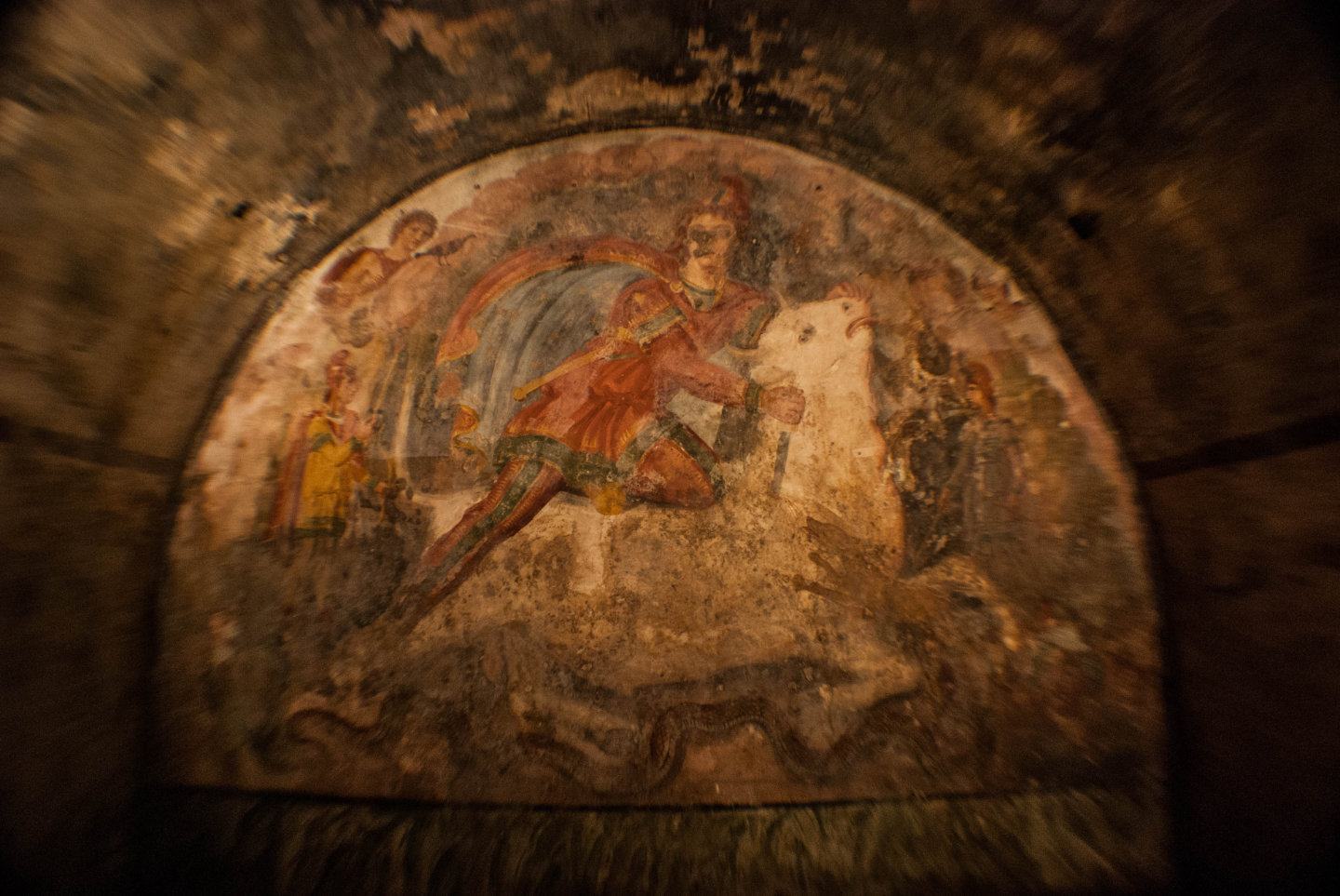
To Helios Mithras, the god who hears (the prayers), Aurelius Marcus, a fuller (processor of woollen textiles), built this sanctuary together with its painted decoration at his own expense as a votive offering in gratitude.
Or, in a slightly more epigraphic style suitable for a scholarly publication:
For good fortune. To Helios Mithras, the god who hears prayers, Aurelius Marcus, a fuller, constructed this sanctuary together with its painted decoration at his own expense as a thank-offering.
Notes
γναφεύς → fuller (the standard archaeological and epigraphic translation), rather than "washer" or "cloth worker".
ἐπήκοος → the god who hears (prayers) or the prayer-hearing god.
εὐχαριστήριον is best rendered as thank-offering, offering in gratitude, or votive offering in gratitude.
If συήλιον is indeed intended for σπήλαιον, then sanctuary or mithraeum is preferable to the more literal "cave", because it reflects the cultic meaning in a Mithraic context. For a book on Mithraism, mithraeum would be the most precise translation.