
Biography
of Egnatius Reparatus
- Egnatius Reparatus, a free citizen, is attested as a member of a Mithraic community (syndexios), holding the office of Sacerdos at the Mitreo di Carsulae.
- Attested at Carsulae, Umbria, Italia in 1st half of 3rd century (TNMM 483).
TNMP 103
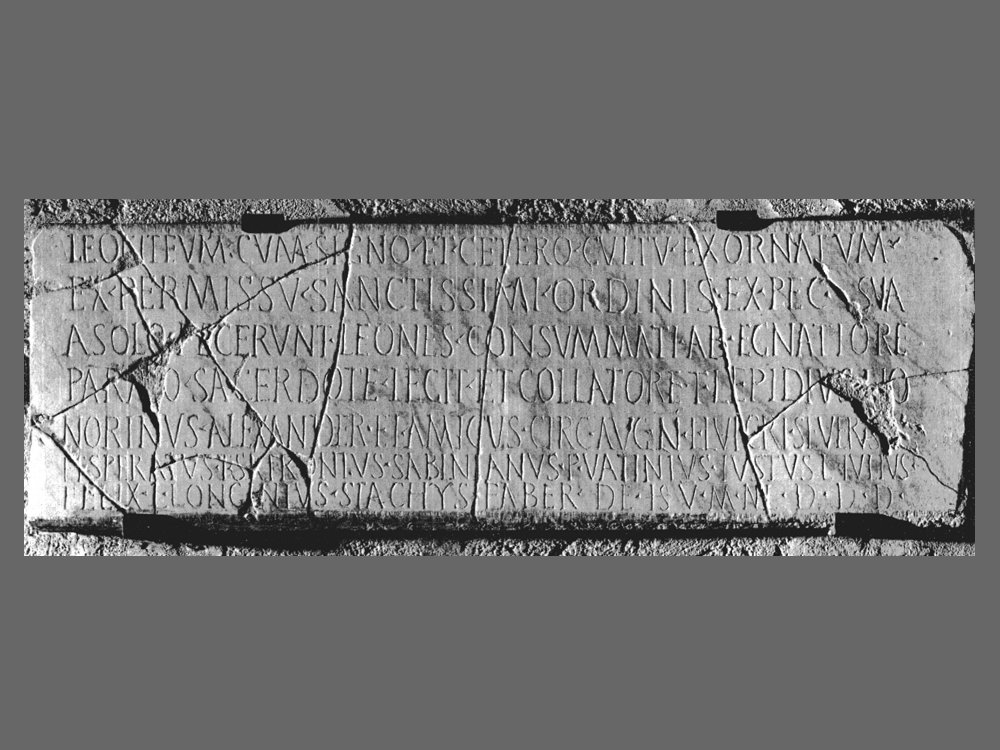
Egnatius Reparatus was a Mithraic priest associated with the community probably located at Carsulae, in Umbria, during the 3rd century CE (TNMM 483). He is named in an inscription recording the construction and furnishing of a leonteum by nine initiates identified as leones.
The inscription styles him sacerdos legitimus et collator. The Lions are described as consummati ab Egnatio Reparato, indicating that Reparatus had performed or presided over the rite by which they attained the status of Leo. Ciotti (1978) interpreted consummati in this context as equivalent to being consecrated or elevated to that grade, an interpretation followed by Aloe Spada (1979). The latter drew particular attention to the fact that the rite is attributed to a sacerdos rather than explicitly to a Pater. She therefore suggested, cautiously, that Reparatus may have acted as Pater of the community, or may have combined the functions of Pater and sacerdos. Clauss (1992), more conservatively, records him simply as sacerdos.
The adjective legitimus is itself significant. Aloe Spada compared it with nomimus, “recognised” or “duly authorised”, and proposed that it may indicate that Reparatus was formally qualified to admit initiates to a higher grade. Whatever the precise relationship between the titles sacerdos and Pater, the inscription places him in a position of considerable ritual authority within the community.
Reparatus was also a collator, having contributed financially to the undertaking. The nine Lions erected the leonteumfrom the ground at their own expense and furnished it with a cult image and other equipment, at a stated cost of 5,000 sesterces. The building site was granted by decree of the municipal decurions, and the work was undertaken ex permissu sanctissimi ordinis, providing unusual evidence for official municipal authorisation of a Mithraic cult space.
The inscription has played an important role in discussions of the status of the Leo. Aloe Spada regarded the leonteum as possible evidence for a space specifically associated with Lions and suggested that the grade may have held a particularly important position within Mithraic initiation. Alvar (2008) likewise used the Carsulae evidence in arguing that Leones, together with Patres, may have been far more prominent in actual Mithraic practice than the conventional model of seven equally significant grades would suggest. Bastianelli (2018) similarly considered the Leo a potentially pivotal stage within the initiatory progression.
The marble inscription was found reused in the remains of a Benedictine monastery at San Gemini, about four kilometres from ancient Carsulae. Its original provenance is not certain, although Carsulae is generally regarded as the most likely source.
References
- Aleš Chalupa (2023) Římský kult boha Mithry. Atlas lokalit a katalog nálezů I.
- Concetta Aloe Spada (1979) ‘Il leo nella gearchia dei gradi mitriaci’. Mysteria Mithrae.
- Epigraphik-Datenbank Clauss / Slaby. Inscription on the leonteum of Umbria in EDCS.
- Giovanna Bastianelli (2018) Mithras in regio VI, Umbria. Fragments of a shipwreck.
- Jaime Alvar Ezquerra (2008) Romanising Oriental Gods Myth Salvation and Ethics in the Cults of Cybele Isis and Mithras.
- Manfred Clauss (1992) Cultores Mithrae. Die Anhängerschaft des Mithras-Kultes..
- Philippe Roy & Laurent Bricault (2021) Les cultes de Mithra dans l’Empire romain.
Attestations
Inscription on the leonteum of Umbria
TNMM 483
This plaque from Carsulae, in Umbria, refers to the creation of a leonteum erected by the lions at their own expense.

Mitreo di Carsulae
TNMM 485
Epigraphic monuments reveal the presence of a Mithraeum in the ancient municiple of Carsulae, in Umbria.
