Biography
of Potentianus
- Potentianus, a free citizen, is attested as a Pater at the Mithräum von Gimmeldingen.
- Attested at Gimmeldingen, Germania superior, Germania in 325 (TNMM 441).
TNMP 24
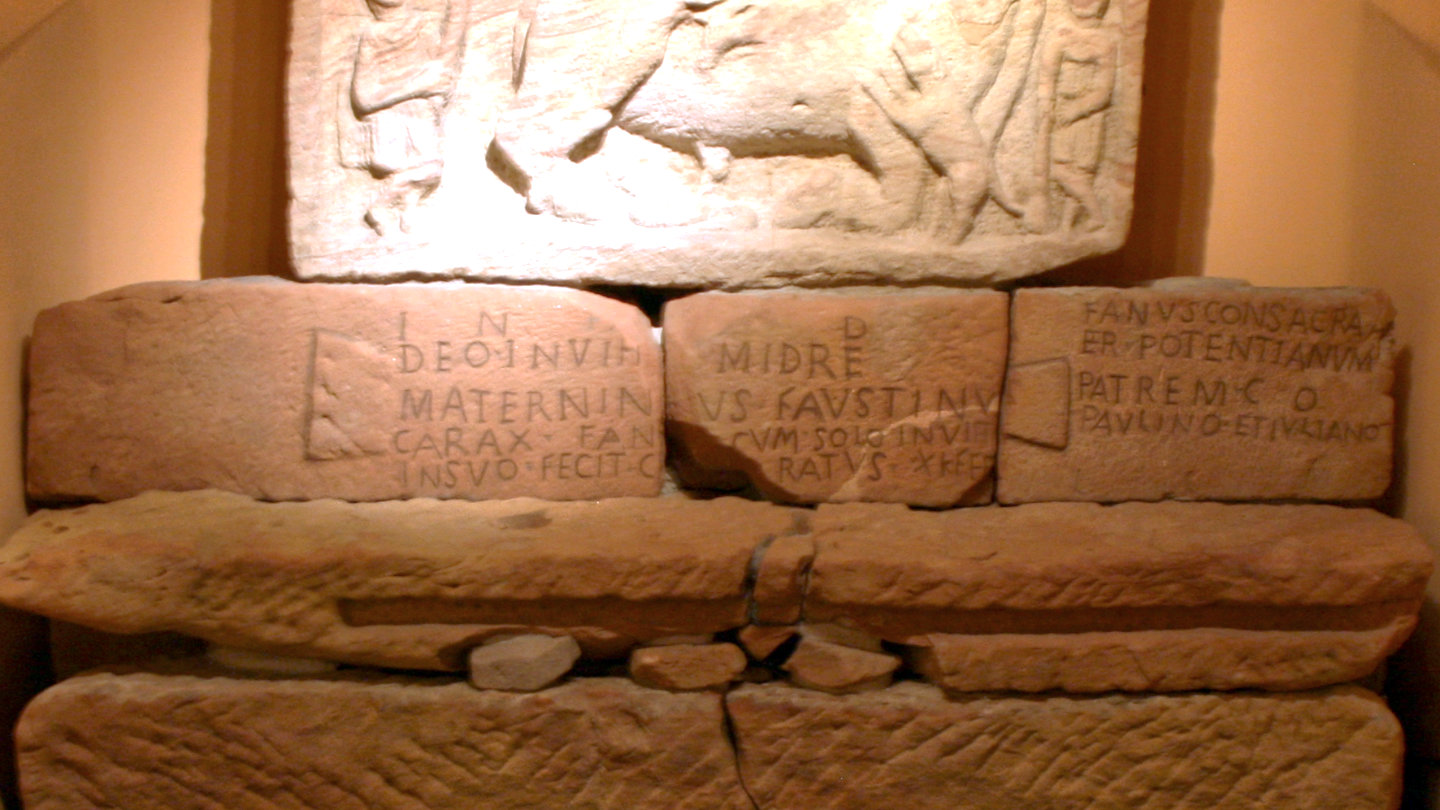
Potentianus is known from a single inscription discovered in the Mithraeum of Gimmeldingen, dated to AD 325 (TNMM 441). The text records the construction and dedication of a sanctuary by Materninius Faustinus, who identified himself as a carax (an unusual spelling of corax), and states that the fanum was consecrated per Potentianum patrem, "through Potentianus, Father".
The inscription identifies Potentianus as the pater of the local Mithraic community, the highest initiatory grade within the cult. His role in the consecration suggests that he exercised ritual authority over the sanctuary and its members, while the financial patronage appears to have been provided by Faustinus himself. No information survives concerning Potentianus’ profession, social standing or family background.
The Gimmeldingen inscription is one of the latest securely dated Mithraic inscriptions from the Rhineland and belongs to the final generations of organised Mithraic worship in the western provinces. It is also notable for several unusual spellings and formulations, including Midre instead of Mithrae, carax instead of corax, and the use of the term fanum rather than the more common spelaeum or templum. These features have attracted scholarly attention as evidence for the regional and late-antique development of Mithraic epigraphic traditions.
References
- David Walsh (2016) Development, decline and demise: The Cult of Mithras ca. A.D. 270-430..
Attestations
Inscription of Corax Materninius Faustinus from Gimmeldingen
TNMM 441
The inscription was located at the base of the main Tauroctony of the Gimmeldingen Mithraeum.
Fanus [sic] consacrat[us] / per Potentianum / patrem co[n]s[ulibus] / Paulino et Iuliano /l[ibens] l[aetus] m[erito].
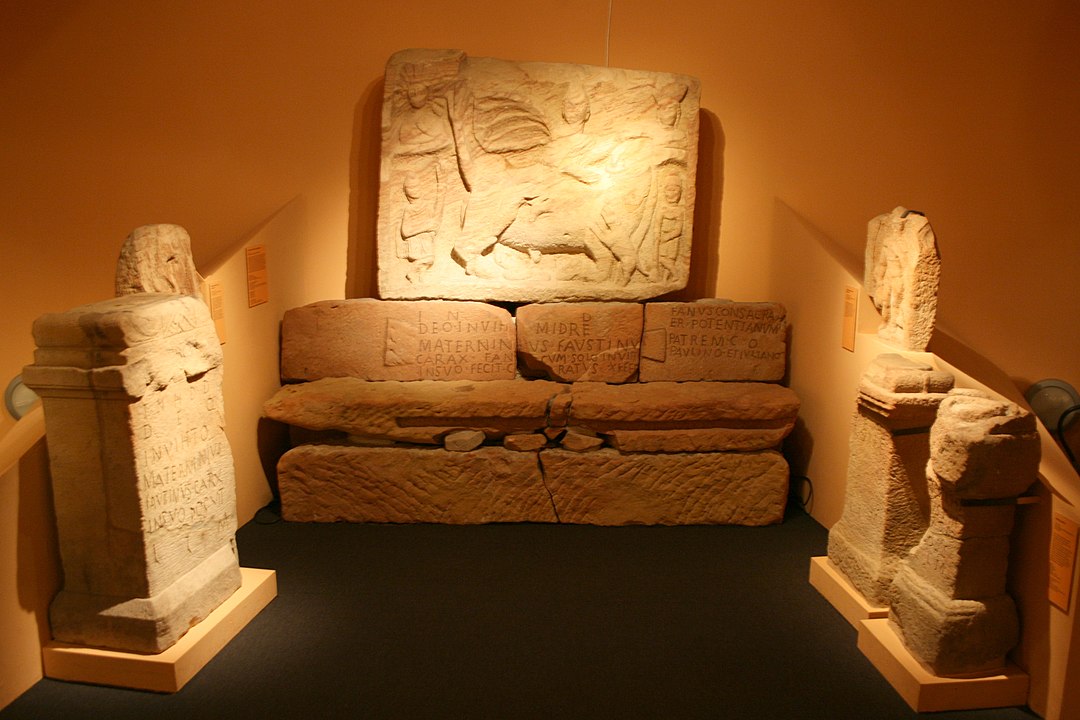
Mithräum von Gimmeldingen
TNMM 49
The few remains of the Mithraeum of Gimmeldingen are preserved at the Historical Museum of the Palatinate, in Speyer, Germany.