
Biography
of Maximus
- Maximus, a free citizen, is attested as a member of a Mithraic community (syndexios) at the Mithraeum of Dura Europos.
- Also recorded as Scenicus of the Legio IV Scythica.
- Attested in service with the Legio IV Scythica.
- Attested in 169 – 256.
- Attested at Dura Europos, Syria-Coele, Syria in 169 – 256 (TNMM 759).
- Attested at Dura Europos, Syria-Coele, Syria (TNMM 833).
TNMP 263
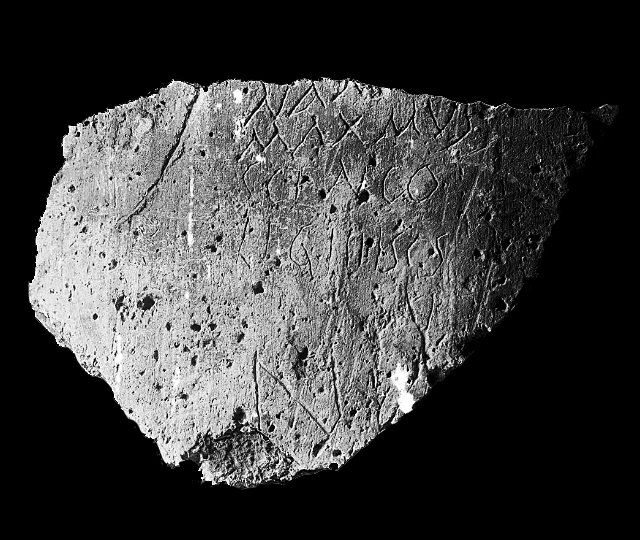
Maximus is known from two graffiti discovered in the Mithraeum of Dura-Europos. One inscription records him as:
Nama Maximus scenicus legionis IIII Scythicae
identifying him as a scenicus associated with the Legio IV Scythica (TNMM 759; CIMRM 60; AE 1940, 229). The term scenicus is generally understood as referring to a performer or actor attached to the military environment, although the precise nature of his duties remains uncertain.
A second graffito from the same sanctuary reads:
Nama Maximus magus (TNMM 833; CIMRM 61).
The relationship between these two inscriptions has been the subject of scholarly debate. Since both graffiti originate from the Mithraeum of Dura-Europos and refer to an individual named Maximus, several scholars have considered the possibility that they refer to the same person. Israel Campos has recently argued that the title magus should be understood as an honorific designation borne by the same Maximus attested as scenicus (Campos 2026).
The interpretation of the title magus remains controversial. Cumont regarded it as evidence for a priestly function within the community, while Francis associated it with a high-ranking position among the Mithraists of Dura. Speidel argued that the title reflected a significant religious role and saw in the Magi of Dura a possible link between Roman Mithraism and Iranian religious traditions. More cautious assessments have rejected the assumption that the term necessarily denotes either a Mithraic grade or a Zoroastrian priest. Lavagne noted that the inscription does not prove the presence of Persian Magi within the sanctuary and highlighted alternative interpretations of the title (Cumont 1975; Francis 1975; Speidel 1977; Lavagne 1976).
Although the identification of the two graffiti cannot be demonstrated with certainty, the coincidence of name, location and context makes it plausible that both inscriptions refer to the same member of the Mithraic community.
References
- Shrine to the God Mithras (Mithraeum).
- Frank Edward Brown, Michael Ivanovich Rostovtzeff & Charles Bradford Welles (eds.) (1939) The Excavations at Dura-Europos. Preliminary Report of the Seventh and Eighth Seasons of Work, 1933–1934 and 1934–1935.
- Epigraphic Database Heidelberg (2024) Engraved column by Maximus of Dura Europos in EDH.
- Alfred Shenington Geden. Engraved column by Maximus of Dura Europos in EDCS.
- Franz-Valéry-Marie Cumont & Eric David Francis. ‘The Dura Mithraeum’. Mithraic Studies. Proceedings of the First International Congress of Mithraic Studies, Vol. 1, pp. 151–214.
- Lucinda Dirven (2025) ‘Dura-Europos: Past, Present, Future’. Dura-Europos: Past, Present, Future, pp 148-169.
- Lucinda Dirven (2025) ‘Dura-Europos: Past, Present, Future’. Dura-Europos: Past, Present, Future, pp 148-169, pp. 148–169.
- Michael J. Fuller (2015) The Shrine of the Holy God Mithras at Dura-Europos: A Study of Religious Interaction in Roman Syria..
Attestations
Engraved column by Maximus of Dura Europos
TNMM 759
A certain Maximus from the Legio IV Scythica engraved his name in one of the columns of the Mithraeum of Dura Europos.

Graffito naming Maximus magus at Dura-Europos
TNMM 833
Engraved inscription naming Maximus as magus, from column 1 of the Mithraeum of Dura-Europos, Syria.
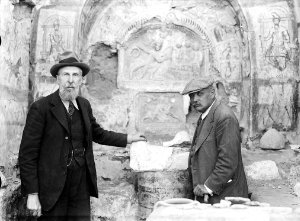
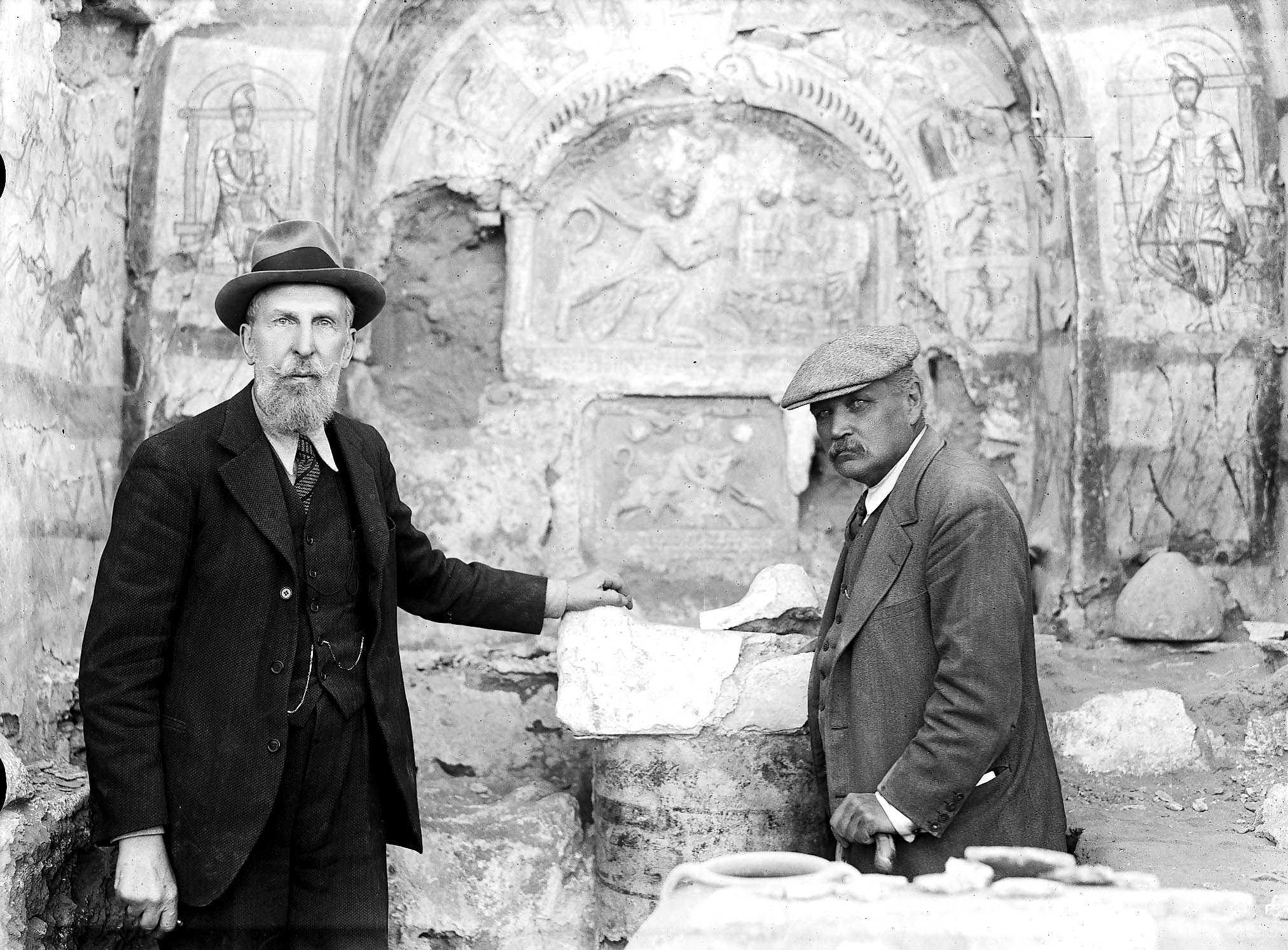
Mithraeum of Dura Europos
TNMM 34
The most emblematic of the Syrian Mithraea was discovered in 1933 by a team led by the Russian historian Mikhaïl Rostovtzeff.
