

This site uses cookies to offer you a better browsing experience.
Find out more on how we use cookies in our privacy policy.

 
Support The New Mithraeum The New Mithraeum is an independent, non-profit project dedicated to Mithraic studies, ancient religions and classical culture. Developed and maintained independently since 2007, the site exists without advertising, paywalls or institutional funding. If you have found value in its articles, interviews, photographs or database, please consider supporting the project with a contribution. Every contribution helps keep The New Mithraeum open, free and alive. Thank you.
Support us →
Locus

Colonia Agrippina

Colonia Claudia Ara Agrippinensium

Colonia Claudia Ara Agrippinensium, usually just called Colonia, was the Roman settlement in the Rhineland that became the modern city of Cologne, now in Germany. It was the capital of Germania Inferior and the military headquarters of the region.

Mithraic monuments of Colonia Agrippina


Mithräum I von Köln

The Mithraeum I of Cologne is situated amid a block of buildings. It was impossible to narrowly determine its construction and lay-out.

CIMRM 1018


Mithräum II von Köln

A second Mithraeum was found in Cologne described by R. L. Grodon as of ’small importance’.


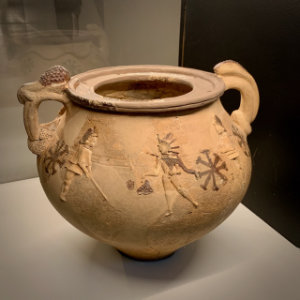
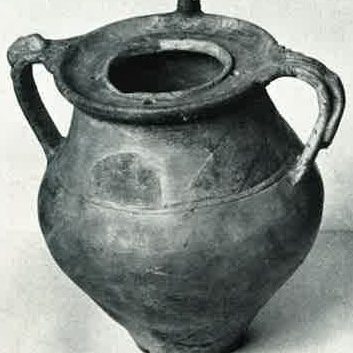
Cultic mithraic vase of Zeughausstraße

The Mithraic vase from Colonia Claudia Ara Agrippinensium in Germany includes Sol-Mithras between Cautes and Cautopates, as well as a serpent, a lion and seven stars.


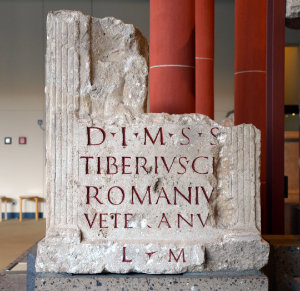
Inscription to Mithras by Claudius Romanius from Köln

Votive inscription dedicated to Mithras by the veteran soldier Tiberius Claudius Romanius, from the Mithraeum II Köln, 3rd century.


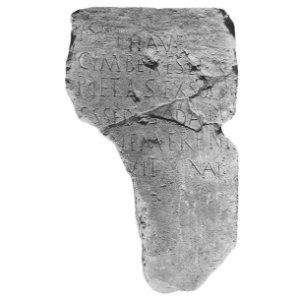
Inscription of Cimber and Exsocho from Cologne

This monument with an inscription by two individuals was found in the first mithraeum of Cologne, Germany.

CIMRM 1021


Head of Mithras from Cologne

This marble head of Mithras was found in the Luxemburgerstrasze in Cologne, Germany.

CIMRM 1022


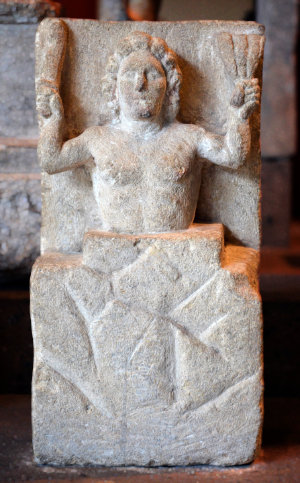
Petrogeny with a sheaf of wheat of Cologne

In this relief of the rock birth of Mithras, the child sun god holds a bundle of wheat in his left hand instead of the usual torch.


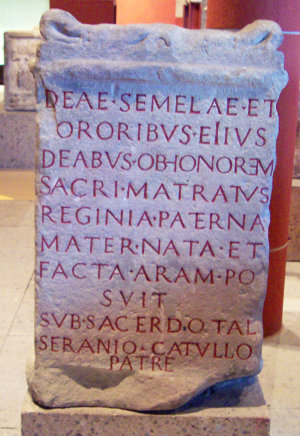
Altar to Semele from Cologne

This sandstone altar found in Cologne bears an inscription to the goddess Semele and her sisters.

CIMRM 1027


Sepulchral inscription from Cologne

Sepulchral limestone inscription from the vicinity of the Mithraeum at Colonia Agrippina (Germania Inferior), mentioning the Mithraic grade Corax.

CIMRM 1020


Alabaster tauroctony fragment from Cologne

Fragment of an alabaster relief from Cologne with part of a tauroctony scene. Only the tip of Mithras’ Phrygian cap and small narrative details above are preserved.

CIMRM 1019


Torchbearer base with Mithraic dedication

Limestone base with remains of a torchbearer and an inscription to Mithras by Lucius Pervincius Sequens.

CIMRM 1023


Relief of Cautopates from the Rhine at Cologne

Limestone relief of the torchbearer Cautopates standing cross-legged in Oriental dress.

CIMRM 1024

See all Mithraic monuments in Colonia Agrippina →

Brothers attested in Colonia Agrippina

Inscriptions from Colonia Agrippina

Inscription to Mithras by Claudius Romanius from Köln

D[eo] I[nvicto] M[ithrae] S[oli] s[ocio] / Tiberius Cl[audius] / Romaniu[s] / veteranu[s] / l[ibens] m[erito].
To the invincible sun god Mithras, ally of sol, Tiberius Claudius Romanius, veteran, willingly and deservedly.

Inscription of Cimber and Exsocho from Cologne

Have / Cimber es[sedarius] et / Pietas Ensocho / essed[ario] sodali / [b]ene merenti / [pos]uit. Vale.

{H}Ave / Cimber es[sedarius] et / Pietas Exsocho / essed[ario] sodali / [be]ne merenti / [pos]uit[!] val[e] // Cor[a]x.

Cor[a]x // Have / Cimber es[sedarius] et / Pietas Exsocho[!] / essed[ario] sodali / [be]ne merent[i] / [pos]uit[!] val[e].
Hail. Cimber, the charioteer, and Pietas have erected [this monument] for Exsocho, a fellow charioteer, deserving of honor. Farewell.

Altar to Semele from Cologne

Deae Semelae et / sororibus eiius[!] / deabus ob honorem / sacri matratus / Reginia Paterna / mater nata et / facta aram po/suit / sub sacerdotal[i] / Seranio Catullo / patre.
To the goddess Semele and her sister goddesses, for the honor of the sacred office of matron, Reginia Paterna, both born a mother and made, placed this altar under the priesthood of Seranius Catullus, Pater.

References

Back to Top