The material documented in Cappadocia reflects the province’s strategic importance within the military and communication systems of eastern Anatolia. Frontier mobility and regional circulation contributed to the spread of Mithraic cults through the province.

People attested in Cappadocia

Places in Cappadocia
Ariaramneia
A settlement of Cappadocia located within the inland communications network of central Anatolia during the imperial period.
Caesarea
Caesarea, also known historically as Mazaca, was an ancient city in what is now Kayseri, Turkey.
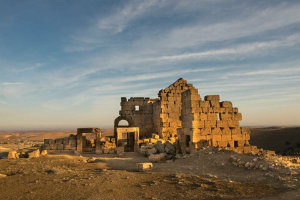
Castrum Zerzevan
Zerzevan Castle, also known as Samachi Castle, is a ruined Eastern Roman castle, a former important military base, in Diyarbakır Province, southeastern Turkey.
Tyana
Tyana, earlier known as Tuwana during the Iron Age, and Tūwanuwa during the Bronze Age, was an ancient city in the Anatolian region of Cappadocia, in modern Kemerhisar, Niğde Province, Central Anatolia, Turkey.
Inscriptions from Cappadocia
Column of Callimorphus
References
- Aleš Chalupa (2023) Římský kult boha Mithry. Atlas lokalit a katalog nálezů I
- Manfred Clauss (1992) Cultores Mithrae. Die Anhängerschaft des Mithras-Kultes.
