Filtering by Country: Bosnia and Herzegovina gave 62 results.

The locality of Pritok-Jezerine has yielded archaeological material associated with inland Dalmatia.
Konjic is a city located in the Herzegovina-Neretva Canton of the Federation of Bosnia and Herzegovina, one of two entities that make up Bosnia and Herzegovina.
The locality of Han Potoci lies within the mountainous hinterland of ancient Dalmatia.
The locality of Carevac is associated with archaeological discoveries from the inland territory of Dalmatia.
Lisičići is associated with archaeological remains connected with the Neretva basin region.
Little is known about Jajce in Roman times, apart from the accidental discovery of a 4th-century mithraeum in 1931.
The identification of Nefertara remains uncertain, though it appears connected with the Dalmatian inland zone.
Modrič lies within the Sava basin region historically associated with the western Pannonian provinces.
Skelani (Serbian Cyrillic: Скелани) is a village in the municipality of Srebrenica, in the Republika Srpska entity of Bosnia and Herzegovina.
Bihać lies in the Una valley and is associated with archaeological remains from the Dalmatian hinterland.

He was a soldier of the Cohors I Belgarum, probably of Dalmatian origin, who dedicated an altar to Mithras in Aufustianis.

Lost altar from Carevac in Glamoč Polje, Dalmatia, dedicated to Deo invicto Soli Mithrae.
Altar from Carevac in Glamoč Polje south-east of Jajce, Dalmatia, dedicated to Invicto by Sisimbrius, erected by decree of the decuriones.

Two limestone relief fragments from Bihać, Dalmatia, found near Kástel Stasi and the Croate Church of Saint Martha, preserving portions of a Mithraic bull-slaying scene.
Sandstone altar from Pritok near Bihać, Dalmatia, dedicated to Invicto Mithrae Soli by Cocceius for his own welfare.
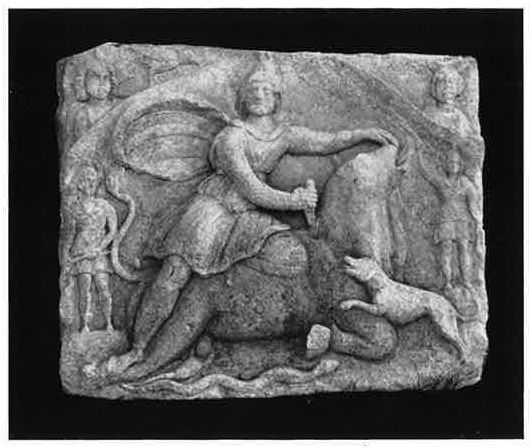
Sandstone tauroctony relief from Pritok near Bihać, Dalmatia, lost during World War II, depicting Mithras in Oriental dress killing the bull in a grotto with the bull's tail ending in corn-ears.
