Filtering by Country: Switzerland gave 41 results.

Augusta Rauricorum became one of the principal urban centres of the Upper Rhine region.
Aquae Helveticae developed around important thermal springs in the territory of modern Baden in Switzerland.
The Gaulish name of today Martigny was either Octodurus or Octodurum in the 1st century BC. It was conquered by the Romans in 57 BC and occupied by Servius Galba with the Legion XII.
Leusonna developed on the shores of Lake Geneva and formed part of the regional communications network of western Helvetia.
Vindonissa served as one of the principal legionary bases of the Upper Rhine frontier.
Allmendingen near Thun occupies a strategic position between the Swiss plateau and Alpine communications routes.
Stein am Rhein occupied a strategic position near the western limits of the Danubian frontier system.
The colonia of Iulia Equestris, modern Nyon, overlooked the shores of Lake Geneva and controlled regional routes.
Geneva is the second-most populous city in Switzerland and the most populous city of Romandy, the French-speaking part of Switzerland.
Centum Prata is the name of a Roman vicus, whose remains are located on the eastern Zürichsee lakeshore in Kempraten, a locality of the municipality Rapperswil-Jona in the canton of St.

Soldier of the Legio VIII Augusta who dedicated an altar to Deus Invictus at Genava after twenty-six years of service.
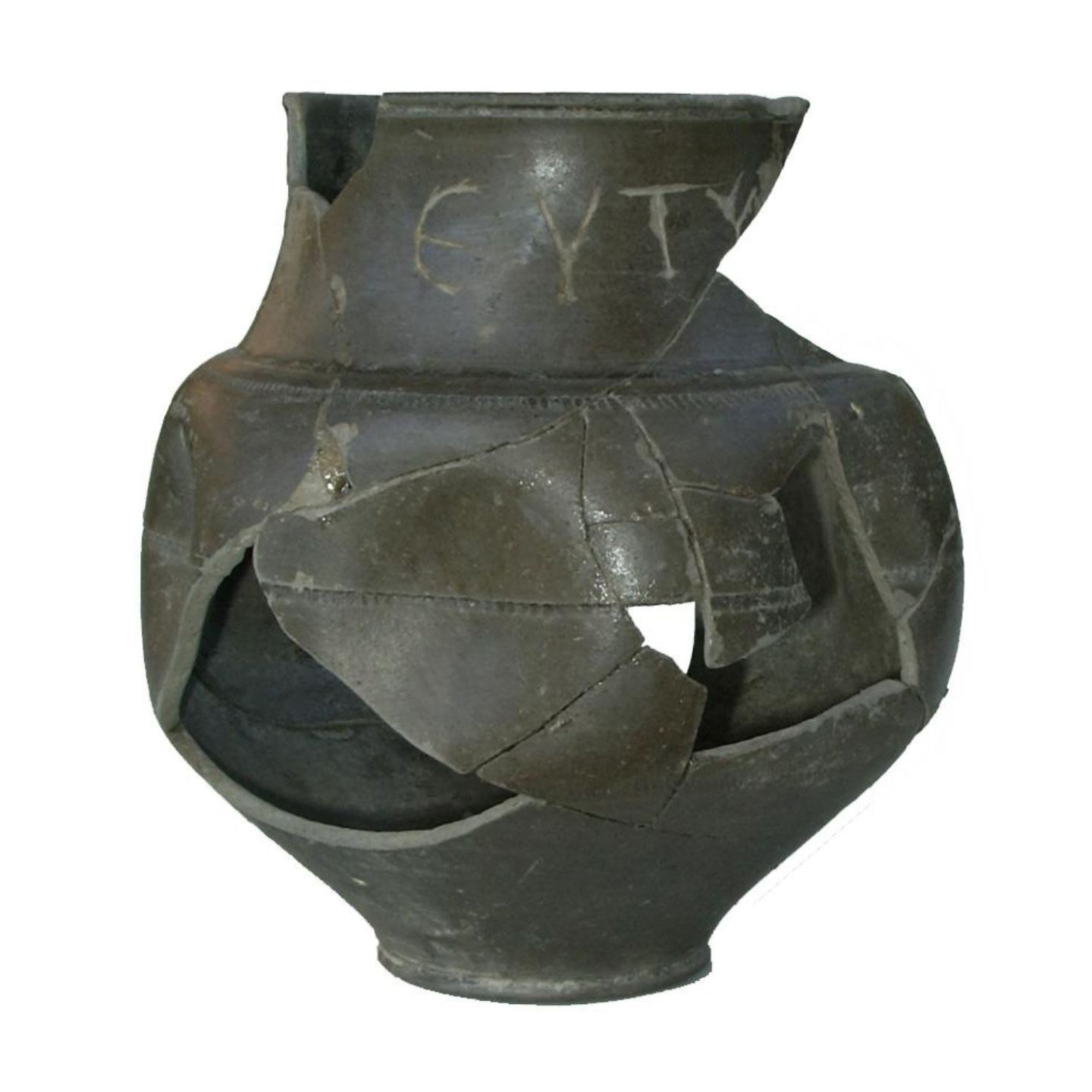
Ceramic cup inscribed with a Greek graffito and recovered from the Mithraeum of Martigny, providing evidence for the use of inscribed vessels within the sanctuary assemblage.
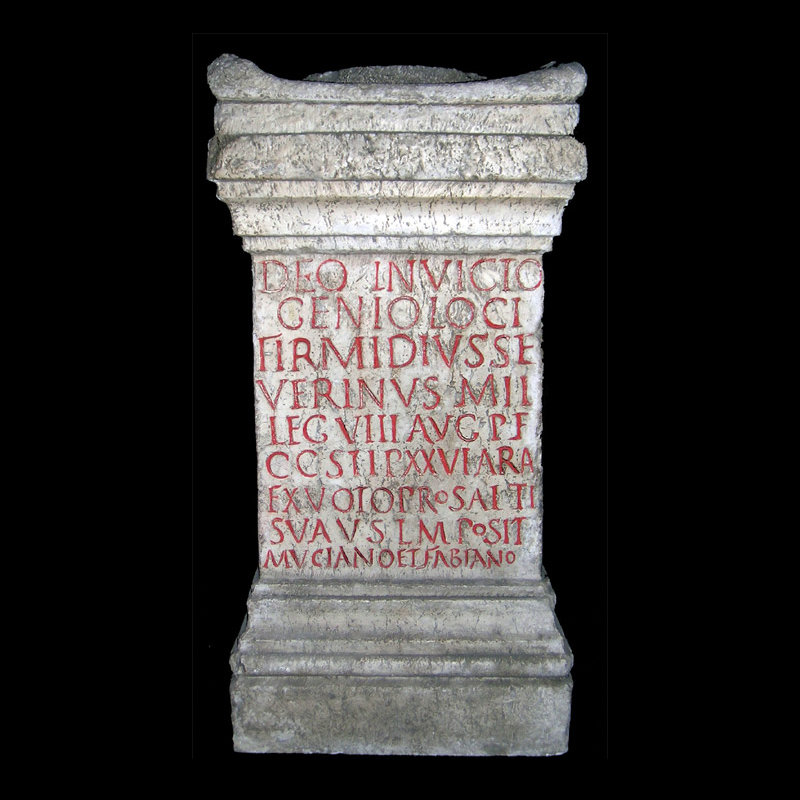
This limestone altar bears an inscription from its donor, Firmidius Severinus, in honour of Mithras after 26 years of service in the Legio VIII Augusta.

Life-sized sandstone head with long curly hair and Phrygian cap, found at the foot of the Hohenklingen near Stein am Rhein, Raetia; probably belonging to a statue of Cautes or Cautopates.
Limestone statue fragment from Nyon, ancient Colonia Iulia Equestris, depicting a lion encircled by a serpent with schematic scorpions engraved in small triangles on each flank; a composition associated with Mithraic lion symbolism.
Small red limestone altar from Nyon, ancient Colonia Iulia Equestris, dedicated to Invicto by Atius ex voto; one of the few Mithraic monuments from this site.
Underground oblong room at Nyon, ancient Colonia Iulia Equestris, situated on the edge of a second Forum dating to the second half of the first century AD, with a series of pillars along the side walls consistent with Mithraic architecture; its interpretation as a Mithraeum remains tentative…
Dark-red clay vase from the refuse pit of the Roman camp at Windisch, ancient Vindonissa, with three handles each encircled by a coiling serpent; a vessel type closely associated with Mithraic ritual.
Altar from Vidy near Lausanne, ancient Leusonna, dedicated to Soli Genio Lunae sacrum by Publius Clodius Primus, curator of the vici Lousonnenses, sevir Augustalis, and curator of the Roman citizens of the Helvetian conventus; not earlier than AD 161–169…
