Filtering by Country: Egypt gave 26 results.

Mendes was a famous city that attracted the notice of most ancient geographers and historians, including Herodotus, Diodorus, Strabo, Mela, Pliny the Elder, Ptolemy, and Stephanus of Byzantium. The city was the capital of the Mendesian nome.
Mampsis or Memphis, today Mamshit, Arabic Kurnub, is a former Nabataean caravan stop and Byzantine city.
Oxyrhynchus, also known by its modern name Al-Bahnasa, is a city in Middle Egypt located about 160 km south-southwest of Cairo in Minya Governorate.
Hermopolis, the city of Hermes, was an important city located between Lower and Upper Egypt. A provincial capital since the Old Kingdom of Egypt, Hermopolis developed into a major city of Roman Egypt.
Alexandria was founded by Alexander the Great in April 331 BC as one of his many city foundations. After he captured the Egyptian Satrapy from the Persians, Alexander wanted to build a large Greek city on Egypt’s coast that would bear his name.

Egyptian scholar of Greek descent, philosopher, astrologer and trusted adviser to the emperor Tiberius, whose intellectual milieu has been associated with the emergence of the Roman Mysteries of Mithras.

Ptolemaic sanctuary of the Iranian god Mithra, probably located at ancient Memphis and known exclusively through third-century BCE Greek papyri.
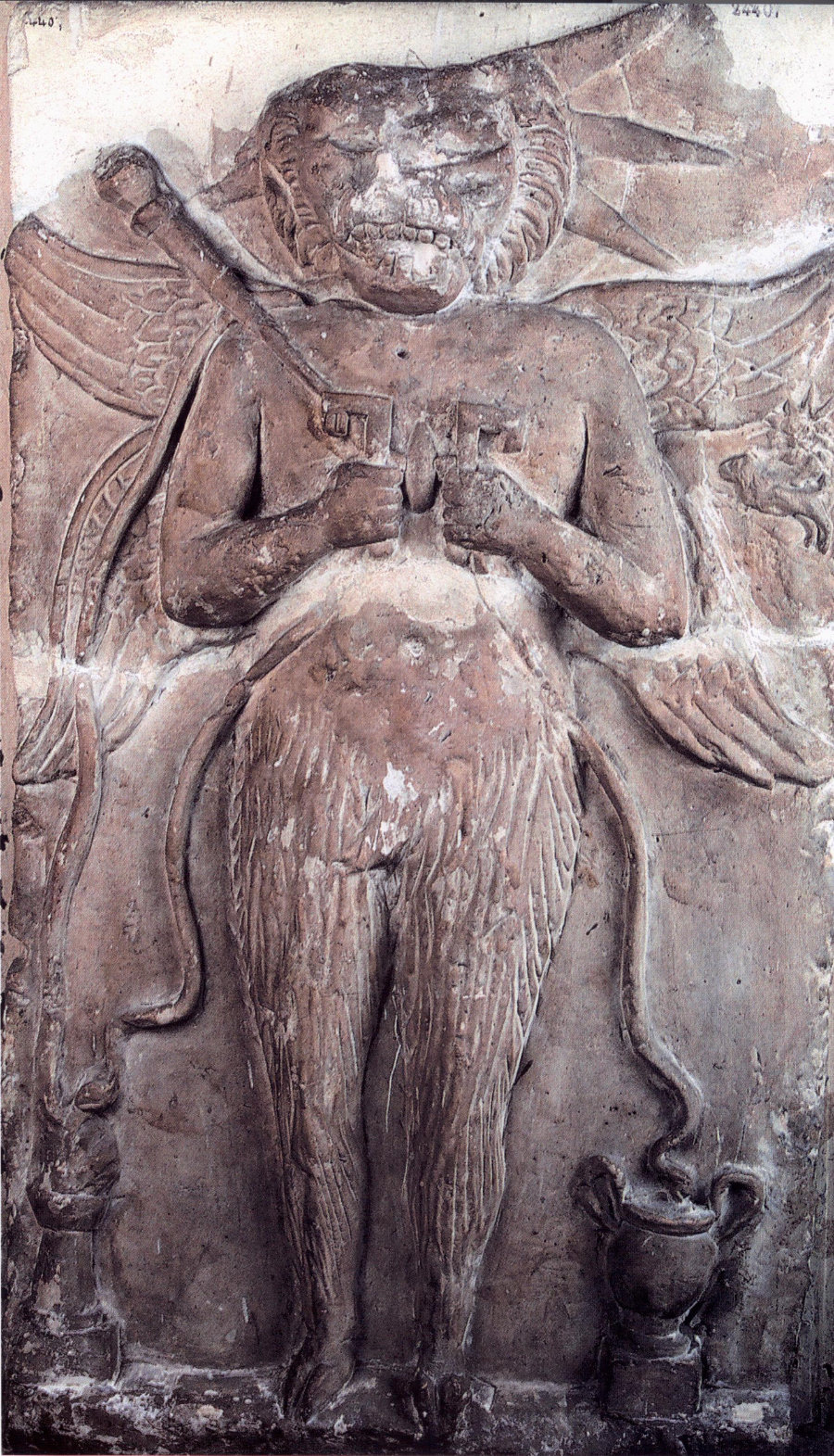
Limestone relief from ancient Oxyrhynchus depicting a four-winged lion-headed deity with keys, torch and three serpents, one of which emerges from the god’s mouth towards a burning altar.
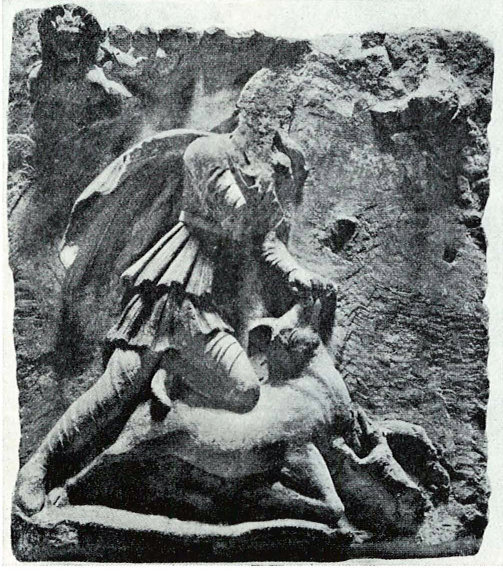
Limestone tauroctony relief from the Mithraeum of Memphis, depicting Mithras sacrificing a small bull inside a rocky cave.
Roman Mithraeum at Kom Dafbaby, near ancient Memphis, poorly documented archaeologically but known through the remarkable group of Mithraic sculptures and reliefs recovered from the site.
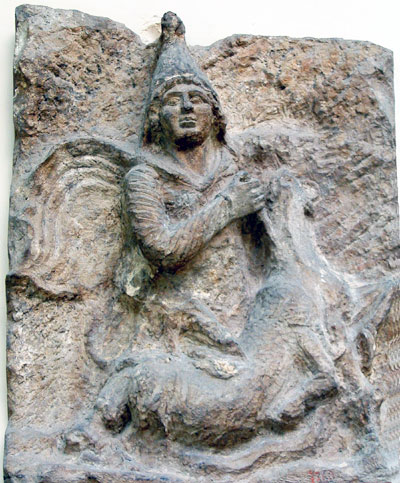
Primitive limestone tauroctony relief from the Mithraeum of Memphis, preserving a simplified representation of Mithras slaying the bull.
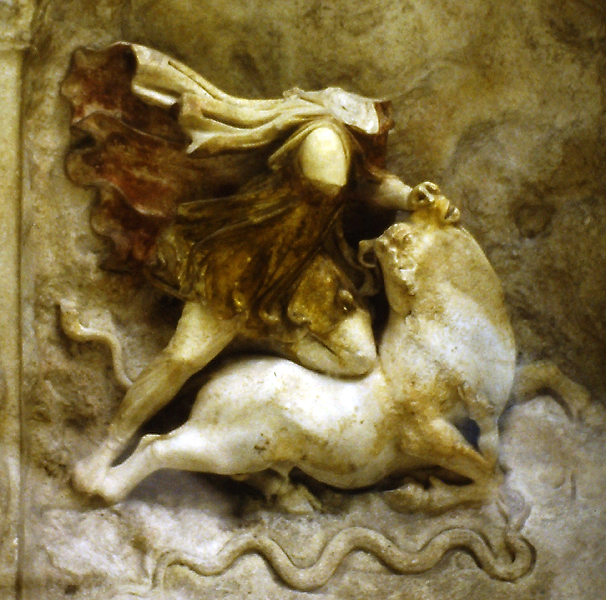
Marble tauroctony relief from the Mithraeum of Memphis, depicting Mithras slaying the bull within an architectural niche framed by Cautes and Cautopates.

Scholar, astrologer, imperial administrator and trusted adviser to the emperors Claudius, Nero and Vespasian.

Oval jasper gem in the Cairo Museum depicting Mithras slaying the bull with Sol, Luna, a leontocephalic figure and seven stars.
Limestone head with Phrygian cap, possibly depicting Mithras, found in Egypt (possibly Alexandria), now in Tübingen, 2nd–3rd century A.D.
Two limestone figures of women, possibly from the Mithraeum near Memphis, one standing cross-legged holding a branch with flowers, Egypt.
Limestone statue of a standing lion with mouth half-open, legs and tail lost, from the Mithraeum near Memphis, Egypt.
Badly damaged limestone statuette of a standing figure in Eastern attire, head, arms and feet lost, from the Mithraeum near Memphis, Egypt.
Upper part of a limestone torchbearer statue in tunic and hanging cloak, arms and lower legs lost, from the Mithraeum near Memphis, Egypt.
Limestone statuette of a standing torchbearer, torch and right arm lost, from the Mithraeum near Memphis, Egypt.
