Your selection gave 851 results.

A brief inscription reading "Deo Invicto Mithrae", found in the ruins of the Castello di Tuenno near San Zeno at the entry to the Tovel valley in Trentino, alongside the decorated relief No. 723.

San Zeno is a locality near Tuenno in the Val di Non, where Mithraic material attributed to Roman Raetia was discovered.
An inscription found in the church of San Felice at Aquileia, recording a vow fulfilled to Sol Deus Invictus by Feronius Censor, with a head of Sol carved between the first two words.
An inscription from Aquileia recording a joint dedication to Deus Sol by the invincible Emperors Diocletian and Maximian, comparable to their dedication to Apollo Belenus elsewhere in the city.
A fragmentary epistyle from Aquileia preserving part of the inscription [Deo In]victo [Mi]th[rae], indicating the presence of a Mithraic sanctuary in the city.
A fragmentary inscription found in the foundations of the Theodosian walls at Aquileia, recording a dedication to the Invincible Mithras by ...ntius Manilianus.
An inscription from Aquileia recording a vow fulfilled to Sol Invictus Mithras by C. Calidius Agathopus, a member of the college of the seviri Augustales of Aquileia.
A fragmentary inscription from Aquileia, probably dedicated to Cautopates, recording a soldier named Marcianus, optio of the Second Adiutrix Legion, who fulfilled his vow for the welfare of himself and his family.
A military inscription from Aquileia, dedicated to the Invincible Mithras by Flavius Exuperatus and several soldiers from the Third Italic and Thirteenth Gemina legions, acting as lustration agents for their commanders Flavius Sabinus and Aurelius Zeno, dated to around 244 A.D…
An inscription copied at San Marco's in Venice in 1829, recording a dedication by Q. Baienus Proculus, pater nomimus, to Sol.
Two inscriptions found at Aquileia in 1805, both dedicated by Q. Baienus Proculus as pater, the first to Cautopates and the second to Cautes.
A small relief fragment from Aquileia, now in the Lapidary Museum at Trieste, preserving part of Mithras' flying cloak and the head of one of the torchbearers.
An inscription from the vicus Vicciomitum in Milan (ancient Mediolanum), recording a votive dedication to the Invincible Mithras by L. Atilius Pupinius on a site granted by decree of the town council.

First Roman emperor of African origin and founder of the Severan dynasty, which ruled the empire for over four decades.
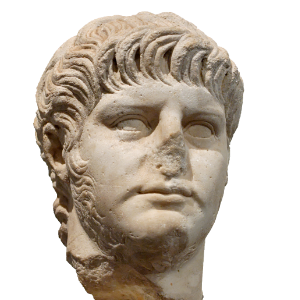
Roman emperor whose ceremonial reception of Tiridates I of Armenia established one of the earliest recorded links between Mithras and the Roman imperial court.

Alfius Severus was a prominent figure associated with the Mithraeum of Marino, probably acting as pater of a small Mithraic community connected with the nearby peperino stone quarries.
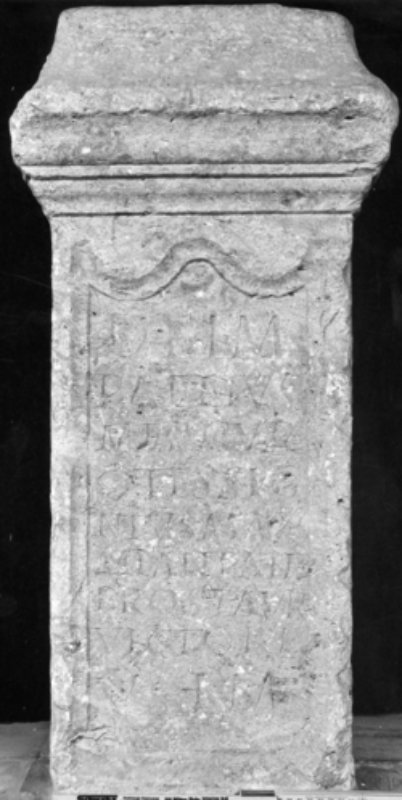
This altar to Mithras found in Aquilieia mentions several persons of a same community.
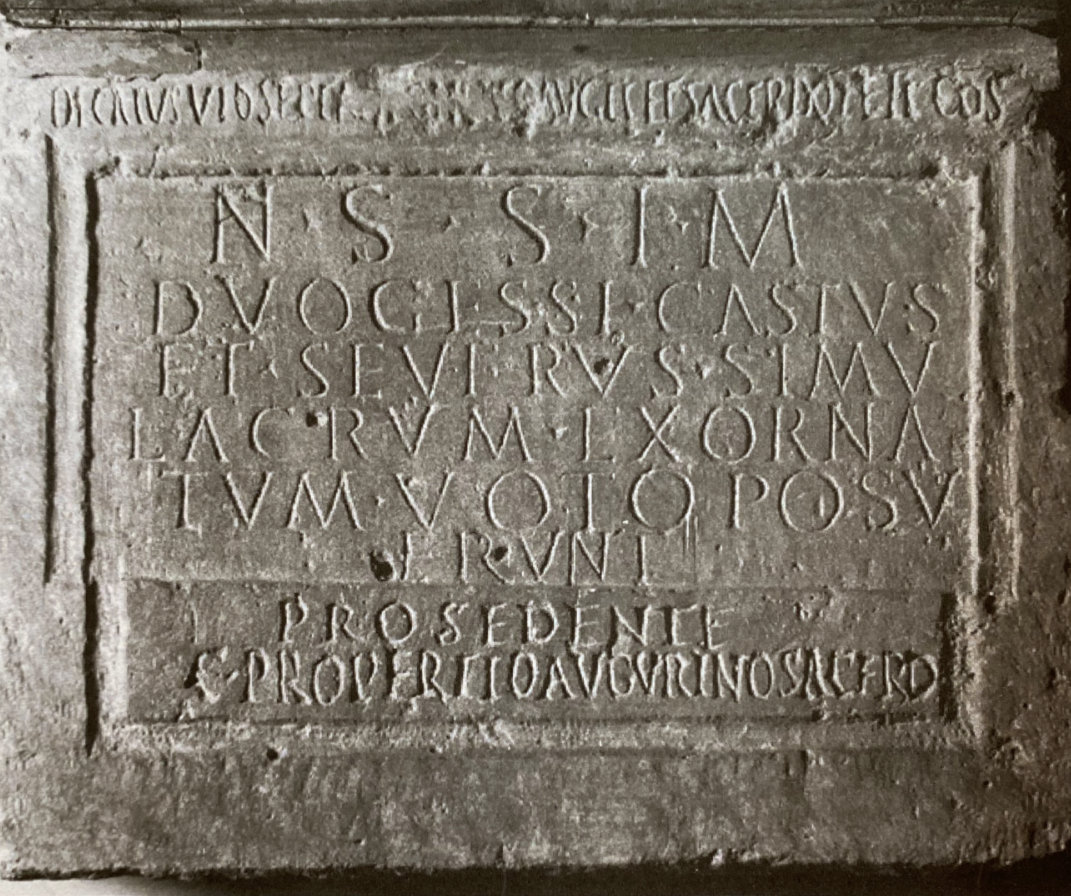
Gessius Castus and Gessius Severus have placed a decorated stutue and left testimony on this inscription below.
A decorated inscription with egg-and-dart moulding found in the castle of La Fratta near Montefalco in Umbria, bearing a brief dedication to Sol Invictus.
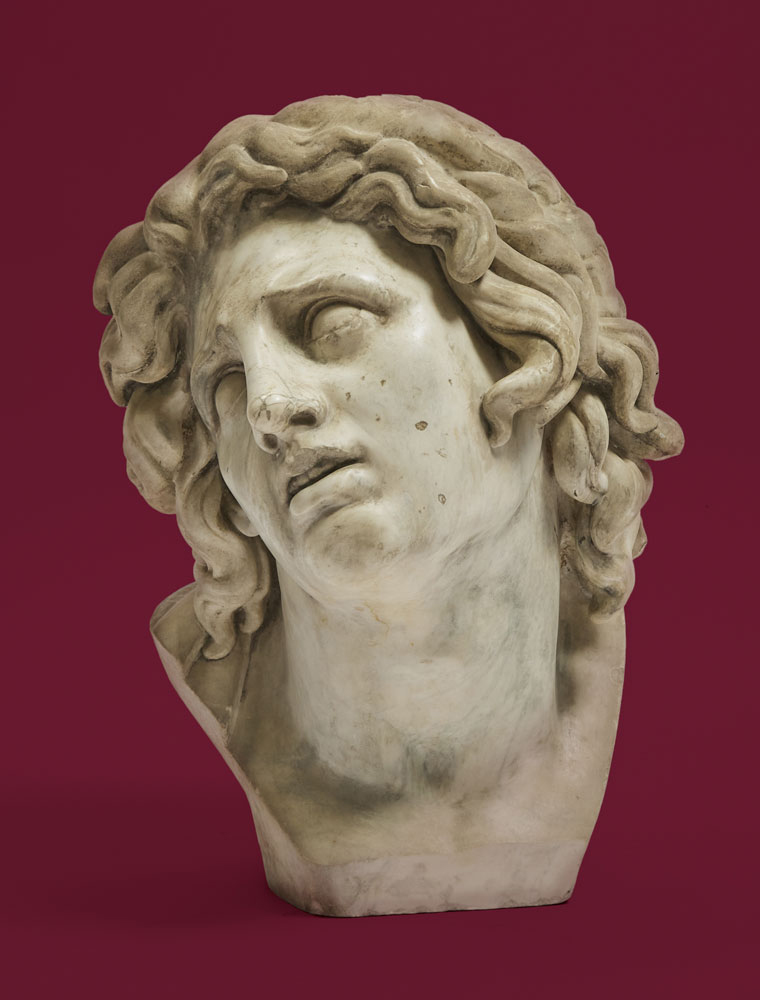
Head formerly associated with Mithraic material but interpreted by Margarete Bieber as a dying Giant.
