Filtering by Country: Libya gave 19 results.

Leptis or Lepcis Magna, also known by other names in antiquity, was a prominent city of the Carthaginian Empire and Roman Libya at the mouth of the Wadi Lebda in the Mediterranean.
Oea was an ancient city in modern-day Tripoli, Libya, founded by the Phoenicians in the 7th century BC. It became a Roman-Berber colony in the second half of the 2nd century BC.
Sabratha, in the Zawiya District of Libya, was the westernmost of the ancient "three cities" of Roman Tripolis, alongside Oea and Leptis Magna.
Cyrene or Kyrene, was an ancient Greek and later Roman city near present-day Shahhat, Libya.
The frontier site of Gholaia formed part of the defensive and logistical system of the Limes Tripolitanus in the Libyan desert.

Occupant of a richly decorated tomb at Oea once interpreted as evidence for female Mithraic initiation.
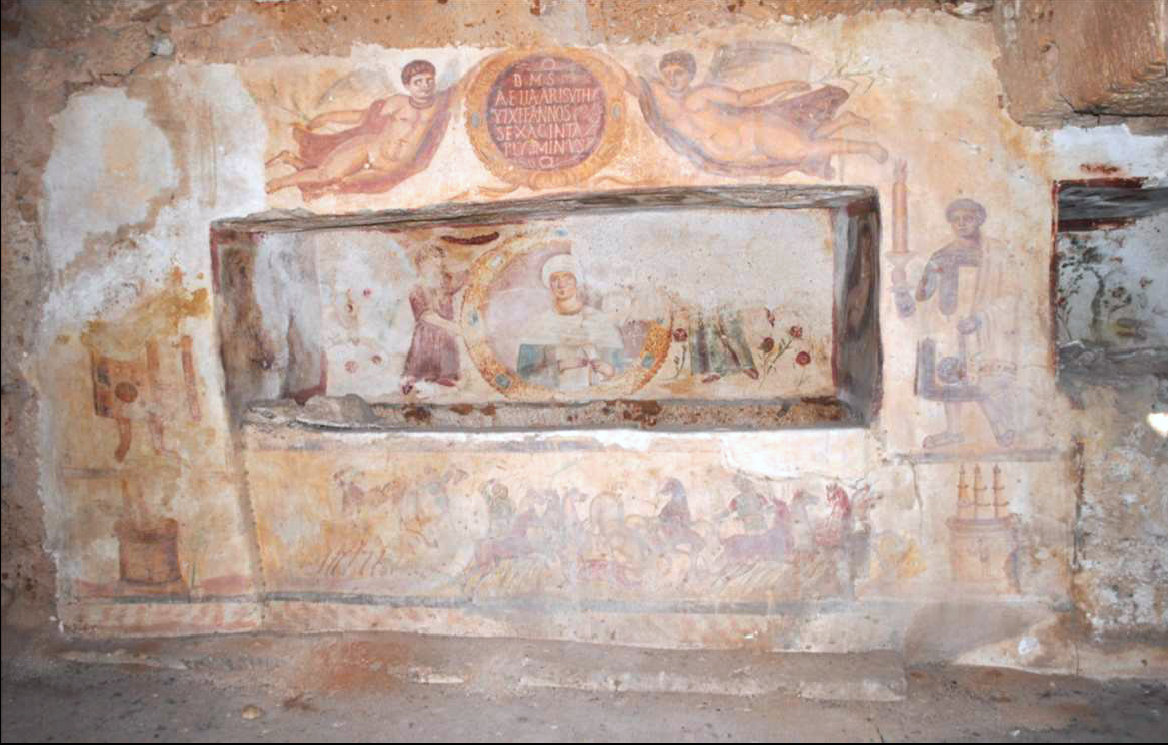
The Mithraic nature of the frescoes of Oea, according to the scholars Cumont and Vermaseren, is now questioned.

Lower part of a white marble cinerary casket decorated with a relief of Mithras killing the bull, from the necropolis area near the amphitheatre of Sabratha.
Limestone keystone dedicated to the invincible Sun by Peticius Pastor and preserved at Lepcis Magna.
Epigraphic monument from Tripolitania preserving a corrected reading discussed in later scholarship.
Fragmentary remains of statues identified as representations of the Mithraic torchbearers.
Group of monuments from Lepcis Magna published among the principal Mithraic remains of Roman Tripolitania.
Second limestone base from the Forum Vetus at Leptis Magna bearing the inscription of Aristius Antiochus, with fragments of a torchbearer figure in Eastern attire.
Damaged statue of Mithras as bull-killer on a rectangular base, found in the piazza of the Fountain of Apollo at Cyrene.
Marble head with locks of hair and Phrygian cap, probably depicting Mithras as bull-killer, found under the threshold of the Iseum at Cyrene.
Small marble head probably of Mithras tauroctonus from Leptis Magna, now Khoms.
Statue of a standing person in eastern attire in red, local limestone with inscription.
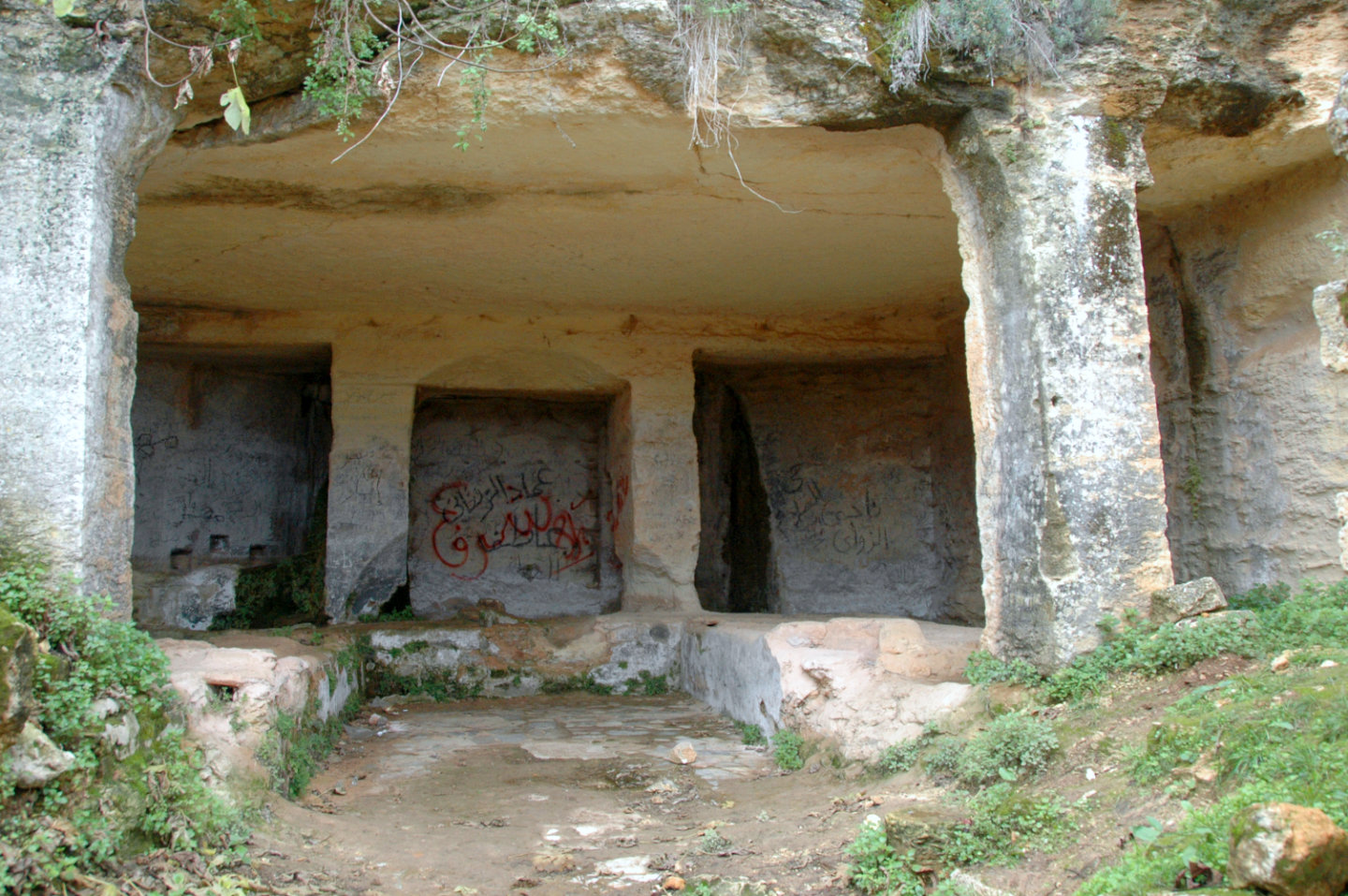
The Mithraeum of Cyrene is preserved among the remarkable ruins of the ancient capital of the Roman province of Cyrene.
