Filtering by Country: Slovenia gave 172 results.

The Rožanec area belongs to the southeastern Alpine frontier landscape of Roman Pannonia.
Poljčane belongs to the southeastern Alpine region historically linked with Roman Pannonia.
Praetorium Latobicorum occupied a strategic position along the communications routes of southeastern Pannonia.
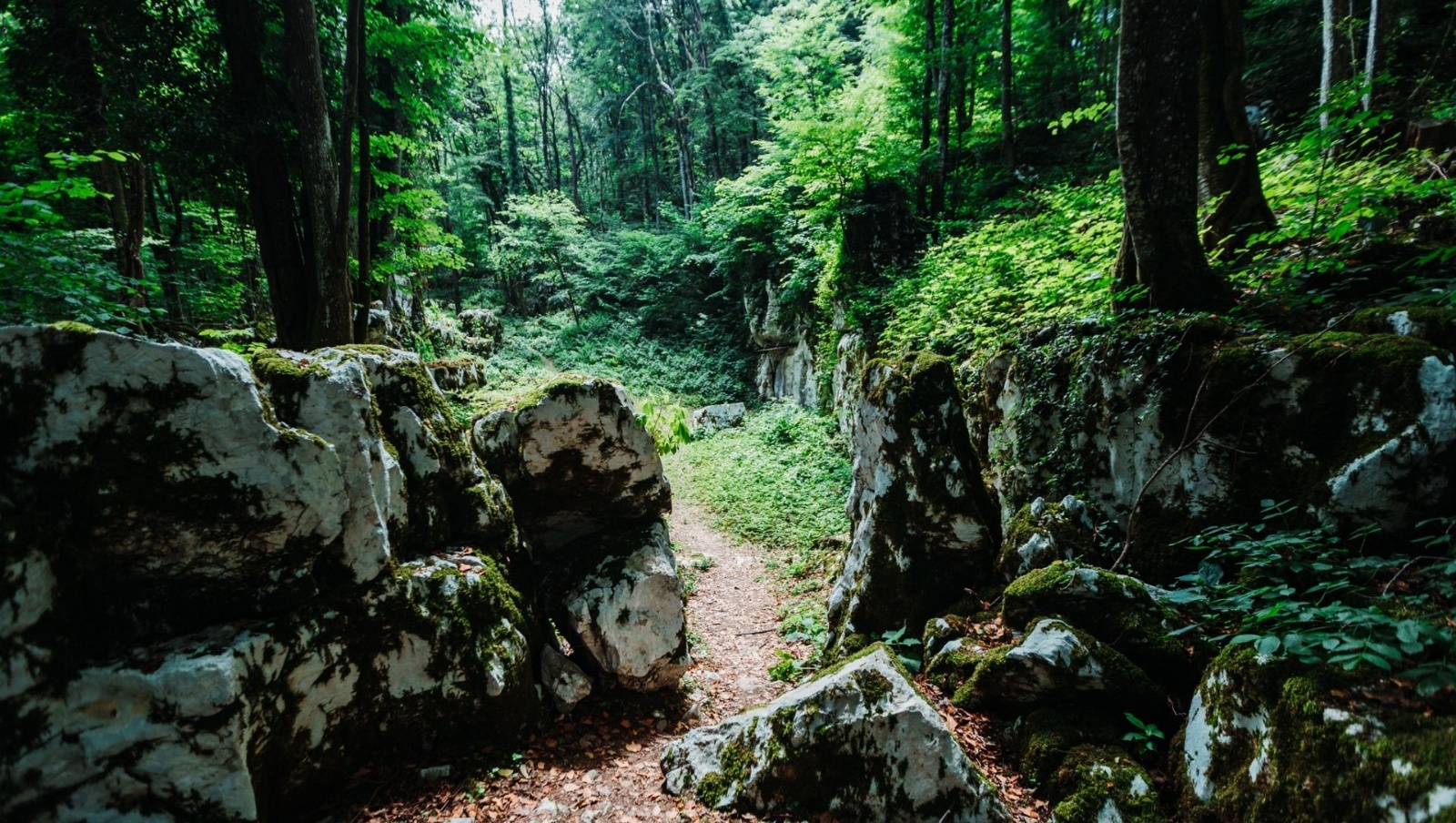
Rožanec is a settlement north of the town of Črnomelj in the White Carniola area of southeastern Slovenia.
Hoče lies within the southeastern Alpine region historically associated with Roman Noricum.
The Romans controlled Poetovium until the 1st century BC. It became the base camp of the Legio XIII Gemina, where they built a castrum.
Neviodunum developed into an important settlement along the Sava river communications corridor.
Atrans stood near the important Alpine crossing routes linking Italy with the Danubian provinces.
Emona or Aemona was a Roman castrum, located in the area where the navigable Nauportus River came closest to Castle Hill, serving the trade between the city’s settlers – colonists from the northern part of Roman Italy – and the rest of the empire.
Višnja Gora lies within the southeastern Alpine region historically connected with Roman Pannonia.
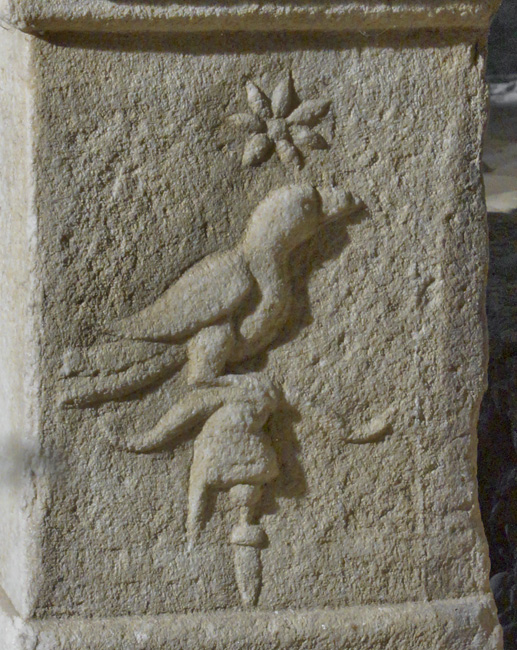
This altar from Ptuj, present-day Poetovio, is decorated with various Mithraic animals such as a tortoise, a cock and a crow and other objects.

Enslaved dedicant to Cautopates at Mithraeum I of Poetovio, belonging to Gabinius Antonius.

Enslaved member of the Mithraic community at Poetovio who dedicated an altar to Cautes in Mithraeum I.
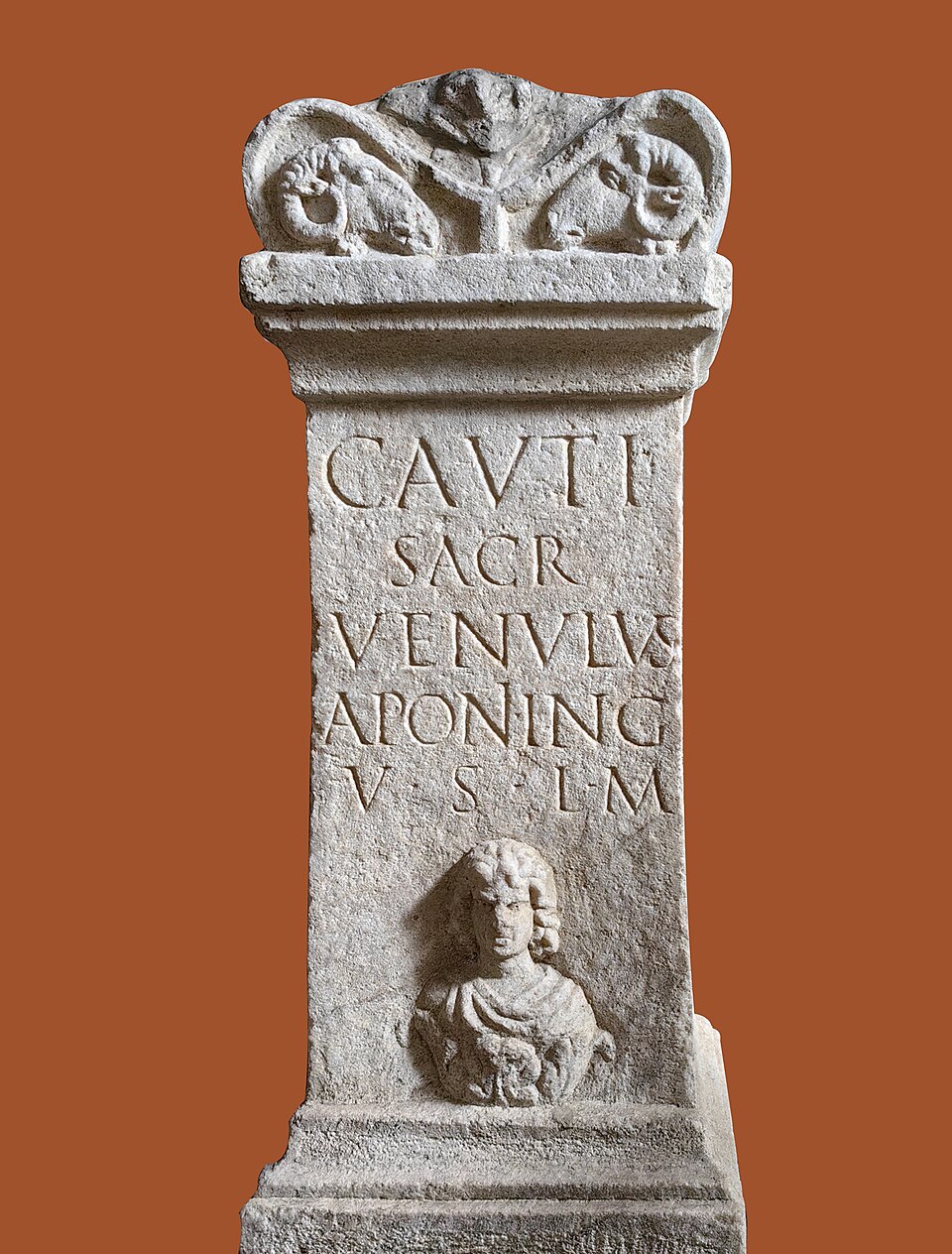
White marble altar from Mithraeum I at Ptuj, dedicated to Cautes by Venulus and decorated with a bust of the god emerging from foliage.
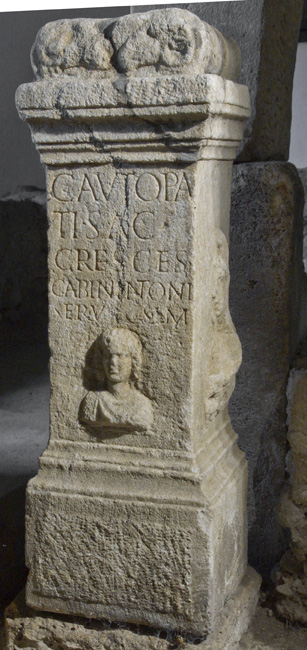
White marble altar from Mithraeum I at Ptuj, ancient Poetovio, decorated with a bust of Cautopates, two ram heads flanking a palm, and lateral representations of Mithras’ rock-birth.

Equestrian officer and praepositus of troops from Legio V Macedonica and Legio XIII Gemina at Poetovio under Gallienus.

Customs slave and vicarius of Primus who dedicated a statue of the rock-born Mithras at Poetovio.

Customs inspector at the Poetovio station who dedicated an altar to Mithras and the Transitus dei following a vision.
