Your search Al. N. Oikonomides gave 2978 results.

This marble sculpture from Sicily, known as the Randazzo Vecchio or Rannazzu Vecchiu, contains some essential elements of the Mithraic Aion, the lion-headed god.
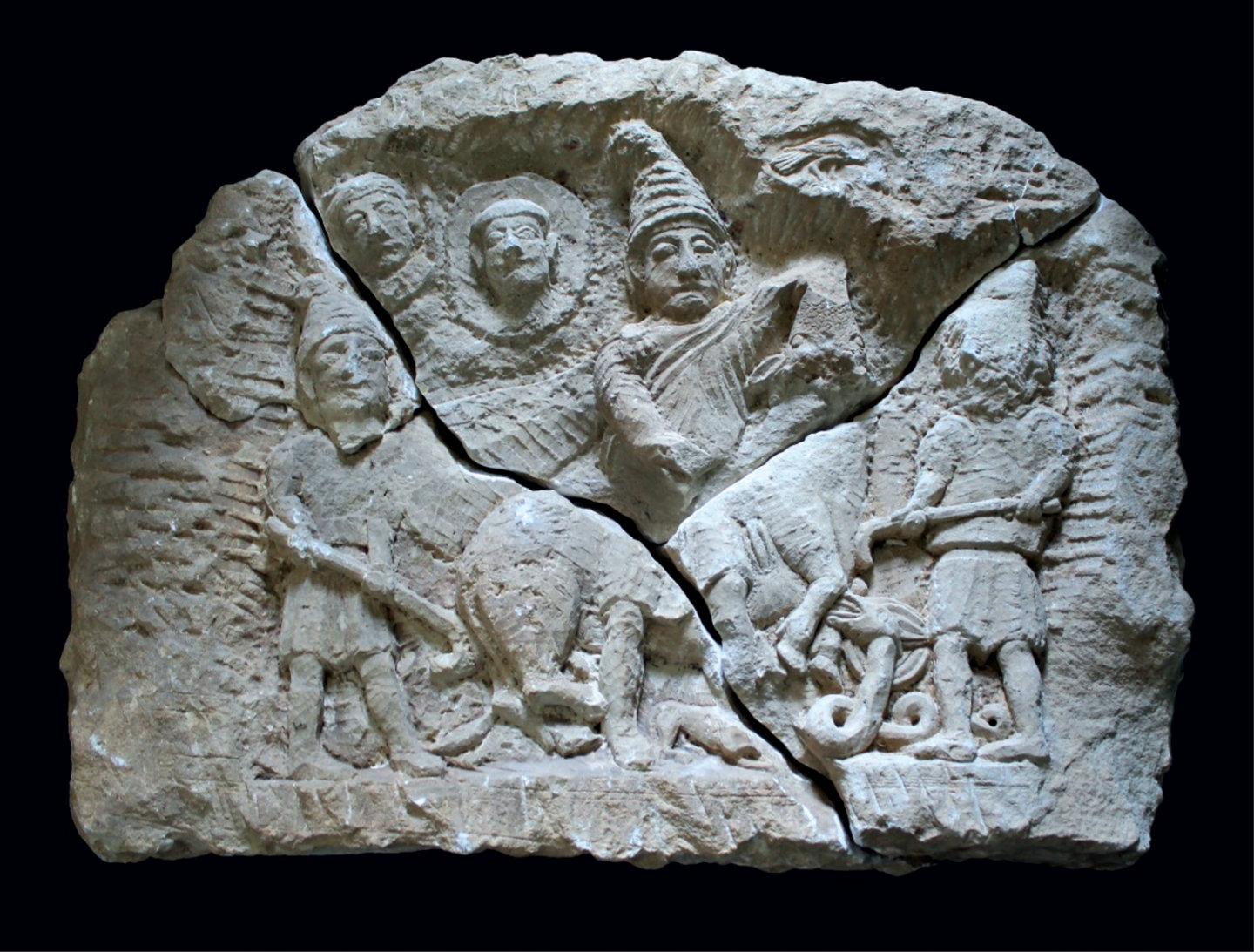
The relief of Mithras killing the bull, found near Zvornik in Bosnia and Herzegovina, features some variations on the usual scene.

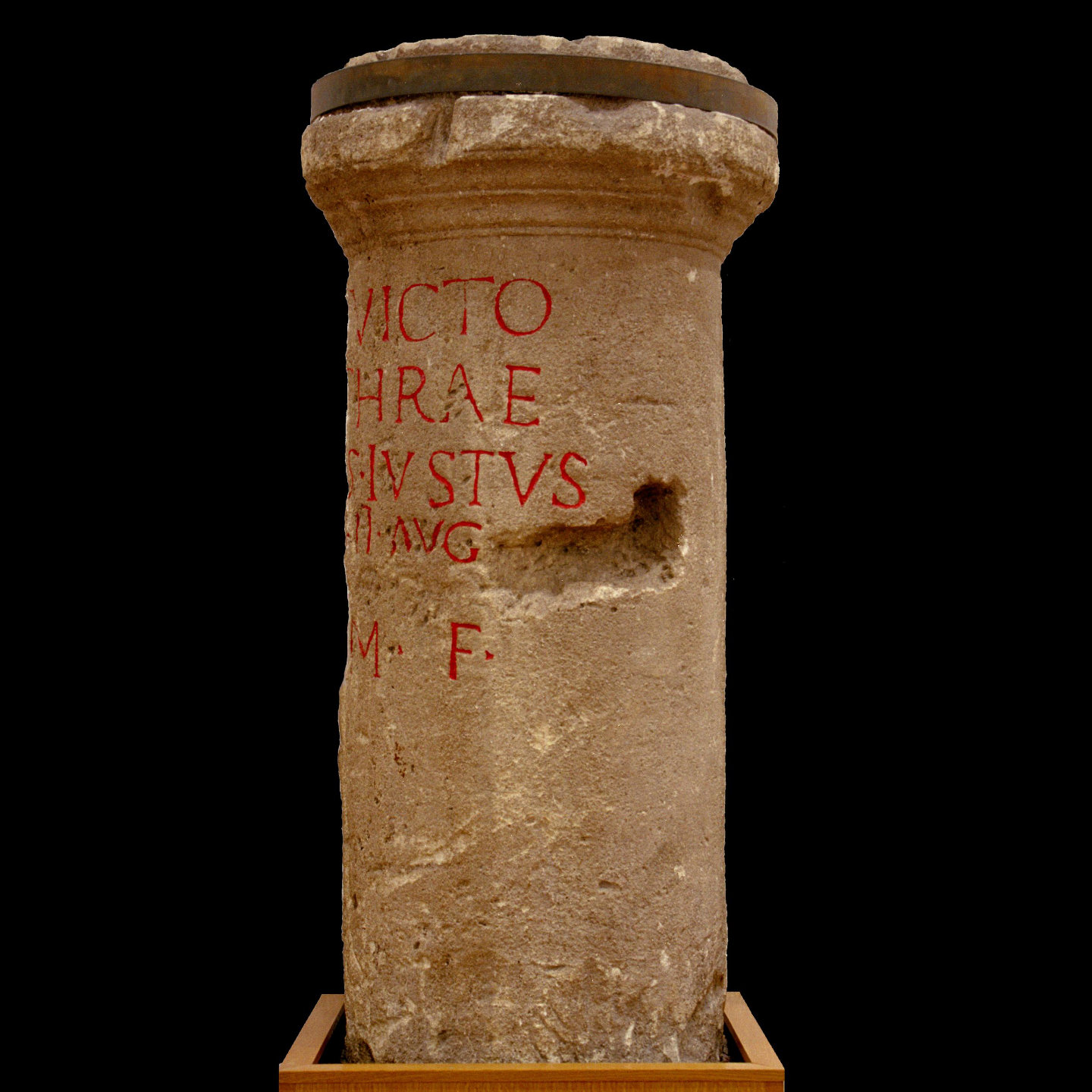
This oolite base, dedicated to the invincible Mithras, was found in the baths of the Villa de Caerleon, Walles.
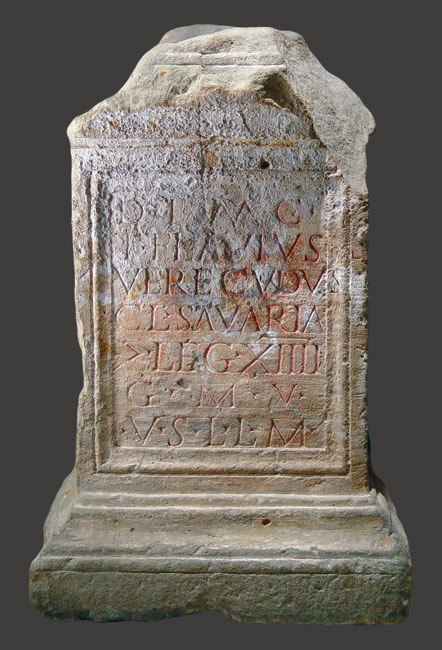
This monument to Mithras and Cautes (or Cautopates) was erected in Carnuntum by the centurion Flavius Verecundus of Savaria.

This elliptical terracotta fragment from Ostia depicts Mithras as a bullkiller.
Minto has claimed that the time god Aion was painted on the corner of the north wall of the Mitreo de Santa Capua Vetere.
A statue and a relief of Cautes have been found in an ancient Gallo-Roman site in the commune of Dyo.

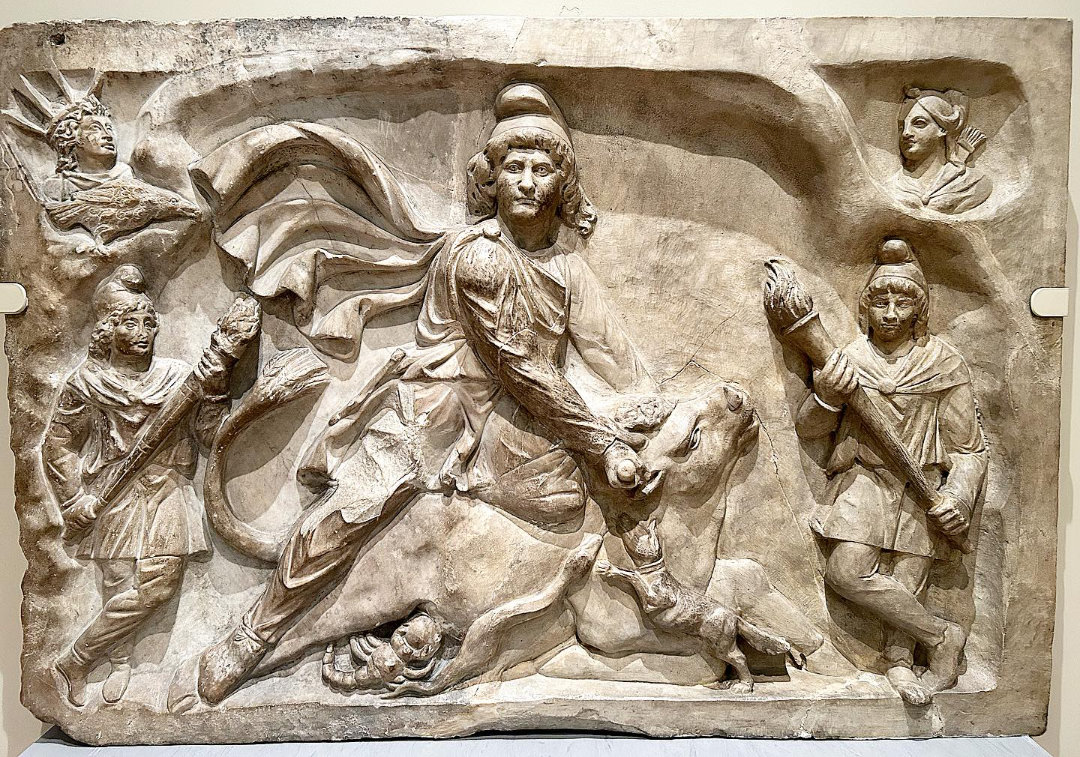
This relief of Mithras killing the bull is on display at the Royal Ontario Museum.
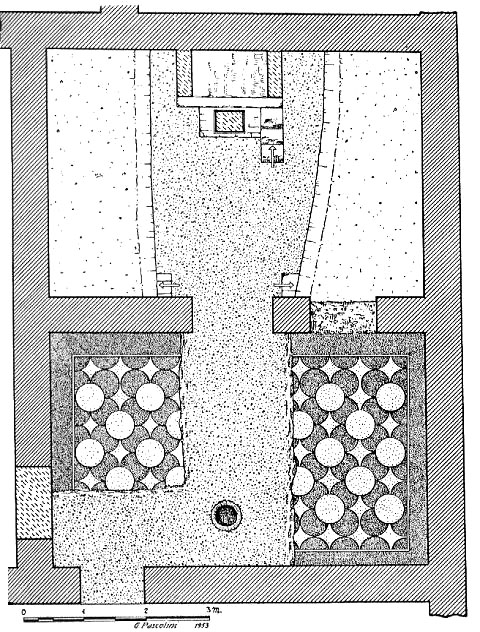
The Mithraeum of the House of Diana was installed in two Antonine halls, northeast corner of the House of Diana, in the late 2nd or early 3rd century.
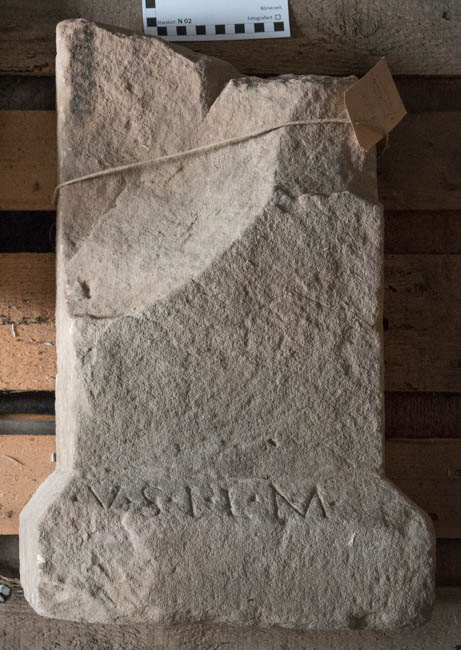
These fragmentary monuments, one with an inscription, were found in the Gimmeldingen mithraeum.
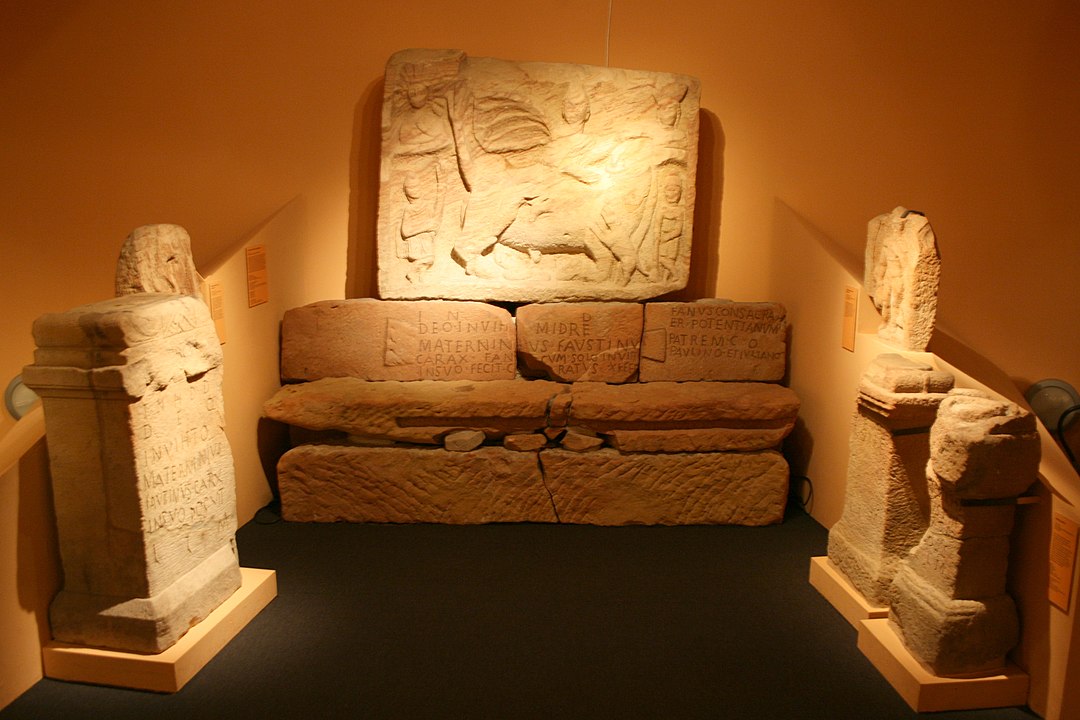
The few remains of the Mithraeum of Gimmeldingen are preserved at the Historical Museum of the Palatinate, in Speyer, Germany.
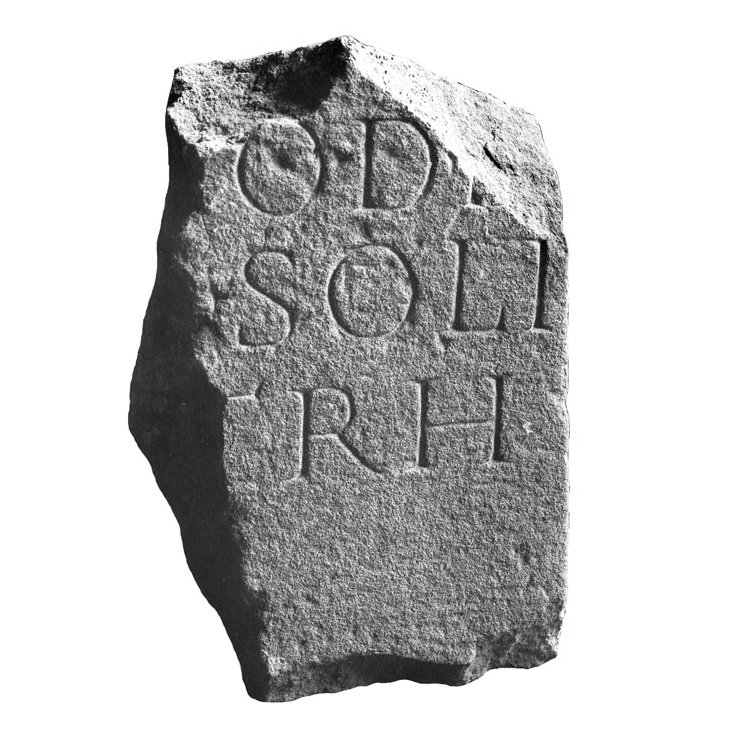
This monument with an inscription to the god Sol Mithras was found in front of the cathedral of Speyer during some sewer works.
A bearded Bacchus and another hermes as a woman, both crowned with vine tendrils, were walled into the base of a niche.
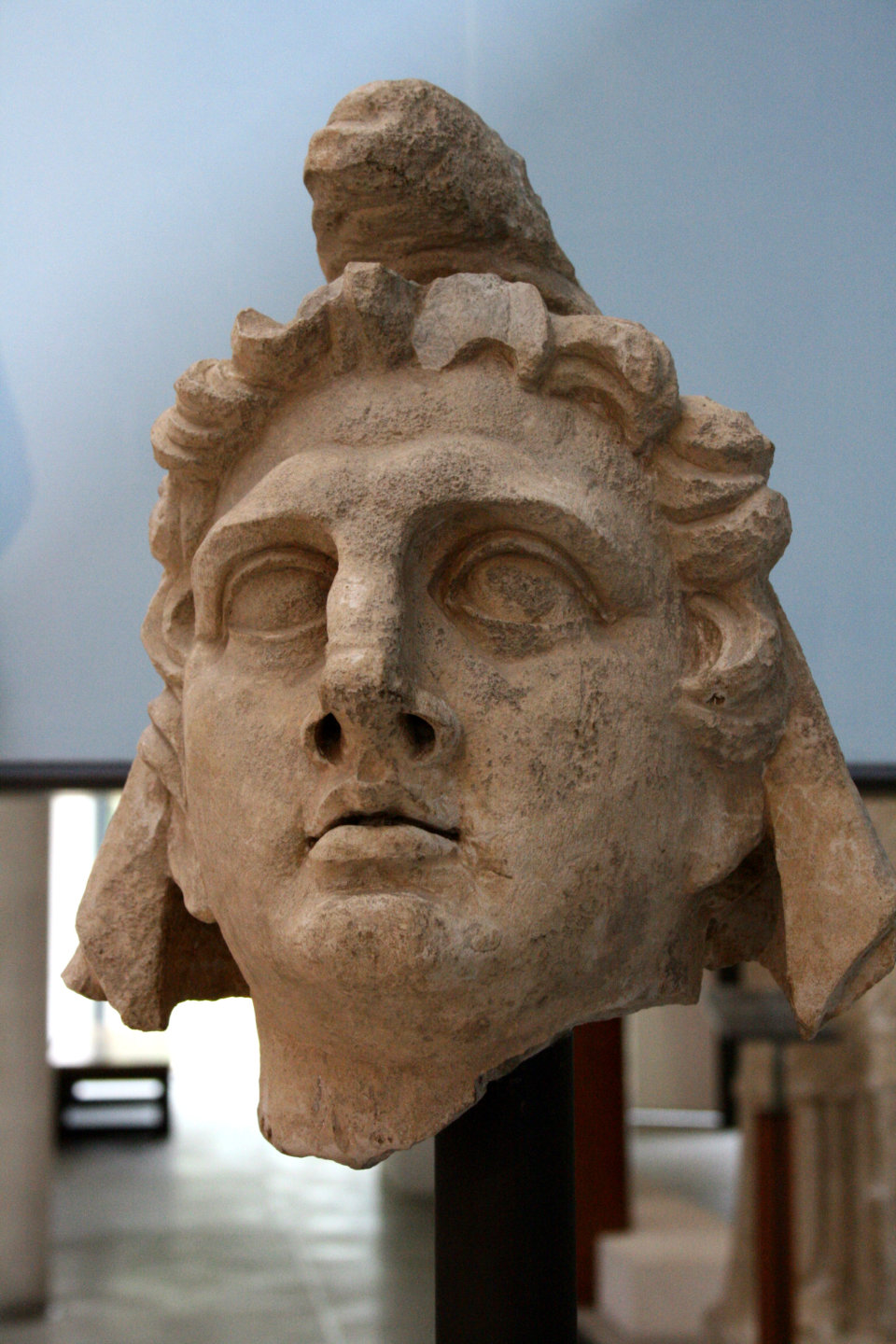
This head of Italian marble, found at Arles, probably belongs to a sculpure of Mithras.
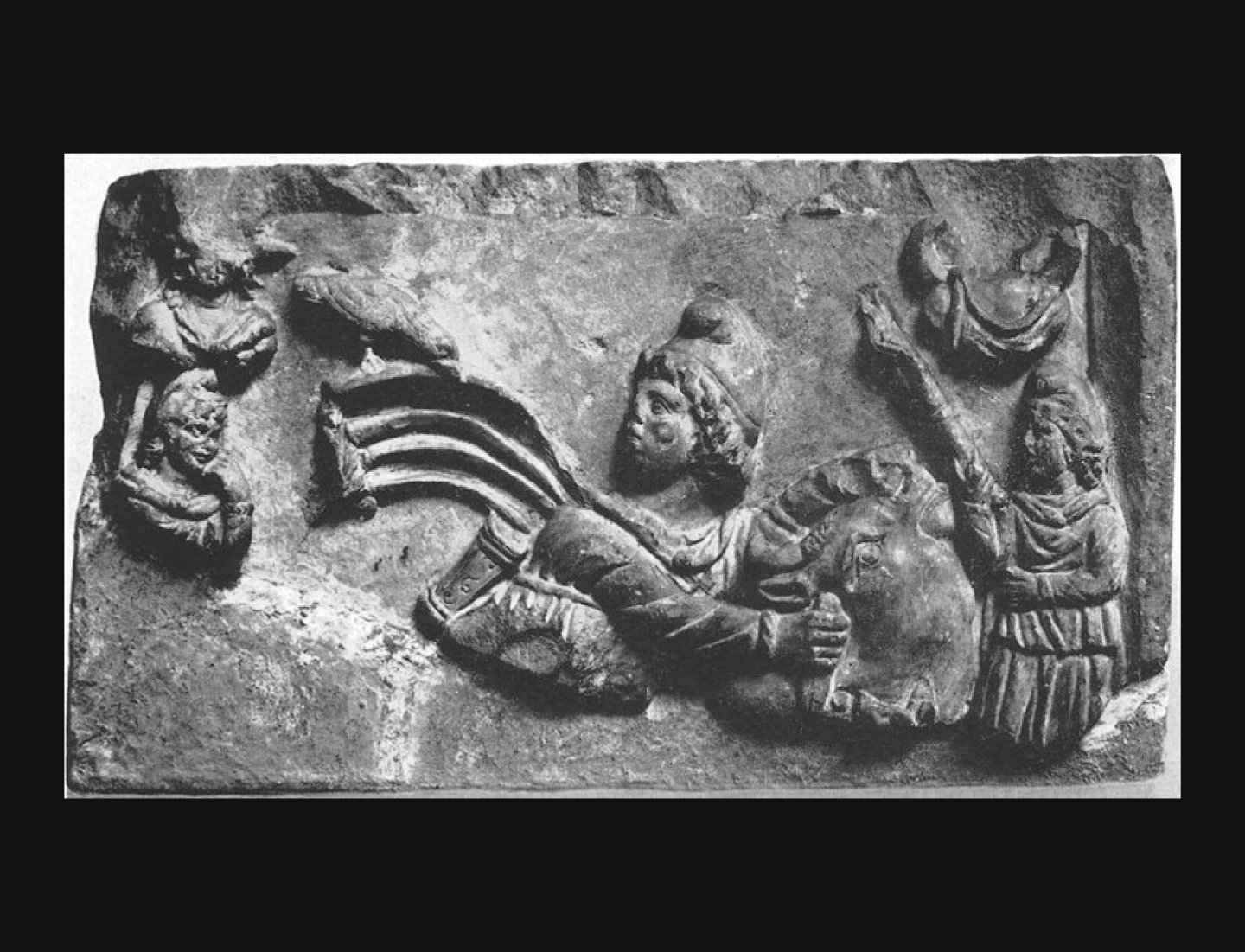
Franz Cumont bought this relief of Mithras as a bullkiller from a dealer who claimed to have found it in a vineyard near the church of Saint Pancrace, in Rome.
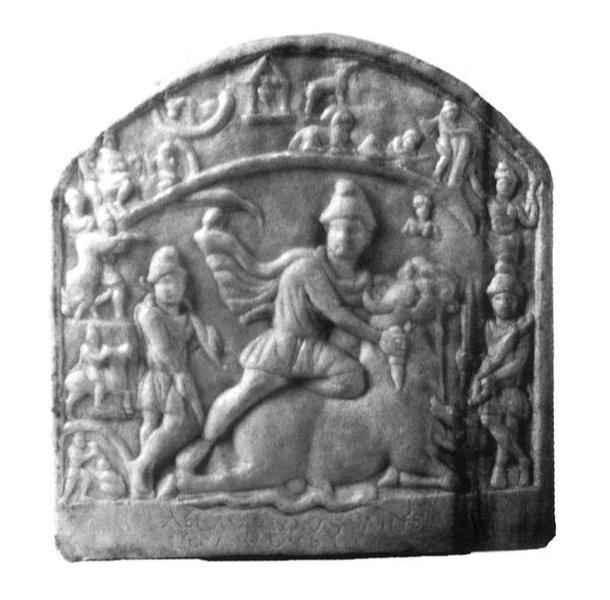
This small relief of Mithras killing the bull was found in 1859 in Turda, in the Cluj region of Romania.
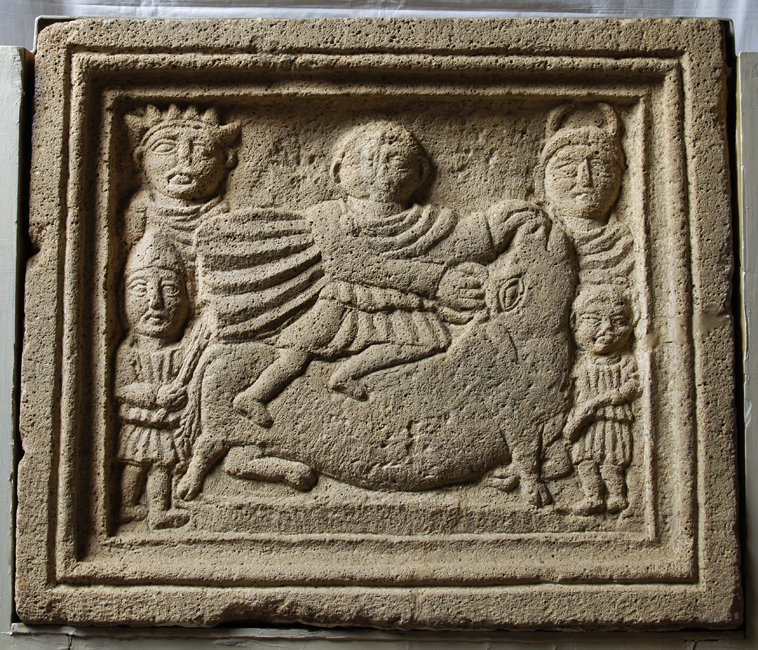
Several elements, such as the snake, scorpion or dog, are missing from this tauroctony relief of Cluj.
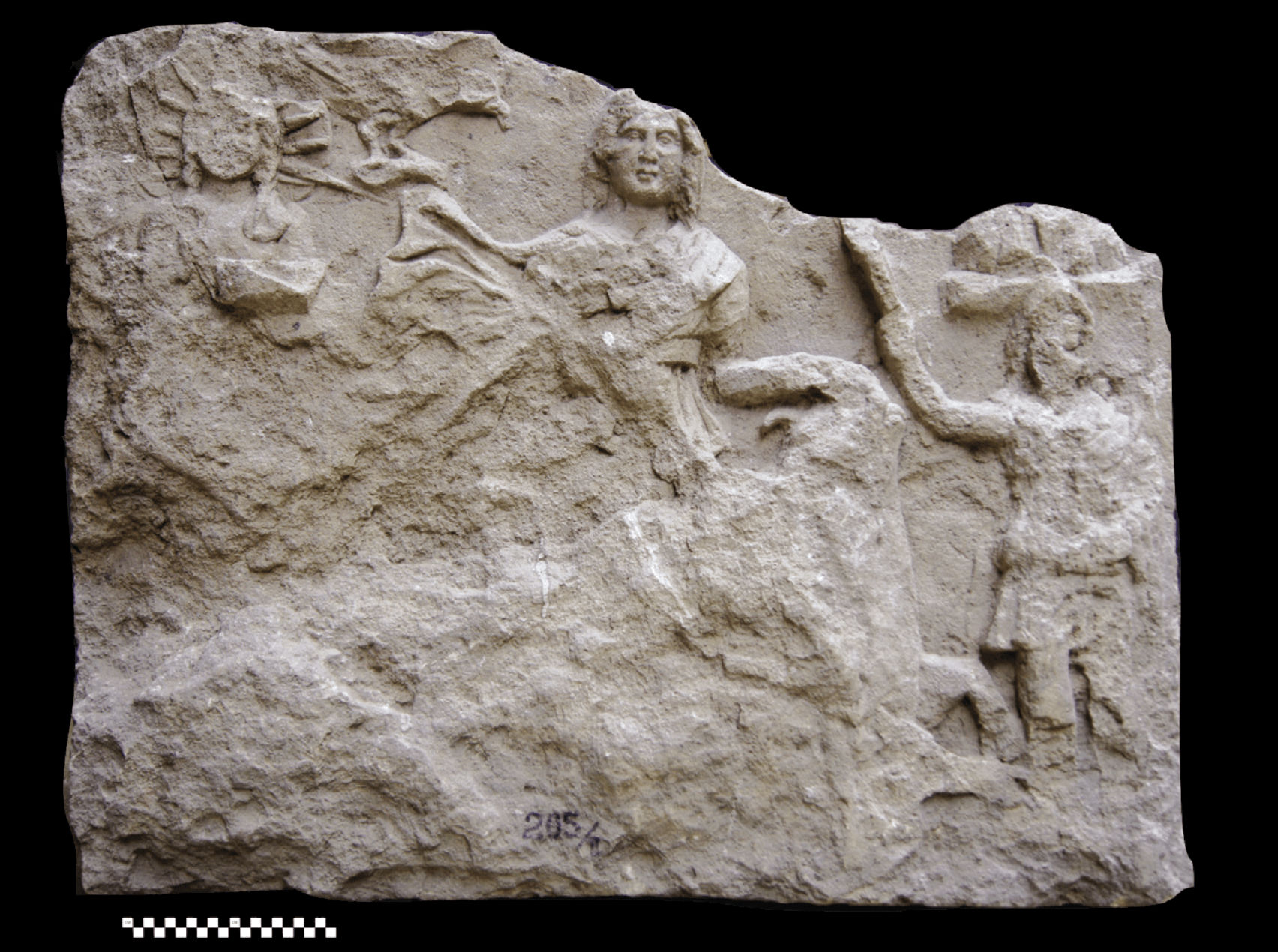
The relief of Mithra slaying the bull from Apulum, Romania, has been missing until the scholar Csaba Szabó identified it in the diposit of the Arad Museum.
