Your search Alba Iulia gave 153 results.

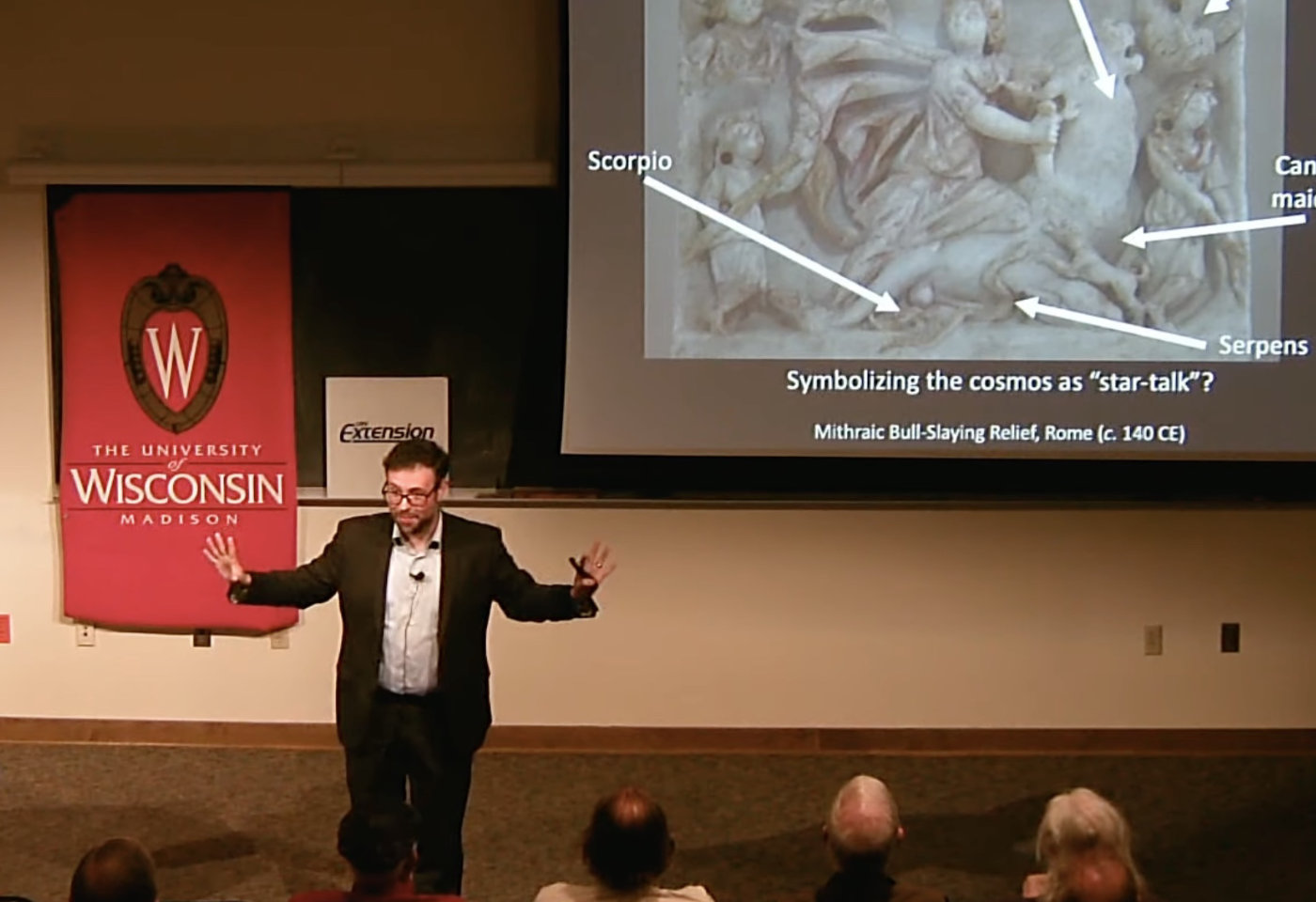
Our modern understanding of Mithraism, though, depends largely on a few short (and very problematic) literary mentions, mostly written by the cult’s Christian rivals.

Slab from near the Cathedral at Alba Julia, Apulum in Dacia, found in 1725, dedicated to Deo invicto Mithrae by a legionary legate.

Small relief found in 1956 at Oarda de Sus near Alba Julia, Dacia, framed by a border; the upper part depicts the dressed bust of Mithras in Phrygian cap, the lower portion the bull-slaying scene.
Lost tauroctony relief from Apulum, Dacia, formerly at the Palace of the Prince at Alba Julia, recorded only in early modern sources.
Inscription from Șard near Apulum, Dacia, dedicated to Soli invicto in Latin and to Helios aniketo in Greek by Abeallathos — a rare bilingual Mithraic dedication.
Inscription from the village of Șard near Apulum, Dacia, dedicated to Soli invicto for the welfare of the Emperor, the Roman people, and the ordo of the Colonia Apuli by Caius Iulius Valens.
Late Roman funerary inscription from Antium commemorating the senator, governor of Numidia and Mithraic pater Alfenius Ceionius Iulianus Kamenius.
Marble altar from Apulum, Dacia, decorated with leaf ornaments at the top and rosettes between leaves on the sides, bearing an inscription.
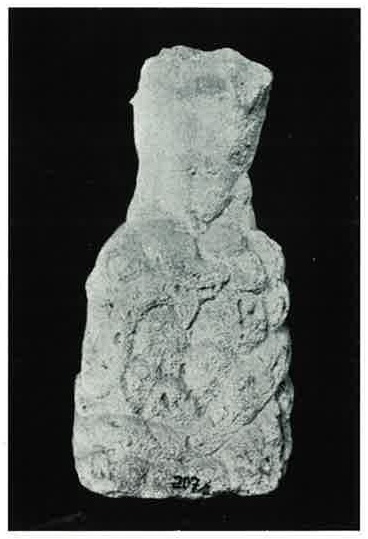
Sandstone rock-birth statue from Apulum, Dacia, depicting the naked Mithras emerging from a rock encircled by a snake; head and arms are lost.
Lost limestone altar from Apulum, Dacia, decorated on the sides with a rose and serpent, on the reverse with a bull's head; the front bears a Mithraic inscription.

Sandstone head in Phrygian cap from Apulum, Dacia; probably belonging to a torchbearer.
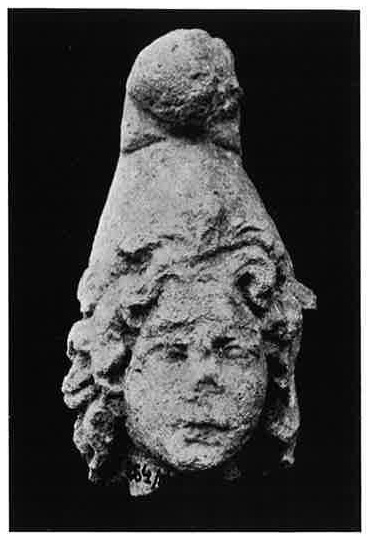
Sandstone head in Phrygian cap from Apulum, Dacia; probably belonging to a torchbearer or Attis.
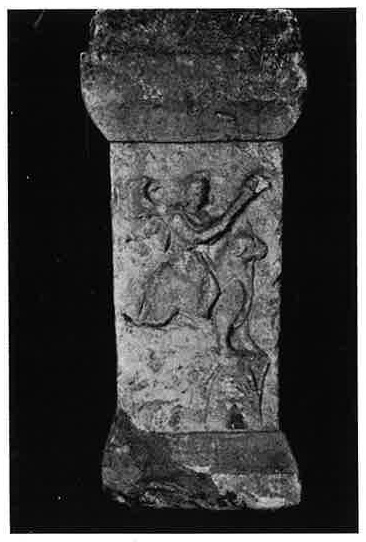
Limestone base from Apulum, Dacia, decorated on the front with Mithras riding the bull to the right while holding an upraised torch — the tauriphoros riding type, distinct from the tauroctony.
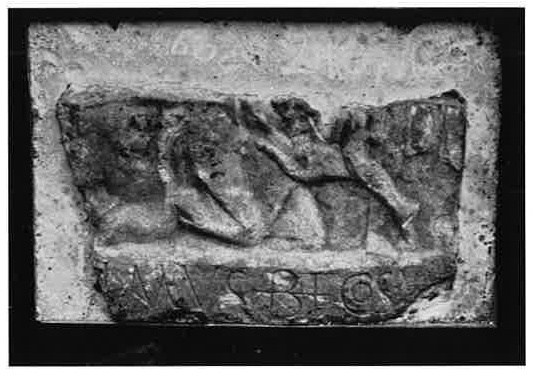
Marble relief fragment from Apulum, Dacia, preserving the forepart of the bull with the serpent and dog, and part of Cautes; the upper portion is lost.
Large marble base from near Kutyamál at Apulum, Dacia, dedicated ex iussu dei Apollinis and naming the Fons Aeternus — the eternal spring — by Ulpius Proculinus, speculator of Legio XIII Gemina.
Limestone base from near the Kutyamál vineyard south of the fortress at Apulum, Dacia, decorated with Bacchic vine scrolls and grapes at the top.
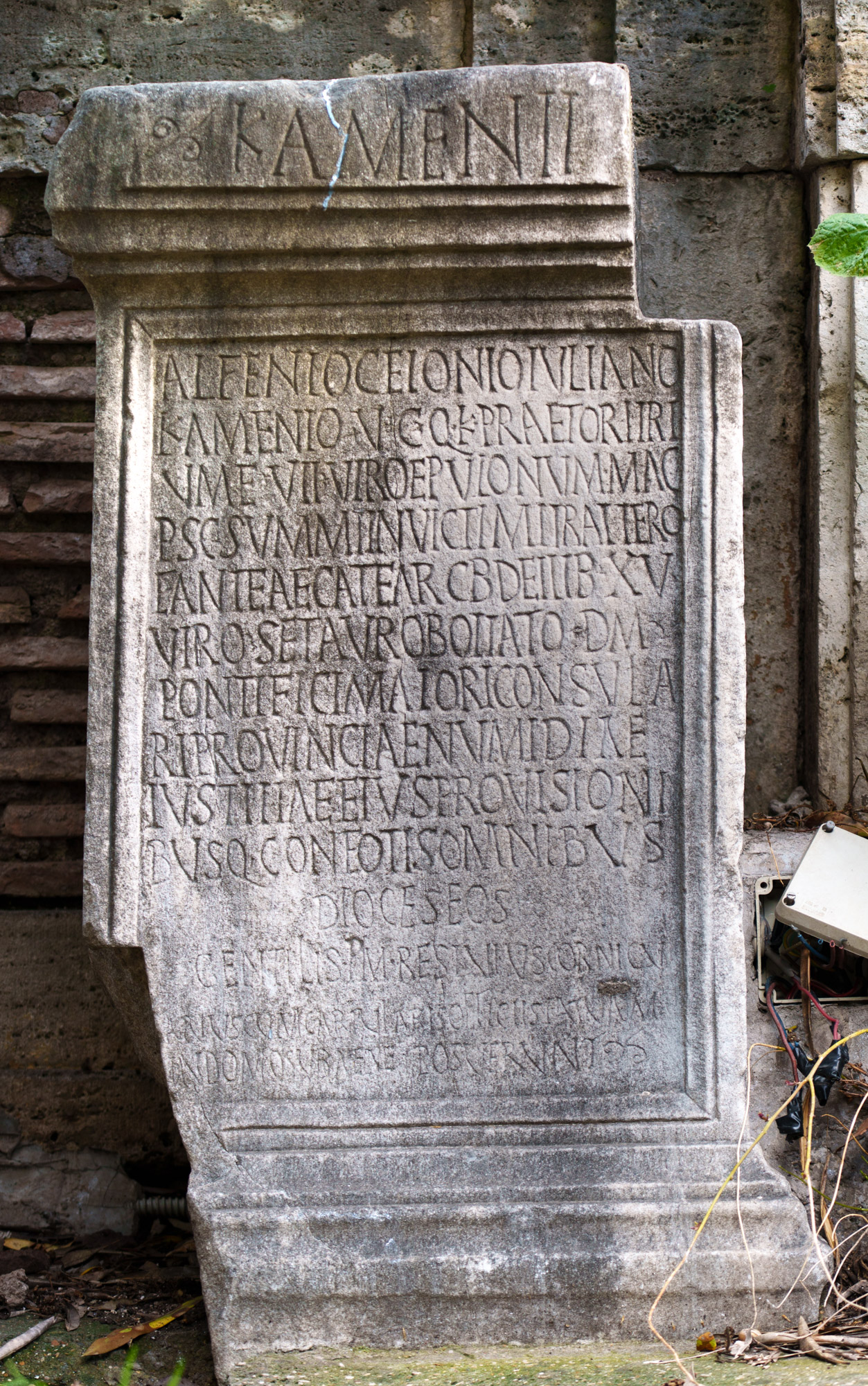
Honorific marble statue base dedicated to the senator and Mithraic pater Alfenius Ceionius Iulianus Kamenius by members of his provincial administration.
Marble altar dedicated at the Vatican Phrygianum in Rome by the Mithraic pater Alfenius Ceionius Iulianus Kamenius in 374 CE.
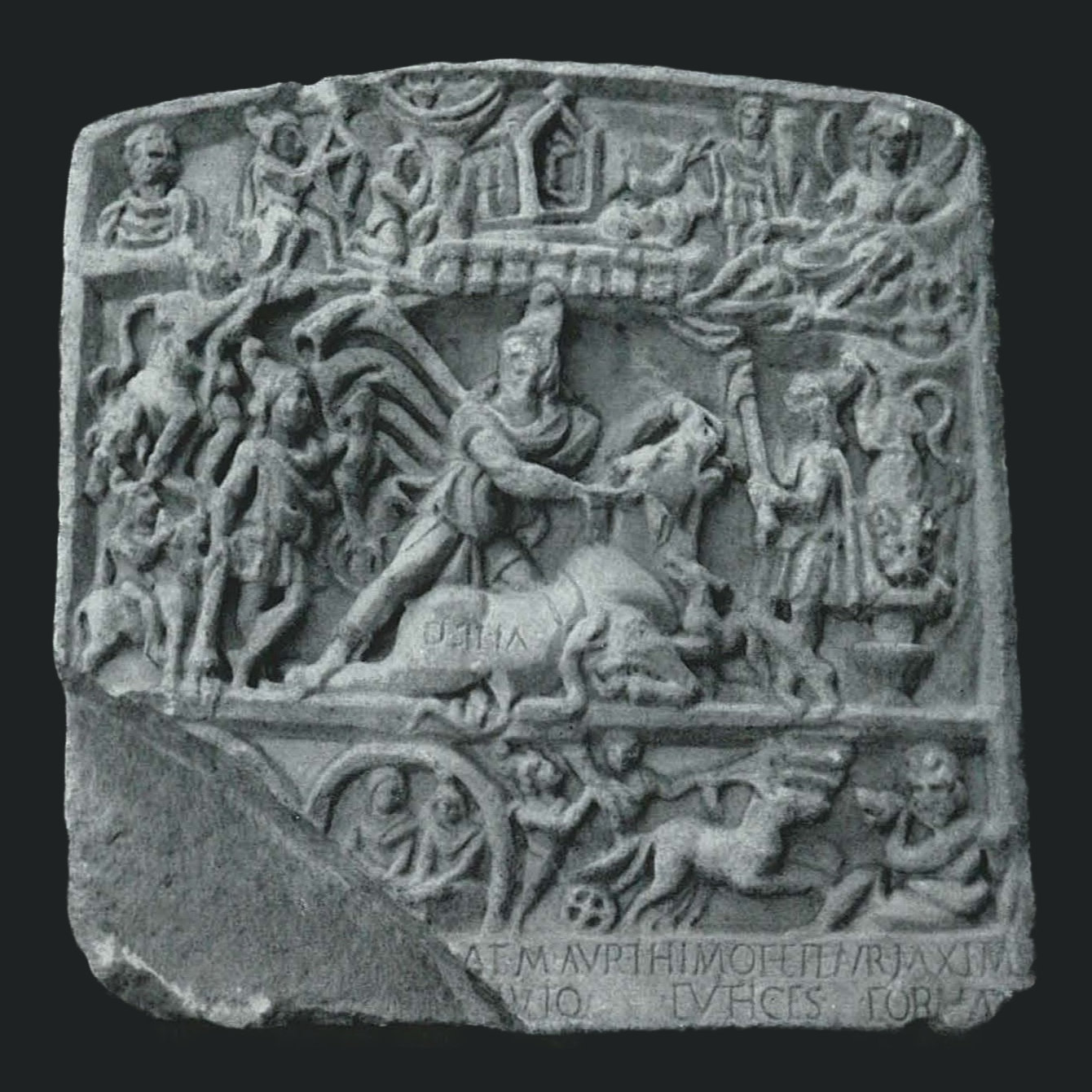
This marble relief of Mithras killing the bull was made by a freedman who dedicated it to his old masters.
