Your search As Salhiyah gave 2391 results.
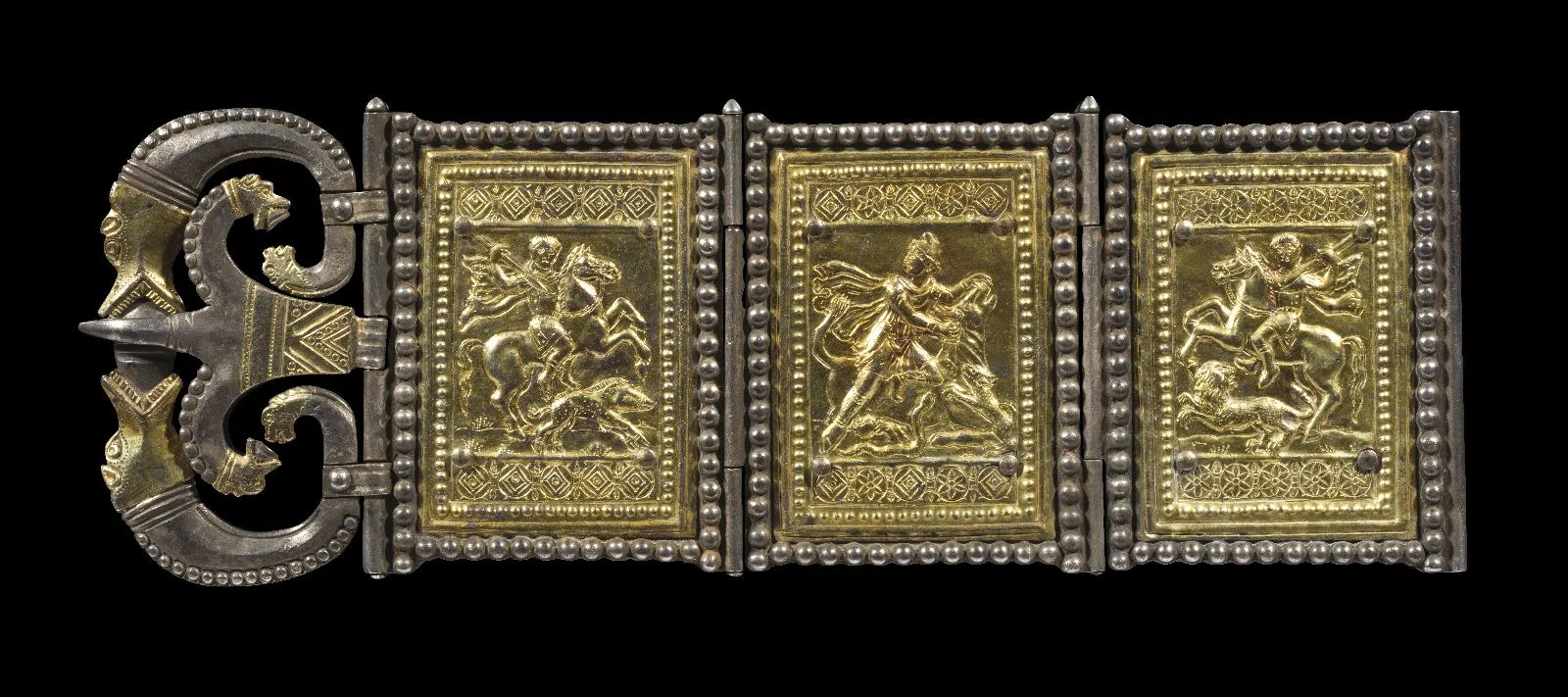
Silver belt fitting with Mithras tauroctony and aristocratic hunting horsemen, fourth century AD.

Fragment of a silvered bronze plate from Mithraeum II at Stockstadt depicting Mithras grasping the bull for the kill
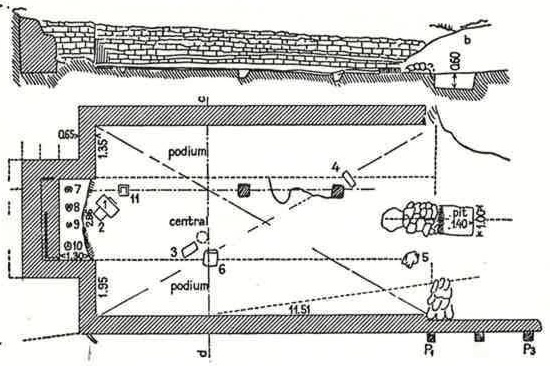
Second Mithraic sanctuary discovered at Stockstadt between 1909 and 1913, situated on a slope near the river Main, with finds at Aschaffenburg

Yellow sandstone altar from Mithraeum I at Stockstadt bearing a bust of Sol in radiate crown holding a whip, with a pierced square hole at the base
Small red sandstone fragment from Mithraeum I at Stockstadt depicting the ritual hand-clasp, iunctio dextrarum
Two grey sandstone fragments of a lion statue on a base from Mithraeum I at Stockstadt, with part of the tail missing
Two white sandstone fragments from Mithraeum I at Stockstadt possibly depicting a rock with part of a serpent, relating to Mithras' birth
White sandstone fragment from Mithraeum I at Stockstadt preserving the naked torso of a male with raised arms, interpreted as Mithras' rock-birth
Lower portion of a red sandstone stele of Cautes from Mithraeum I at Stockstadt, cross-legged, with a dedicatory inscription on the base
Fragment of a sandstone relief from Mithraeum I at Stockstadt depicting a beardless figure in a velum, identified as a wind or winter deity
Large red sandstone tauroctony relief from Mithraeum I at Stockstadt, mostly thrown into the river Main when the sanctuary was destroyed
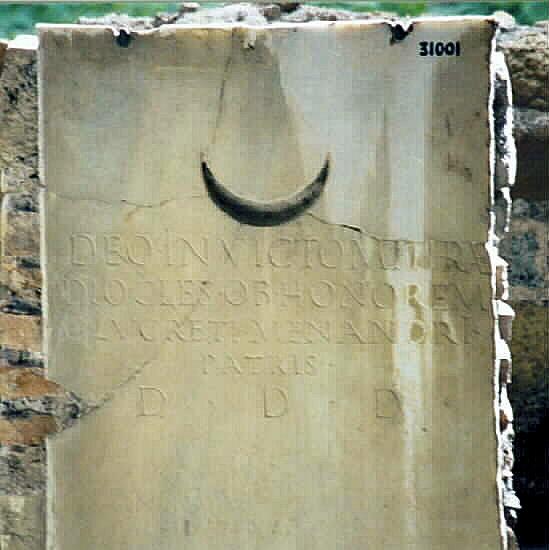
The brick altar of the Mithraeum Menander was covered with marble slabs bearing a crescent and an inscription.
Late Roman funerary inscription from Antium commemorating the senator, governor of Numidia and Mithraic pater Alfenius Ceionius Iulianus Kamenius.
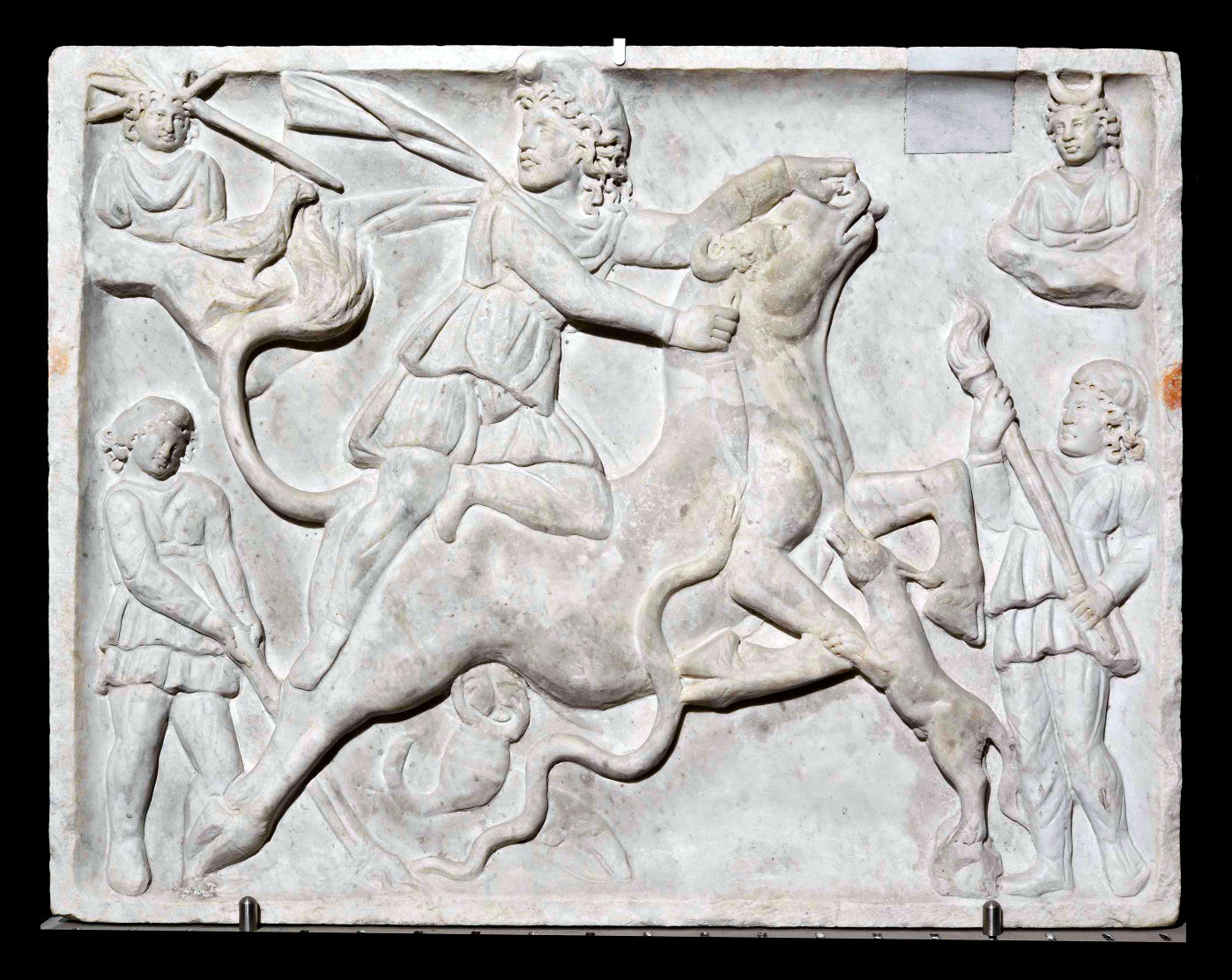
It is not certain that the marble relief of Mithras killing the bull was found on Capri, in the cave of Matromania, where a Mithraeum could have been established.
Gold lamina from Ciciliano showing a nude, serpent-entwined Aion-Kronos holding a key and surrounded by Greek voces magicae (2nd c. CE).

Ciciliano is a comune in the Metropolitan City of Rome in the Italian region of Latium, located about 35 kilometres east of Rome.
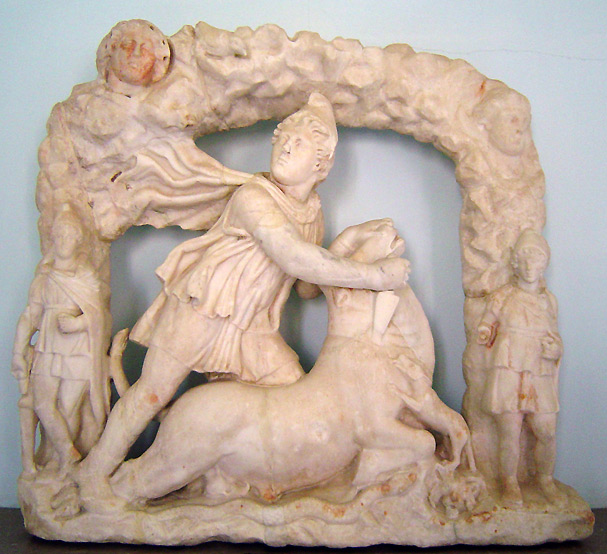
The assumed find-place of the Mithras Tauroctonus of Palermo is uncertain.
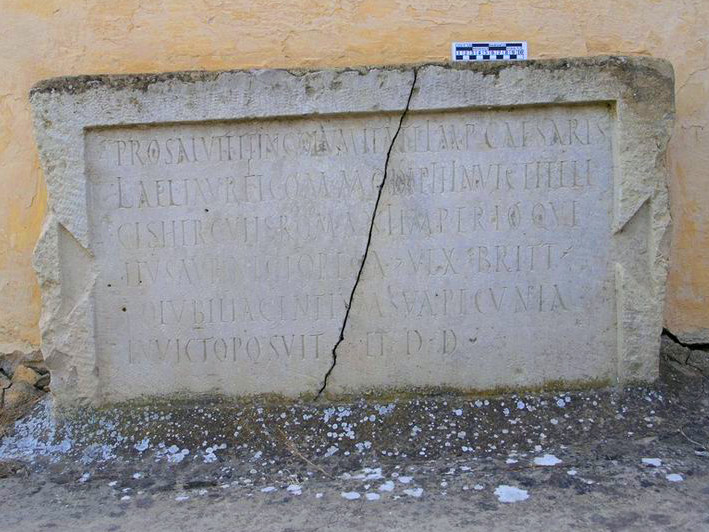
One of the two inscriptions by Aurelius Nectoreca, a follower of Mithras, found in Meknès, Morocco.
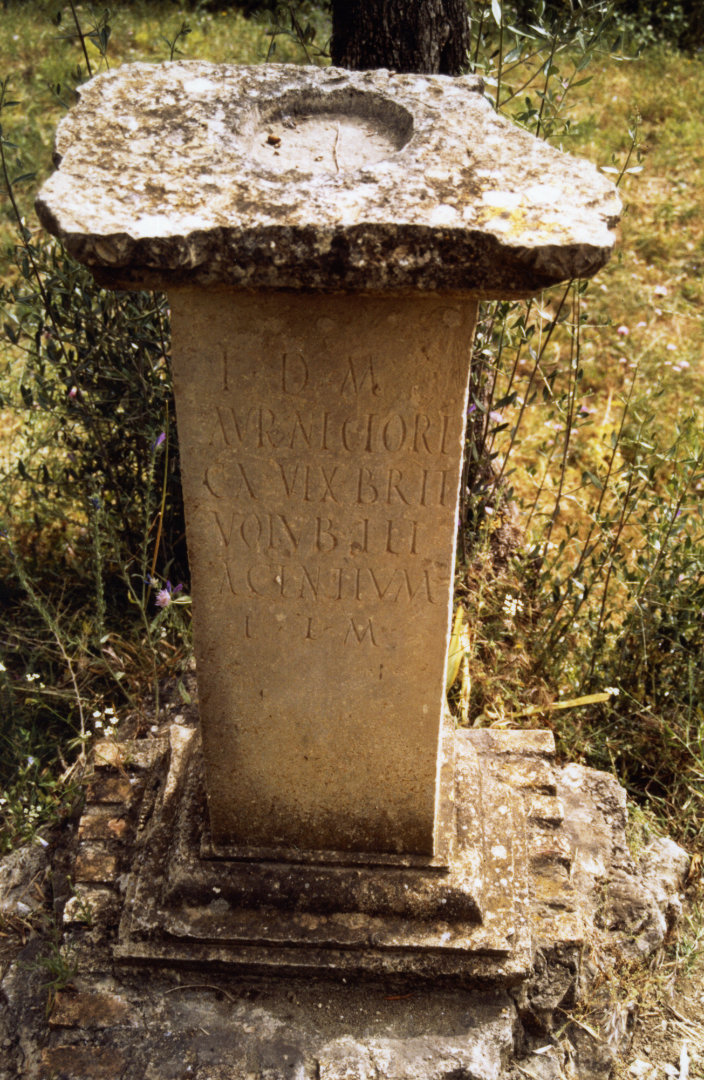
Two inscriptions by Aurelius Nectoreca, a follower of Mithras, have been found in Meknès, Morocco.
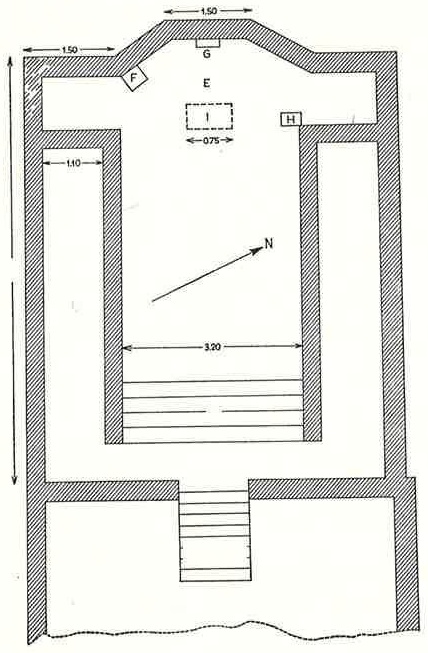
Mithraic sanctuary found at Biljanovac north-east of Kumanovo, Moesia Superior, with a pronaos and inner sanctuary, yielding marble reliefs, an altar, and associated cult objects.
