Your search Athens gave 20 results.
Athenae remained one of the foremost intellectual and cultural centres of the eastern Mediterranean under Roman rule.

Two embroidered pieces from an Egyptian grave, dated to the early centuries AD, now in the Benaki Museum in Athens, depicting a Mithraic procession with figures on horseback and attendants.
Marble bust from the south-east slope of the Acropolis at Athens, from the Attic mountain Pentelikon, depicting a man with an uncovered breast and mantle; probably Mithras, though the head is lost.
Greek inscription from Athens, recording that Acrisius dedicated a gift to Mithras in honour of Chrysippos.
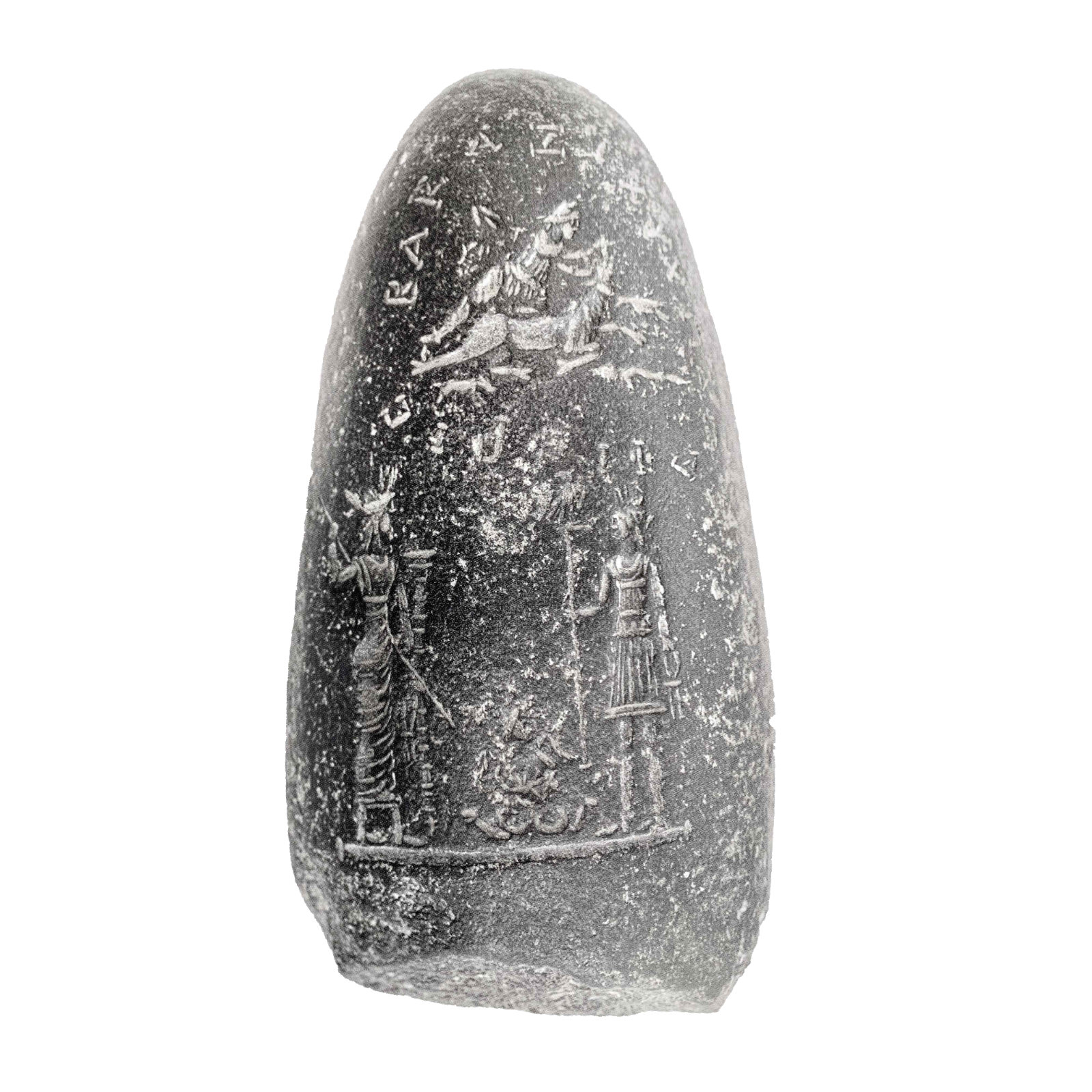
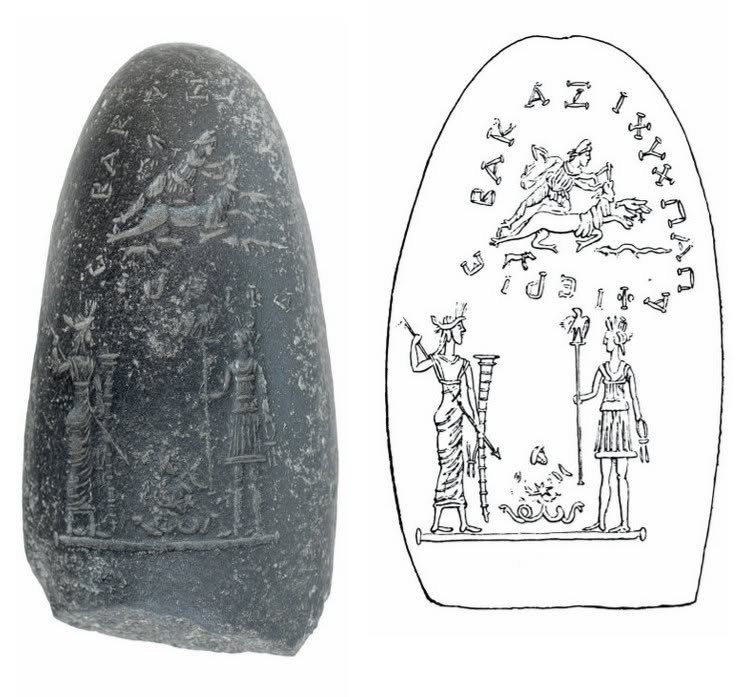
Black polished cone-shaped prehistoric axe from Argolis, now in the Athens National Museum, interpreted by some scholars as having Mithraic votive associations.
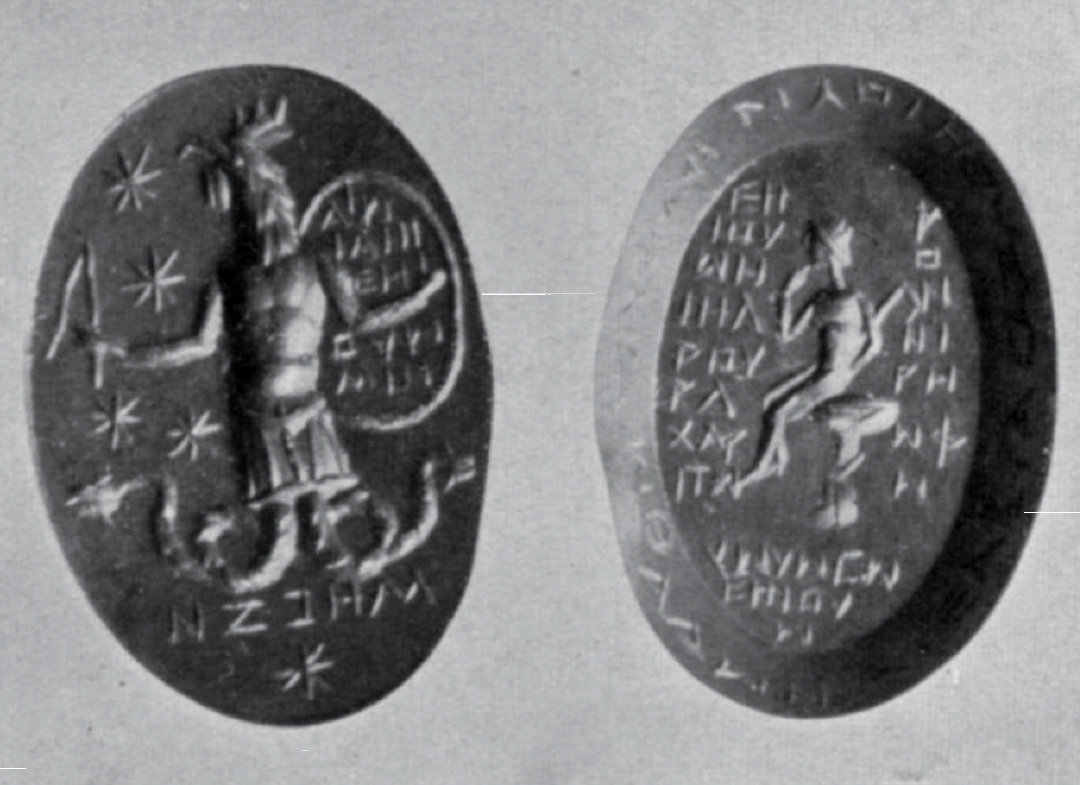
Gnostic amulet found in the ancient Agora of Athens, depicting Abraxas on one side and a Mithraic inscription on the other.
Small altar found in the foundations of a school building in the Piraeus, near Athens, dedicated to Helios Mithras.
According to Christopher A. Faraone, the axe-head from Argos belong to a category of thunderstones reused as amulets.
Patras is Greece's third-largest city and the regional capital and largest city of Western Greece, in the northern Peloponnese, 215 km west of Athens.
Elefsina or Eleusis is a suburban city and municipality in Athens metropolitan area.
North African author, Platonic philosopher and rhetorician associated with the Mithraic milieu of Ostia.
Lenni George on Hekate’s development across ancient traditions, from mystery cults to magical practice and philosophical thought.
At Rome’s twilight, amid political upheaval and Christian ascendancy, Vettius Agorius Praetextatus embodied pagan intellect, virtue, and authority across senatorial, military, and mystical spheres.
By reading Orphic theology together with Eleusinian ritual practice, the mysteries emerge as a structured mystagogy of transformation: a disciplined passage from forgetfulness (Lethe) to knowledge (aletheia), from mortality to participation in the divine.
This collective volume explores the ways ancient peoples interacted with divine powers through prayer, magic, and the interpretation of the stars. Drawing on evidence from Mesopotamia to Late Antiquity, it situates these practices within broader religious and cosmological systems…
Callimorphus dedicated this image of the sun god to the invincible sun ’Mythra’.
Laurent Bricault has revolutionised Mithraic studies with the exhibition The Mystery of Mithras. Meet this professor in Toulouse for a fascinating look at the latest discoveries and what lies ahead.
It is well known that Mithras was born from a rock. However, less has been written about the father of the solar god, and especially about how he conceived him.
Peter Mark Adams: ‘The initiation was a frightening experience that caused some people to panic as a flood of otherworldly entities swept through the ritual space.’.