Your search Boulogne-sur-Mer gave 706 results.
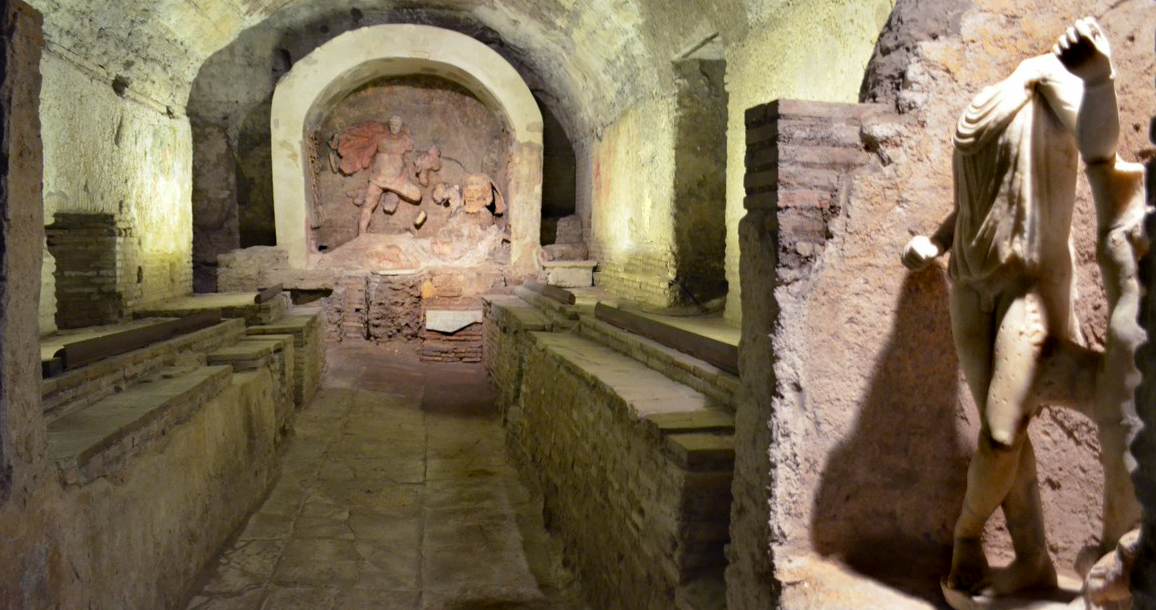
The Mithraeum of Santa Prisca houses remarkable frescoes showing the initiates in procession.

This remarkable Greek marble relief of Mithras killing the bull was discovered in 1705 and remained in private collections until it was bought by the Louvre.

Large marble slab found in 1648 near S. Silvestro in Capite, inscribed with a Latin dedicatory poem forming a cypher-acrostic for TAMESIUS and AUGENTIUS, with records of leontica and chrysos initiations, dated to 362 A.D.
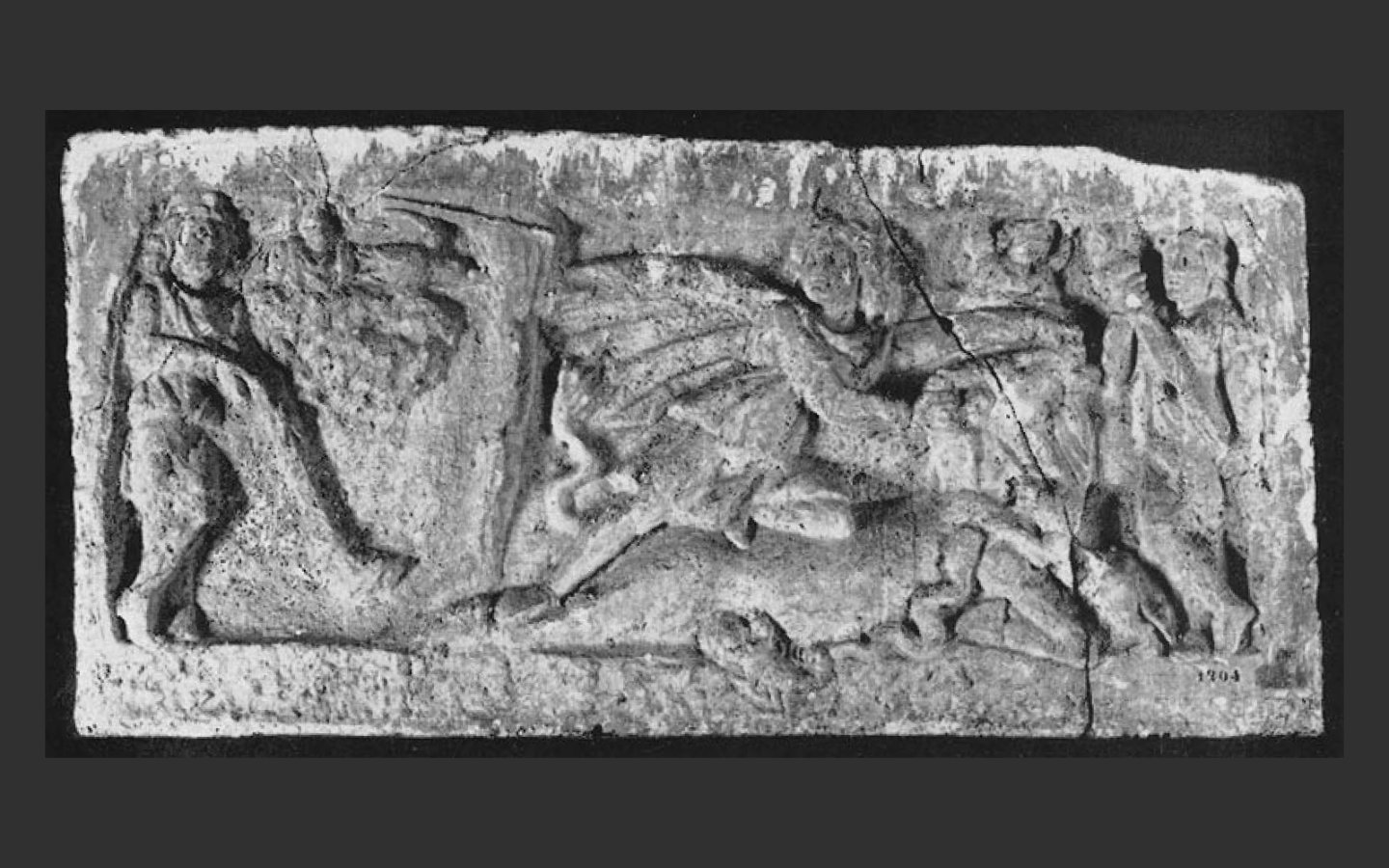
This relief of Mithras Tauroctonos from Rome bears the inscription of three brothers, two of them lions.
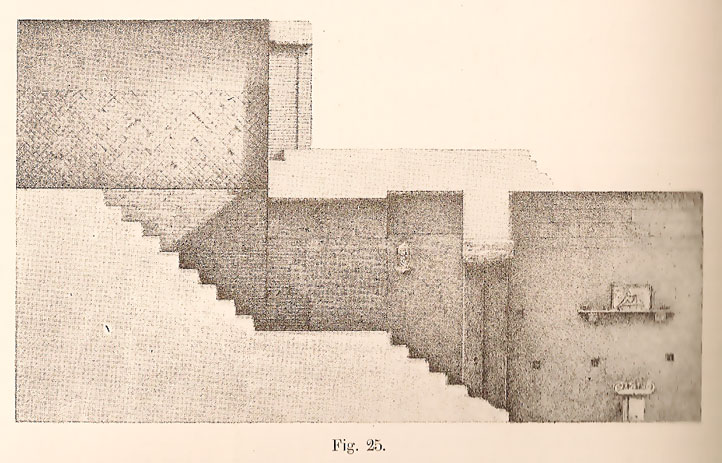
In a house from the time of Constantine, a Lararium was found with a statue of Isis-Fortuna. The Mithraeum was a door next to it, on a lower room.
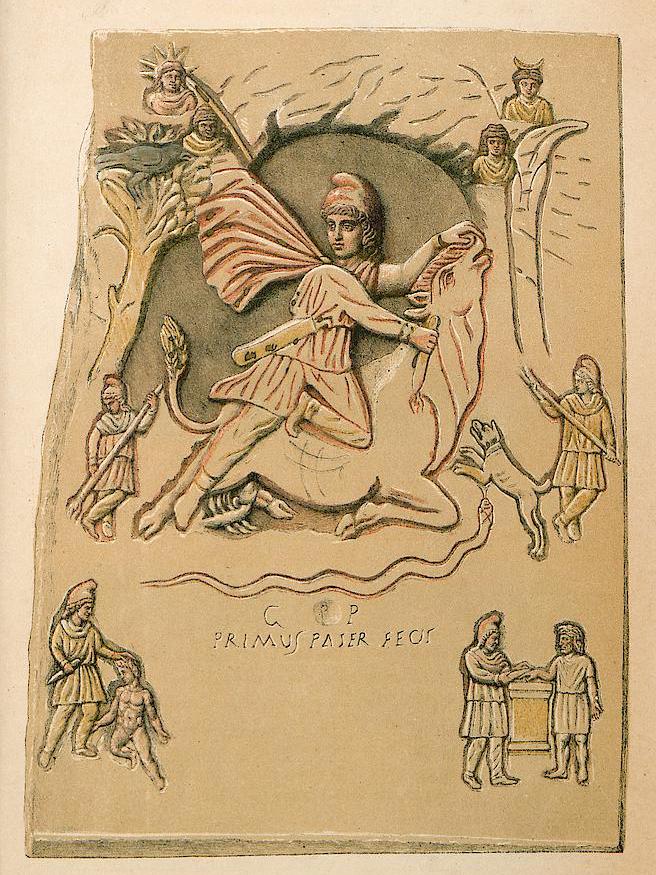
The relief of Mithras slaying the bull found on the Esquiline Hill includes two additional scenes with Mithras and two other figures.
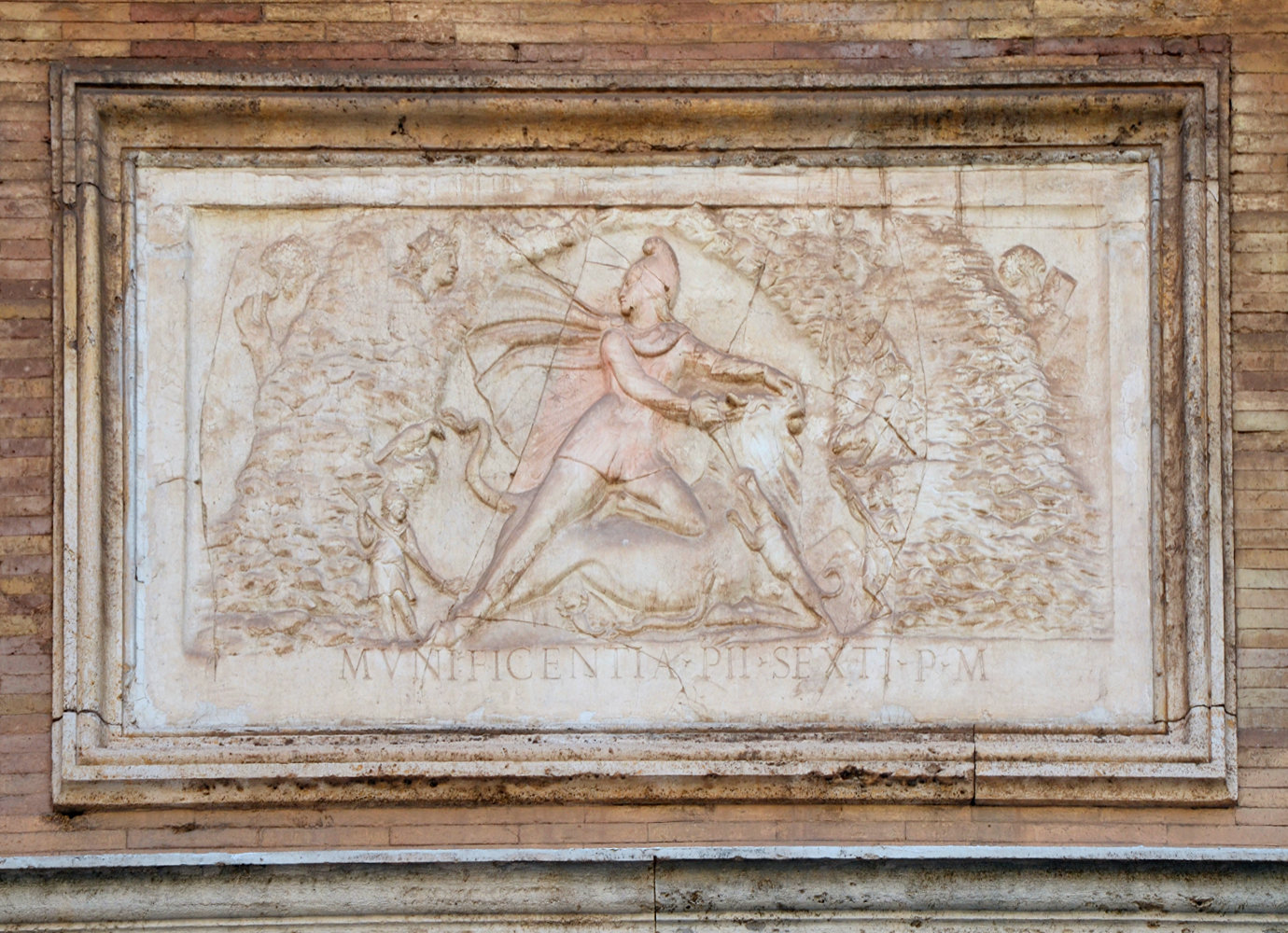
The Tauroctony relief of Mithras killing the bull walled in the Cortile of the Belvedered, Vatican City, was found by Fagan near Ostia.
One of the rooms in a sustantive masonry building in Hollytrees Meadow was considered to be a Mithreum, a theory that has now been discarded.
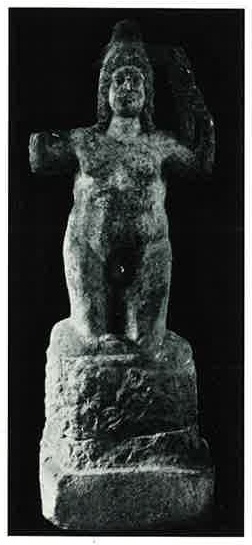
This white marble statue of the rock-birth from Cibinium in Roman Dacia is one of the largest known Mithraic sculptures from the Danubian provinces.
Two embroidered pieces from an Egyptian grave, dated to the early centuries AD, now in the Benaki Museum in Athens, depicting a Mithraic procession with figures on horseback and attendants.
Third-century sepulchral inscription from near Philippi, Macedonia, studied for its Mithraic content in the upper lines of the text.
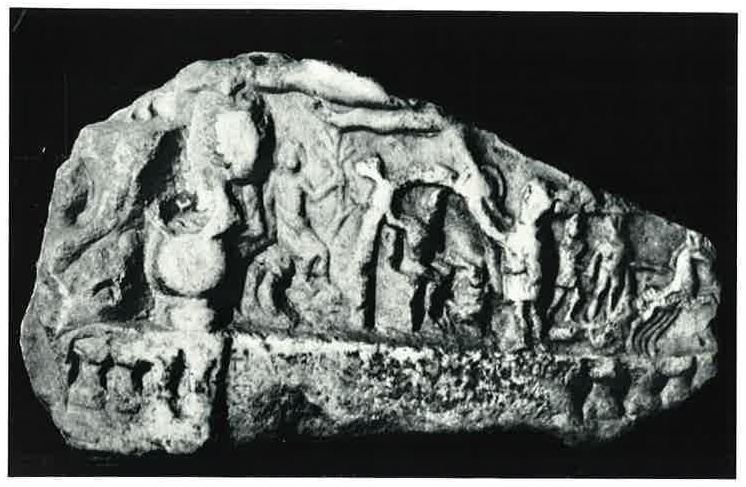
Lower part of a marble tauroctony relief from Sinitovo, Thracia, found walled into a well, depicting the lower portion of the bull-slaying scene; the Greek inscription in the lower border records a thanksgiving to Helios Mithras invictos.
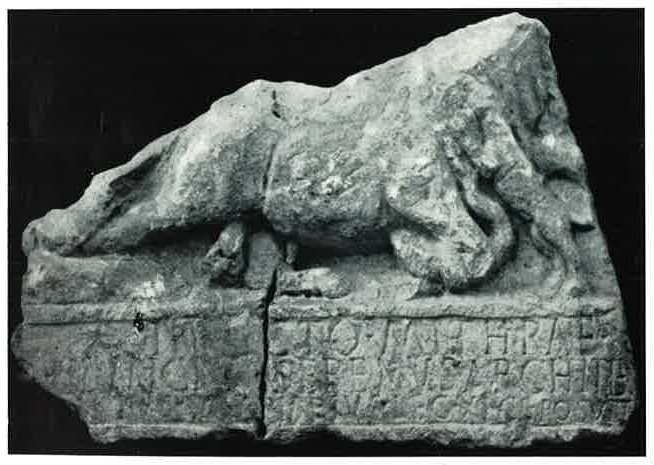
Sandstone tauroctony relief from Balcic, ancient Dionysopolis in Moesia Inferior, depicting the standard bull-slaying scene; the attribution to Dionysopolis rather than another site is disputed.
White marble trapezium-shaped tauroctony relief probably from Constanța, ancient Tomis in Moesia Inferior, divided into three horizontal registers with the central tauroctony and subsidiary scenes.
Marble stele from Histria, Moesia Inferior, found reused in a late wall in the southern quarter of the city, bearing a Mithraic dedication or scene.
Limestone tauroctony relief fragment from Mintia-Vețel, ancient Micia in Dacia, now lost, preserving the left corner with Cautopates with torch downward and a partially legible inscription below.

Small relief found in 1956 at Oarda de Sus near Alba Julia, Dacia, framed by a border; the upper part depicts the dressed bust of Mithras in Phrygian cap, the lower portion the bull-slaying scene.
Altar from Pécs, ancient Sopianae in Pannonia Inferior, found during church restoration in 1890, dedicated to Soli invicto pro salute.
Fragment of a Mithras relief from Zsámbék near Aquincum, Pannonia Inferior, showing seven altars alternated with trees — a processional or decorative border rather than a main tauroctony scene.
Right portion of a sandstone altar from Topusko, Pannonia Superior, formerly used as a step in a bathing establishment, dedicated to Invicto Mithrae by Maximus with his companions.
