Your search Boulogne-sur-mer gave 591 results.
In his first book, Fahim Ennouhi sheds light on the cult of Mithras in Roman Africa. A marginal and elitist phenomenon, confined to restricted circles and largely absent from local religious dynamics, yet revealing.
In the second half of the 4th century, a Mithraic temple was established within an earlier spring sanctuary at Septeuil, where the cult of the nymphs and Mithraic practices appear to have coexisted.
An inscription mentioning a speleum decorated by Publilius Ceionius suggests the location of a mithraeum in Cirta, the capital of Numidia.
Acclaimed esoteric scholar @peter.mark.adams talks about his latest book, ‘Ritual and Epiphany in the Mysteries of Mithras’, interviewed by professor, writer and host of The New Mithraeum podcast @andreu.abuin.
The Mithraeum of Serdica was found in the fortified area of the ancient city of Serdica, now Sofia, Bulgaria.
Archaeologists at Doliche are now excavating houses around the vast Mithras temple to learn how people lived beside the sanctuary.
In Plutarch’s Life of Alexander, the grieving Darius binds the eunuch Tireus by the light of Mithras to reveal the truth about his captive wife Statira, a solemn appeal that leads to unexpected praise for Alexander’s honor and restraint.
Passage from Plutarch’s Life of Pompey, recounting the rise, power, and insolence of the Cilician pirates before Pompey’s campaign to suppress them.
In the 1900s a model Mithraeum was built in Saalburg in the mistaken belief that there was an original temple of Mithras in an ancient Roman building.

Restoring the Mysteries: A Conversation with Peter Mark Adams on his new book ‘Ritual & Epiphany in the Mysteries of Mithras’.
Of Isis and Osiris or Of the Ancient Religion and Philosophy of Egypt, Plutarch, The Moralia.
Deux extraits rapportés par Eznik de Goghp, Ve siècle, sur la création du Soleil selon les mythologies des mages.
Dion Chrysostom, c. 100 A.D., a philosophical writer under the emperors Nerva and Trajan, composed a series of discourses or essays (λόγοι) on various subjects, in one of which he reports concerning the doctrines and practices of the magi.
Commentaries by Pseudo-Nonnus, also known as Nonnus the Abbot, on Gregory Nazianzen’s In Julianum Imperatorem Invectivae Duae and In Sancta Lumina.
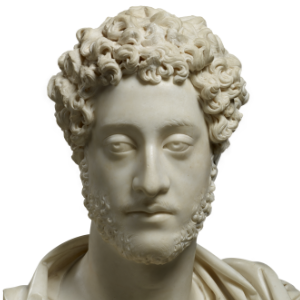
Two excerpts from the ’Life of Commodus’ in Lampridius’ Historia Augusta, dating from the 4th century CE.

Hermadio's inscriptions have been found in Dacian Tibiscum and Sarmizegetusa, as well as in Rome.