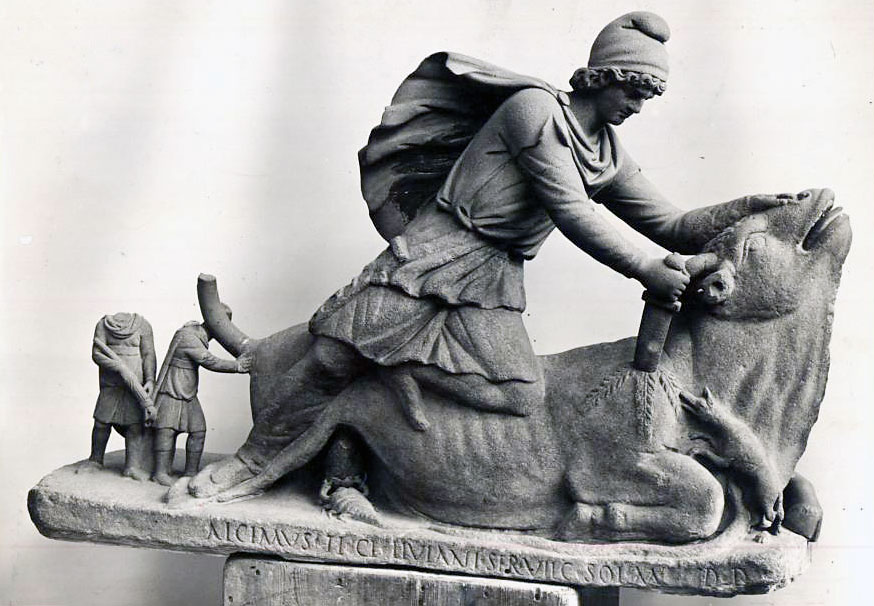
Your search Bu Njem gave 1882 results.

Architectural elements including marble plaques, mouldings, entablature sections, and acanthus friezes, found in a building about 30–40 metres south-west of the Mithraeum at Les Bolards (ancient Venetonimagus) in Lugdunensis, suggesting the possible existence of a second sanctuary…
Two small heads in Phrygian caps, possibly belonging to a tauroctony of Mithras, together with a fragment of a bull's foot and the mouth and neck of the dog, found at the Mithraeum of Les Bolards (ancient Venetonimagus) in Lugdunensis.
A limestone statue from the Mithraeum at Borcovicium (modern Housesteads), representing a standing male figure in short tunic with bare legs and feet, arms held tight along the body with clenched fists once holding attributes now lost, with part of a snake on his right arm…
A large limestone tauroctony relief in several fragments from the Mithraeum at Borcovicium (modern Housesteads), the vaulted main fragment showing Mithras slaying the bull with Cautes raising his torch beside the bull's foreleg, a crescent of Luna in the upper corner…
A white marble statue from the Mithraeum at Walbrook in London, depicting Bonus Eventus standing in a long hanging cloak, leaning on a ship's stem, holding a cornucopia against his shoulder and a patera above a burning altar from the back of which a…
A brief inscription reading D(eo) M(ithrae), found inside a fullonica at Pola (modern Pula) in a room that had once served as a vestibule.
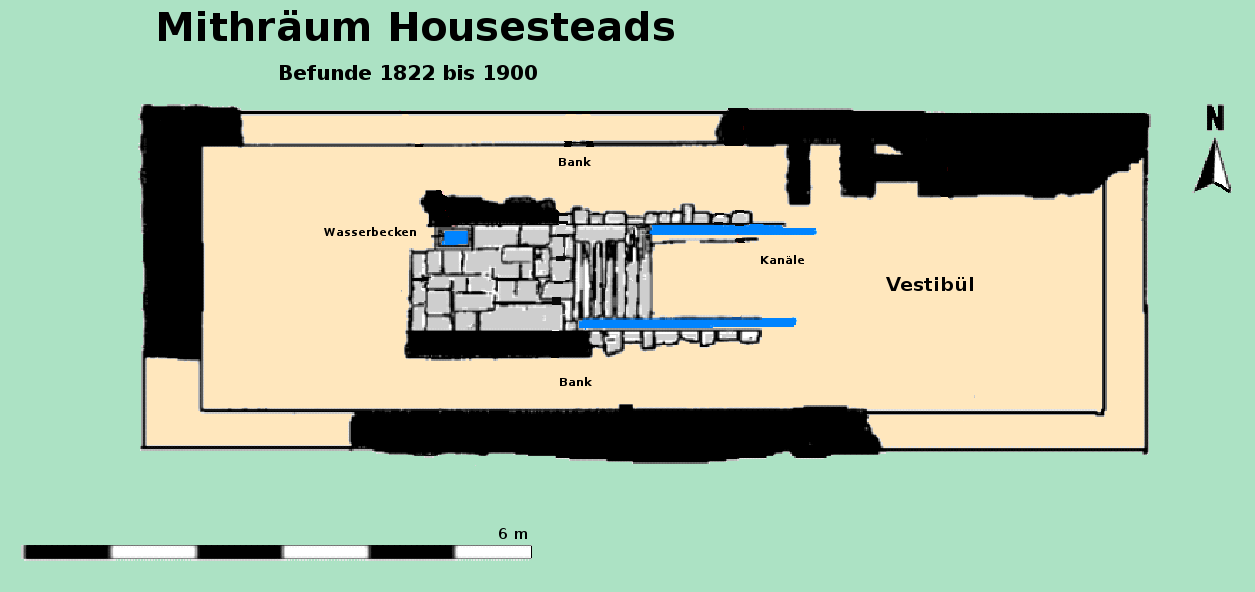
The Housesteads Mithraeum is an underground temple, now burried, discovered in 1822 in a slope of the Chapel Hill, outside of the Roman Fort at the Hadrian's Wall.
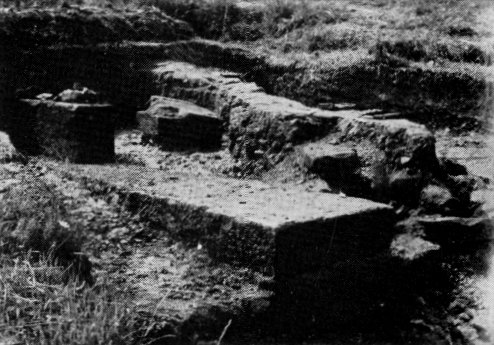
The Mackwiller Mithraeum was built in the middle of the 2nd century, during the reign of Antoninus the Pious, on the site of a spring already worshipped by the natives.
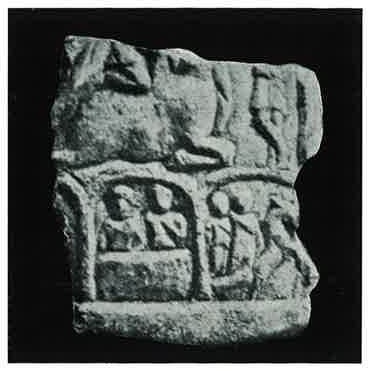
Right lower corner of a marble tauroctony relief from Oltenia, Dacia, preserving the lower portion of Mithras killing the bull.
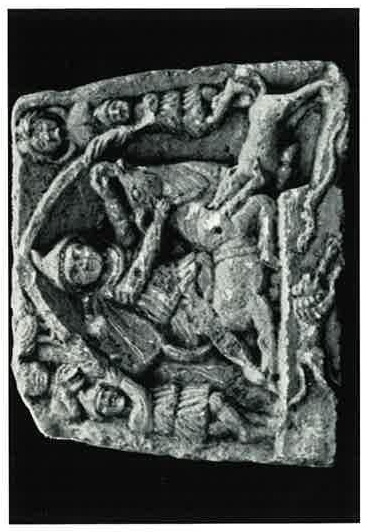
Limestone tauroctony relief from Oltenia, Dacia, of unknown exact provenance, depicting the standard bull-slaying with the full iconographic programme.
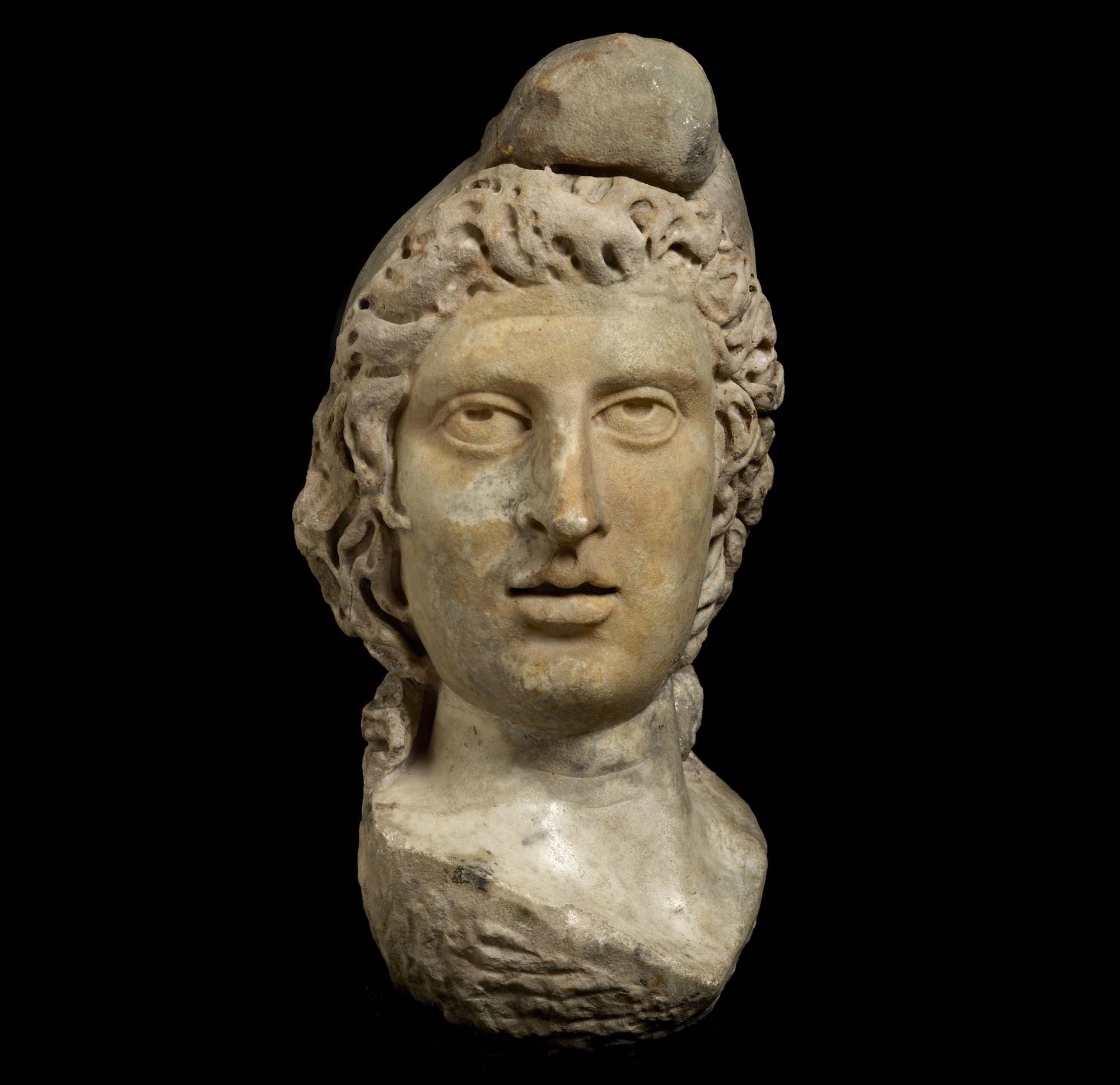
The Mithras's head of Walbrook probable belonged to a life-size scene of the god scarifying the bull.
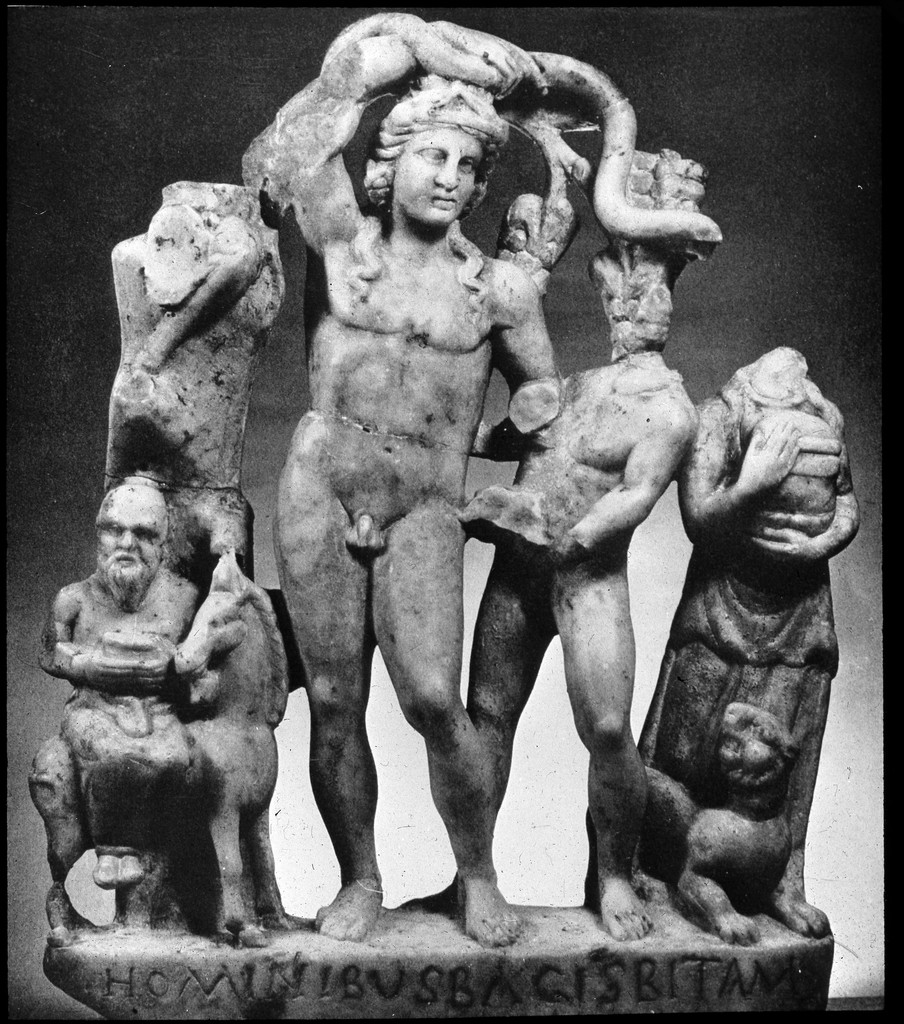
Marble group of Dionysus accompanied by a Silenus on a donkey, a satyr and a menead.
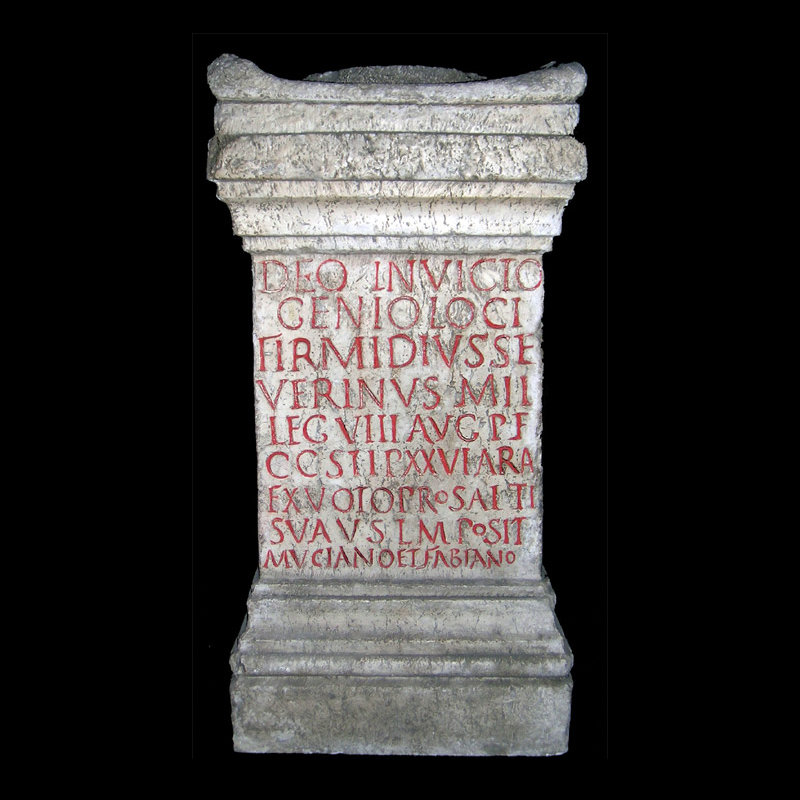
This limestone altar bears an inscription from its donor, Firmidius Severinus, in honour of Mithras after 26 years of service in the Legio VIII Augusta.
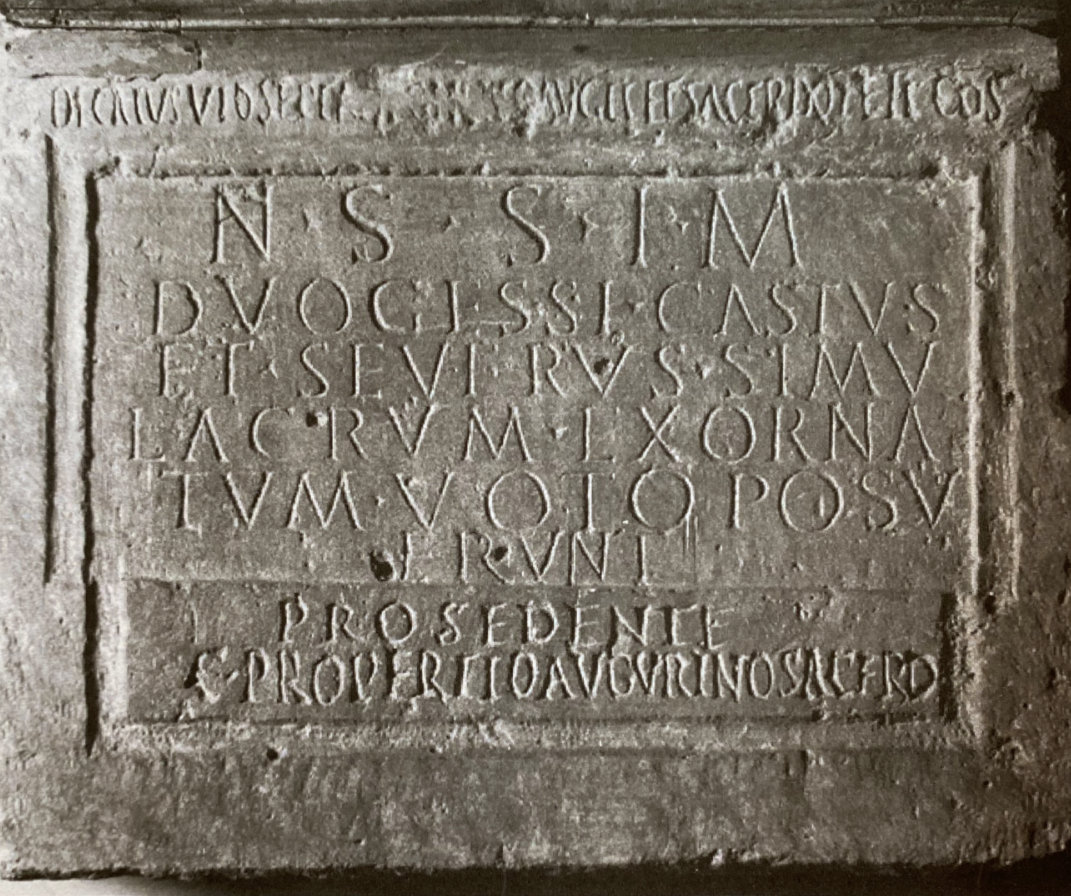
Gessius Castus and Gessius Severus have placed a decorated stutue and left testimony on this inscription below.
A badly damaged tauroctony relief carved in peperino, fixed high into a wall of the old farm known as Le Capanacce on the Via Cassia near Vicus Matrini in Etruria, showing Mithras as a bullkiller in a vaulted cave with serpent, the head and left arm of the god lost…
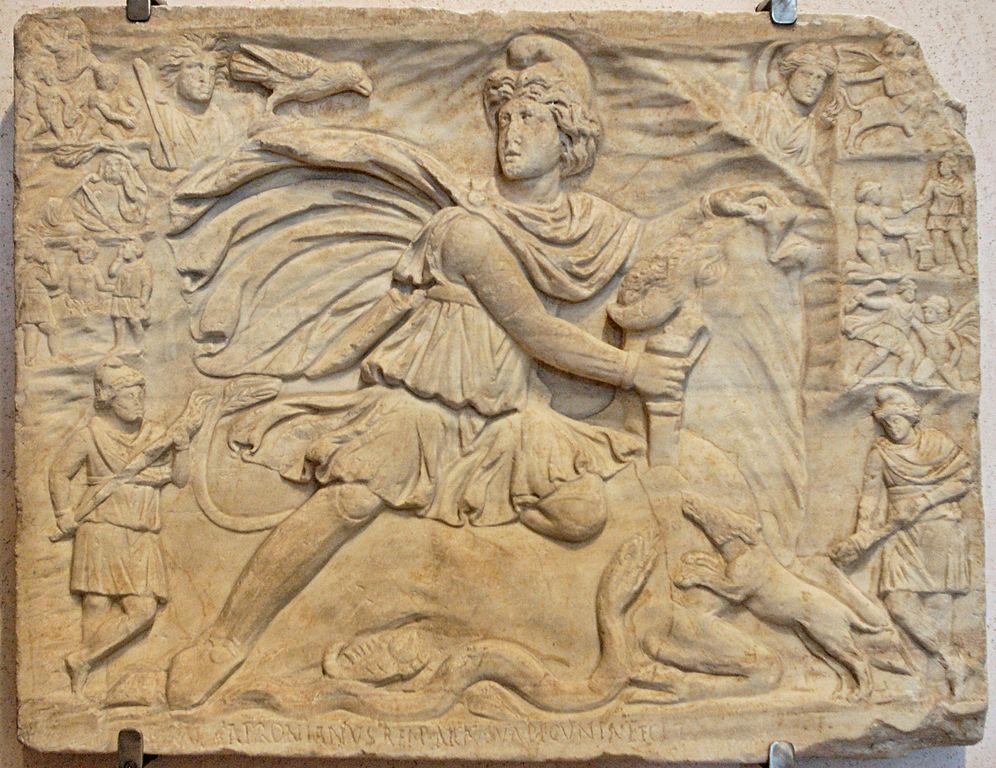
The relief of Mithras slaying the bull of Nersae includes several episodes from the exploits of the solar god.
A subterranean room with a stucco depiction of Mithras slaying the bull, probably from the fourth century, discovered at Agurzano near Ponte Mammolo on the Via Tiburtina outside Rome.
A tauroctony statue once in the Collection Santa Croce near the Piazza Giudea in Rome, showing Mithras as bullkiller with a broad belt around the bull's body, the arms of the god and the bull's horns broken off.
A tauroctony relief from Rome, formerly in the Hoffmann Collection, showing Mithras slaying the bull with dog, serpent and scorpion, with the god's pupils fashioned from white enamel and the whole piece heavily restored.