Your search Bu Njem gave 1882 results.

Small bronze statuette in Phrygian cap from Catunele de Motru, Dacia, possibly a torchbearer; the Mithraic attribution is not certain as no torch survives.
Fragmentary Latin inscription from Gross-Krotzenburg recording a dedication by Speratus of Cohors IIII Vindelicorum
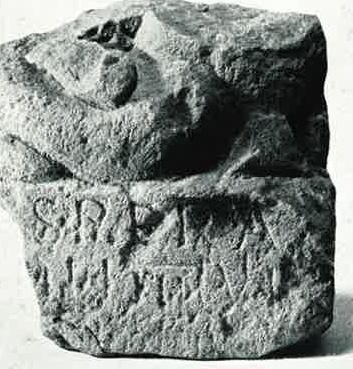
Fragment of a sandstone statue found during cellar excavations at Gross-Krotzenburg in 1848, possibly belonging to the Mithraeum
Small finds from the Gross-Krotzenburg Mithraeum including a Phrygian-capped head, a pinecone fragment, coins of Trajan and Hadrian, and column fragments
Inscribed altar from Gross-Krotzenburg dedicated to Deo Soli invicto by Lucius Fabius Anthimus, probably a physician of Cohors IIII Vindelicorum
Red sandstone altar from Gross-Krotzenburg decorated with four pairs of leaves and a triangle, found to the right of the Macrinus altar
Inscribed altar from Gross-Krotzenburg dedicated to Deo Soli invicto Mithrae by Iulius Macrinus, immunis of Legio VIII Augusta
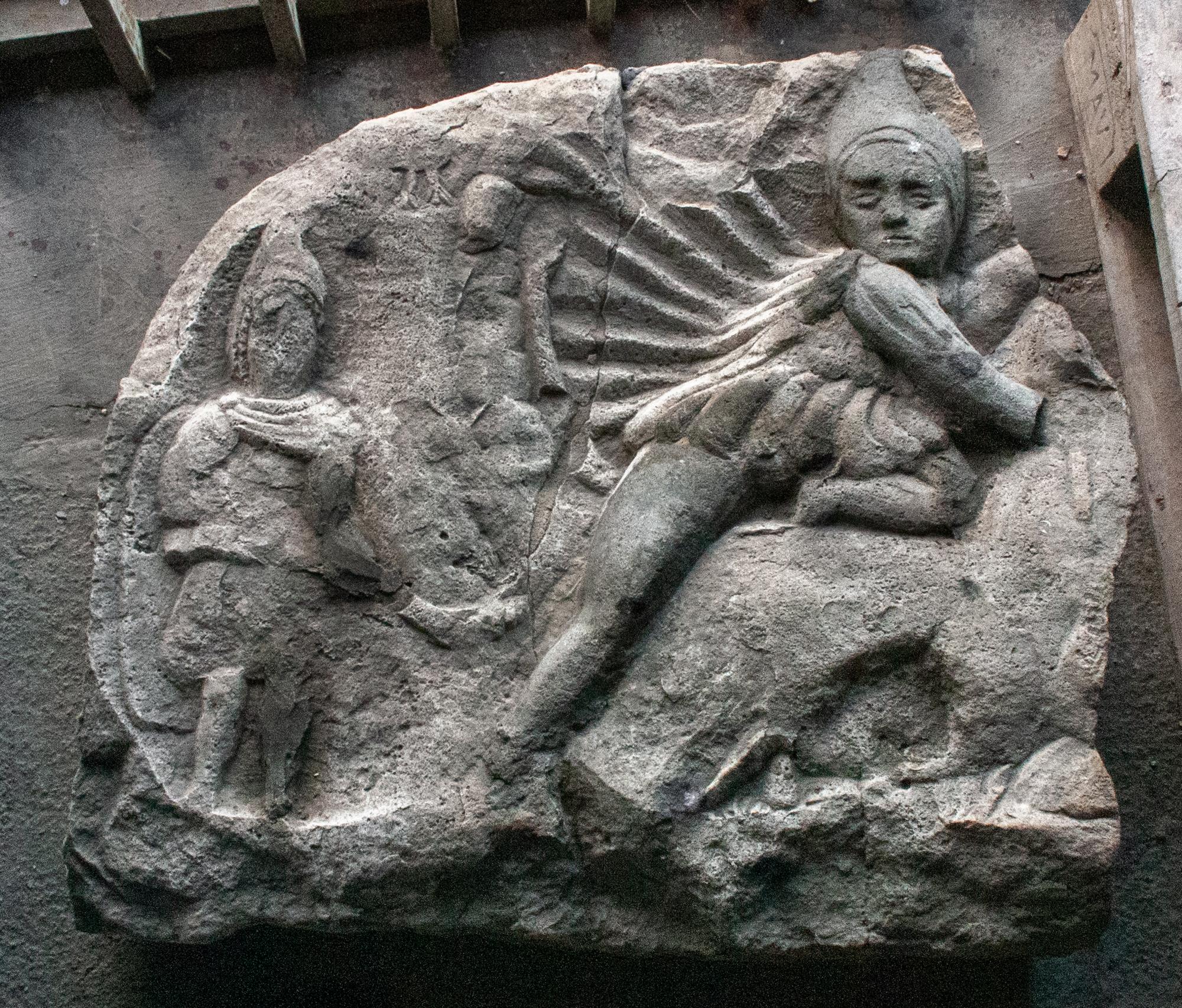
This limestone tauroctony from Aquincum preserves Mithras slaying the bull together with Cautopates, the serpent, the scorpion, and the legs of the raven.
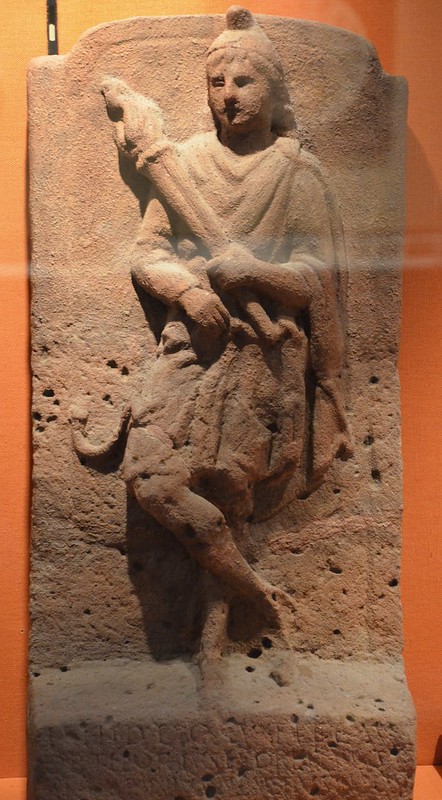
Reliefs of Cautes and Cautopates dedicated by Florius Florentius of Saalburg and Ancarinius Severus.
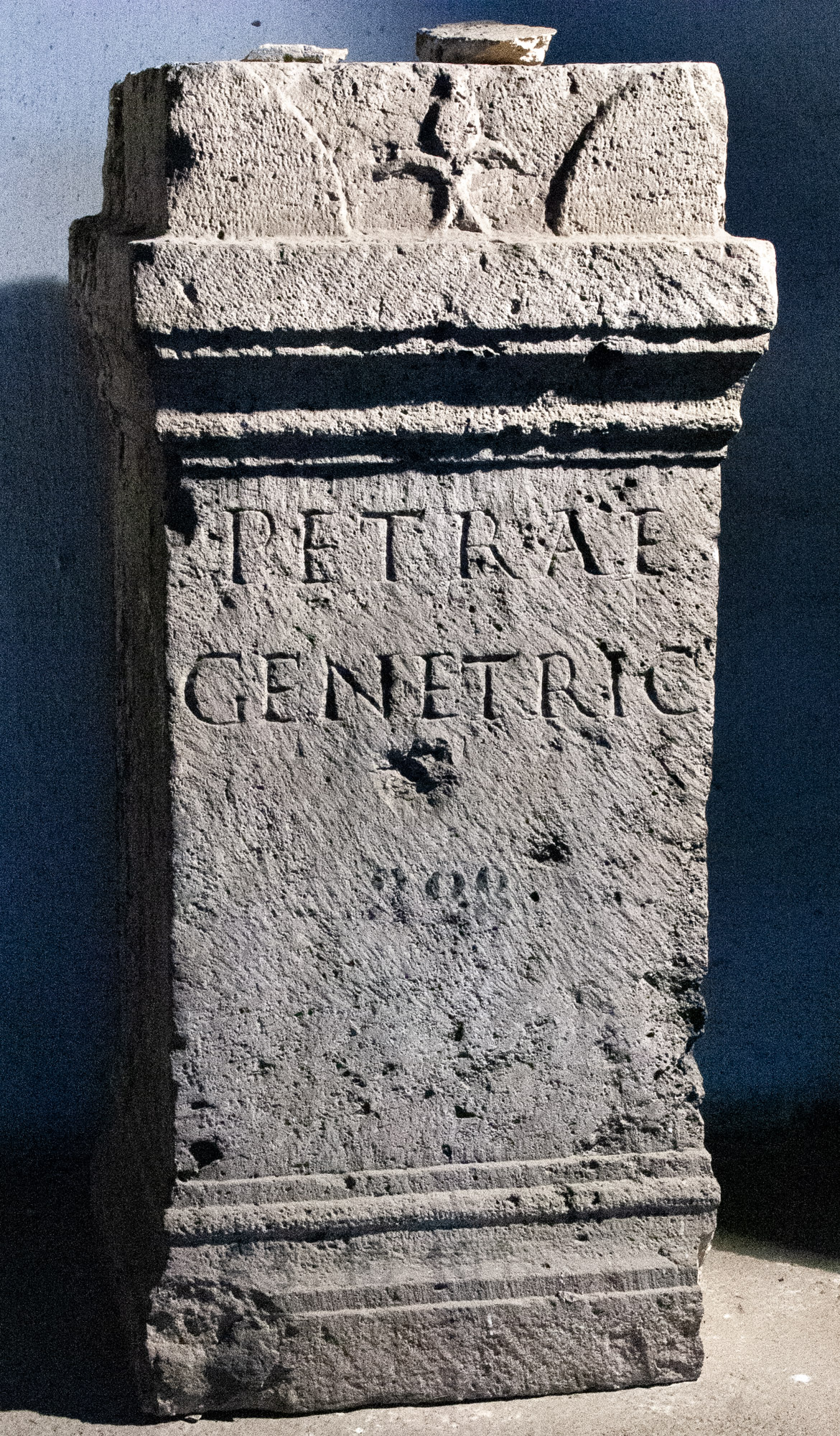
Small limestone altar from Aquincum, Budapest, dedicated to Petra Genetrix.
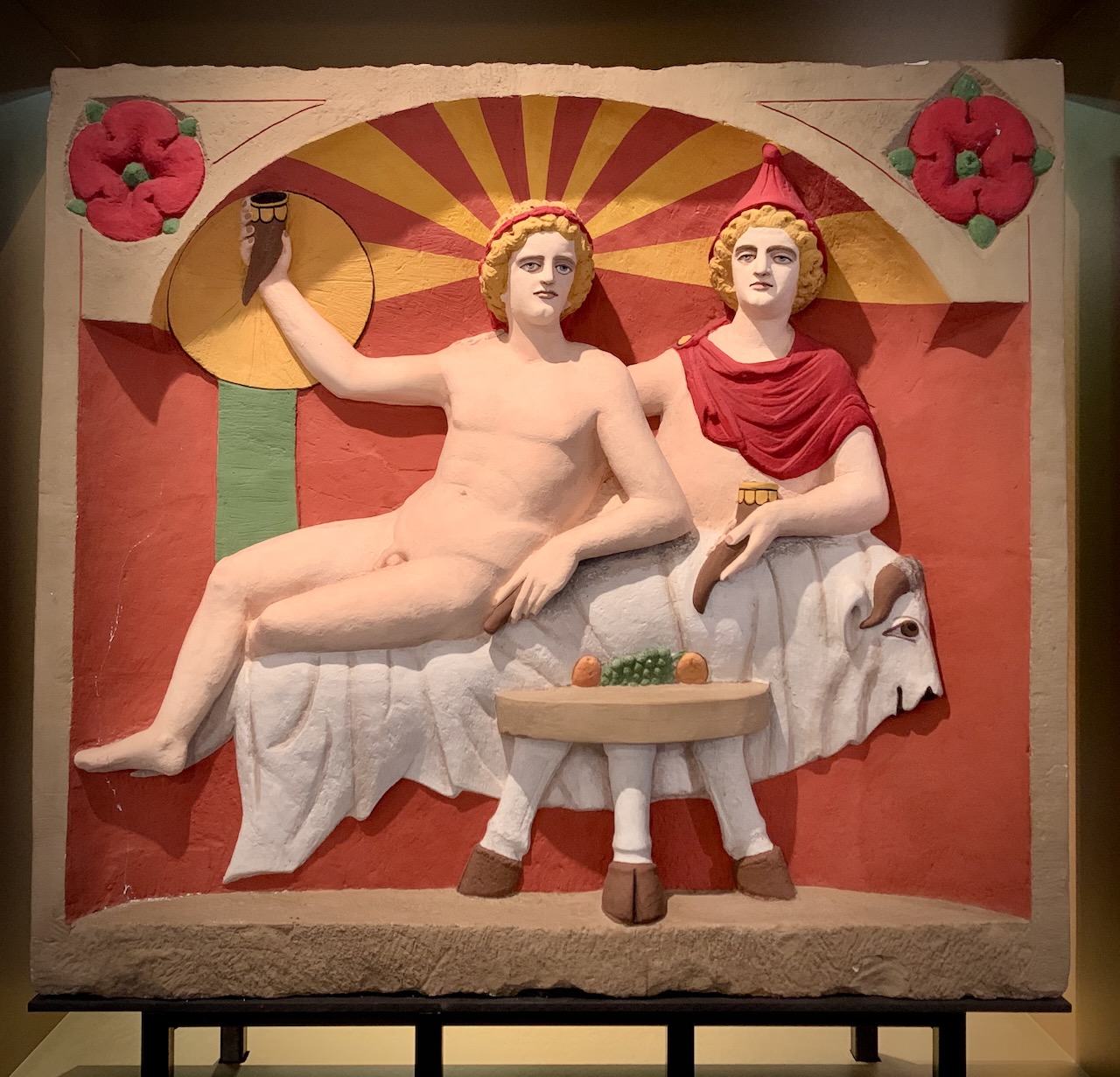
Bas-relief depicting a naked Sol leaning over his fellow Mithras while raising a drinking horn during the sacred feast.
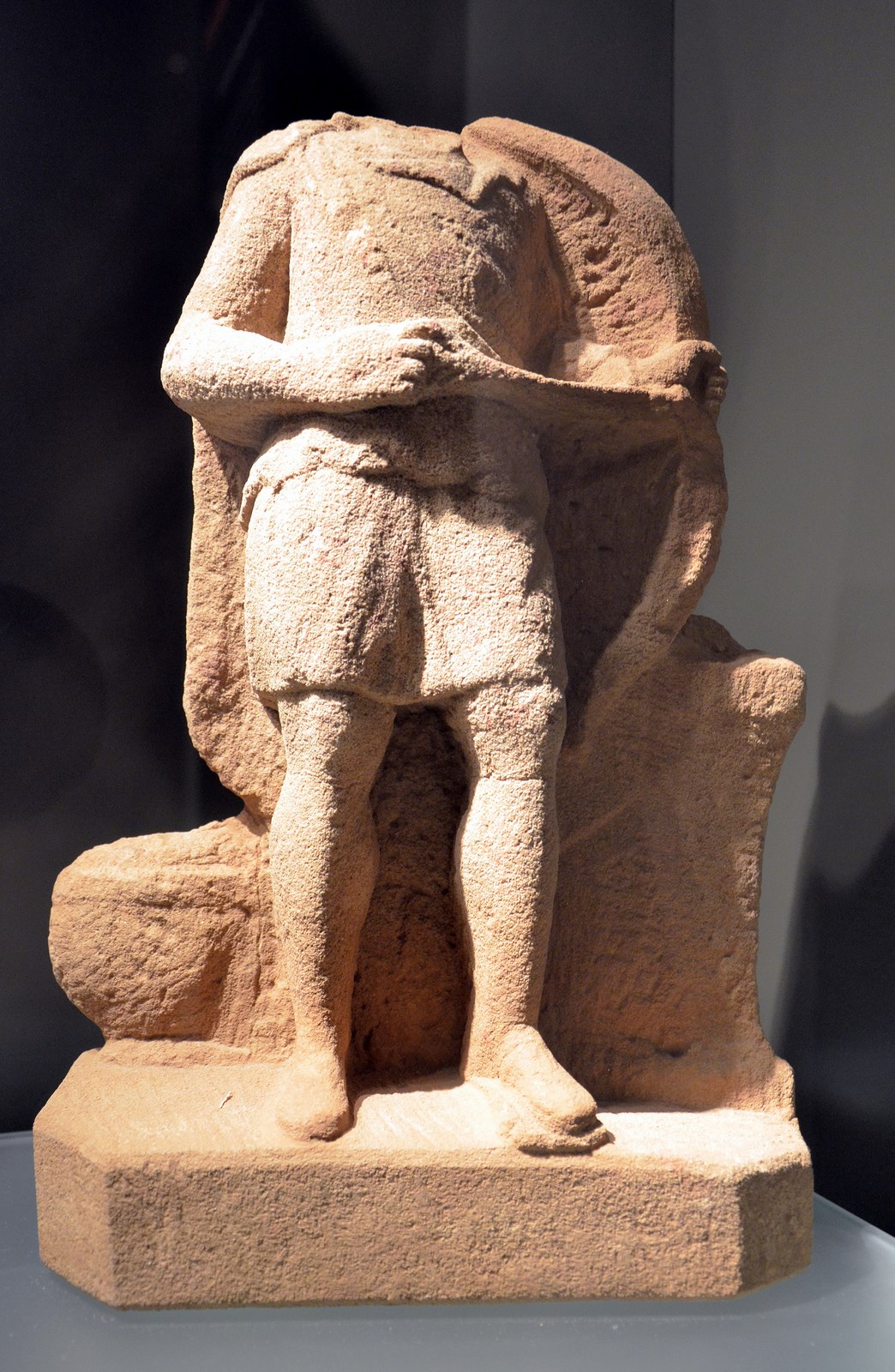
Statue in yellow sandstone found in the pit of the Mithraeum of Dieburg, showing Mithras standing beside an altar with bow and arrow, accompanied by a vase and associated with the water miracle.
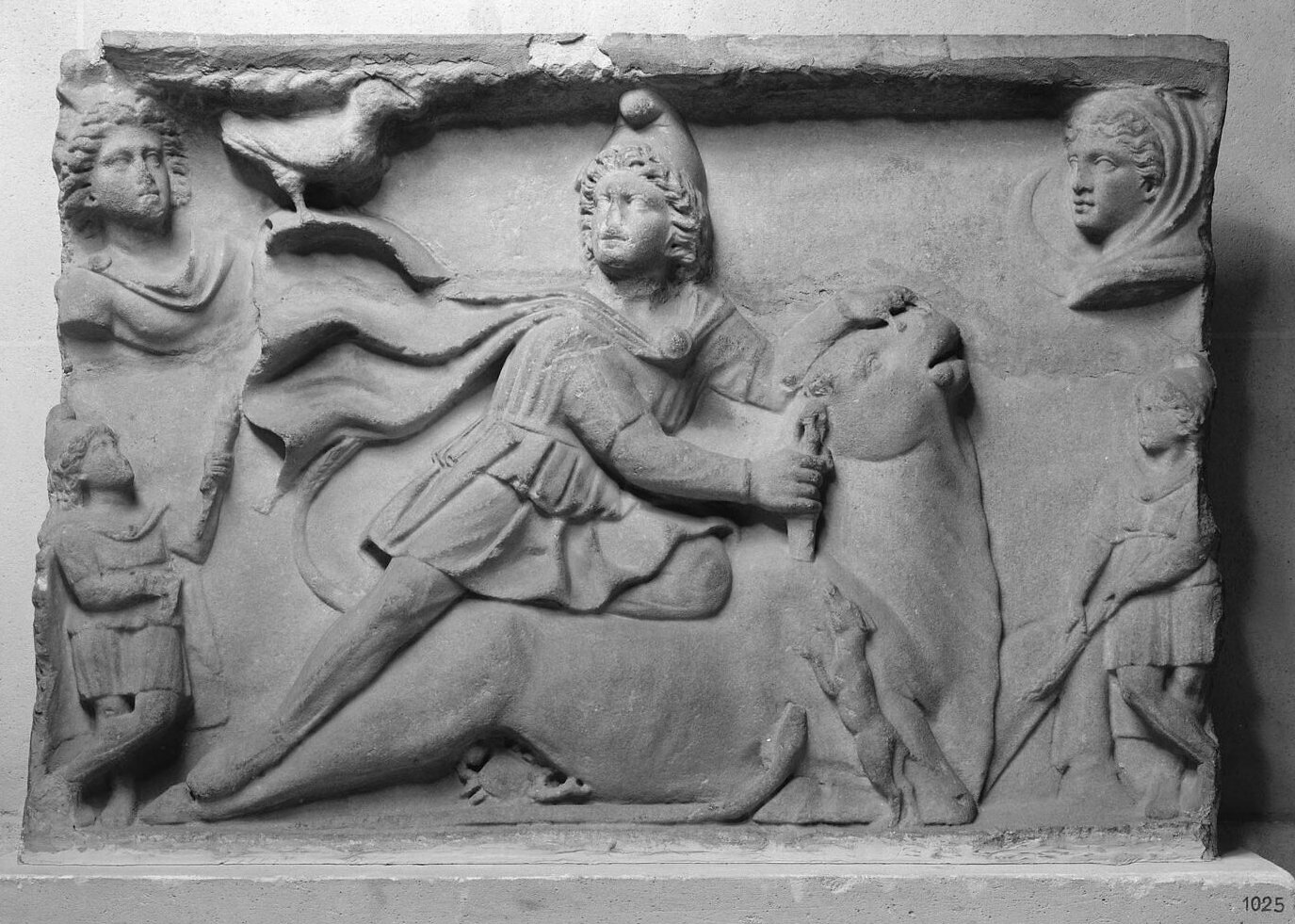
This is one of the three reliefs of Mithras as a bullkiller from the Villa Borghese collection that belong to the Louvre museum, now in the Louvre Abu Dhabi.
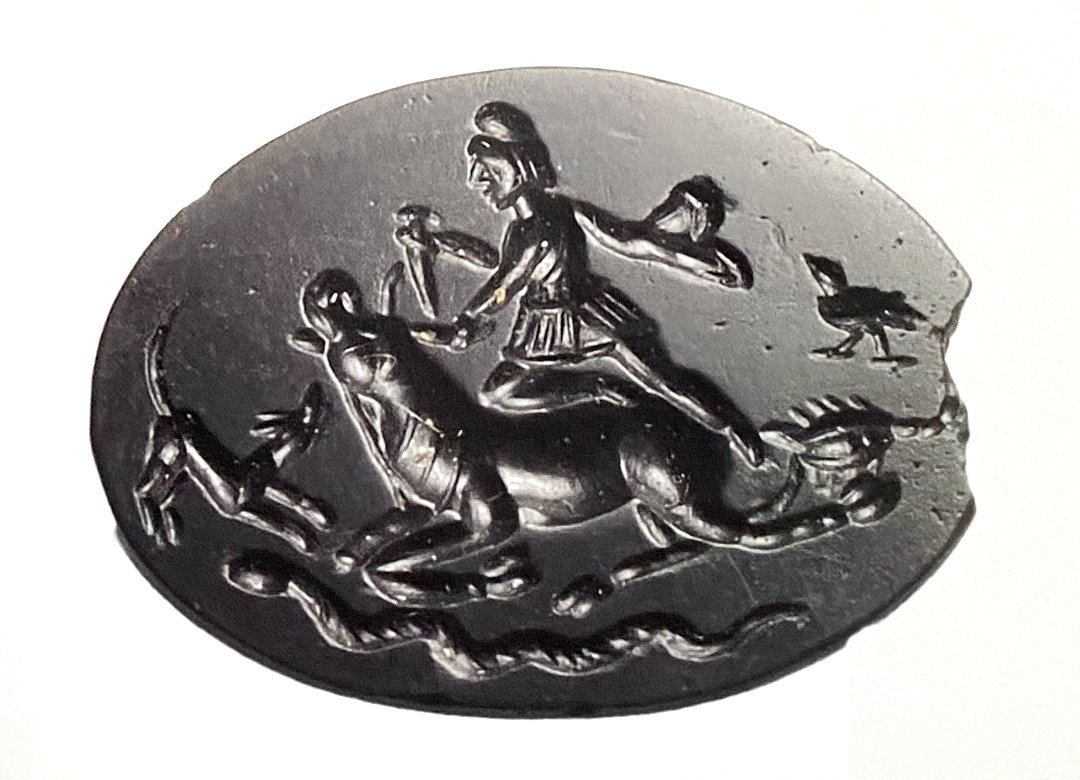
This intaglio with Mithras killing the bull on one side and Kabiros on the other was probably used as a magical amulet.
The Mithraeum of Aquincum I existed in the potter's quarter of the ancient city of Budapest.
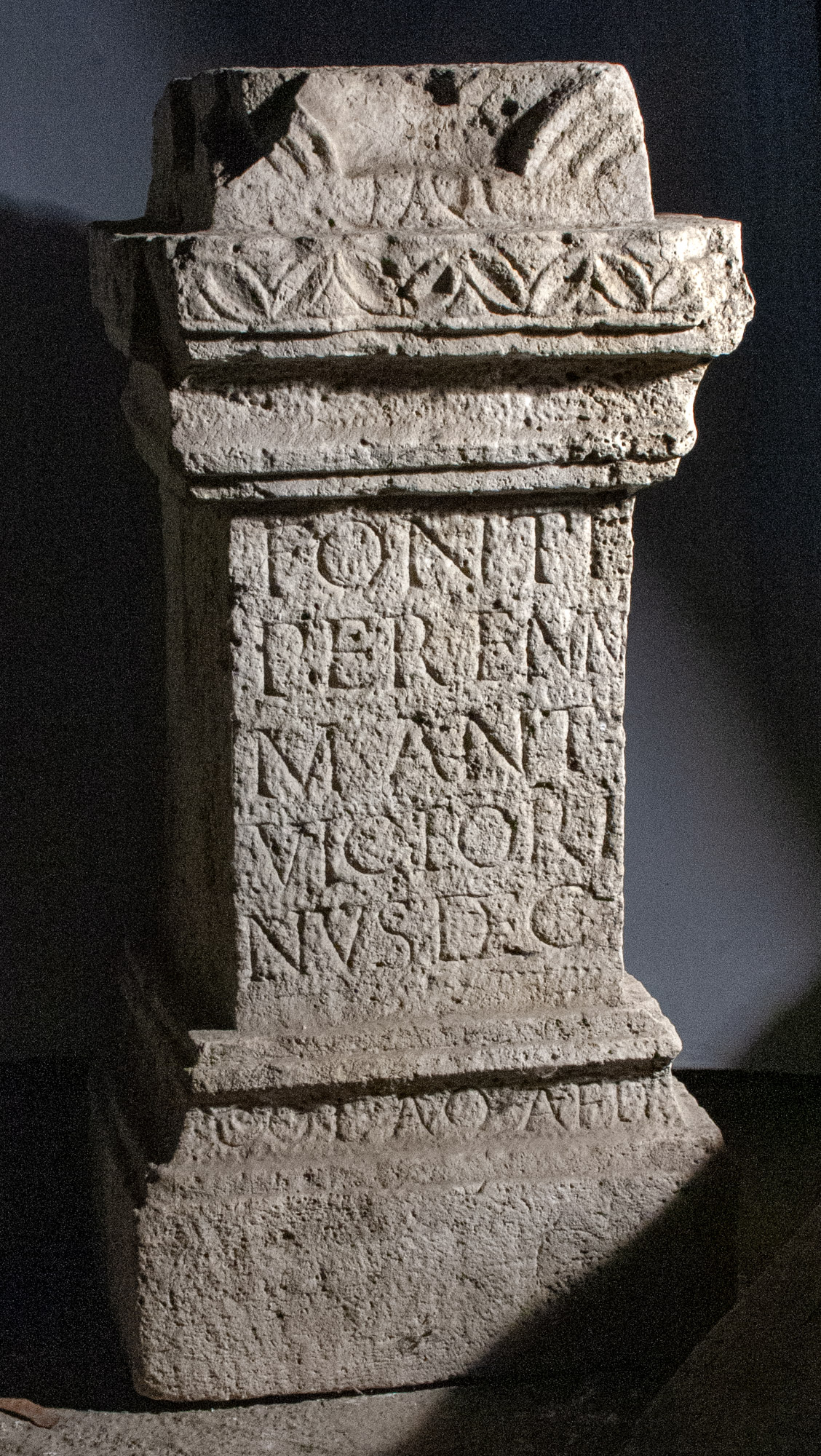
One of several dedications commissioned by the duumvir Marcus Antonius Victorinus in his Mithraeum of Aquincum, modern Budapest.
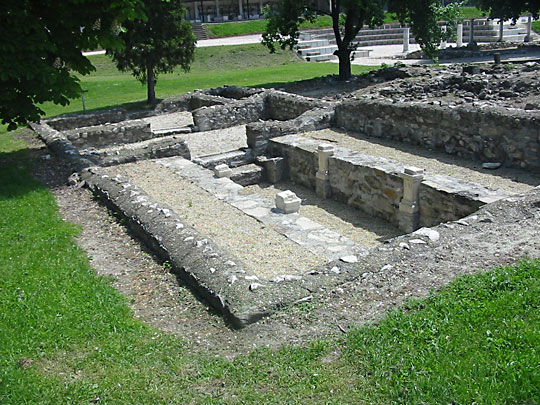
This temple of Mithras in Aquincum was located within the private house of the decurio Marcus Antonius Victorinus.
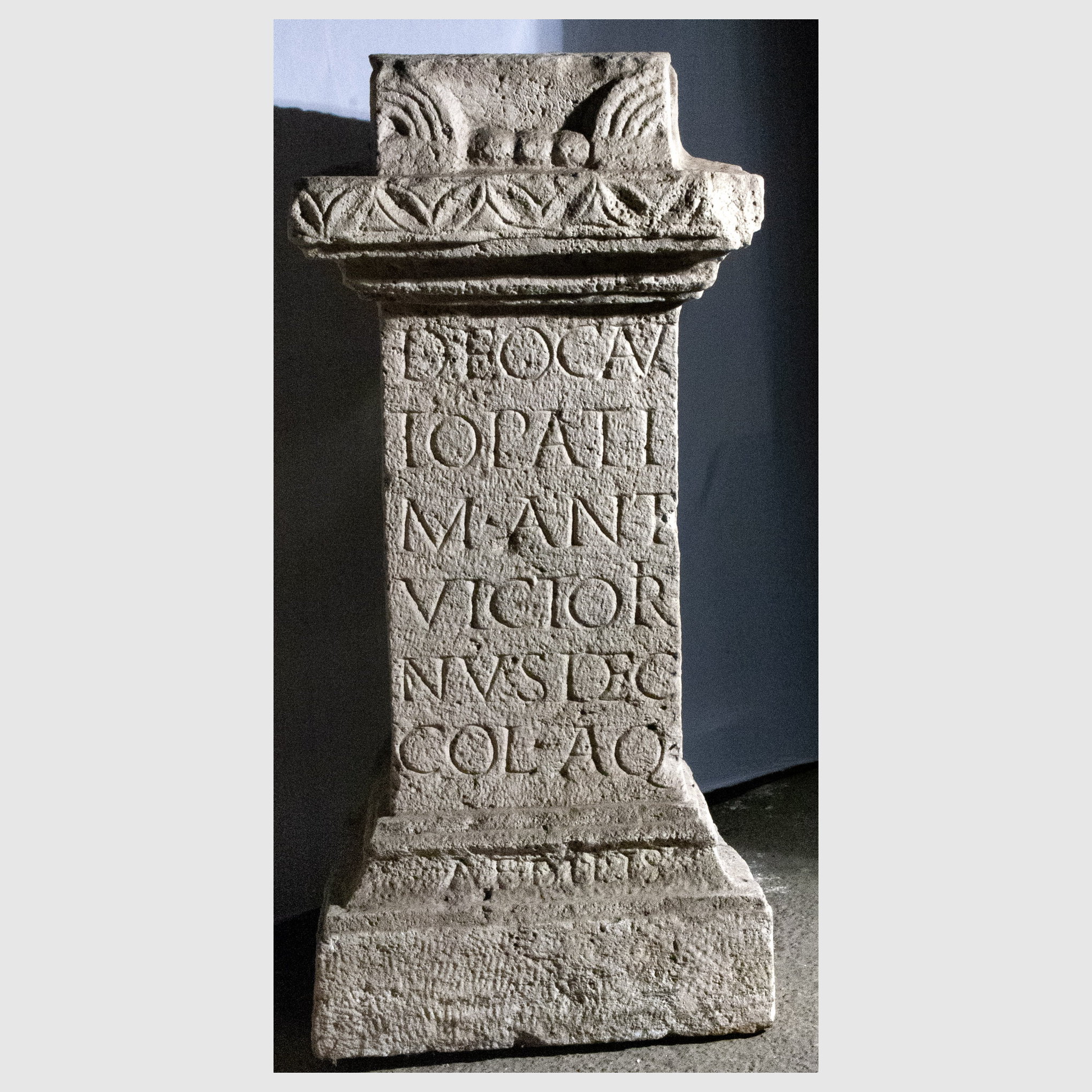
These two altars, erected by a certain Victorinus in the mithraeum he built in his house, bear inscriptions to Cautes and Cautopates.
Fragments of this limestone statue include the head and torso of Mercury, holding the caduceus in his left hand.
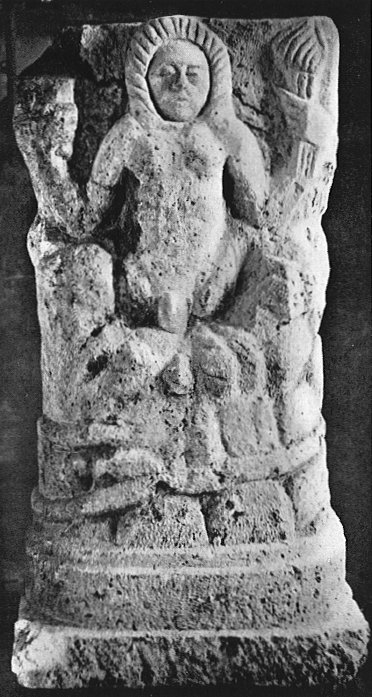
Another sculpture of Mithras rock-birth from the Mithraeum of Victorinus, in Aquincum.
