Your search Bu Njem gave 1882 results.
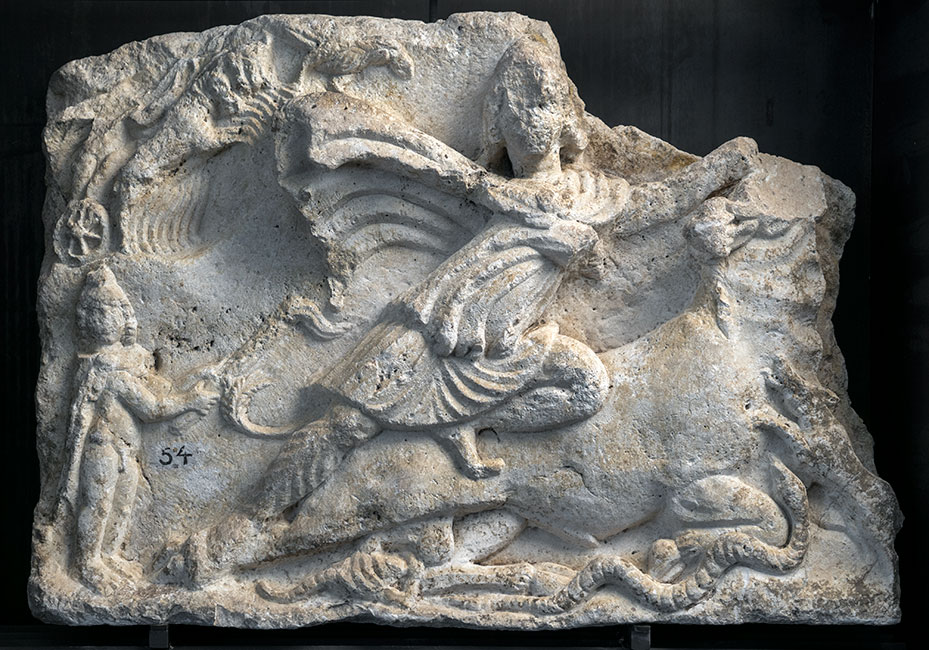
The relief of Mithras killing the bull of Zadar includes a naked Sol in a quadriga.
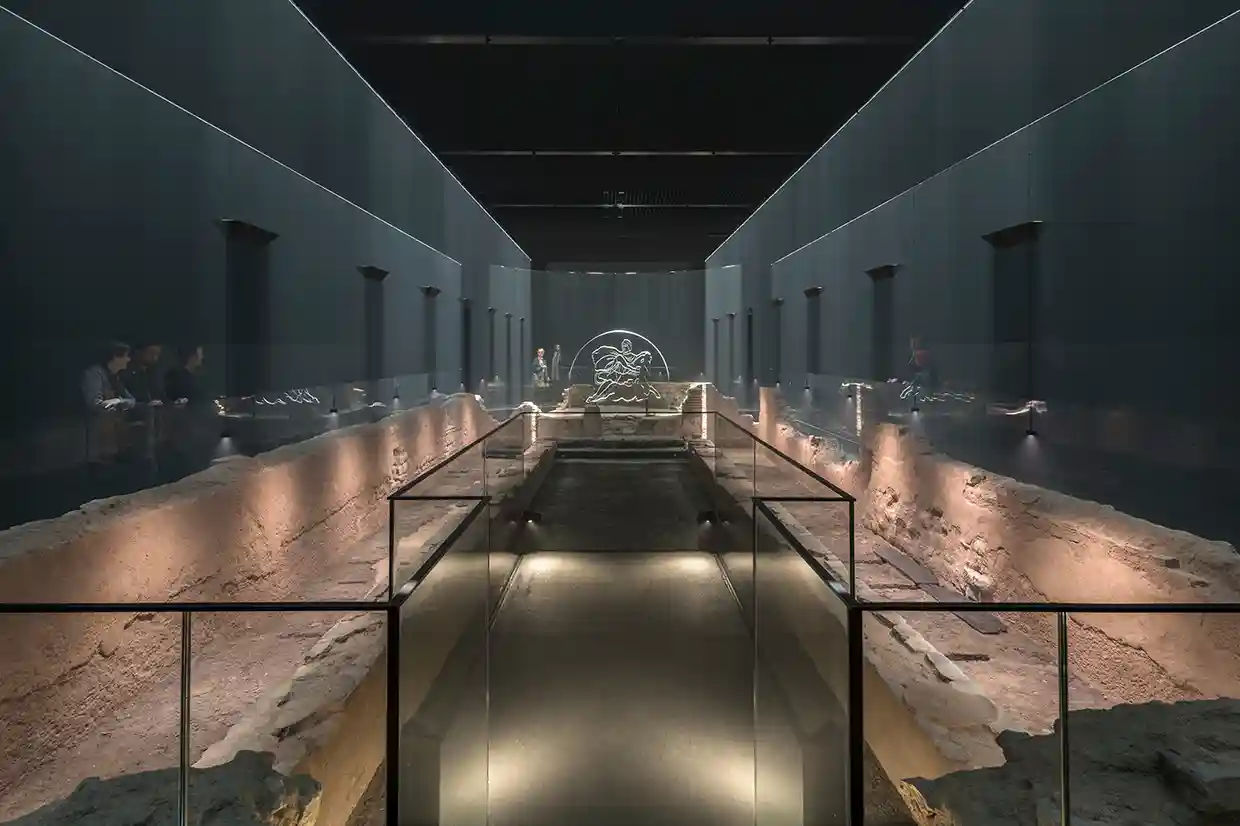
Visitors to new museum will uncover mystery cult of Mithras the bull slayer in multi-sensory experience.
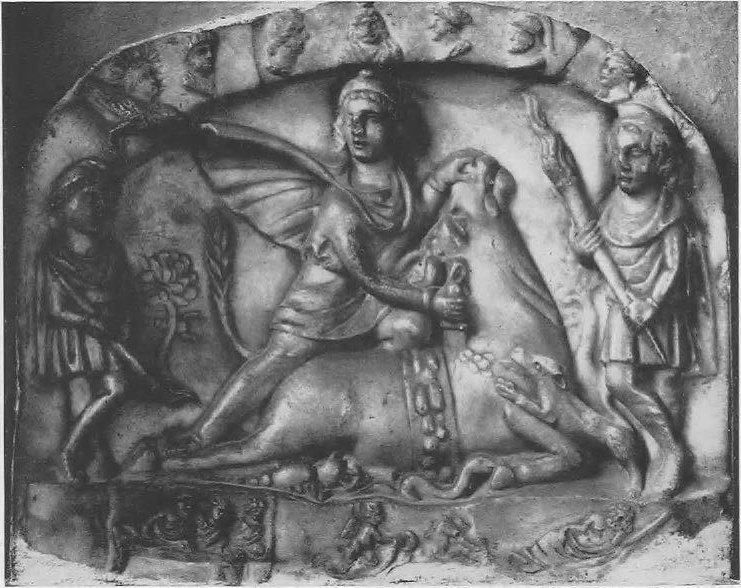
The relief of Mithras killing the bull of Bologna depicts several scenes of the mithraic myth.
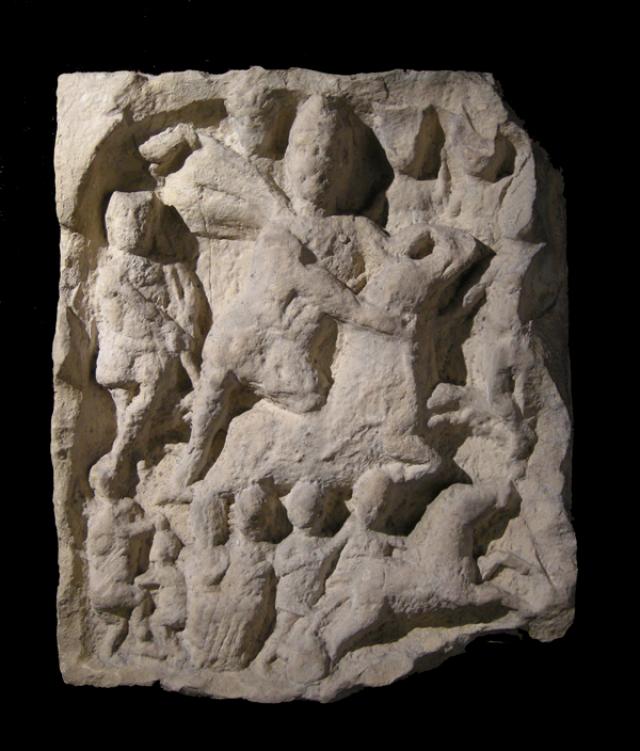
This stone in basso relief of Mithras killing the bull was found 10 foot underground in Micklegate York in 1747.
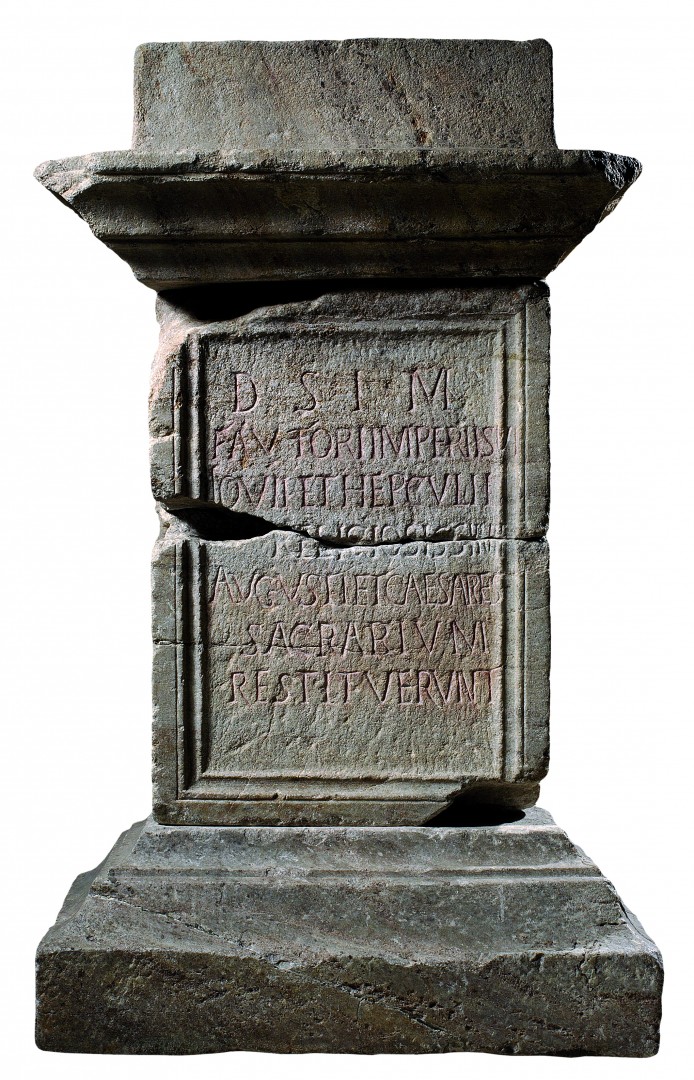
Altar with Cautes and Cautopates dedicated to Sol Invictus Mithras as protector of the Tetrarchy in 3rd-century Carnuntum.

Iuvavum and Ovilava formed two important urban centres connected by the Norican road network.
Guntia developed into an important settlement on the Danubian communications routes of Raetia.

Mithraic sanctuary found at Sárkeszi near Székesfehérvár, Pannonia Inferior, in a place called Ságvölgyi; yielding altars, tauroctony reliefs, and cult objects.
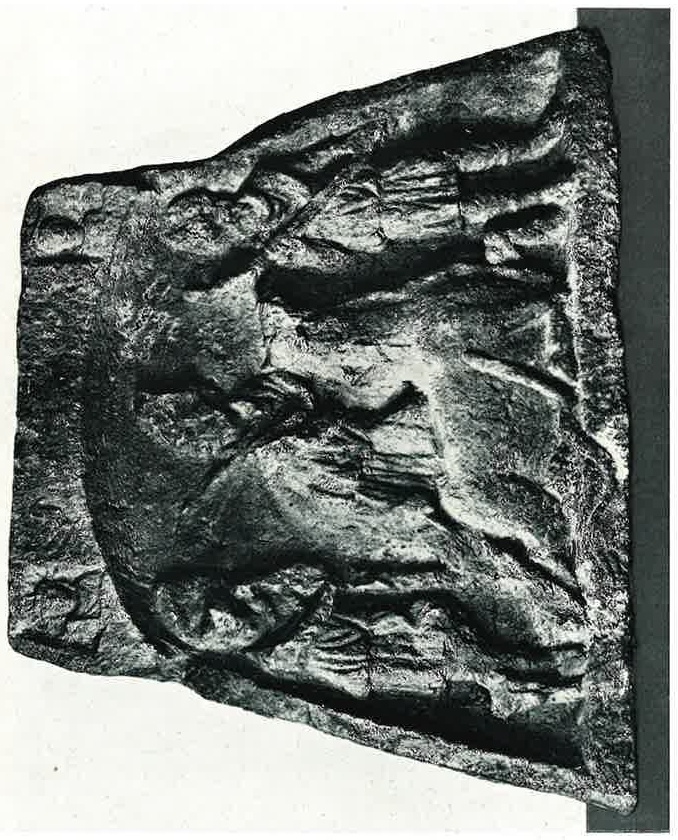
Mithraic sanctuary found in the district of Campona near Nagytétény, Pannonia Inferior, in 1934, yielding three inscribed altars, statue fragments, and other cult objects.
Fragment of a Mithras relief from Zsámbék near Aquincum, Pannonia Inferior, showing seven altars alternated with trees — a processional or decorative border rather than a main tauroctony scene.
Votive stone found at Epfach in 1830, ancient Abudiacum in Raetia, dedicated to Soli sacrum by Tiberius Claudius Mace, son of Tiberius Claudius Mace, apparently a dedication by a son continuing his father's cult.
Pair of Castor ware vessels interpreted as ritual banquet deposits from the Mithraeum of Procolitia.
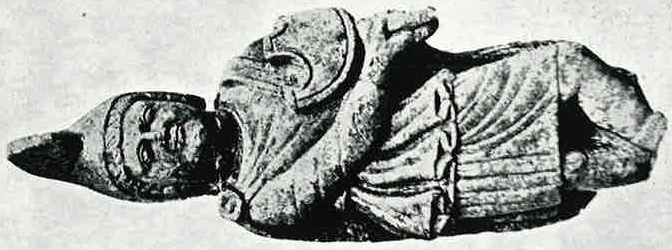
Small head in Phrygian cap from Aquincum, Pannonia Inferior, possibly representing a torchbearer or Attis.
Base from Aquincum, Pannonia Inferior, recording that Marcus Aurelius Frontinianus and Marcus Aurelius Fronto, soldiers of Legio II Adiutrix and fratres, built a temple to Soli socio; dated to the consulship of Antoninus, either AD 213 or 222.
Base from Aquincum, Pannonia Inferior, dedicated to Deo invicto Mithrae by Marcus Aurelius Frontinianus, decurio of the Colonia Aquinci.
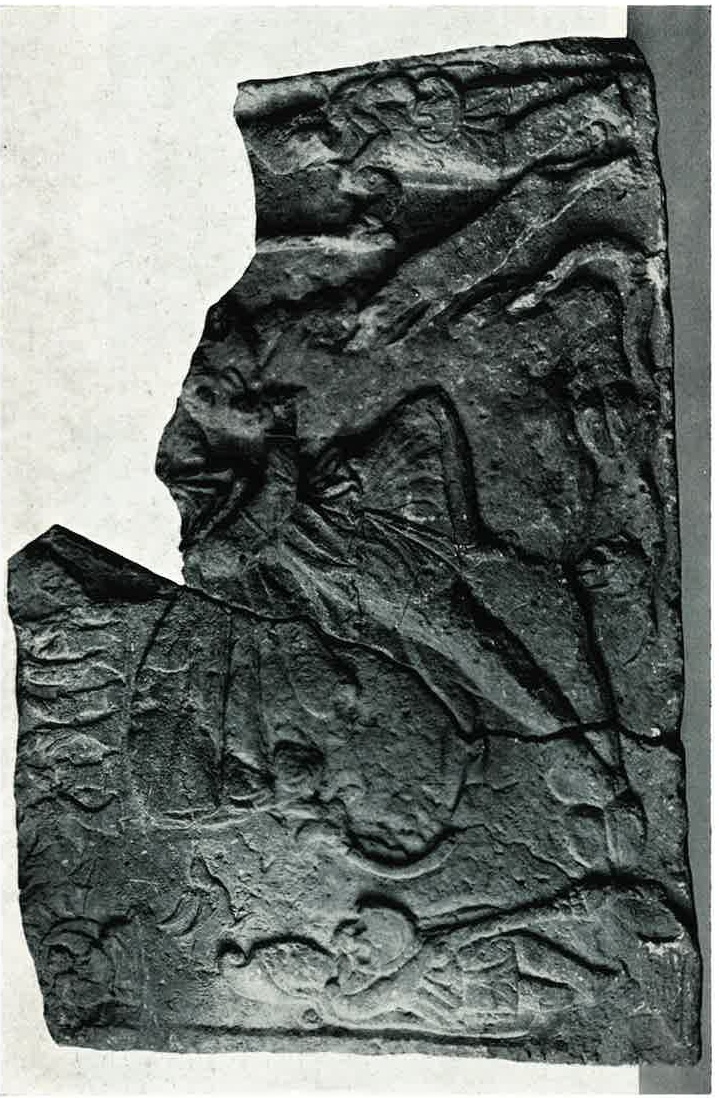
Marble tauroctony relief from Aquincum or possibly Budaörs, Pannonia Inferior, depicting the bull-slaying scene with cypress trees between the torchbearers and the central group.
Altar from Aquincum, Pannonia Inferior, dedicated to Soli invicto deo Mithrae by Titus Aelius Iustus, miles of Legio II Adiutrix Pia Fidelis.
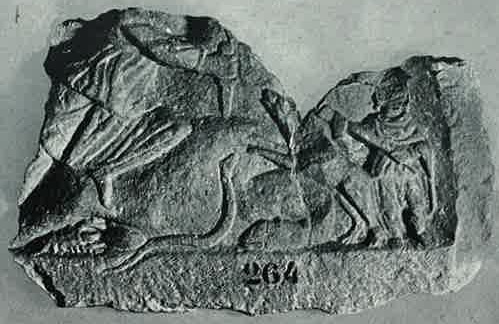
Altar from Aquincum, Pannonia Inferior, dedicated to Invicto Mitrae by Publius Aelius Attalus.
Marble tauroctony relief from Aquincum, Pannonia Inferior, found at Budapest III, Fötér, depicting Mithras as bull-slayer with both torchbearers flanking the central group.
Fourth Mithraic sanctuary discovered near the southern town-wall of Aquincum, Pannonia Inferior, between a rectangular building and an apsidal structure; excavated in 1941–42 and yielding the most complete sculptural assemblage from the city.
