Your search Cabrera de Mar gave 999 results.
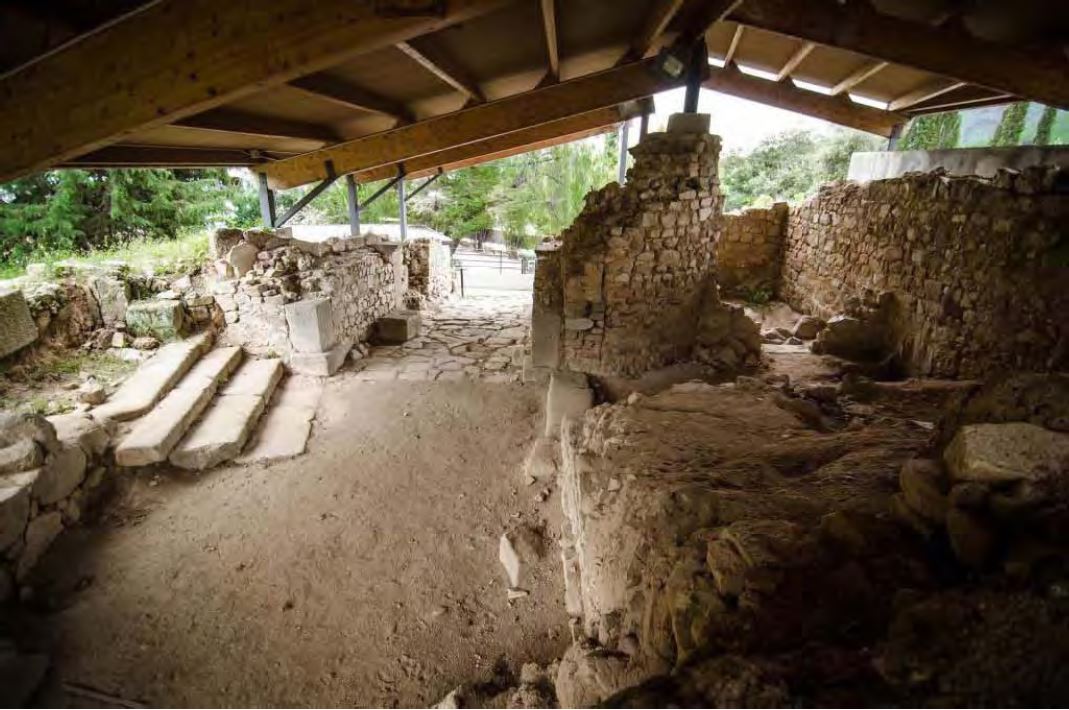
The Roman villa of Can Molodell had a sanctuary that has been related to the cult of Mithras.
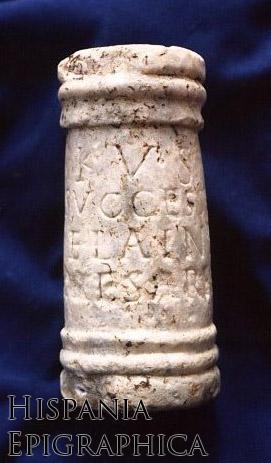
Small arula with mithraic inscription and dedication to Cautes from a garlic merchant.
Ituro, now Cabrera de Mar, was an important trading town and the capital of the Laietani, an Iberian people, until Roman times.
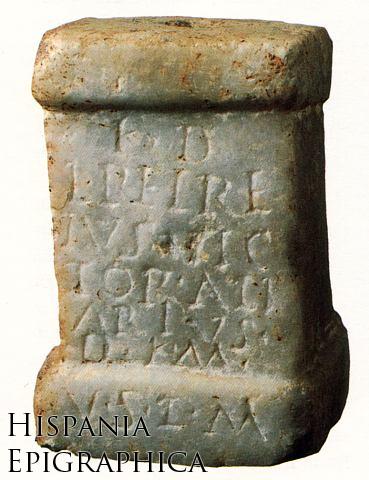
This altar has been unusually dedicated to both gods Mithras and Mars at Mogontiacum, present-day Mainz.
Marble inscription recording the dedication of a cult image to the unconquered Mithras by a certain pater Valerius Marinus from Rome.
This remarkable Greek marble relief of Mithras killing the bull was discovered in 1705 and remained in private collections until it was bought by the Louvre.
This is one of the at least three inscriptions of Dioscorus, servant of Marcus to Mithras Invictus found in Alba Iulia, Romania.
One of the three known inscriptions of Dioscorus, servant of Marci, found in Alba Iulia, Romania.
In 1852, Károly Pap, a naval captain, unearthed several Mithraic monuments in his garden at Marospartos, including this altar.
This altar was dedicated by a certain Marcus Aurelius Decimus to Sol Mithras and other gods in Diana, Numibia, present Argelia.
The altar with a Phrygian cap and a dagger from Trier was erected by a Pater called Martius Martialis.
This stone altar fround in Altbachtal bears an inscription by a certain Martius Martialis.
This marble relief from Alba Iulia contains numerous scenes from the myth of Mithras.
These two inscriptions by a certain Titus Martialius Candidus are dedicated to Cautes and Cautopates.
This marble slab found near the Casa de Diana in Ostia bears two inscription with several names of brothers of a same community
Antonius Valentinus, centurio, made this plaque for the salut des empereurs Septimus Severus and Marcus Aurelius.
The Mithraeum of Marino presents an unusually elongated structure with depictions from the Severian period.
This magnificently illustrated publication renews the Mithraic dossier on the basis of concrete data, with caution and penetration. Marino's discovery is disconcerting and rekindles the controversy about the order in which bands should be read.
This monograph presents the findings from Robert J. Bull's 1973 excavation of the Mithraeum in Caesarea Maritima, Israel, including stratigraphic analyses, studies of frescoes and and insights into the site's historical significance.