Your search Castle Park, Colchester, Essex gave 83 results.

The existence of a mithraeum in the "tana del lupo", a natural cave in the castle of Angera, has been assumed since the 19th century, following the discovery of two mithraic inscriptions in the town.
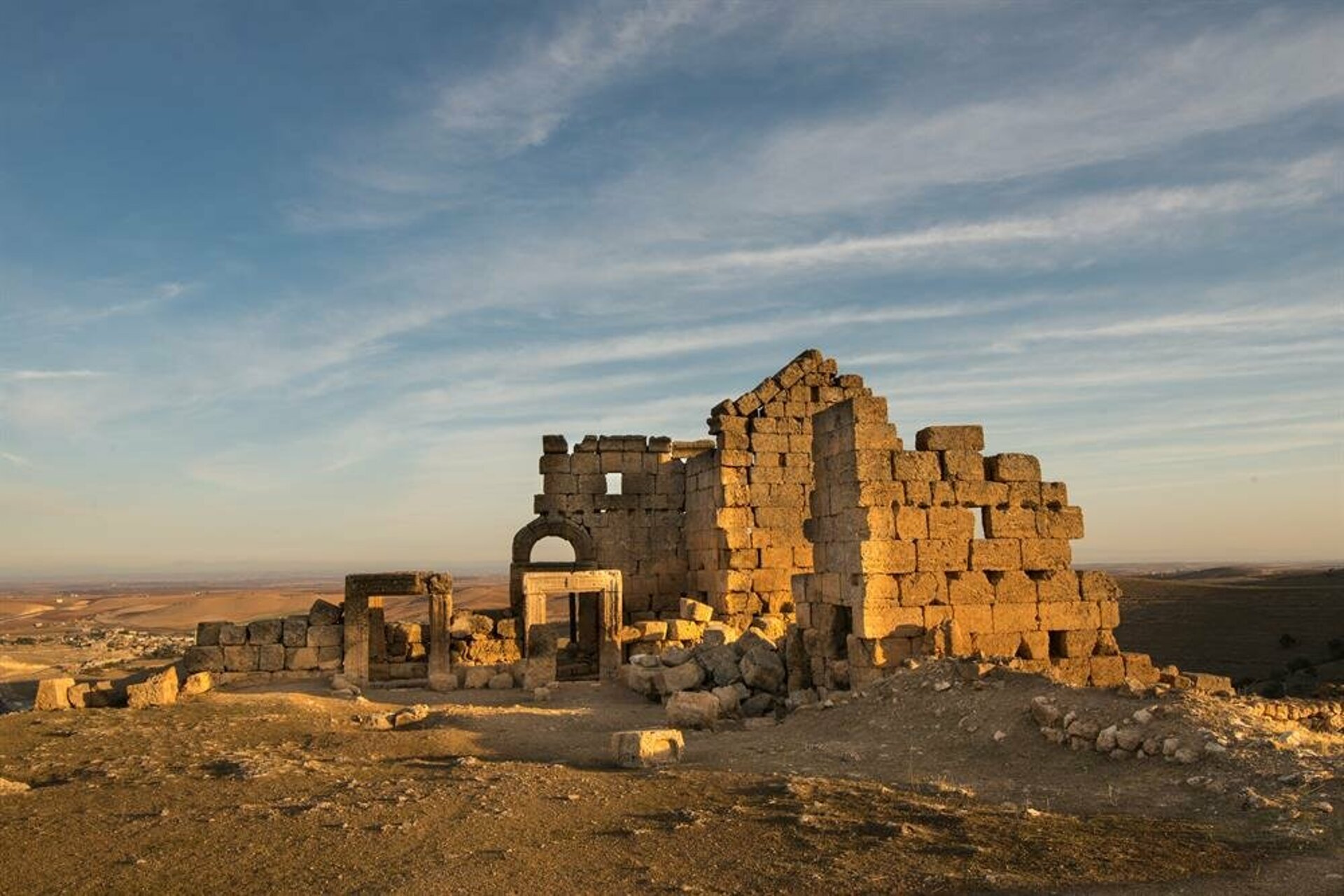
A Mithraeum was discovered in 2007, during the excavations at the Zerzevan Castle.

The Mithras temple of Prilep is in a small grotto under the castle of Markovi-Kuli.

The Temple of Mithras, inside an ancient military settlement, is situated on the eastern border of the Roman Empire.

The hill fort of Epiacum, known today as Whitley Castle, occupied a strategic upland position south of Hadrian’s Wall.
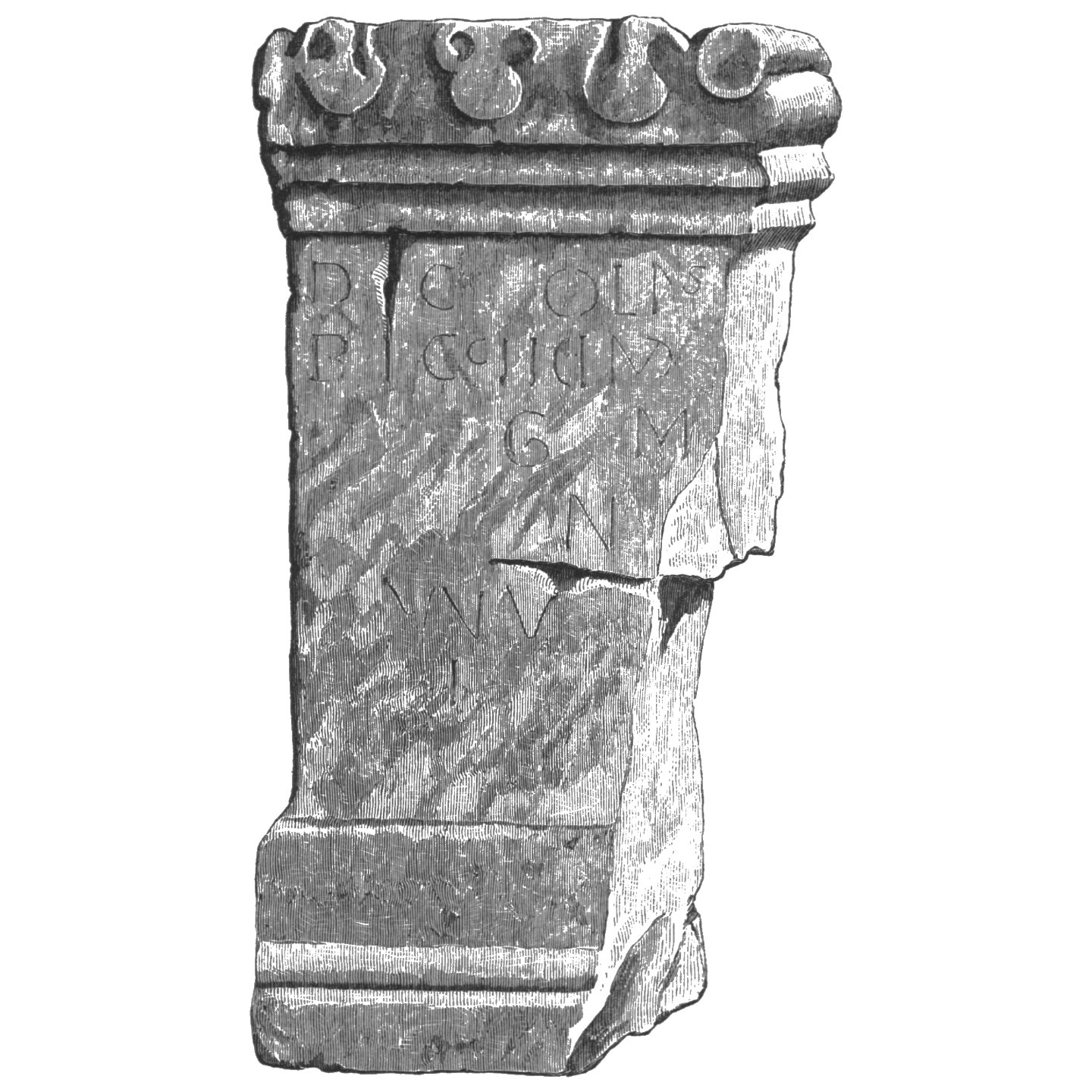
Horsley thought that, like some other inscriptions in the Naworth Collection, this altar also had come from Birdoswald.
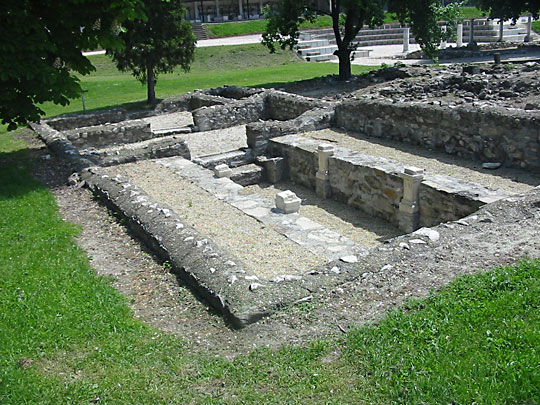
This temple of Mithras in Aquincum was located within the private house of the decurio Marcus Antonius Victorinus.
A decorated altar from the Mithraeum at Vindobala (modern Rudchester), with the letters DEO crowned with vittae on the shaft, surrounded by palm-branches, a representation of Mithras' rock-birth on the capital, and on the front of the die a naked figure grasping a bull's horns…
A white marble altar base from the Mithraeum at Angera, decorated with palmettes, eagles carrying a festoon and rosettes on the front, dolphins on the reverse, and on each side mythological scenes of Jupiter and Neptune combatting Giants with snake-feet.
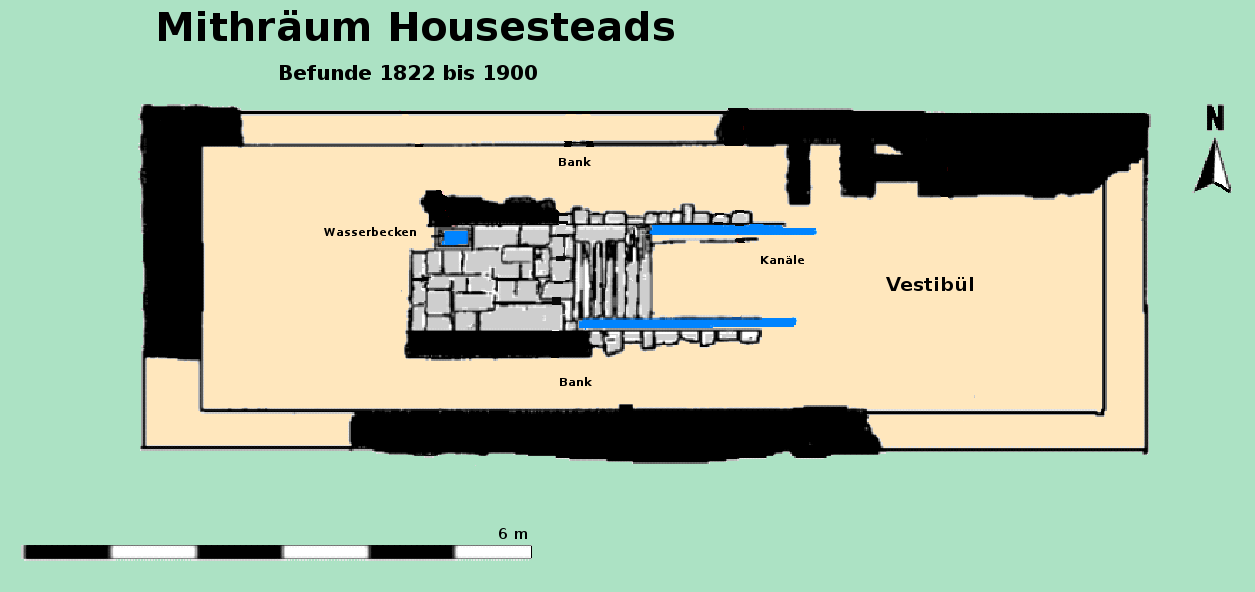
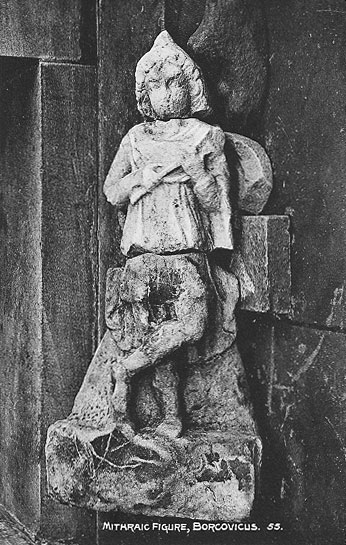
The Housesteads Mithraeum is an underground temple, now burried, discovered in 1822 in a slope of the Chapel Hill, outside of the Roman Fort at the Hadrian's Wall.

This unusual mural depicting Mithras killing the bull was found near the Colosseum in 1668.
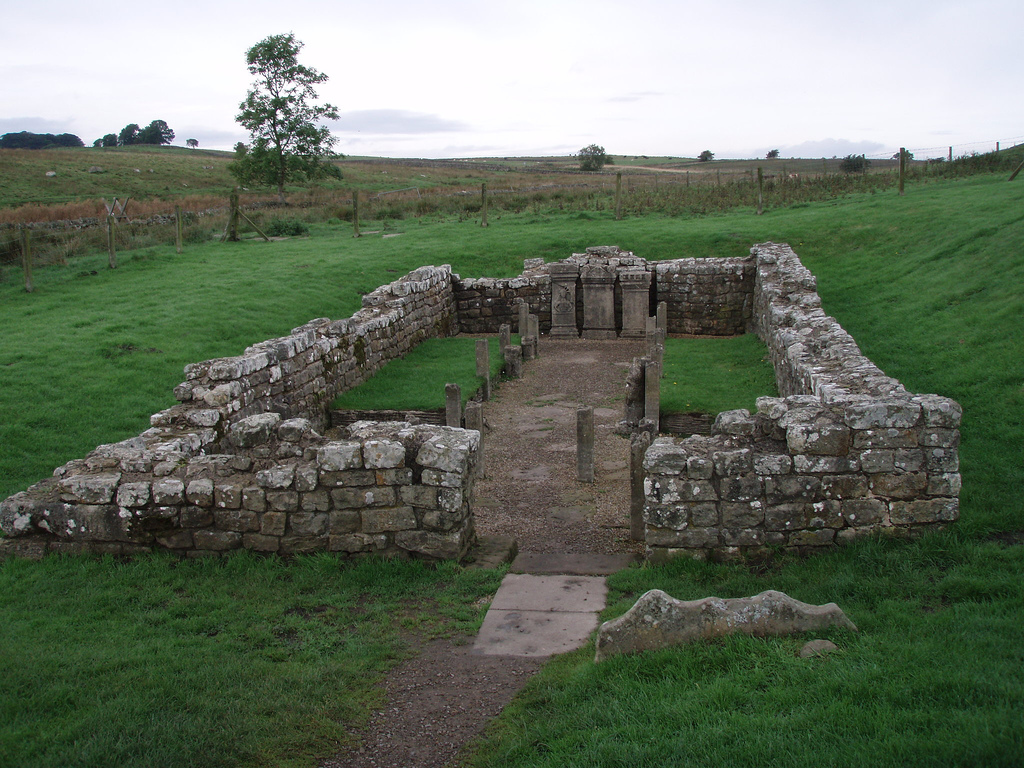
The temple of Mithras of Carrawburgh, Brocolita, disclosed three main stages of development, the second exhibiting two reconstructions.
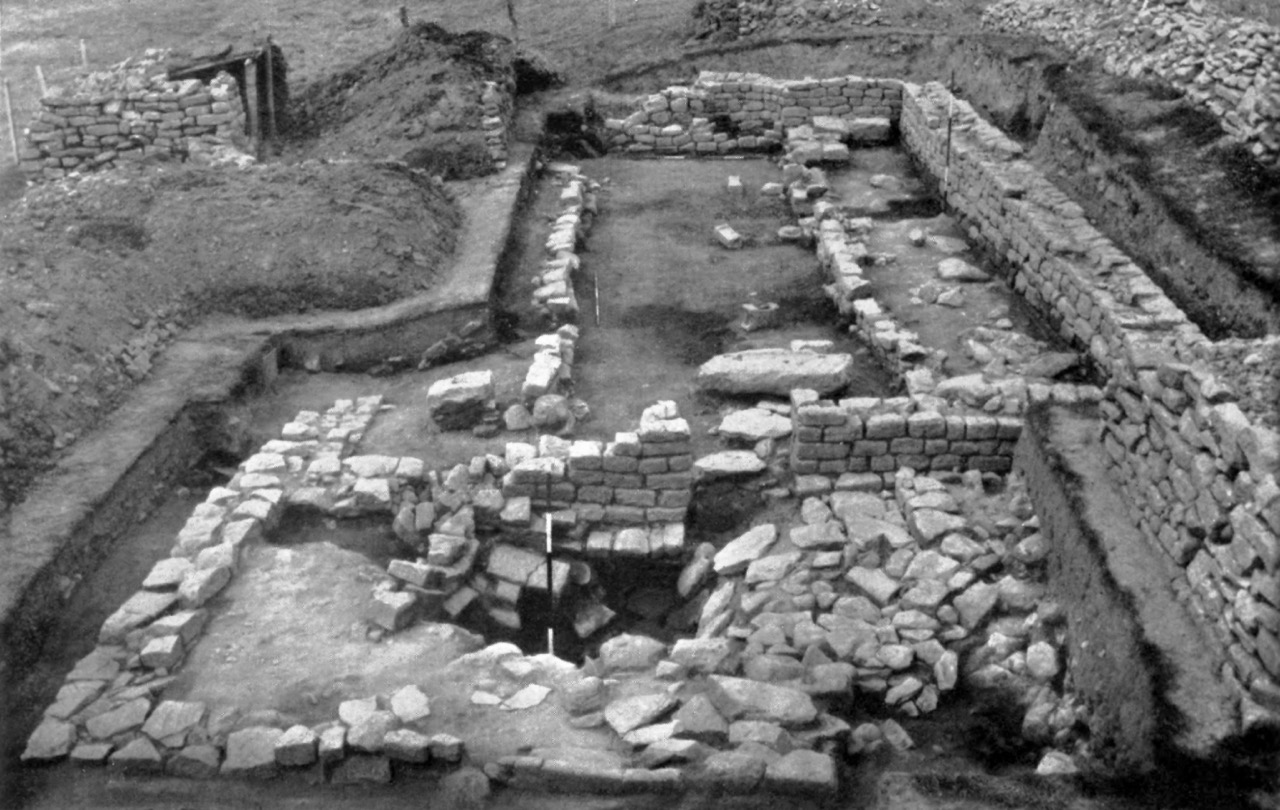
The Mithraeum of Rudchester was discovered in 1844 on the brow of the hill outside the roman station.
Third-century sepulchral inscription from near Philippi, Macedonia, studied for its Mithraic content in the upper lines of the text.
Small limestone altar from near Višnja Gora, Pannonia Superior, dedicated to Fonti perenni — the eternal spring — a dedication associated with the Mithraic water cult.
Altar from Petronell, ancient Carnuntum, Pannonia Superior, dedicated to Soli by Quintus Cottius Lalus.
Altar from Petronell, ancient Carnuntum, Pannonia Superior, dedicated to Soli divino ex visu by Lucius Aelius Leo — possibly the same individual who dedicated a further altar identifying himself as a miles of Legio XIIII Gemina.
White marble slab from the Zollfeld at Virunum, Noricum, dedicated to Deo invicto Mithrae by Diadumenus, arcar(ius) of the imperial dispensator Nicolaus for the kingdom of Noricum.

This dedicatory inscription by Aurelius Seleucus, found in Cilicia, aligns with Plutarch’s account of Cilician pirates performing foreign sacrifices and secret rites of Mithras.
