Your search Cemetery of the church of St. Michael gave 3410 results.
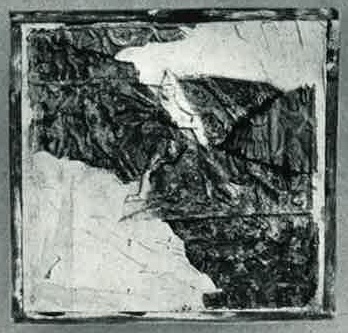
Bluish marble tauroctony relief in fragments from the Mithraeum at Sarmizegetusa, Dacia, divided into horizontal registers with the central bull-slaying and multiple subsidiary Mithraic scenes.
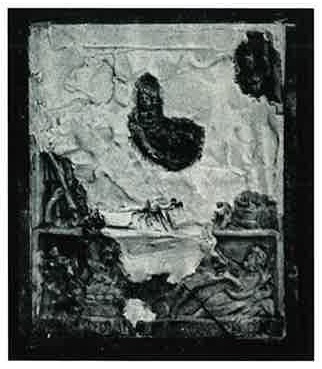
White marble tauroctony relief in eleven fragments from the Mithraeum at Sarmizegetusa, Dacia, divided into three horizontal registers, the central one depicting the bull-slaying and the others bearing subsidiary Mithraic scenes.
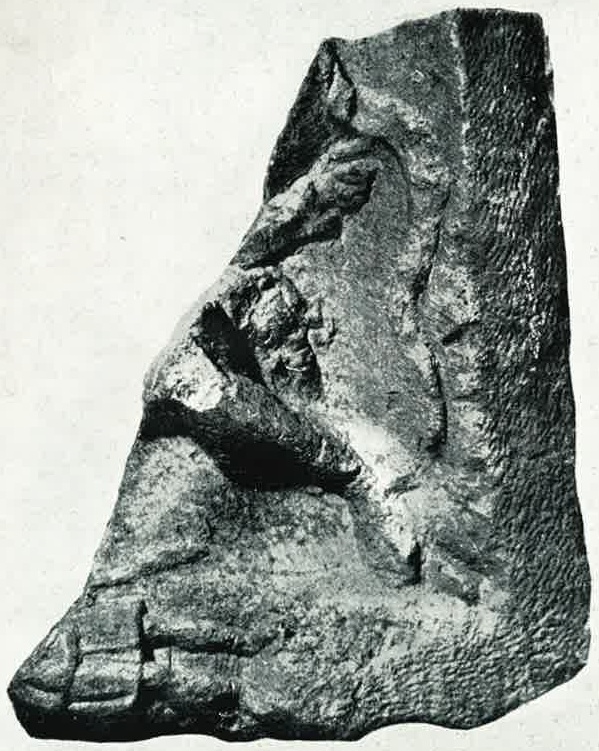
Right upper corner of a white marble tauroctony relief from Budapest, ancient Aquincum or its vicinity, in the National Museum since 1868, preserving part of the grotto border and divine busts.

Altar from Aquincum, Pannonia Inferior, dedicated to Soli invicto deo Mithrae by Titus Aelius Iustus, miles of Legio II Adiutrix Pia Fidelis.
Sandstone statue from near Mithraeum III at Aquincum, Pannonia Inferior, probably depicting Mithras's rock-birth.
Small bronze bust of Sol with five rays found at Strasbourg, ancient Argentoratum, during construction works in the 1860s–70s; associated with the Mithraic assemblage from the city.
Upper portion of a sandstone statue from Strasbourg, ancient Argentoratum, showing a head surmounted by a serpent's head; the fragment probably belonged to an Aion.
Sandstone fragment of a Mercury statuette preserving part of the shoulder and caduceus.
Decorative bronze candlestick discovered near the entrance of the supposed Mithraic sanctuary.
Cult statue base discovered with a hooked ritual sword in front of the sanctuary niche.
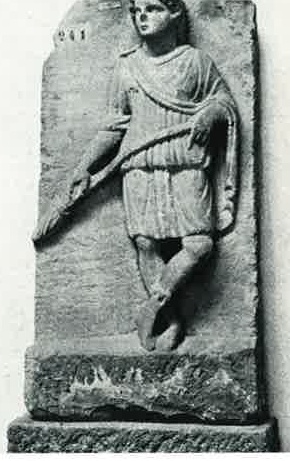
Relief in red sandstone originally standing on a base in Mithraeum I at Heddernheim, ancient Nida, featuring the bull-slaying scene.
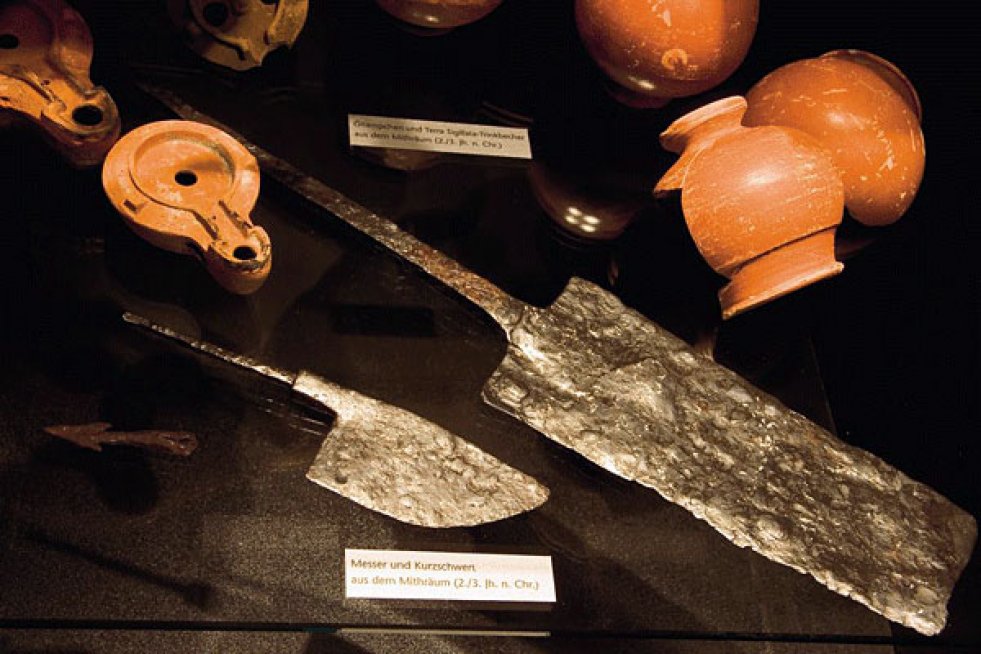
The Mithraeum of Kunzing was an underground building, oriented east-west. The entrance was probably on the east.
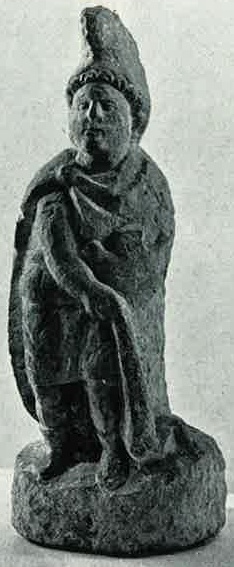
This statuette of Cautopates from Intercisa shows the torchbearer holding a burning torch and a pelta at his side.
This inscription shows that Publilius Ceionius, most distinguished man, dedicated a temple to Mithras at Mila, in the modern Constantina, Algeria.
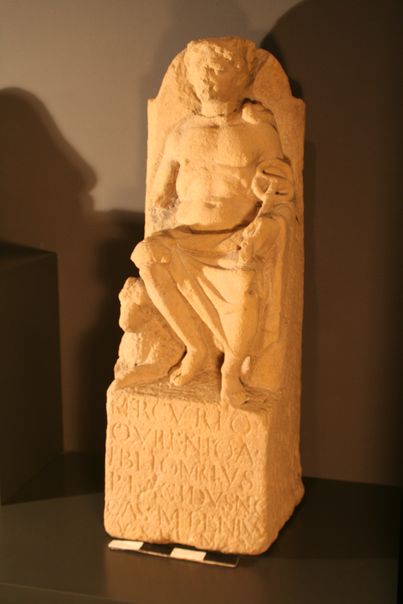
The statue was dedicated to Mercury Quillenius, an epithet used to refer to a Celtic god or the Greek Kulúvios.
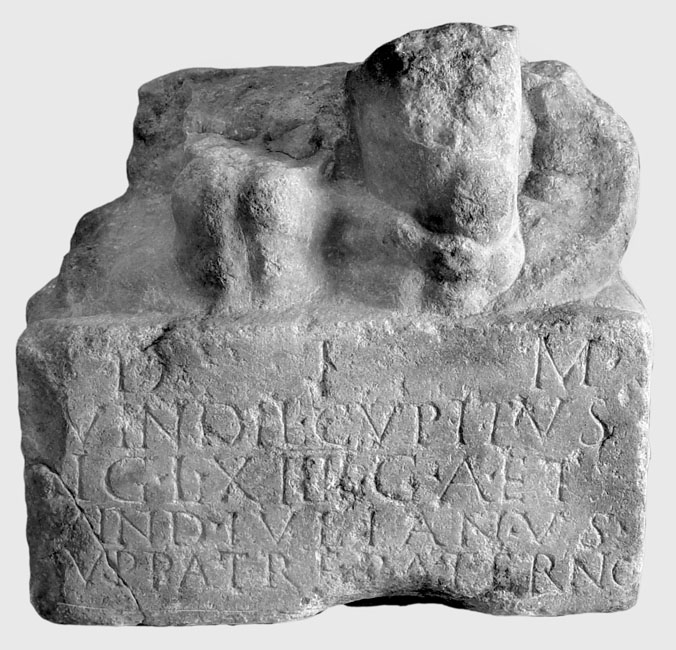
Only parts of the knees of Mithras, emerging from the rock, have been preserved from this monument of Petronell-Carnuntum, Austria.

This altar for the completion of a temple to Sol Invictus by Flavius Lucilianus was found in Fossa, Italy.
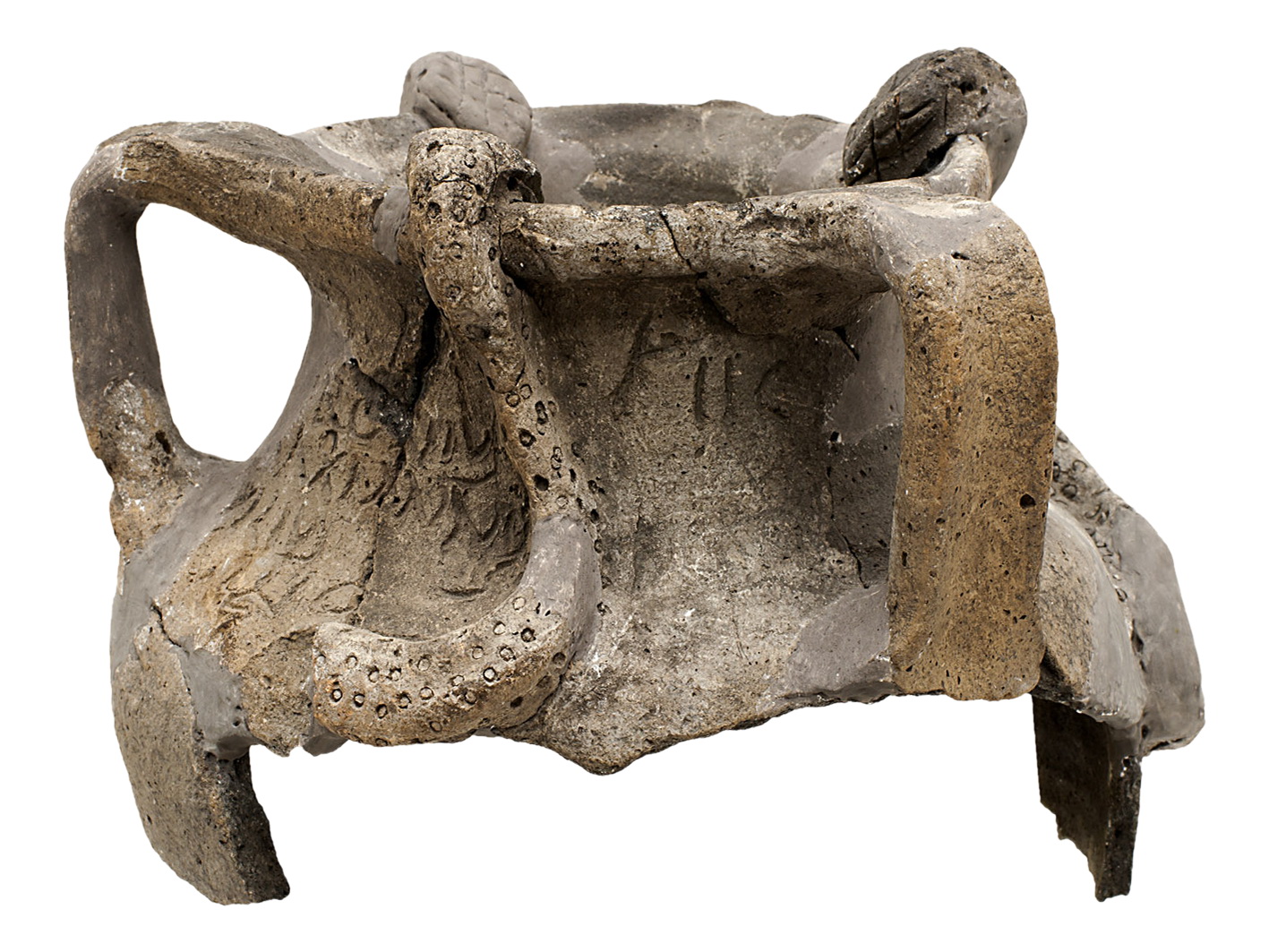
Upon first examination, archaeologists interpreted the inscription on the cult vessel from Gradishje as referencing Mithras, though it has since been re-evaluated.
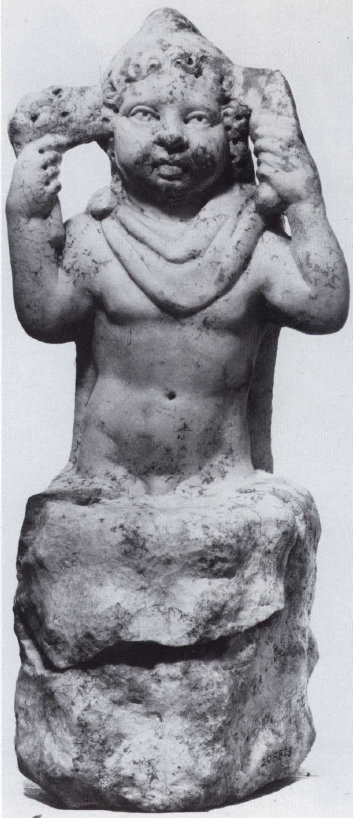
The second statue of Mithras rock-birth was found in the Mitreo di Santo Stefano Rotondo shows a childish Mitras emerging from the rock.
A fragmentary red sandstone relief preserves the upper part of three-headed Hekate holding a long object in her left hand.
