Your search Ernest Will gave 219 results.
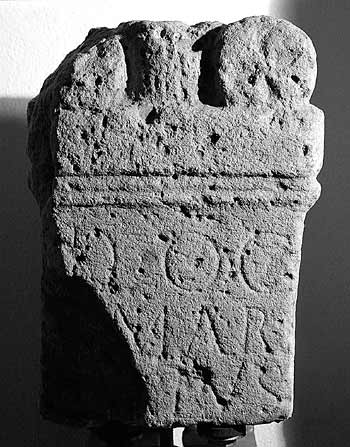
These two inscriptions by a certain Titus Martialius Candidus are dedicated to Cautes and Cautopates.

Limestone slab dedicated to the invincible Sun by the governor Marcus Aurelius Decimus near the temple of Aesculapius.
Sandstone altar from the Mithraeum of Vindobala bearing a dedication to Sol Invictus and Mithras by the prefect Aponius Rogatianus.
This sandstone altar from the Mithraeum of Vindobala (modern Rudchester) preserves a dedication to the Invincible Mithras by P. Aelius Titullus, prefect of a cohort.
An inscription found in the ruins of an old stone wall at Cambeck, near Petrianae, recording a vow willingly and with merit fulfilled to Deus Sol Invictus by Sextus Severius Salvator, prefect.
The inscription on the altar No. 858 from the Mithraeum at Borcovicium (modern Housesteads), recording a vow willingly and with merit fulfilled by Herion to Sol.

The last pagan emperor of Rome, closely associated with Mithras and Neoplatonic interpretations of the Sun God.

Alfius Severus was a prominent figure associated with the Mithraeum of Marino, probably acting as pater of a small Mithraic community connected with the nearby peperino stone quarries.
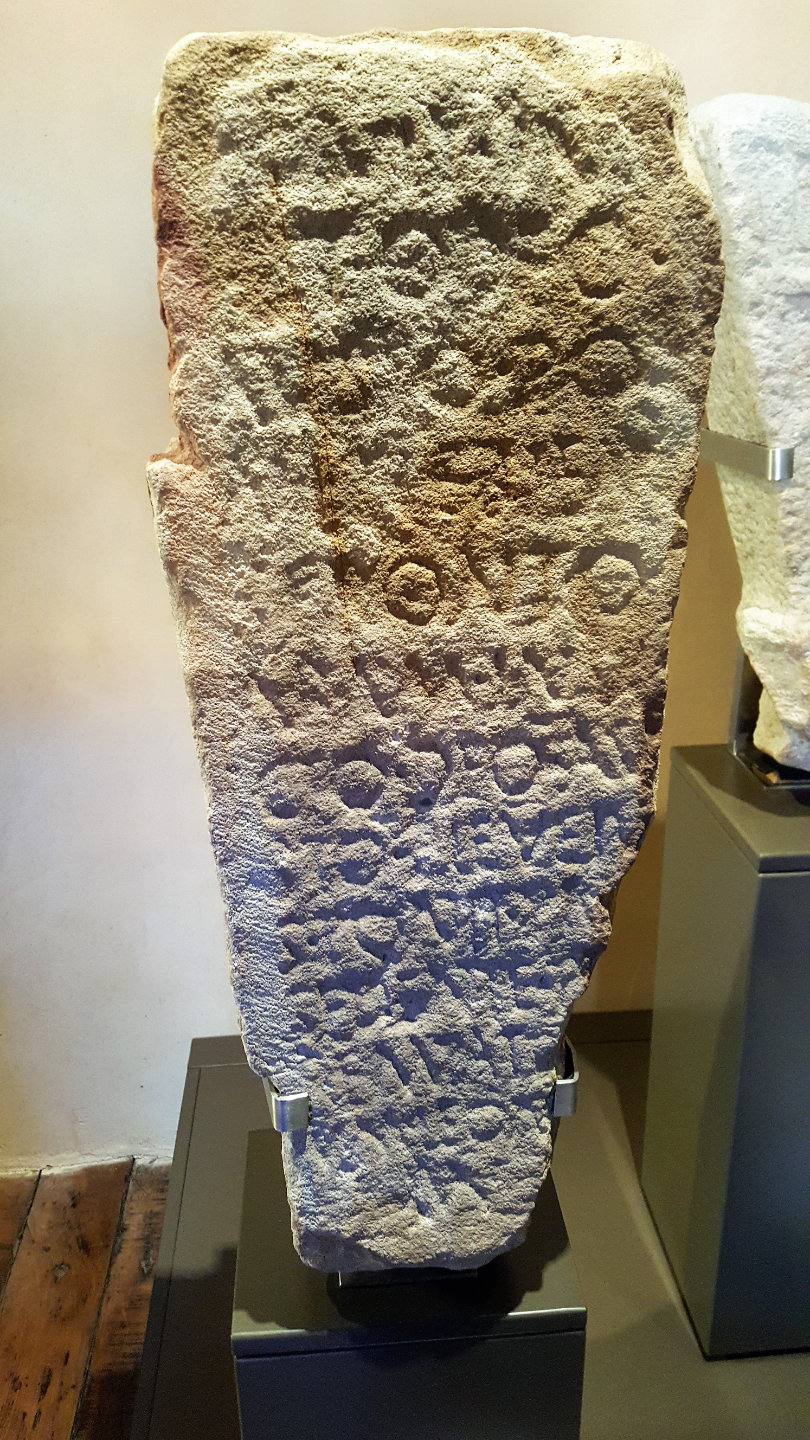
The monument of San Juan de la Isla (Asturias) devoted to Mithras was preserved in the portico of the main church until 1843.
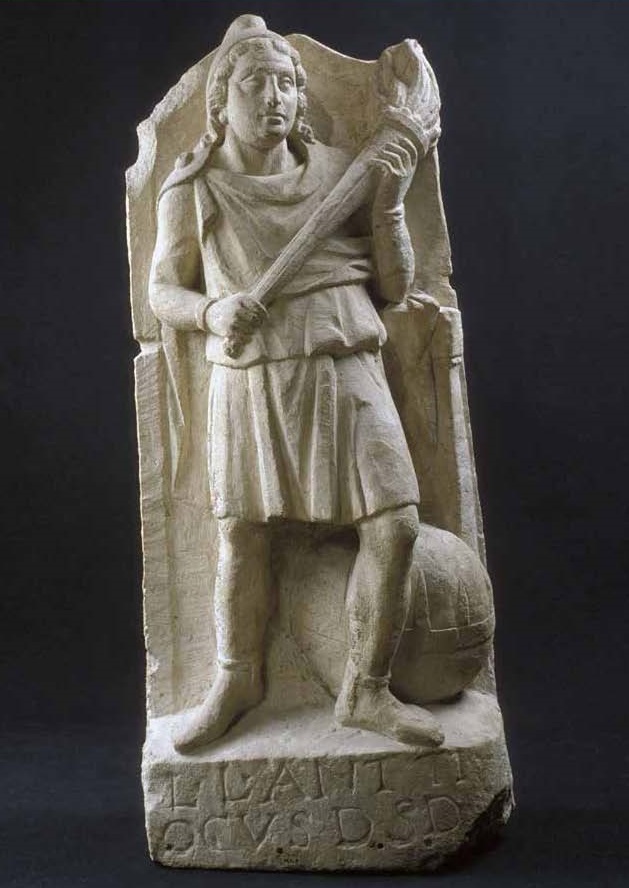
This monument representing Cautes with uncrossed legs was consecrated by a certain Anttiocus.
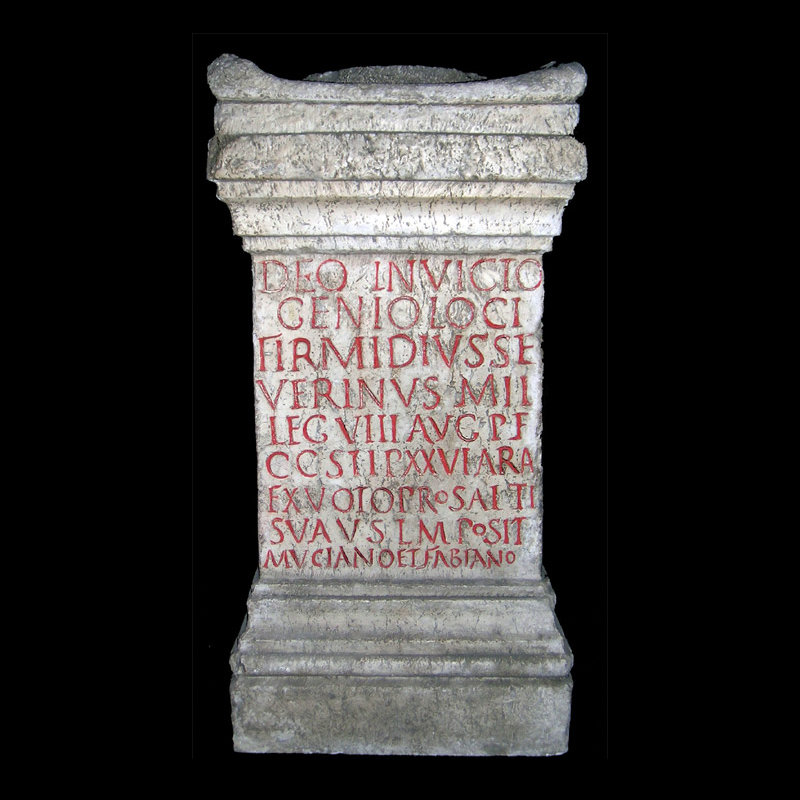
This limestone altar bears an inscription from its donor, Firmidius Severinus, in honour of Mithras after 26 years of service in the Legio VIII Augusta.
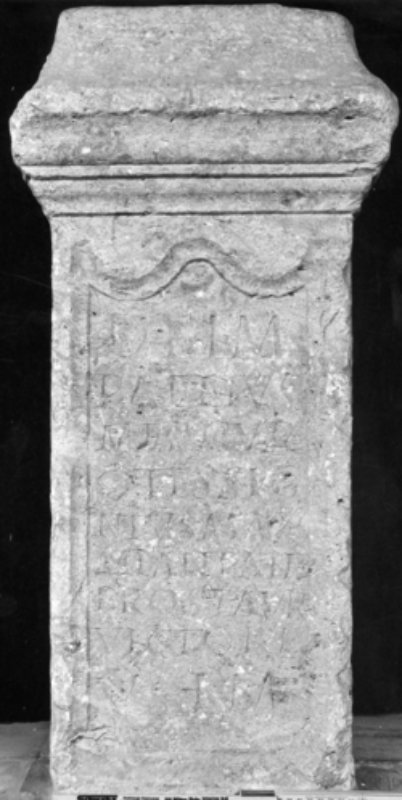
This altar to Mithras found in Aquilieia mentions several persons of a same community.
Preliminary readings of the painted Mithraic texts later revised after additional research and restoration.
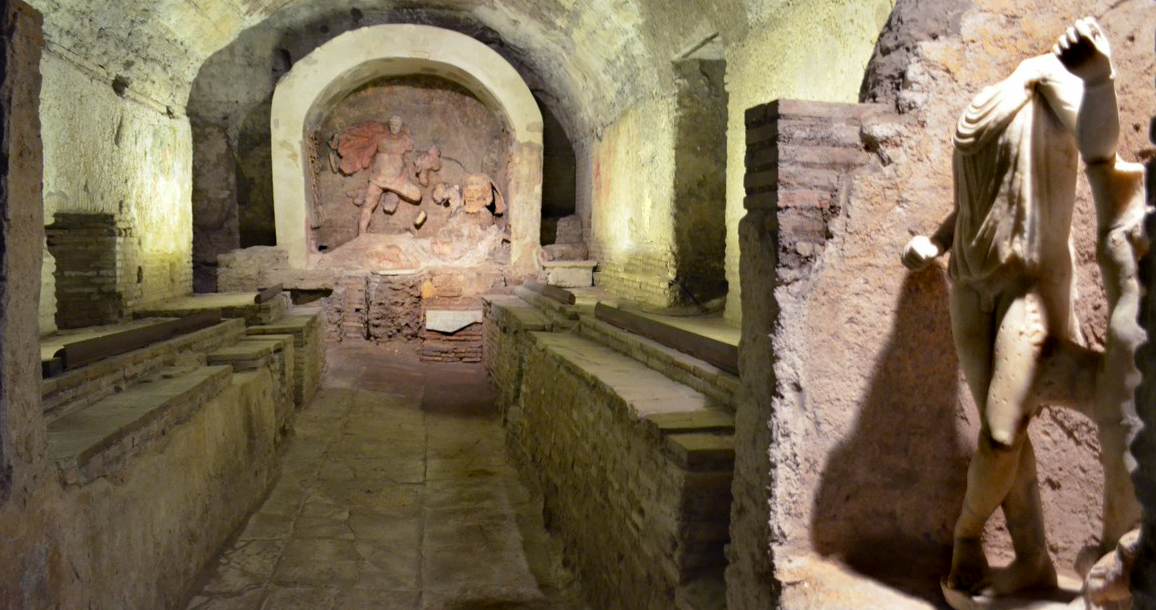
The Mithraeum of Santa Prisca houses remarkable frescoes showing the initiates in procession.
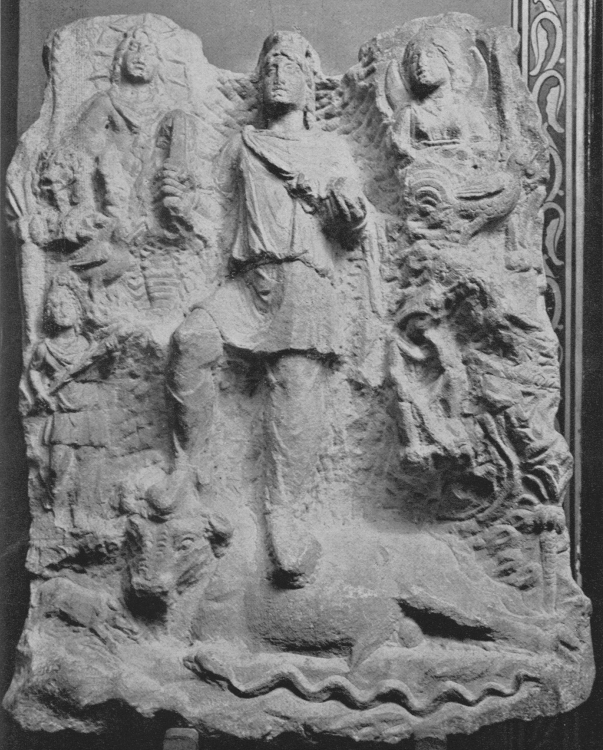
This unusual representation of Mithras standing on a bull was kept in the Casino di Villa Altieri sul Monte Esquilino until the 19th century.
Punic ex-voto to Tanit bearing the formula 'Meqim Elim Mithrahastarni', tentatively interpreted as a Mithras reference but pre-dating the Roman cult.
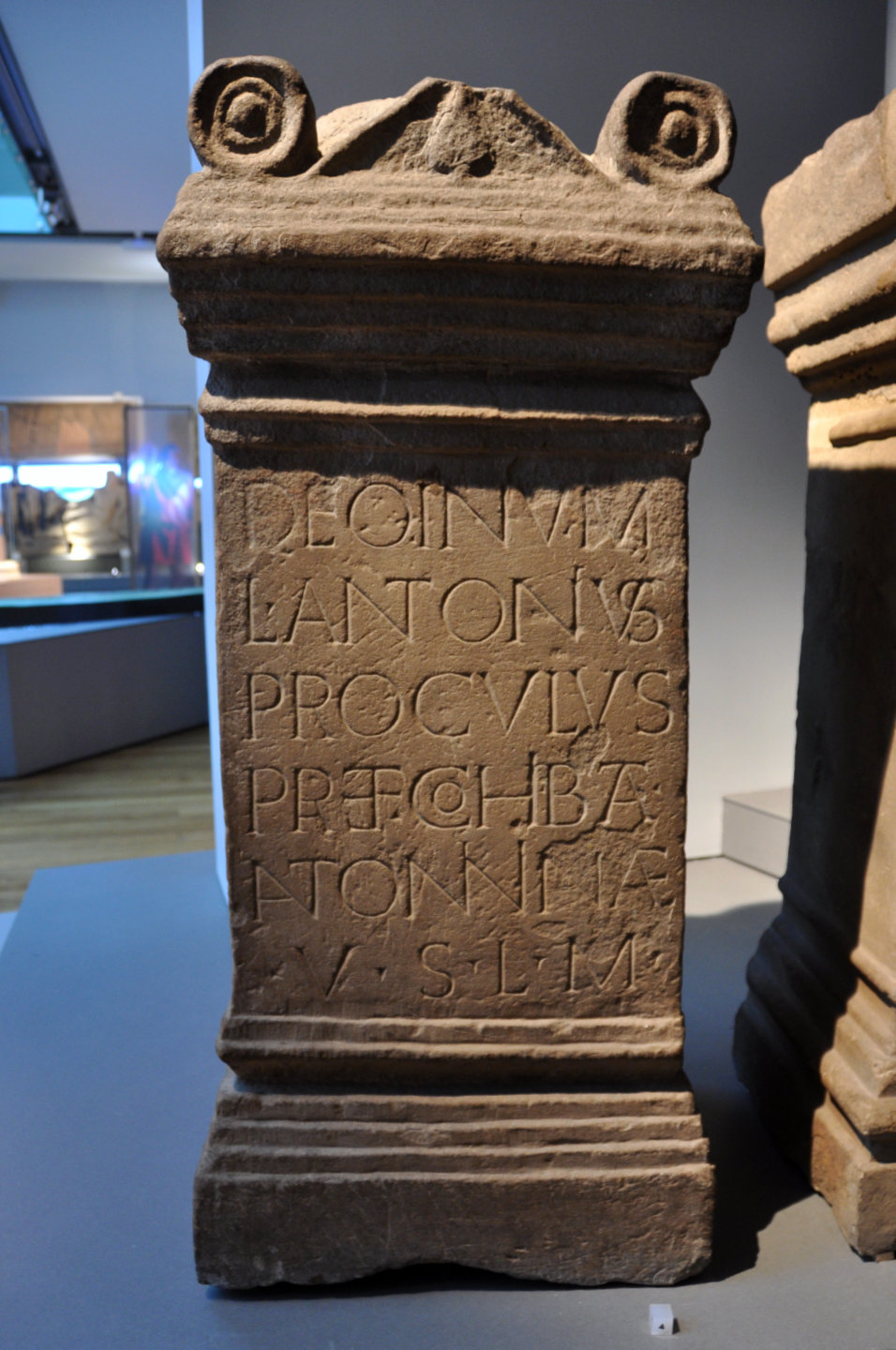
One of the three altars to Mithras found at the Mithraeum of Carrawburgh fort.
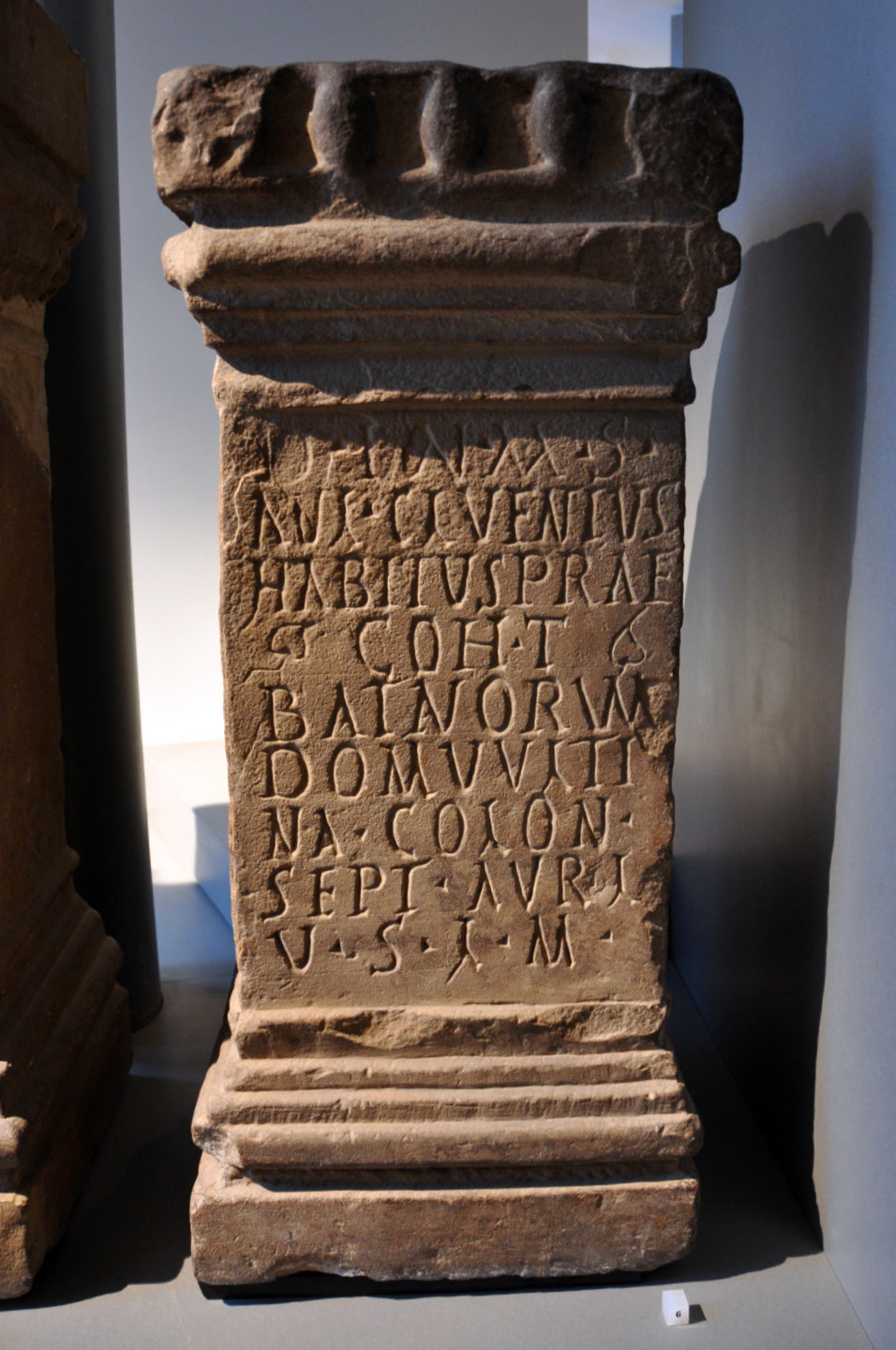
One of the three altars to Mithras found at the Mithraeum of Carrawburgh fort.
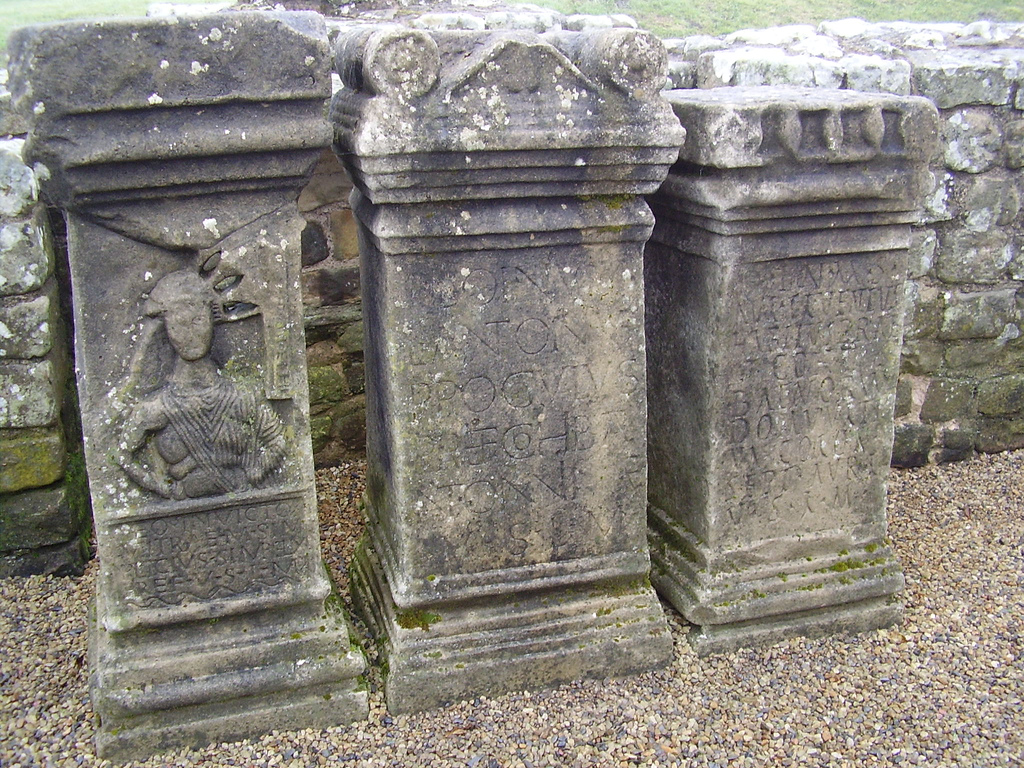
One of the altars from the Carrawburgh Mithraeum depicts the bust of Mithras or Sol.
Marble stele from Histria, Moesia Inferior, found reused in a late wall in the southern quarter of the city, bearing a Mithraic dedication or scene.
