Your search Farid ud-Din Attar gave 1137 results.
Franz Cumont considers the bas relief of Osterburken ’the most remarkable of all the monuments of the cult of Mithras found up to now’.
This relief of Mithras killing the bull includes various singular features specific to the Danubian area.
Mithraic Influence on Early Christian Symbolism and Church – Architecture
The large number of monuments found at the Mithraeum of Sarmizegetusa and the sheer size of the temple are unusual.
This remarkable Greek marble relief of Mithras killing the bull was discovered in 1705 and remained in private collections until it was bought by the Louvre.
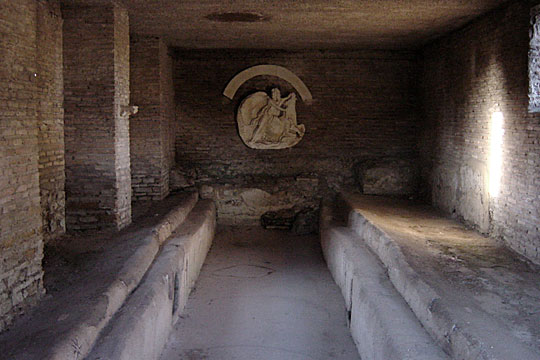
The Mithraeum of the Seven Spheres (Sette Sfere) is of great importance for the understanding of the cult, because of its black-and-white mosaics depicting the planets, the zodiac and related elements.
Over the last century or so, a great deal has been said about the god Mithras and his mysteries, which became known to the European world mainly through his Roman cultus during the Imperial Period.
Upon first examination, archaeologists interpreted the inscription on the cult vessel from Gradishje as referencing Mithras, though it has since been re-evaluated.
We’ve put together a new table of cross-references of monuments to Mithras in several databases, including Vermaseren’s Corpus, Cumont’s Textes, CIL, l’Année épigraphique, Clauss / Slaby and Heldeiberg’s epigraphic databases, and more…
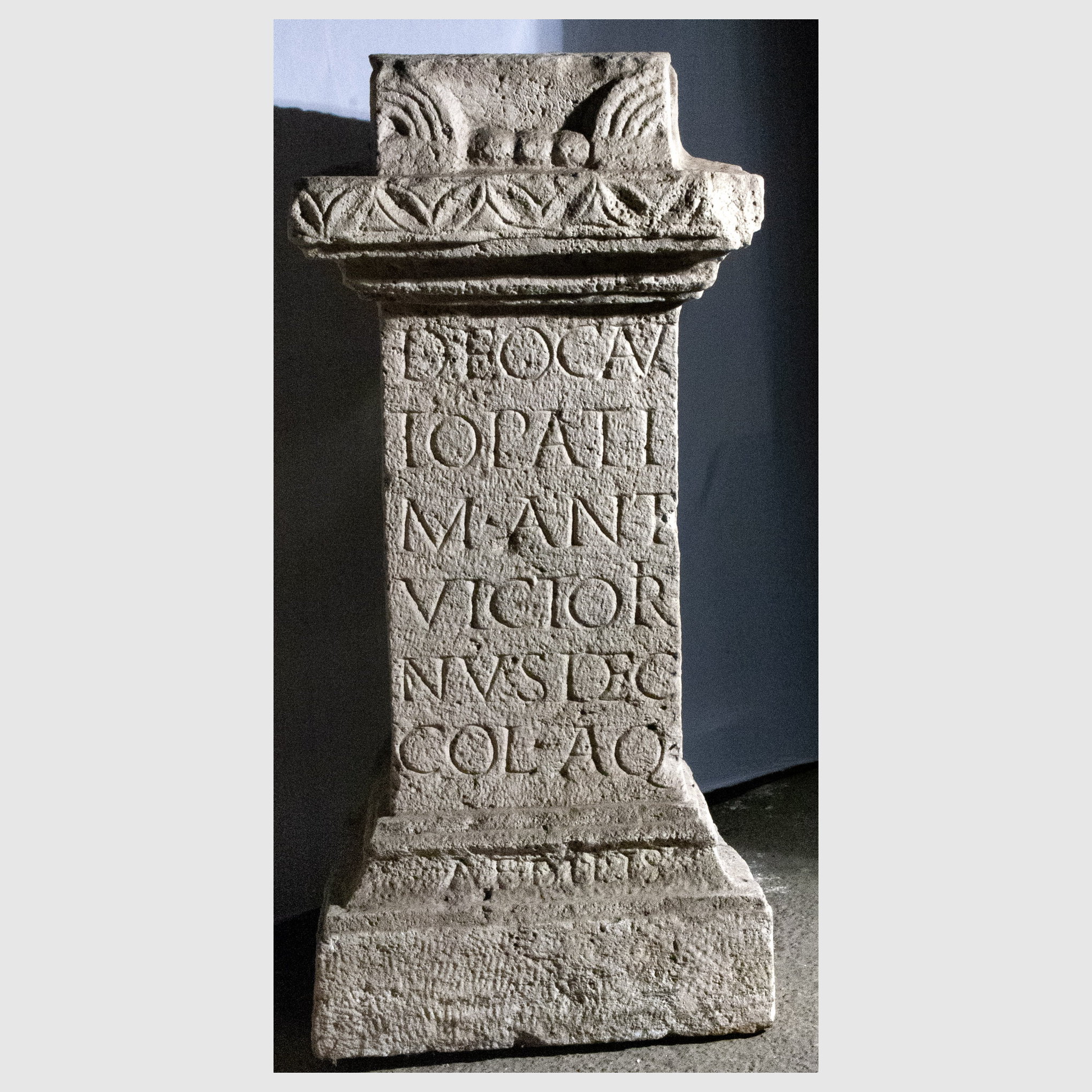
Several inscriptions dedicated to Mithras have been found in Eauze, including these two by a certain Pater Sextus Vervicius Eutyches, discovered in 1768.
In this relief of Mithras as bull slayer, recorded in 1562 in the collection of A. Magarozzi, Cautes and Cautopates have been replaced by trees still bearing the torches.
This fragmented altar was found in two pieces that Ana Osorio Calvo has recently brought together.
This small bronze statuette of Mithras riding a horse is composed of two pieces.
The Mithraeum of Els Munts, near Tarragona, is one of the largest known to date.
Marble slab with inscription by Velox for the salvation of the chief of the iron mines of Noricum.
The most emblematic of the Syrian Mithraea was discovered in 1933 by a team led by the Russian historian Mikhaïl Rostovtzeff.
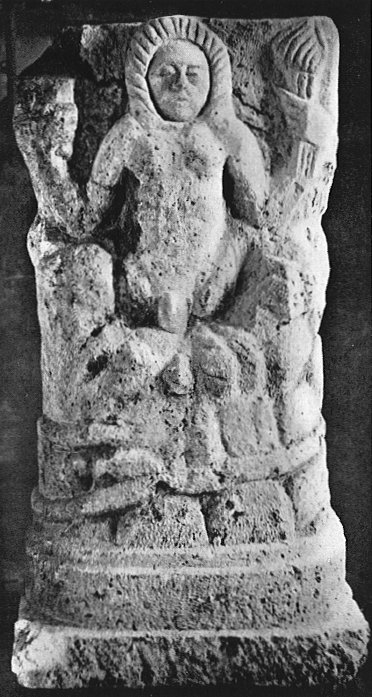
This marble sculpture from Sicily, known as the Randazzo Vecchio or Rannazzu Vecchiu, contains some essential elements of the Mithraic Aion, the lion-headed god.
On one of the capitals of the cathedral of Santa Maria Nuova in Monreale, Sicily, an unusual turbaned bull-slaying Mithras has been recorded.
This heliotrope gem, depicting Mithras slaying the bull, dates from the 2nd-3rd century, but was reused as an amulet in the 13th century.