Your search Florence gave 9 results.

Florentia was a Roman city in the Arno valley from which Florence originated.

A rectangular marble tauroctony relief found in Etruria, once in the Villa Martin at Settignano near Florence, showing Mithras slaying the bull with Cautes and Cautopates in Eastern attire cross-legged on either side and the busts of Sol and Luna in the upper corners;…
A white marble tauroctony statue fragment in the Palazzo Corsini in Florence, possibly from the Florentine area, heavily restored, with the upper body of Mithras and the bull's hind quarter with scorpion preserved but hind-legs lost and the god's head replaced by a petasus…
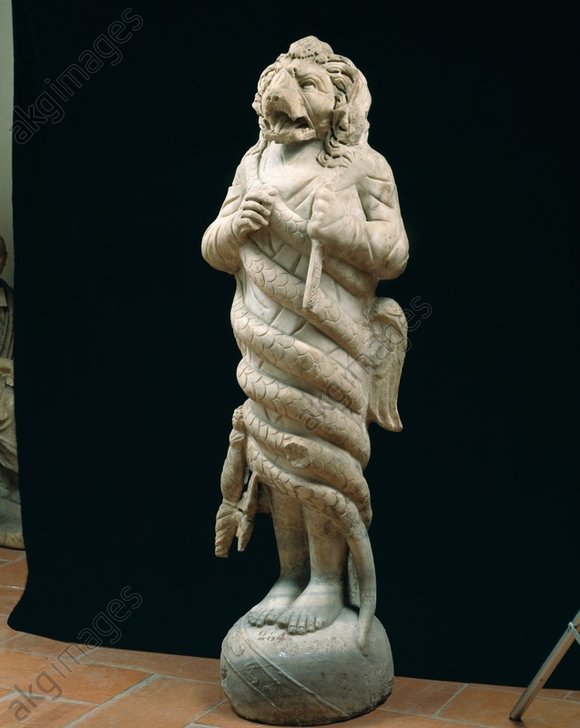
The sculpture of Aion from Florence, Italy, has the usual serpent, coiled six times on its body, whose head rests on that of the god of eternal time.

The sculpture of the birth of Mithras in Florence included the head of Oceanus.
Torrita di Siena is a comune in the Province of Siena in the Italian region of Tuscany, located about 80 kilometres southeast of Florence and about 40 km southeast of Siena.

Yellow lenticular carnelian gem probably from Aquileia, now in Udine, depicting a Mithraic scene nearly identical to the Florence jasper.

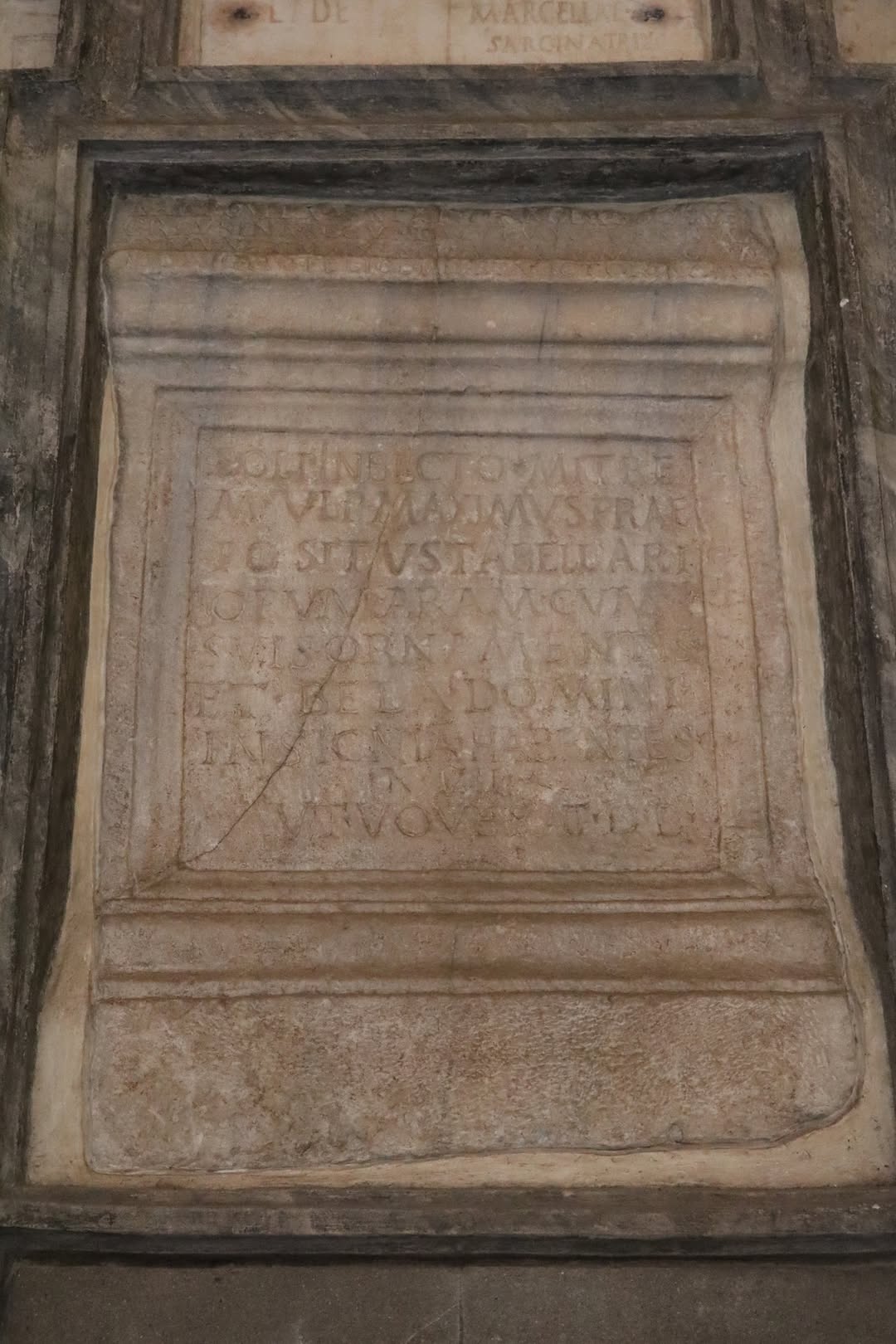
Marble altar dedicated to Sol Invictus Mithras, found in Rome (in aedibus Maffaeiorum), set up in 183 A.D. by M. Ulpius Maximus, praepositus tabellariorum, together with its ornaments and Mithraic insignia, in fulfilment of a vow.
