Your search Frankfurt am Main gave 2188 results.

Basalt relief from Mithraeum I at Heddernheim, ancient Nida, featuring a depiction of the goddess Epona, found in a Mithraic context
Sandstone statue of a seated lion in attacking posture, from Mithraeum I at Heddernheim, ancient Nida, with its hindmost part lost
Votive inscription from Heddernheim, ancient Nida, dedicated to Fortuna by Tacitus, an eques of the Ala I Flavia Milliaria
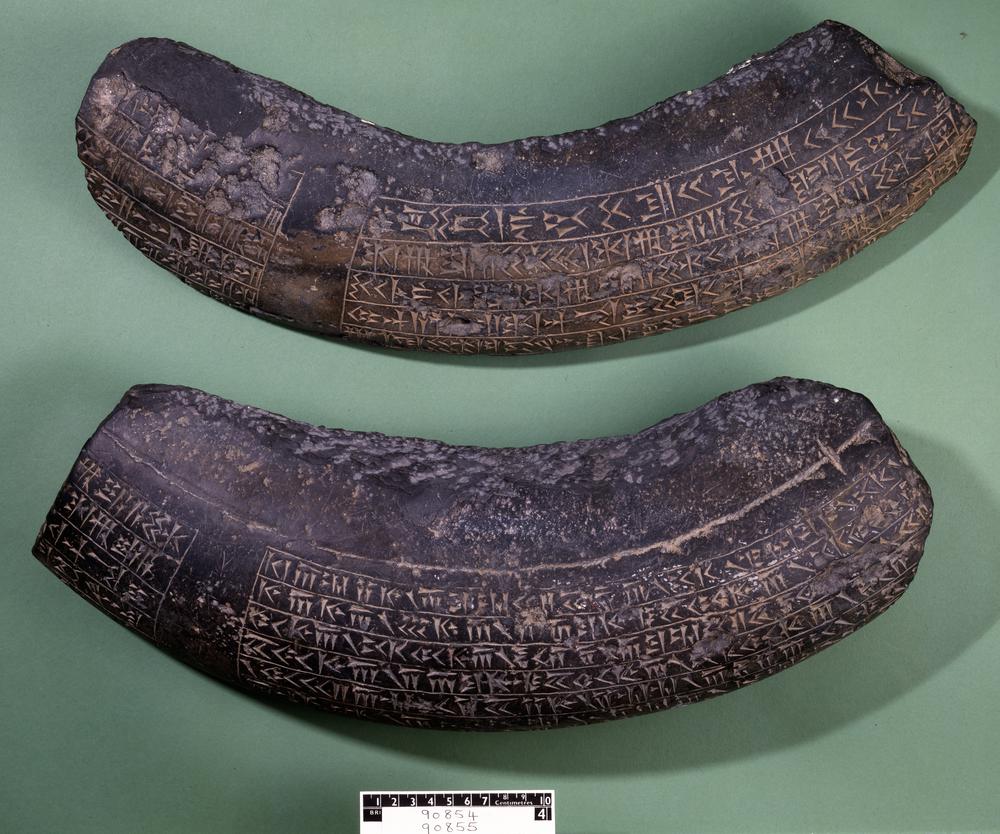
The base of the column bears an inscription that records the rebuilding of a palace at Ectabana ’by the favour of Ahuramaza, Anahita and Mithra’.

Robert Turcan présente les dévotions immigrées dans le monde romain, sans négliger les cultes marginaux ou sporadiques, traitant également des courants gnostiques, occultistes et théosophiques.

Questions on the old and new testaments, 113.11. Ambrosiaster, 5th cent.
A black marble cippus from Val Camonica with clear but inelegant lettering, dedicated to Cautopates by G. Munatius Tiro, a duovir iure dicundo, and his son G. Munatius Fronto.
An inscription from the place called La Oneda near Breno in Val Camonica, dedicated to Sol Divinus by L. Apisocius Successus for himself and his four patrons Marcus, Gaius, Lucius and Quintus, with a dagger with ribbons carved below.
Marble funerary stele dedicated to the soldier Aurelius Lucanus, a devotee of Mithras, found at Amasya (ancient Amasia), Pontus.
Lost altar from Zsámbék near Aquincum, Pannonia Inferior, dedicated to Soli invicto sacrum; found with the preceding piece.
Lost altar from Zsámbék near Aquincum, Pannonia Inferior, bearing a dedication to Invicto deo; found together with the following piece in a vineyard.
Sculpted ram’s head discovered among the finds from the supposed Mithraic sanctuary.

This plaque, located on the western staircase of the Palace of Darius, mentions the god Mithra together with Ahura Mazda as protectors of King Artaxerxes III Ochus.
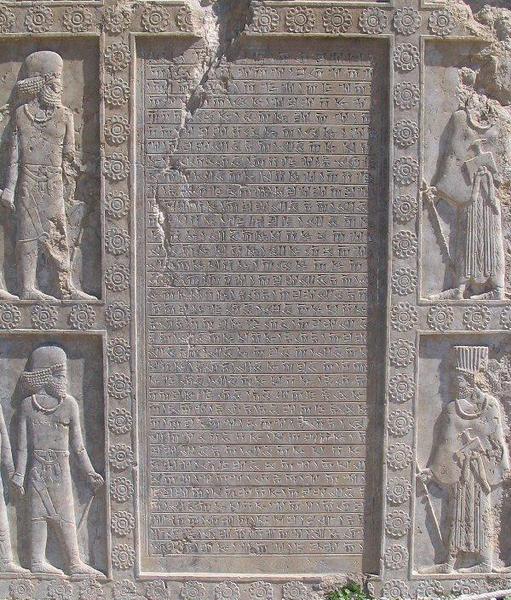
Located at the western entrance to the Palace of Darius in Persepolis, this tablet bears an inscription mentioning Ahuramazda and Mithra.
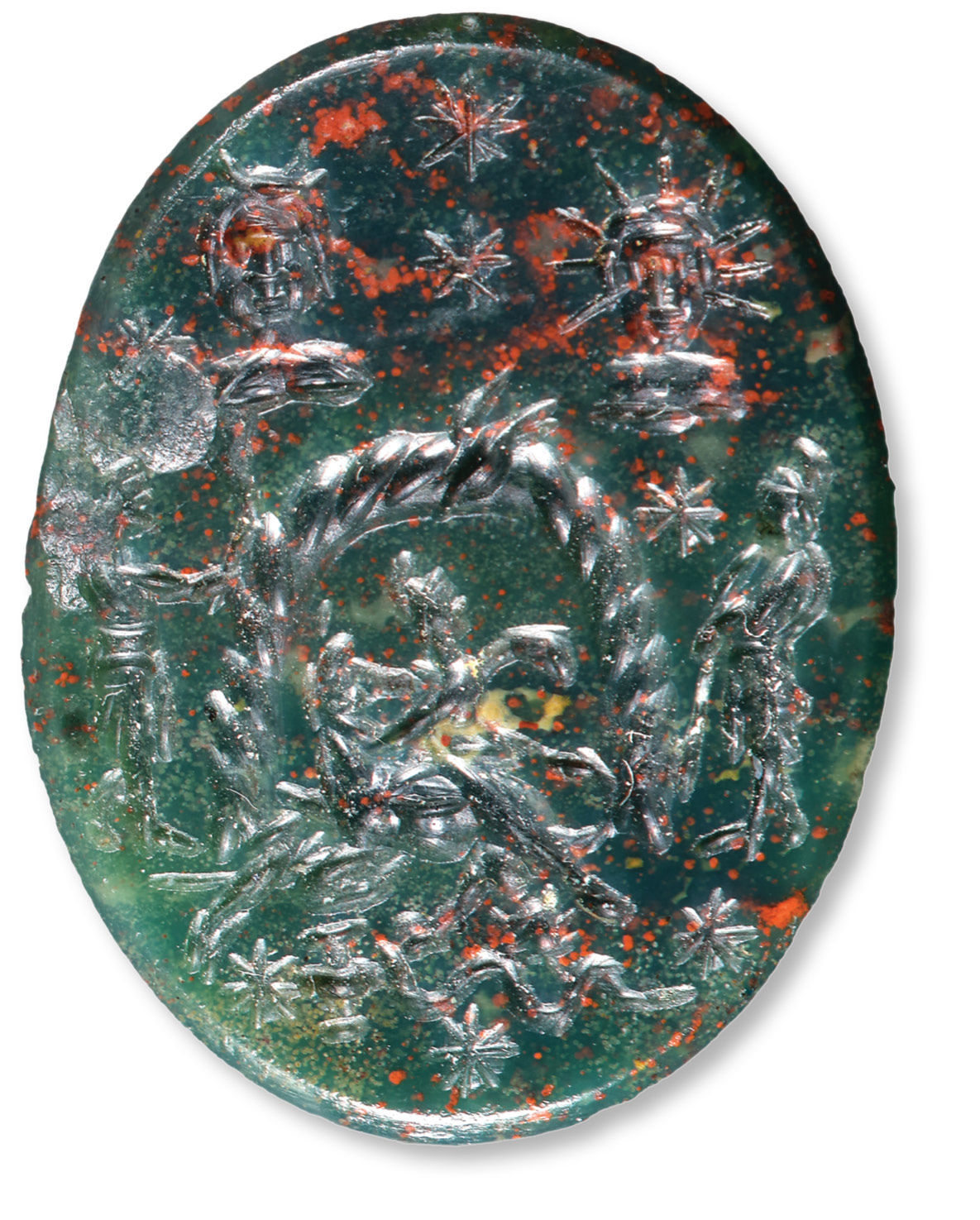
This heliotrope gem, depicting Mithras slaying the bull, dates from the 2nd-3rd century, but was reused as an amulet in the 13th century.
The Mithraeum of Pamphylia was cut back into the rock to form a cave, with a separate relief of Mithras killing the bull.