Your search From Rome, Mithreum of Castra Peregrinorum under Santo Stefano Rotondo. gave 548 results.
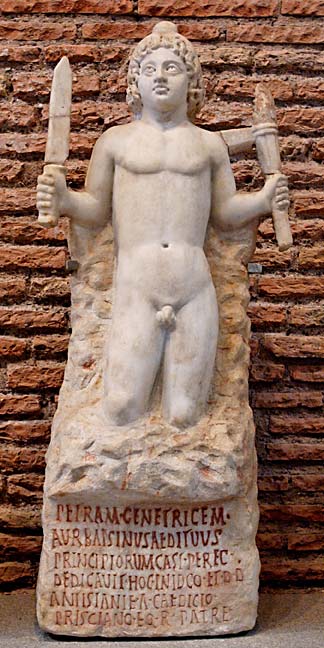
The sculpture of Mithras rock-birth from Santo Stefano Rotondo bears an inscription of Aurelius Bassinus, curator of the cult.
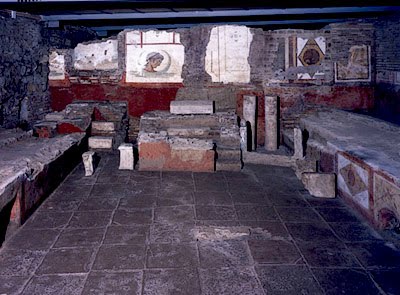
The Mitreo dei Castra Peregrinorum was discovered under the church of Santo Stefano Rotondo in Rome.
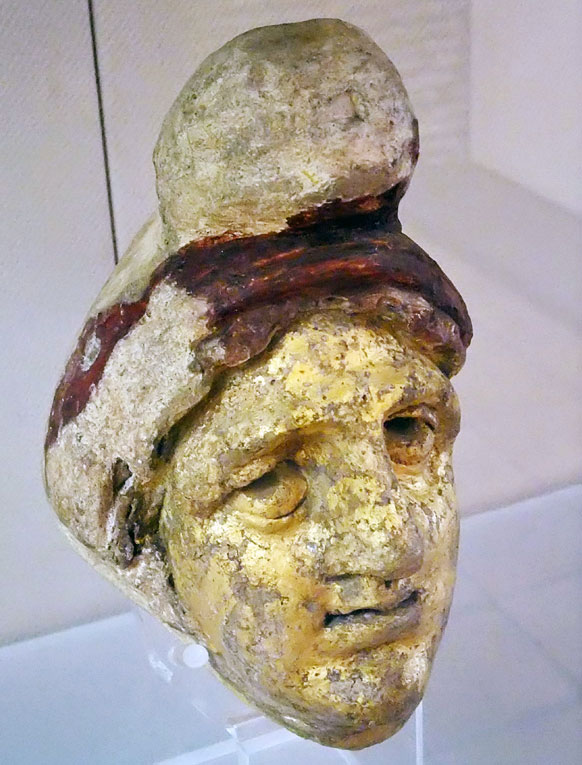
The head was part of a stucco relief of the Tauroctony found under the church of Santo Stefano Rotondo in Rome
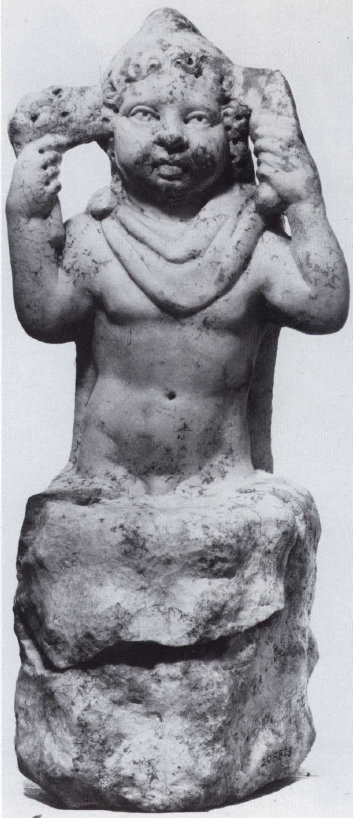
The second statue of Mithras rock-birth was found in the Mitreo di Santo Stefano Rotondo shows a childish Mitras emerging from the rock.

Lissa-Caronna details the excavation and findings of a mithraeum beneath San Stefano Rotondo, focusing on its decor, sculptures, and rituals.

This temple of Mithras has been discovered under the Church in Vieux-en-Val-Romey, in 1869.
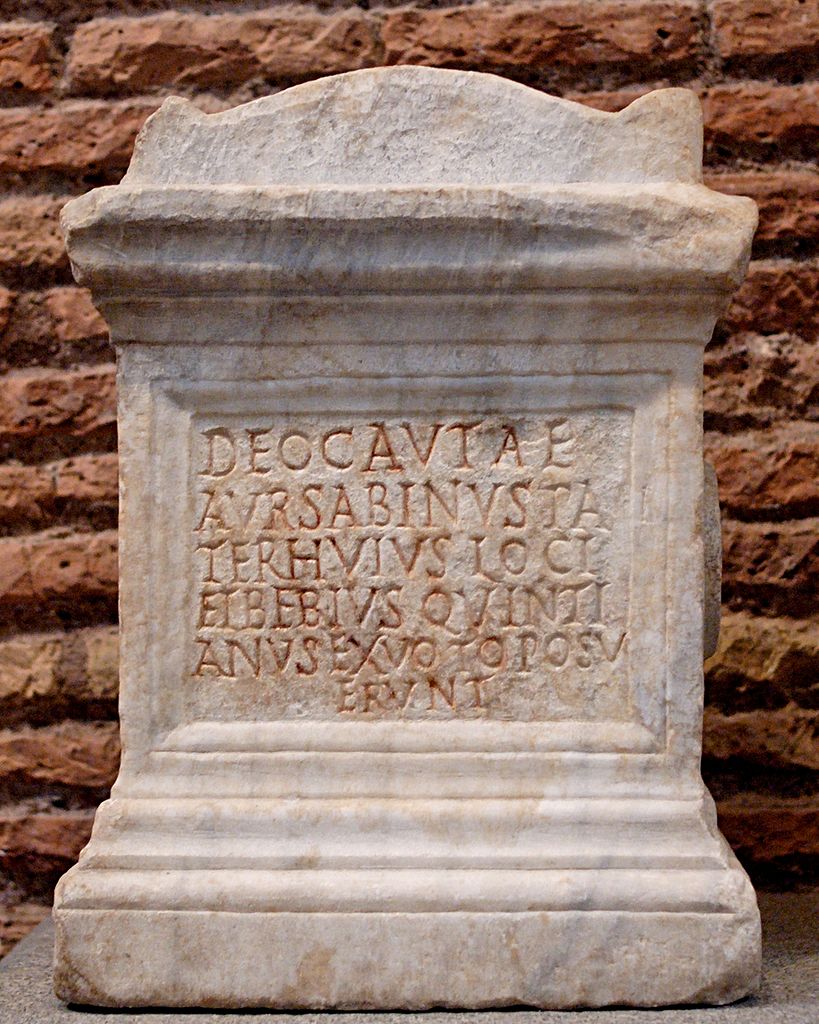
These two parallel altars to the diophores were dedicated by the Pater and a Leo from the Mithraeum of S. Stefano Rotondo.
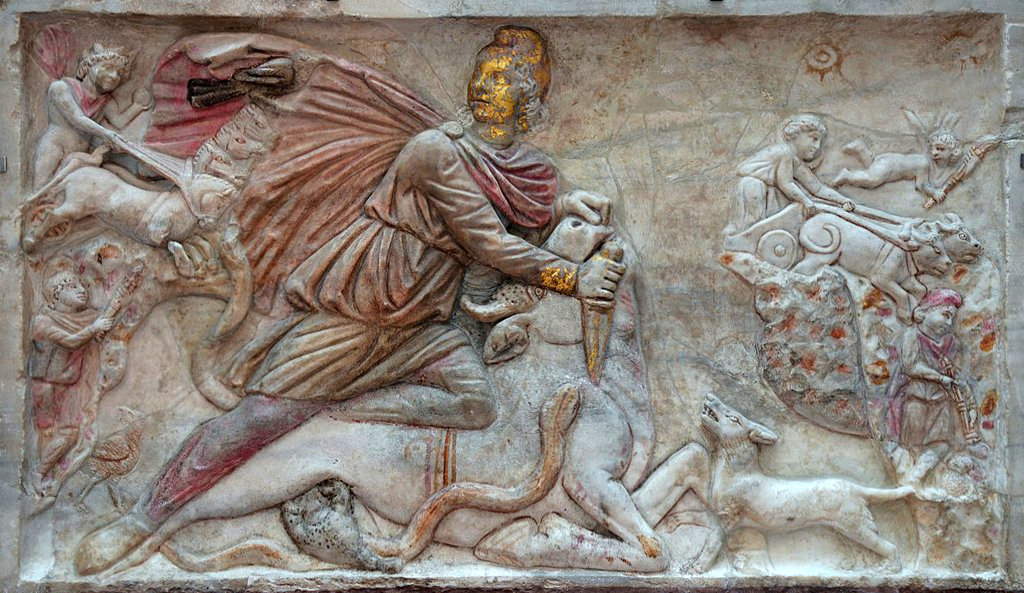
The relief of Mithras killing the bull of Stefano Rotodon preserves part of his polycromy and depicts two unusual figures: Hesperus and an owl.
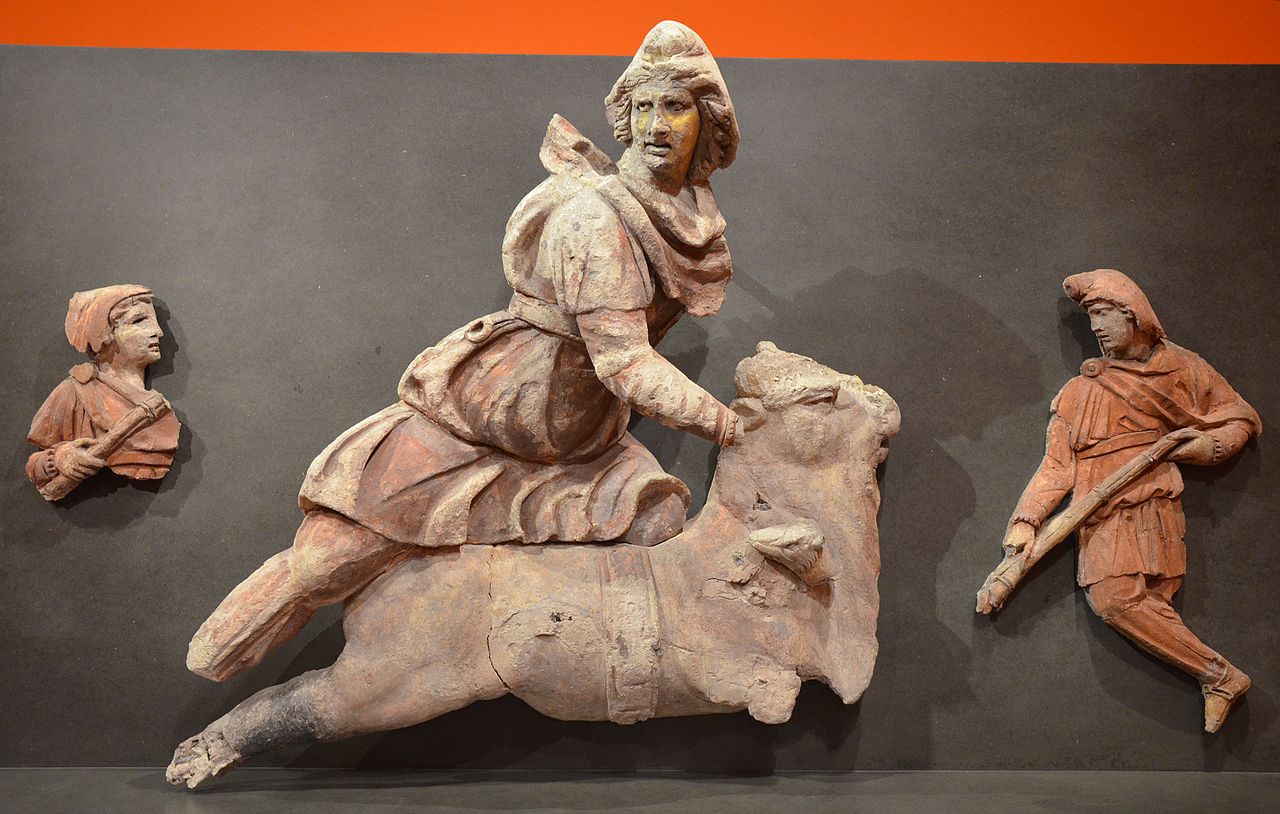
This relief was found under the Palazzo Montecitorio, in Rome, and bought by the Liebighaus at Frankfort.
A marble dedication tablet found in the Vigna Curtii Palloni outside the Porta Sant'Agnese near the Praetorian Camp in Rome, recording the construction of a sacrarium dedicated to Sol Invictus by Q. Pompeius Primigenius, pater and sacerdos, under Septimius Severus and Caracalla…
Under-layer wall-paintings in the S. Prisca Mithraeum on the Aventine showing a further procession of Mithraic initiates in different colours, with partially legible dipinti including liturgical verses and acclamations.
White marble statue of a standing cross-legged torchbearer in Eastern attire with traces of red painting, found in the Castra Pretoria in 1882; head, arms, and feet are lost and the monument could not subsequently be traced.
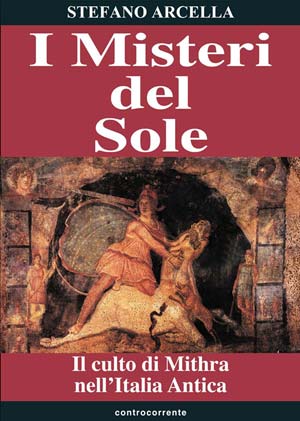
A study of Roman Mithraism that combines historical evidence with a symbol-centred interpretive approach, exploring Mithraic iconography, ritual experience, and the cult’s encounter with Christianity in the Late Empire.
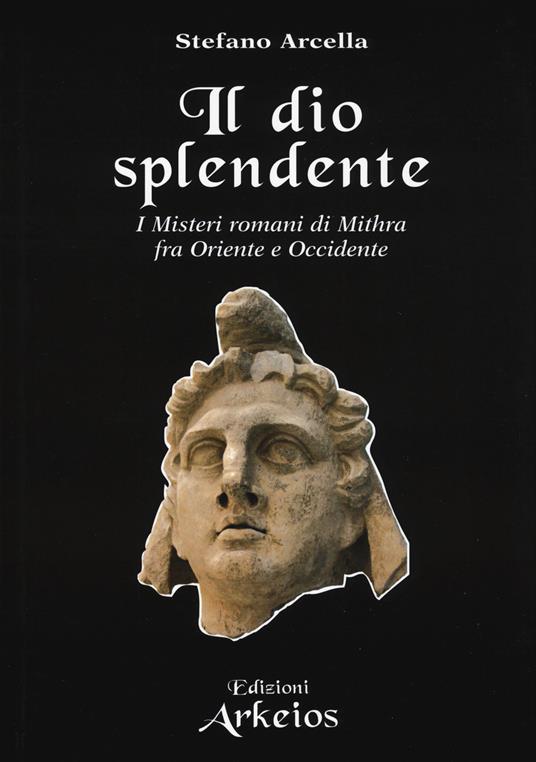
A study that re-examines Roman Mithraism through epigraphic evidence and comparative analysis, exploring its links with Orphism, Platonism, and Iranian traditions, and presenting the cult of Mithras as a solar path of individual spiritual awakening between East and West…

The Mithraeum under and behind S. Prisca on the Aventine is without doubt the most important sanctuary of the Persian god in Rome.
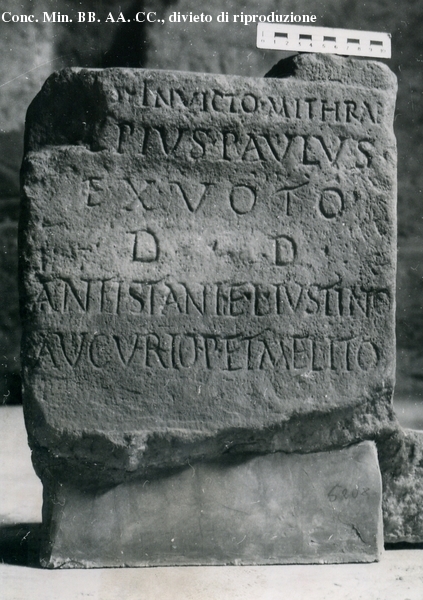
Small marble base, found in one of the private houses along the Via Sacra nearly opposite to the Basilica of Constantine, Rome.
Epigraphic testimony catalogued in the Année Épigraphique and Lugli’s Fontes for ancient Rome.
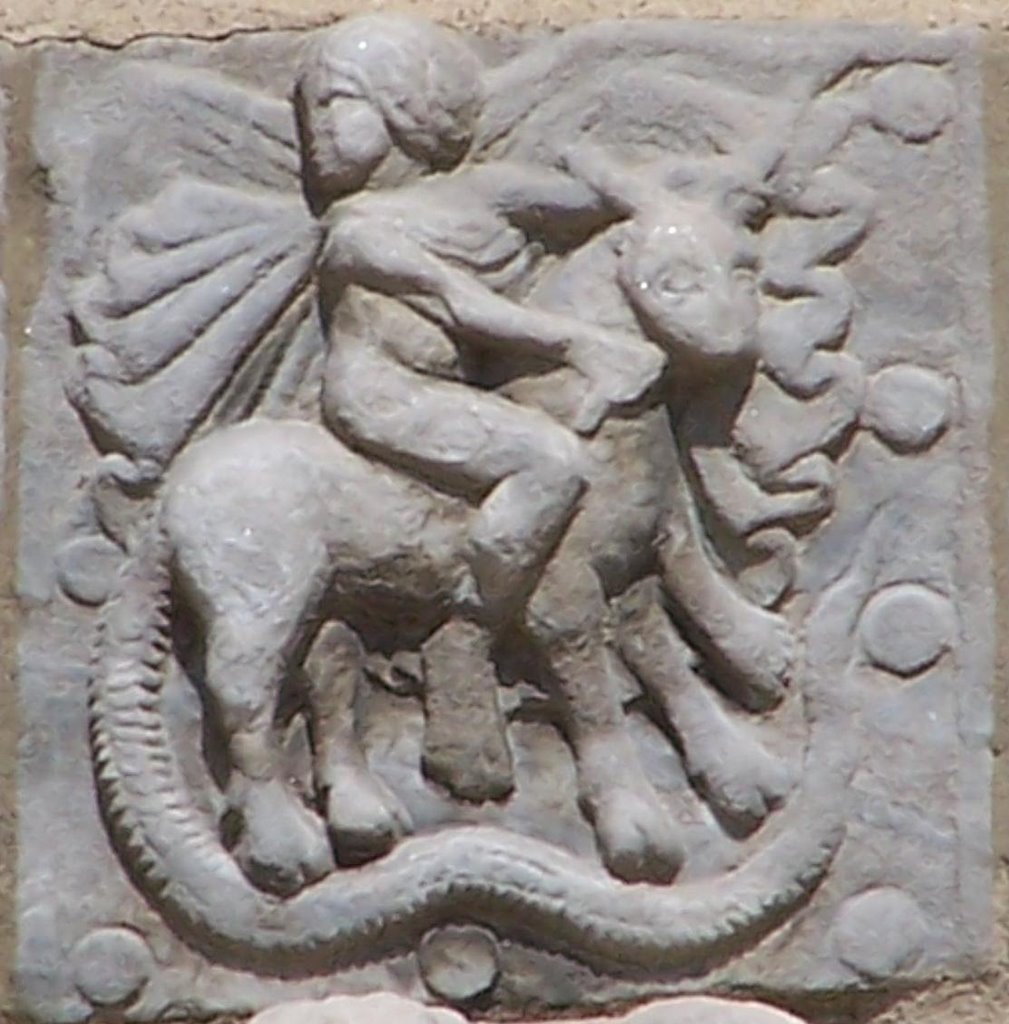
Mithras slaying the bull appears as the sign of Capricorn in a zodiacal sequence on the Pórtico del Cordero of the Abbey de Santo Domingo de Silos, Burgos, Spain.

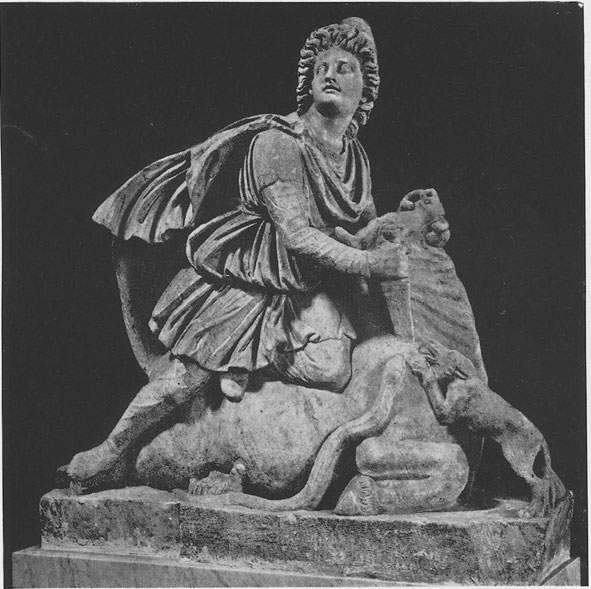
White marble statue found near the Scala Santa in Rome depicting Mithras as bull-slayer, accompanied by the dog, serpent and scorpion, with the bull’s tail ending in ears of grain.
