Your search Germania superior gave 260 results.

Scholar, politician and a court astrologer to the Roman emperors Claudius, Nero and Vespasian.

Praeses of the Noric Mediterranean province, of equestrian rank, restaured the Mithraeum of Virunum in 311.
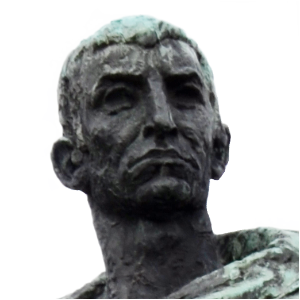
Danube region can be traced back to the legions that fought under his command in Armenia.

Clarissimus knight and legate born in Poetovio that helped to disseminate the cult of Mithras in the African provinces.

Gladiator to whom his companions Cimber and Pietas erected a monument in Colonia, Germania.

Emperor Caracalla ordered one of Rome’s largest temples to the god Mithras to be built in the baths bearing his name.
At Rome’s twilight, amid political upheaval and Christian ascendancy, Vettius Agorius Praetextatus embodied pagan intellect, virtue, and authority across senatorial, military, and mystical spheres.
This second altar discovered to date near Inveresk includes several elements unusual in Mithraic worship.
Sepulchral limestone inscription from the vicinity of the Mithraeum at Colonia Agrippina (Germania Inferior), mentioning the Mithraic grade Corax.
Colonia Claudia Ara Agrippinensium, usually just called Colonia, was the Roman settlement in the Rhineland that became the modern city of Cologne, now in Germany. It was the capital of Germania Inferior and the military headquarters of the region.
Vetera was the name of the location of two successive Roman legionary camps in the province of Germania Inferior near present-day Xanten on the Lower Rhine.
Szombathely is the oldest recorded city in Hungary. It was founded by the Romans in 45 AD under the name of Colonia Claudia Savariensum, and it was the capital of the Pannonia Superior province of the Roman Empire.
Carnuntum was a Roman legionary fortress and headquarters of the Pannonian fleet from 50 AD. After the 1st century, it was capital of the Pannonia Superior province. It also became a large city of 50,000 inhabitants.
Passage from Plutarch’s Life of Pompey, recounting the rise, power, and insolence of the Cilician pirates before Pompey’s campaign to suppress them.
This terra sigillata was found in 1926 in a grave on the Roman cemetery of St. Matthias, Trier. An eyelet indicates that it could have been hung on a wall.
Over the last century or so, a great deal has been said about the god Mithras and his mysteries, which became known to the European world mainly through his Roman cultus during the Imperial Period.
There is no consensus on the authenticity of this monument erected by a certain Secundinus in Lugdunum, Gallia.
