Your search Lucciana (Mariana site) gave 296 results.

Zaraï was a Berber, Carthaginian, and Roman town at the site of present-day Aïn Oulmene, Algeria.

An altar found in 1830 at the ancient site of Industria near Monteu da Po in Liguria, bearing a dedication to the Invincible Mithras by C. Industrius Verus.
A skeleton of a man aged approximately thirty to forty years, with arms tied behind his back and wrists bound with an iron chain, found lying on a fragment of the main relief at the back of the Mithraeum at Pons Saravi (modern Saarburg) in Belgica…
An inscription from the vicus Vicciomitum in Milan (ancient Mediolanum), recording a votive dedication to the Invincible Mithras by L. Atilius Pupinius on a site granted by decree of the town council.
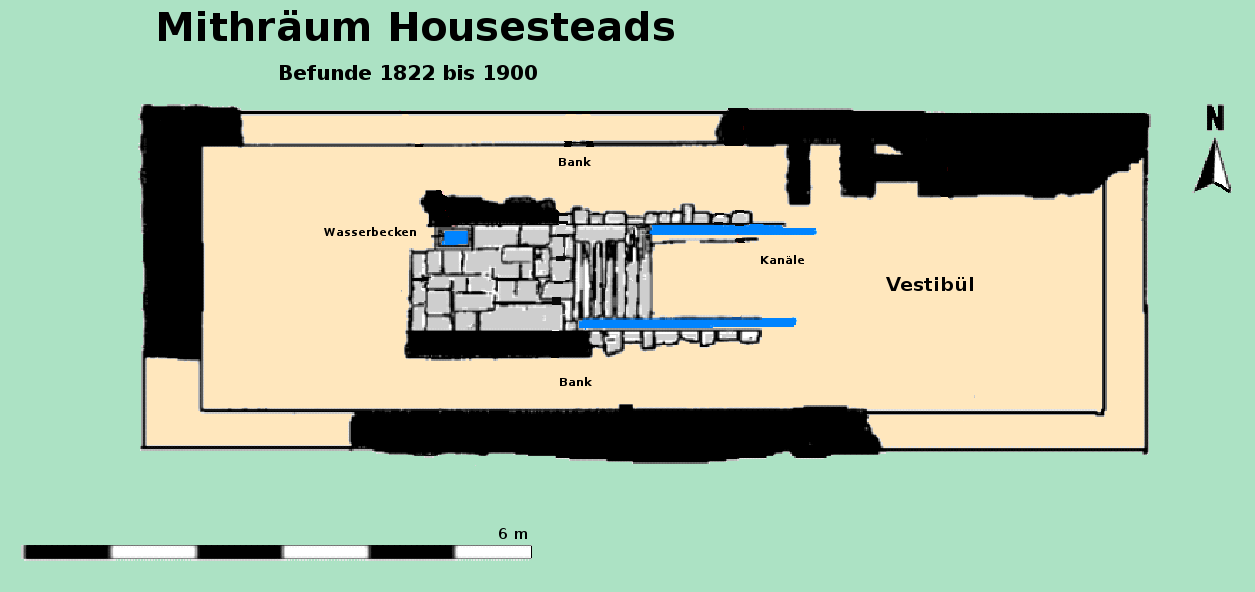
The Housesteads Mithraeum is an underground temple, now burried, discovered in 1822 in a slope of the Chapel Hill, outside of the Roman Fort at the Hadrian's Wall.

Alfius Severus was a prominent figure associated with the Mithraeum of Marino, probably acting as pater of a small Mithraic community connected with the nearby peperino stone quarries.
Roman settlement of Dacia superior located in the area of present-day Sibiu in Romania. The site became an important urban and military centre, later developed into the medieval city known as Hermannstadt in German and Nagyszeben in Hungarian.
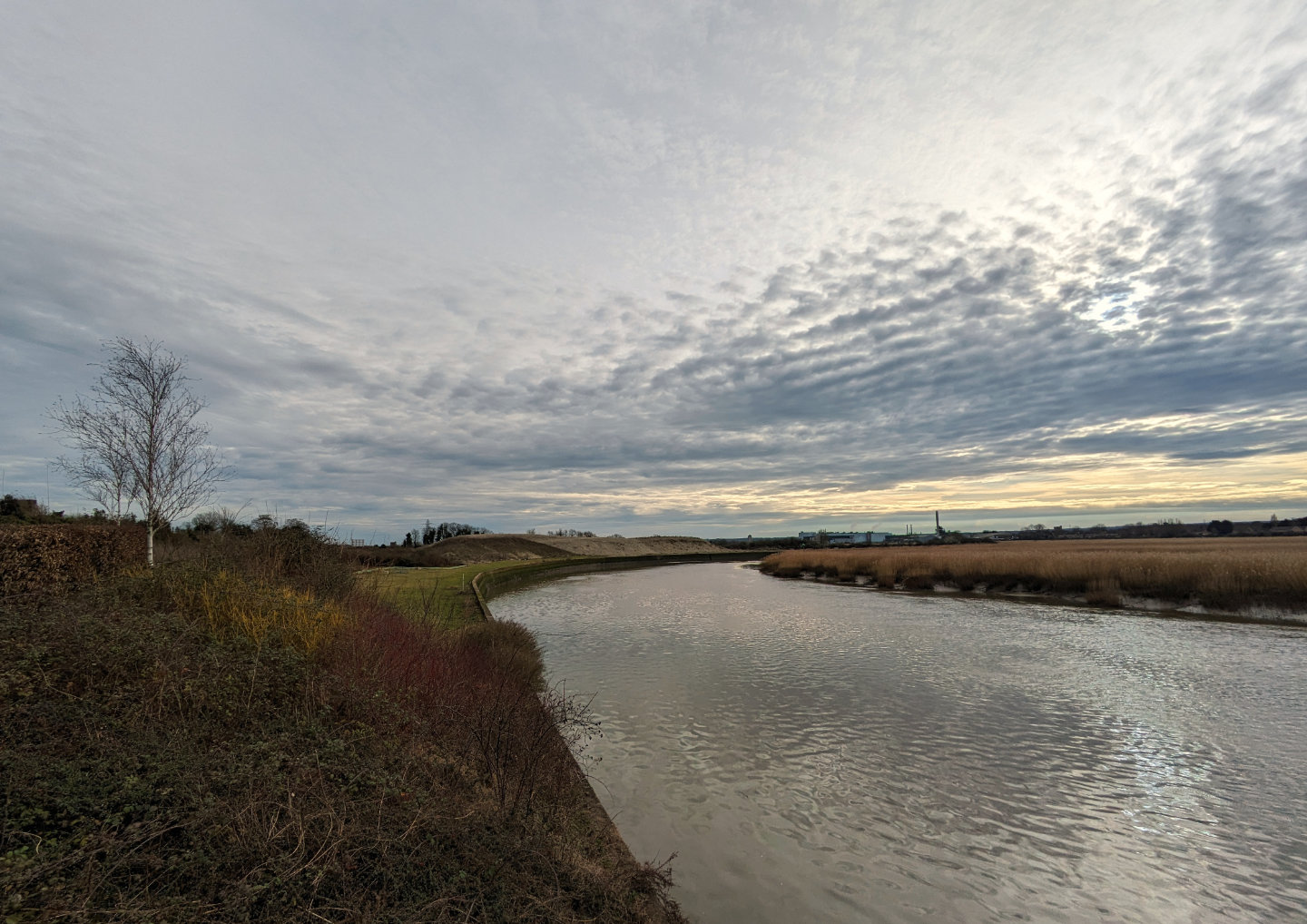
To date, there is no evidence that the so-called Mithraeum of Burham was ever used to worship the sun god.
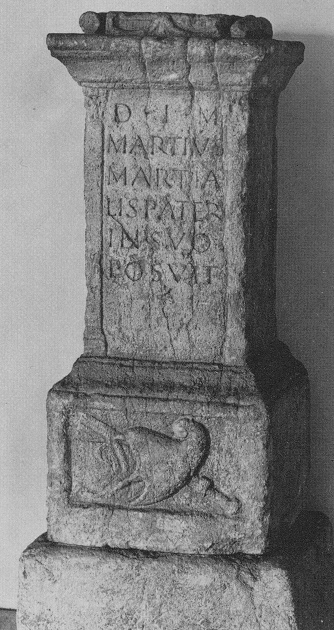
The altar with a Phrygian cap and a dagger from Trier was erected by a Pater called Martius Martialis.

This remarkable Greek marble relief of Mithras killing the bull was discovered in 1705 and remained in private collections until it was bought by the Louvre.
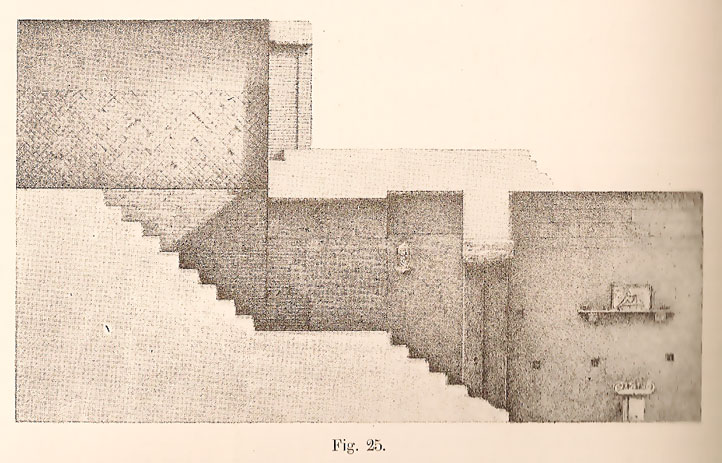
In a house from the time of Constantine, a Lararium was found with a statue of Isis-Fortuna. The Mithraeum was a door next to it, on a lower room.
Rock inscription of Sagarios, strategus of Ariaramneia, recording a Mithraic ceremony near Farasha (ancient Ariaramneia), Cappadocia, likely 1st century A.D.
Sandstone tauroctony relief from Balcic, ancient Dionysopolis in Moesia Inferior, depicting the standard bull-slaying scene; the attribution to Dionysopolis rather than another site is disputed.
Tauroctony relief carved directly into the rock of the Mithraeum on the Colle S. Giorgio near Cavtat, ancient Epidaurum in Dalmatia; the composition includes Sol, Luna, Cautes, and Cautopates flanking the central scene.
Sandstone altar with akroteria from the Mithraeum at Pohanica, Noricum, dedicated to Deo invicto Mithrae by Marcianus; the frame bears two outward-pointing darts as a decorative motif.
Small red limestone altar from Nyon, ancient Colonia Iulia Equestris, dedicated to Invicto by Atius ex voto; one of the few Mithraic monuments from this site.
The six divine names inscribed on the bronze hatchets from Thun-Allmendingen — Iovi, Neptuni, Minervae, Mercurio, Matribus, Matroni — reflecting the polytheistic religious landscape of the Mithraic community at this site.
Site excavated by C. F. L. Lohner in 1824–25 at the Renzenbühl near Thun-Allmendingen, Germania Superior, where the outline of five rooms was identified, one or more of which may have served as a Mithraic sanctuary.
Two rectangular sandstone reliefs from Zasenhausen near Cannstatt, ancient Clarenna, each depicting a male bust with astral symbols on the forehead, arranged in opposing directions.
A white marble fragment from Ocrea in Umbria bearing the name "Mitrha" (sic), possibly related to Mithraic monuments from nearby sites.
