Your search Monte Compatri gave 58 results.
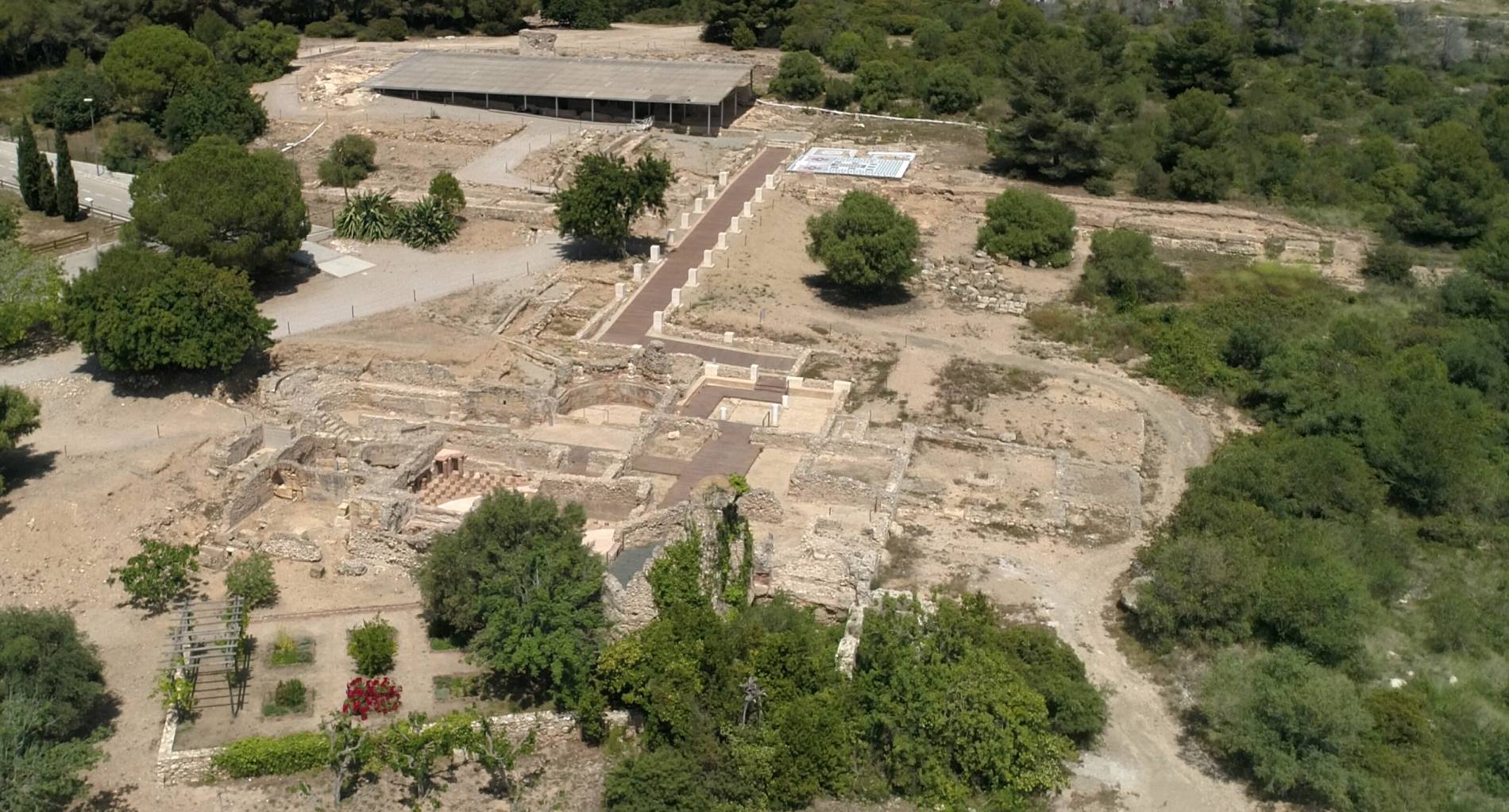
The Mithraeum of Els Munts, near Tarragona, is one of the largest known to date.
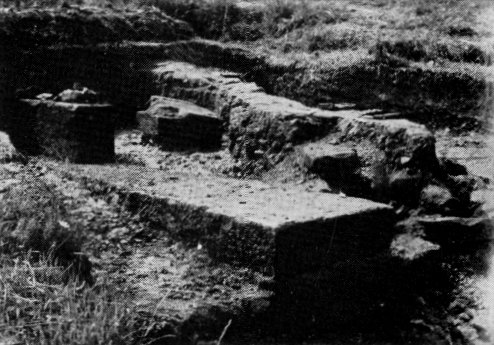
The Mackwiller Mithraeum was built in the middle of the 2nd century, during the reign of Antoninus the Pious, on the site of a spring already worshipped by the natives.

Bronze lamella probably from Rome, found in 1729, bearing a dedication to Sol Sanctissimus by C. Veratius Faustinus, a soldier of the third praetorian cohort.
Marble base found in 1764 on the Aventine with a dedication to Sol by C. Rufus Volusianus, vir clarissimus, who held the offices of pater, hierophant, prophet of Isis and pontifex of the Sun, dated to the 4th century A.D.
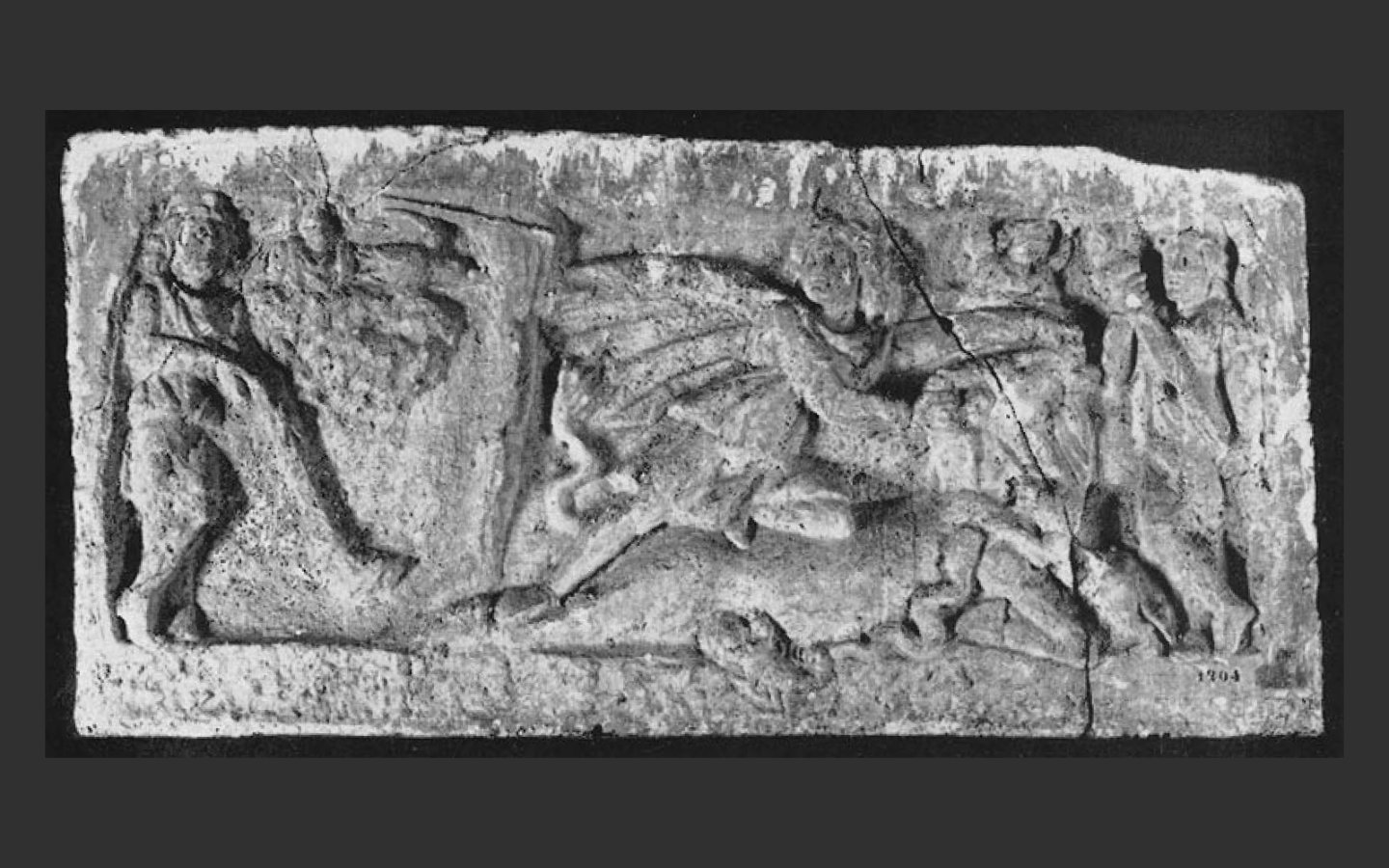
This relief of Mithras Tauroctonos from Rome bears the inscription of three brothers, two of them lions.
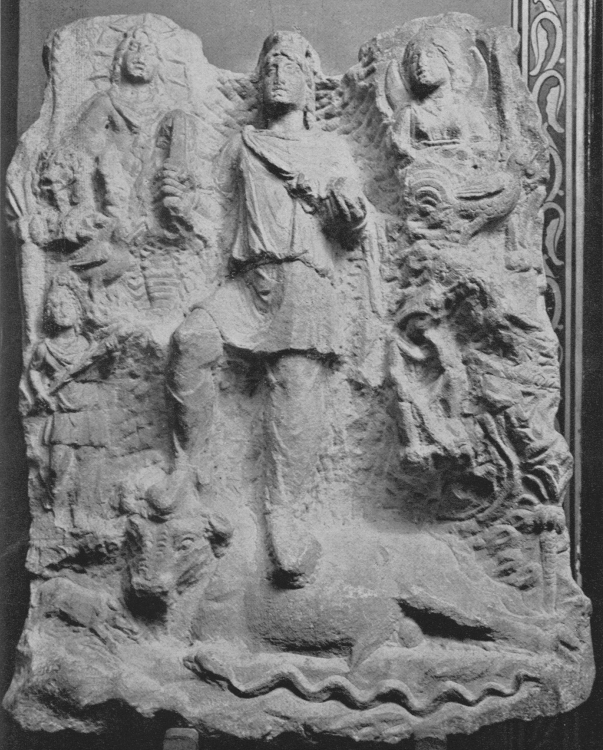
This unusual representation of Mithras standing on a bull was kept in the Casino di Villa Altieri sul Monte Esquilino until the 19th century.
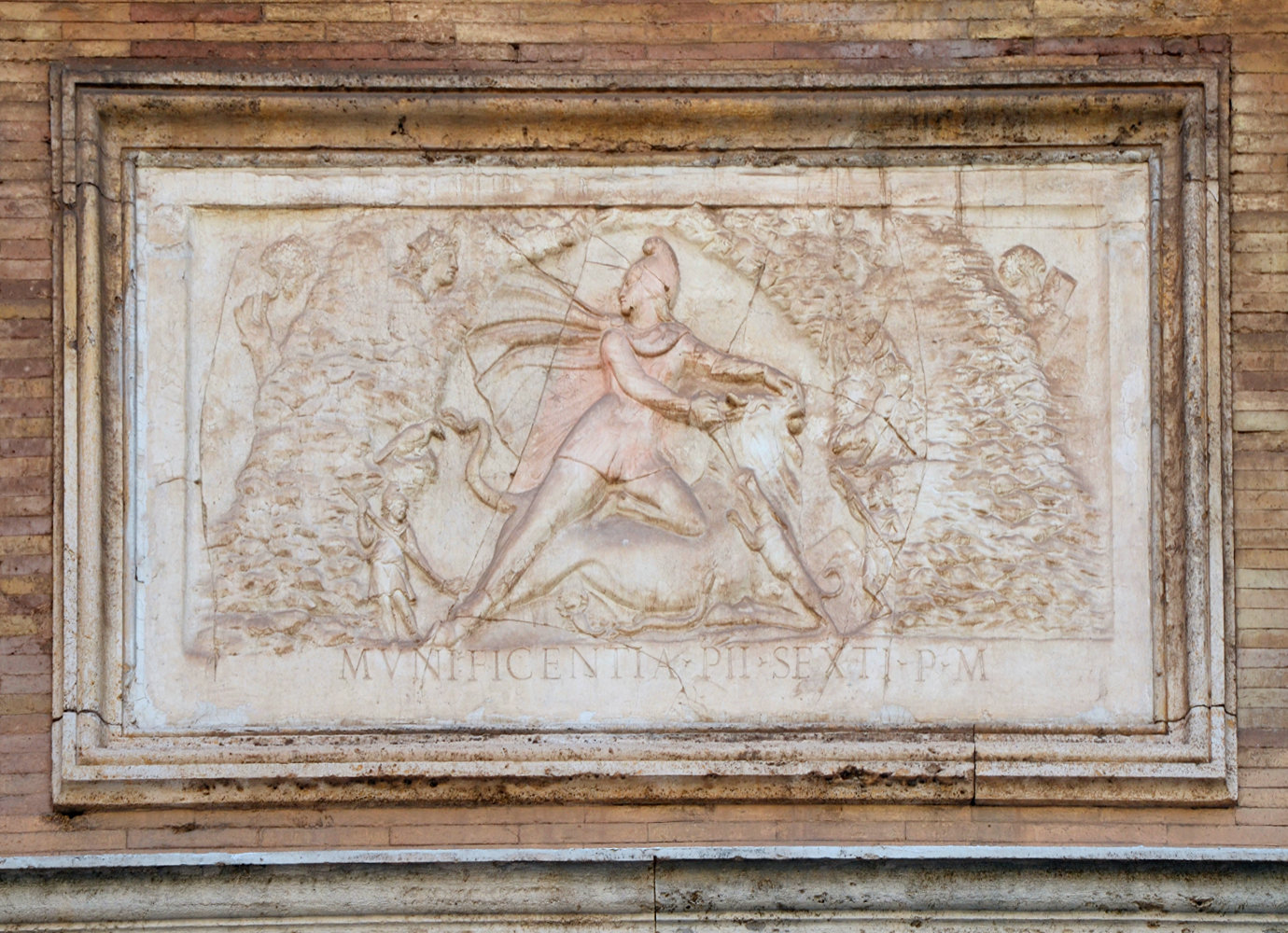
The Tauroctony relief of Mithras killing the bull walled in the Cortile of the Belvedered, Vatican City, was found by Fagan near Ostia.
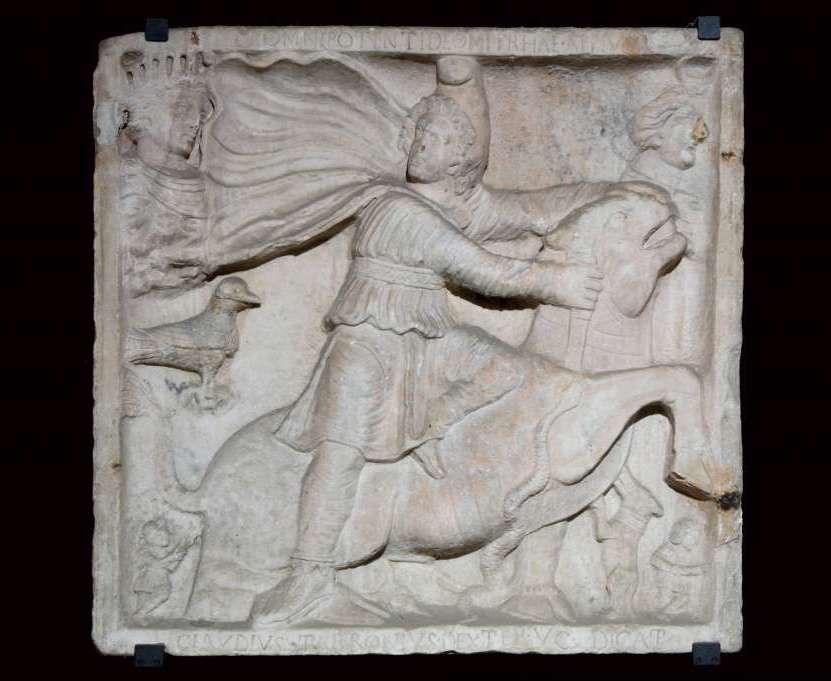
The marble relief of Mithras killing the bull in Naples bears an inscription that calls the solar god omnipotentis.
Monumental inscription honouring the senator and Mithraic pater Kamenius together with his numerous priestly offices and initiatory roles.

In this relief of Mithras as bull slayer, recorded in 1562 in the collection of A. Magarozzi, Cautes and Cautopates have been replaced by trees still bearing the torches.


Garlic merchant, probably from Lusitania, who dedicated an altar to Cautes in Tarraconensis.
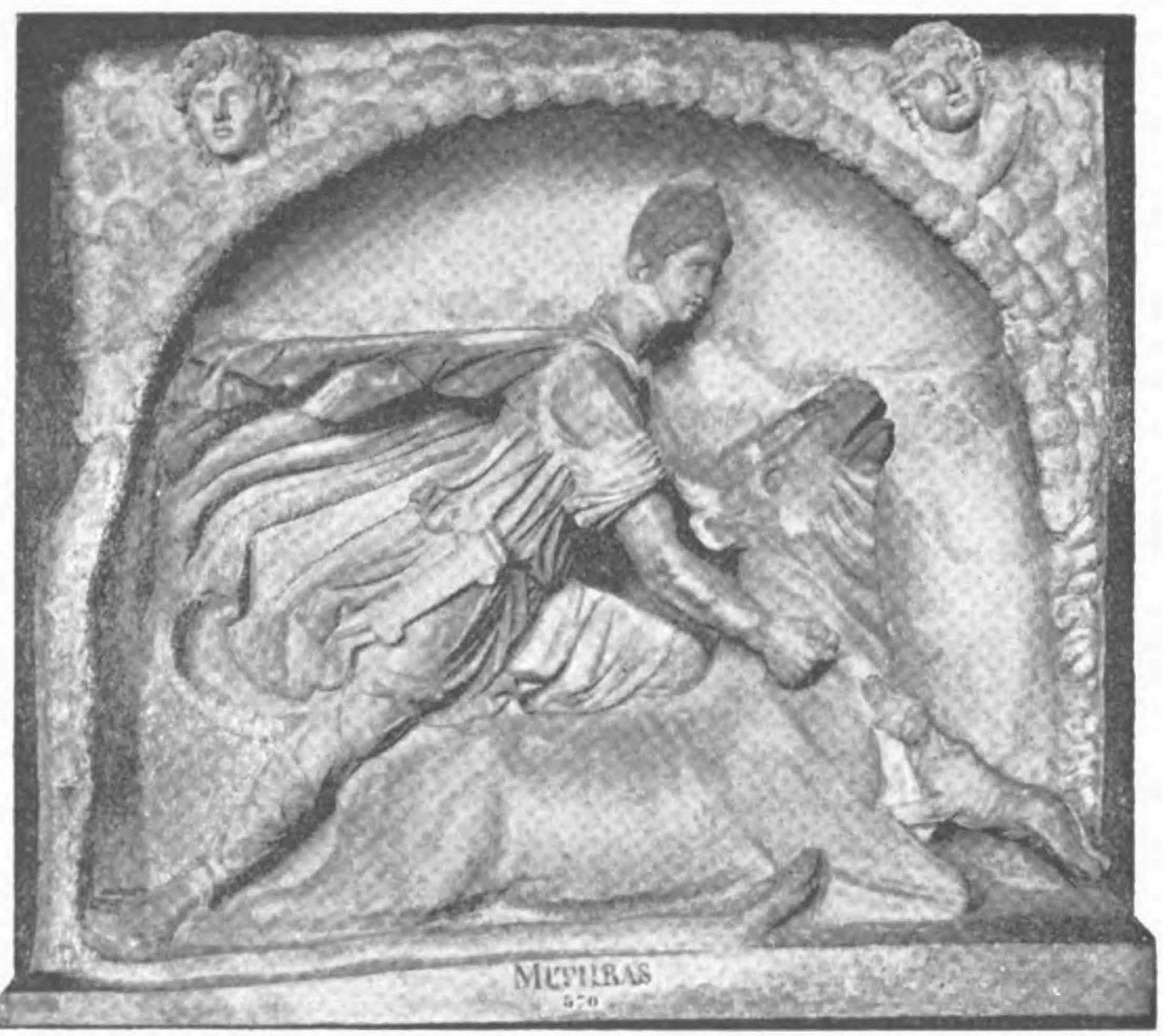
This is one of the three reliefs depicting Mithras killing the bull that the Louvre Museum acquired from the Roman Villa Borghese collection.
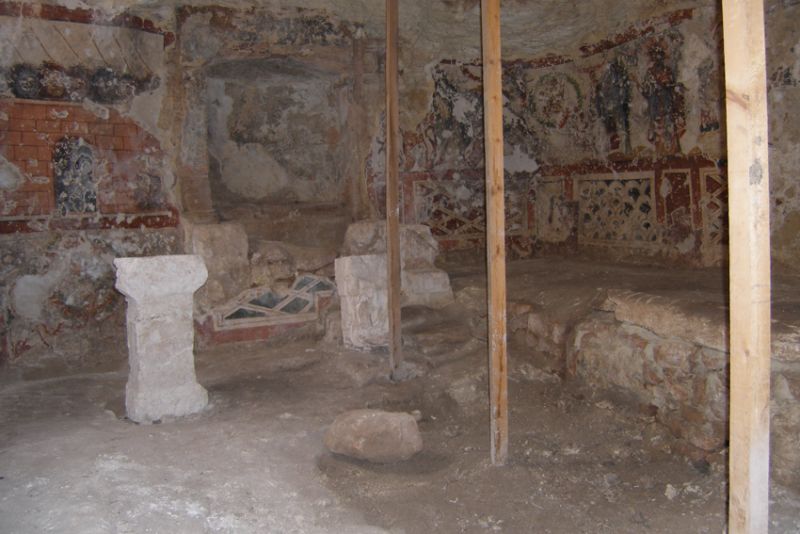
The Mithraeum of Hauarte or Hawarte, which preserves colourful frescoes, it’s the latest know and used.
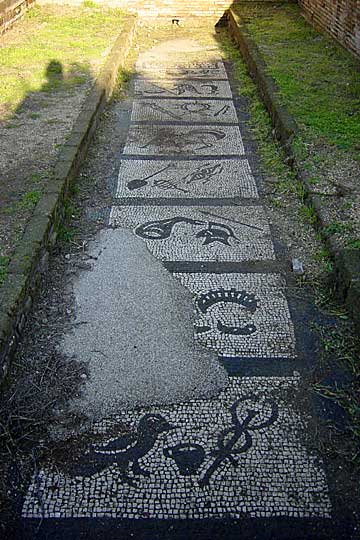
The Felicissimo Mithraeum has a floor mosaic depicting the seven mithraic grades.

Lissa-Caronna details the excavation and findings of a mithraeum beneath San Stefano Rotondo, focusing on its decor, sculptures, and rituals.

Roger Beck describes Mithraism from the point of view of the initiate engaging with the religion and its rich symbolic system in thought, word, ritual action, and cult life.

Ce 4e fascicule de Mithriaca concerne un très curieux monument exhumé au XVIe siècle sur le site d'un Mithraeum qu'on localise tout près de l'église S. Maria in Domnica, non loin de S. Stefano Rotondo où un autre spelaeum fut mis au jour en 1973…