Your search Monteu da Po gave 2106 results.

BSc Econ in Political Science and Intelligence Studies, born in Warsaw, PL, Researcher of Cults and Mysteries, a practicing Heathen since the age of 12.

My research explores the emergent area of Digital Civics. I formulated the first definition, critical underpinning, and pedagogical model for this concept.
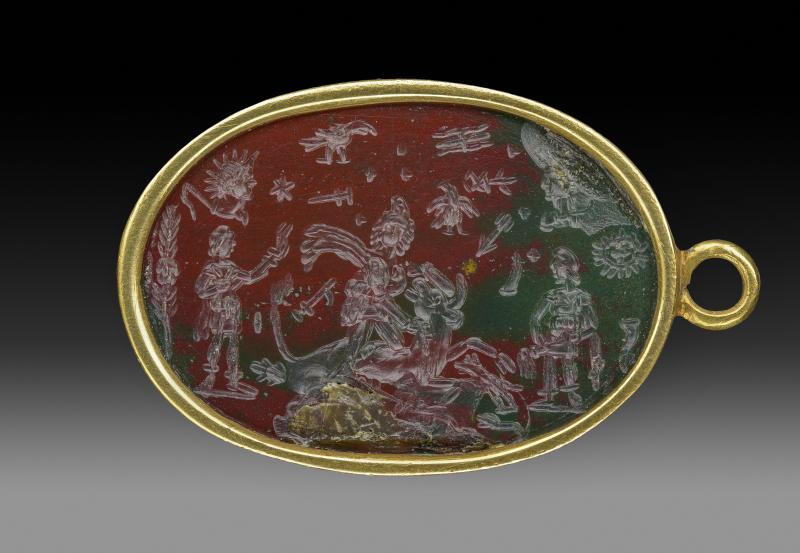
This intaglio portrays Mithra slaying the bull on one side, and a lion with a bee, around seven stars, and inscription, on the other.
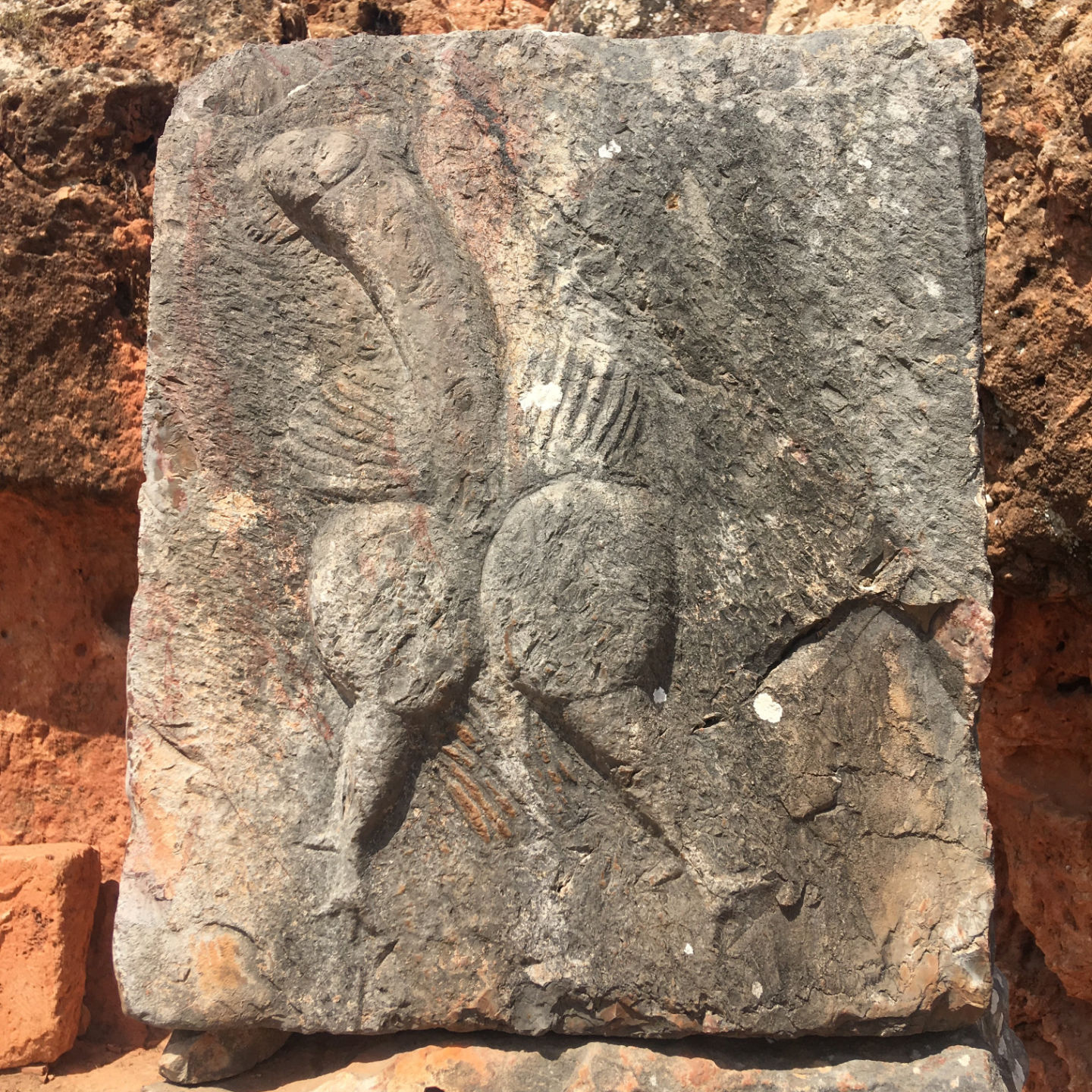
The phallus from Tiddis, Algeria, has been represented as a cock.

Benefactor of the Imperial Palace Mithraeum and possible member of Ostia’s African community.
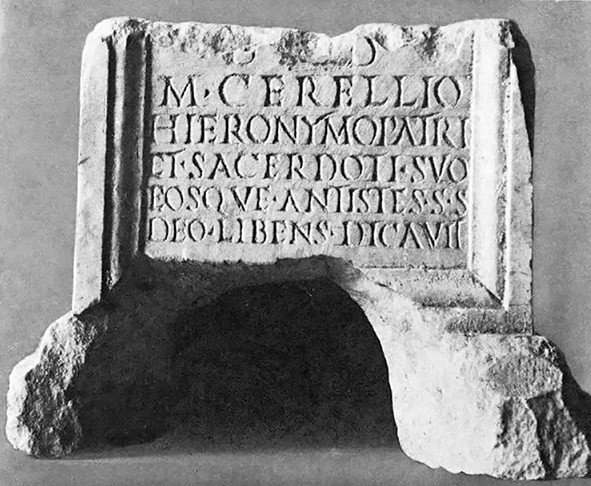
Small marble base recording a donation to M. Cerellio Hieronymo, pater and sacerdos, on behalf of an antistes who dedicated objects to the god, from the Mitreo degli Animali at Ostia.
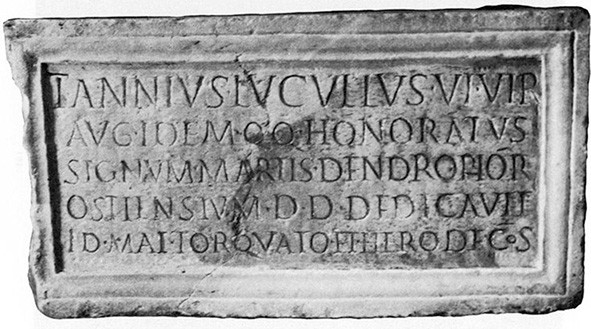
Small marble base with a dedication by T. Annius Lucullus, sevir and quinquennalis, to Martis Dendrophoris Ostiensium, from the Mitreo degli Animali at Ostia, dated to 143 A.D.

The dedicator of this marble basin could be the same person who offered the sculpture of Mithras slaying the bull in the Mitreo delle Terme di Mitra.
This inscription, found in the Mitreo della Planta Pedis, among some other monuments in Ostia, suggests a link between Mithras and Silvanus.
Small marble column dedicated by Iunia Zosime, mater, to Virtus Dendrophori from silver weighing two pounds, from the Mitreo degli Animali at Ostia.
Marble head of Helios-Mithras with curly hair and seven holes for fastening rays, from the Mitreo degli Animali at Ostia, Lateran Museum.
A small cippus from the Mithraeum of Sabazeus records the rebuilding of the sanctuary after its collapse.

Marble torso found at Ostia in 1912 between the Decumanus and the Via dei Molini, dedicated to Mithras by a certain Atilius Glyco.

The son of an eponymous person, he consecrated an altar to Helios Mithras in Kreta, Moesia inferior.
Sandstone altar with patera from the rock sanctuary at Kreta, Moesia Inferior, bearing a Greek inscription of uncertain reading, possibly a thanksgiving to Mithras.
Sandstone base with a hollow at the back from the rock sanctuary at Kreta, Moesia Inferior, probably supporting a cult statue.

Mithraic sanctuary excavated in a quarry at Kreta near Nikopol, Moesia Inferior, carved into the rock and including a small niche with a sandstone tauroctony relief, a base, and several altars.
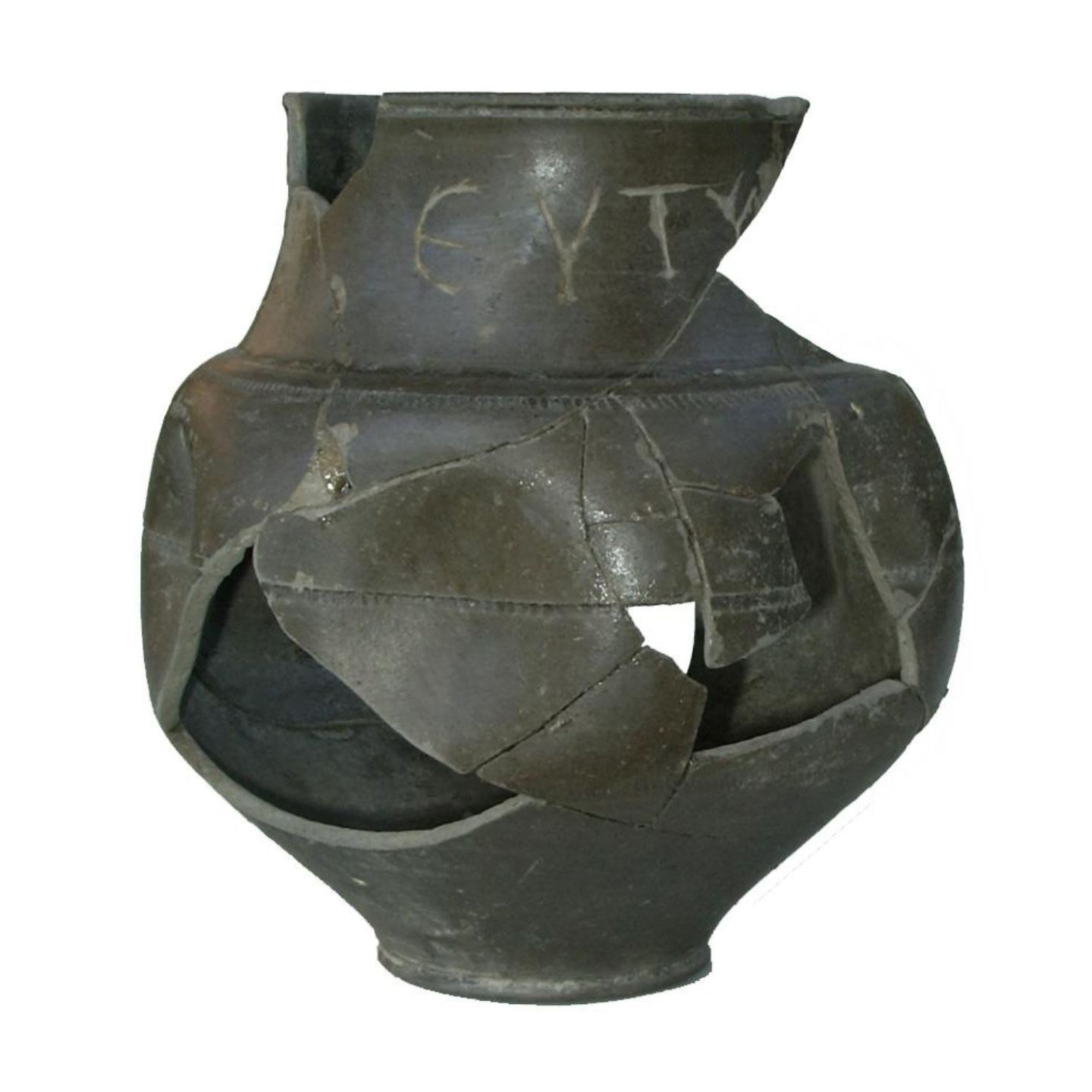
Ceramic cup inscribed with a Greek graffito and recovered from the Mithraeum of Martigny, providing evidence for the use of inscribed vessels within the sanctuary assemblage.
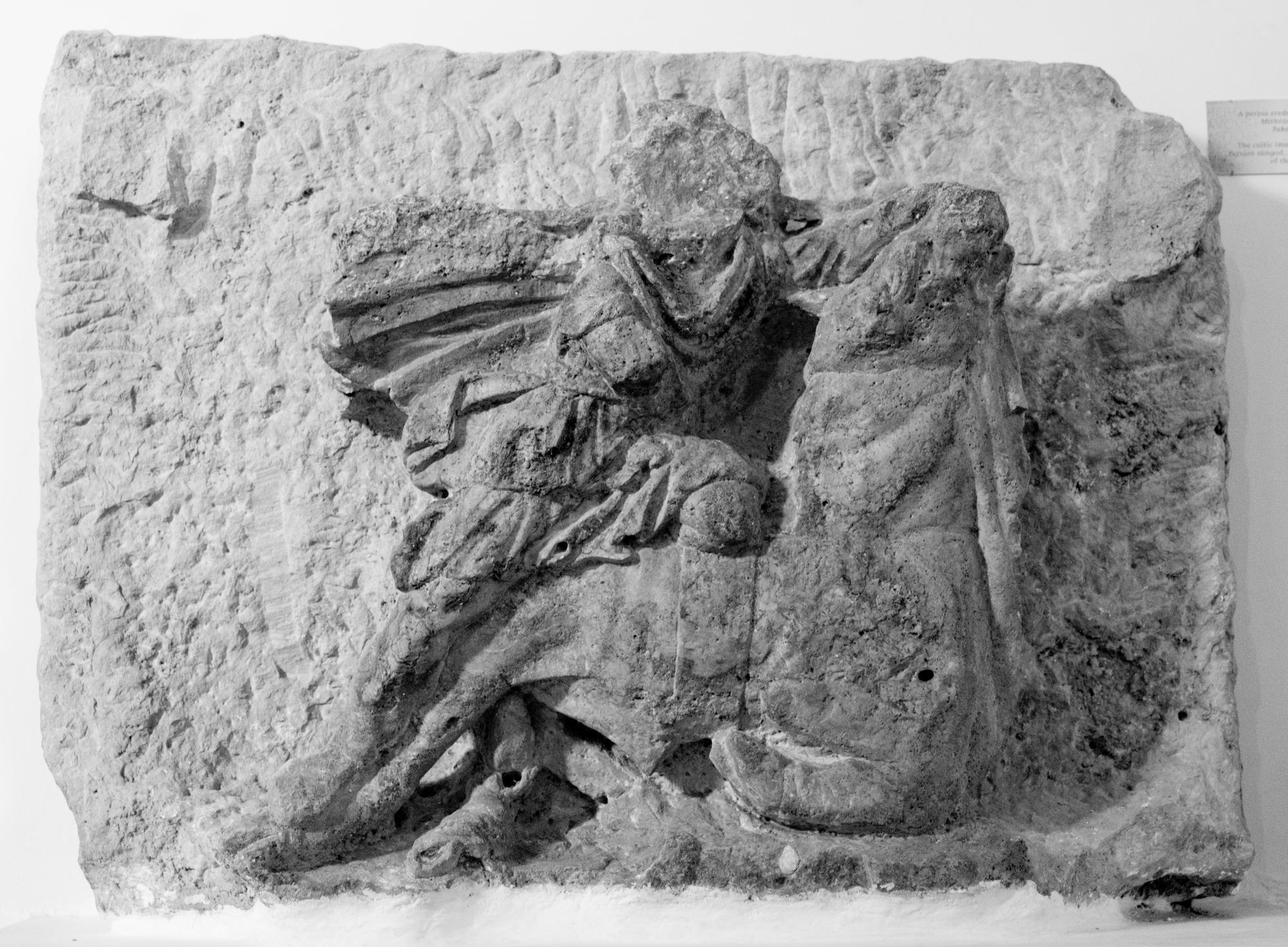
Relief showing Mithras slaying the bull, found at Paks in Roman Pannonia, modern-day Hungary.
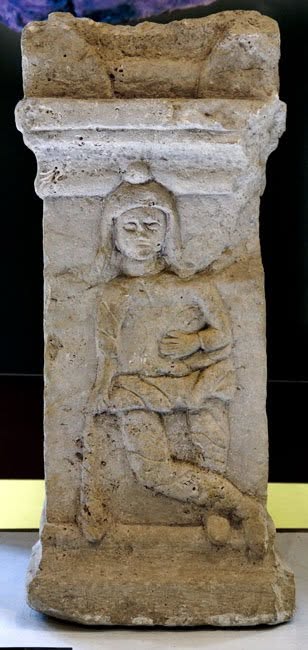
Votive altar depicting Cautopates from the Roman city of Durostorum, modern-day Silistra in Bulgaria.
