Your search Roman cemetery of St. Matthias gave 3406 results.

One of the rooms in a sustantive masonry building in Hollytrees Meadow was considered to be a Mithreum, a theory that has now been discarded.
Miscellaneous cult objects from Ober-Florstadt including pottery, lamps, legionary stamps, coins, animal bones, and a bone flute fragment
Sandstone relief from Ober-Florstadt featuring two arched niches each containing a naked Dioscurus wearing a shoulder cape and pilum
Pair of sandstone altars from Ober-Florstadt, the larger of which bears a palm-branch on its upper cornice
Pair of small sandstone altars of different sizes, recovered from the Mithraeum at Ober-Florstadt in Upper Germany
Fragment of a sandstone statue, comprising a head and hand certainly belonging to a figure of Cautes, found at Ober-Florstadt
Fragmentary marble statue of a woman from the Mithraeum delle Sette Porte.
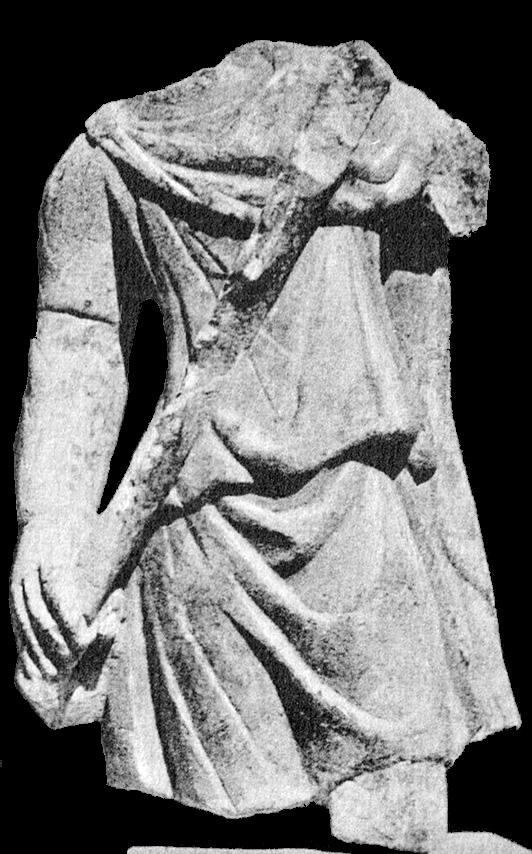
Marble statue of Cautes, found at Ostia. The head, one arm and the legs are missing. The figure wears a short tunic and raises the torch in the canonical upward gesture.
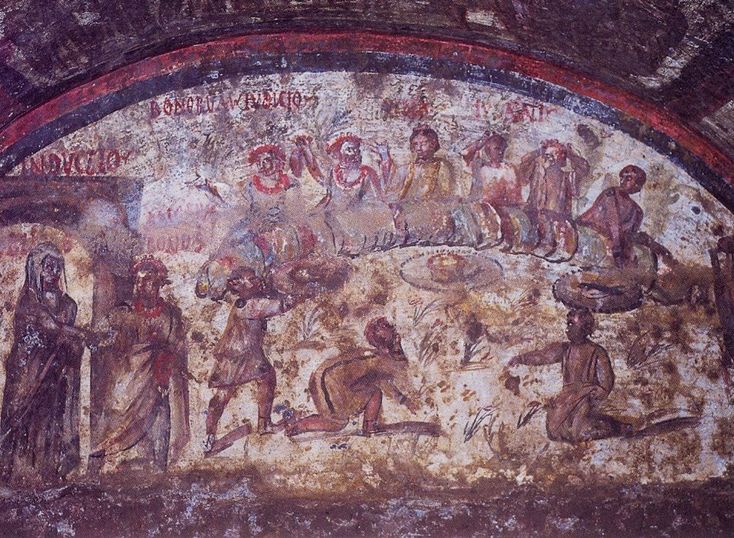
The epigrahy includes a mention of Marcus Aurelius, a priest of the god Sol Mithras, who bestowed joy and pleasure on his students.
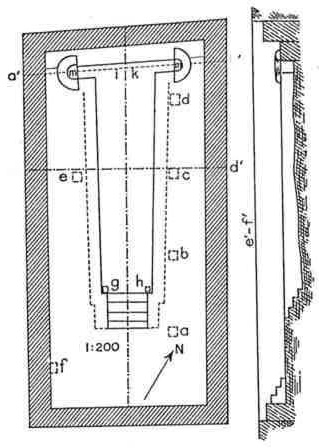
Mithraeum discovered in 1887–1888, located about 85 m north of the castellum at Ober-Florstadt, built on a hillside with a central aisle, benches, and an altar podium.
Sandstone statue of Cautopates holding two downward-pointing torches, from the Ober-Florstadt Mithraeum.
This elliptical terracotta fragment from Ostia depicts Mithras as a bullkiller.
Dedication from the Mithraeum of Rudchester recording the restoration of a temple dedicated to Sol Invictus.

Memoir by Félix Lajard analysing a Mithraic bas-relief discovered in Vienne in 1830. Based on direct examination of the fragments and their context, the study corrects an earlier misidentification and documents a rare lion-headed figure within a probable mithraeum…

Les monuments mithriaques sont rares en Syrie. Les sculptures de Sidon, datées de 188, constituent l’essentiel de la documentation malgré des incertitudes sur leur origine exacte.
This altar to Mithras is dedicated by a certain Gaius Iulius Castinus, legate prefect of the emperors.
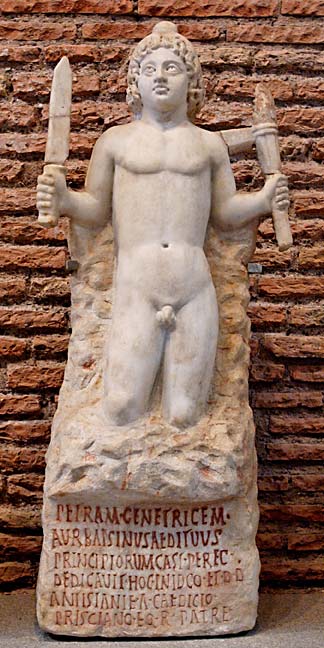
The sculpture of Mithras rock-birth from Santo Stefano Rotondo bears an inscription of Aurelius Bassinus, curator of the cult.
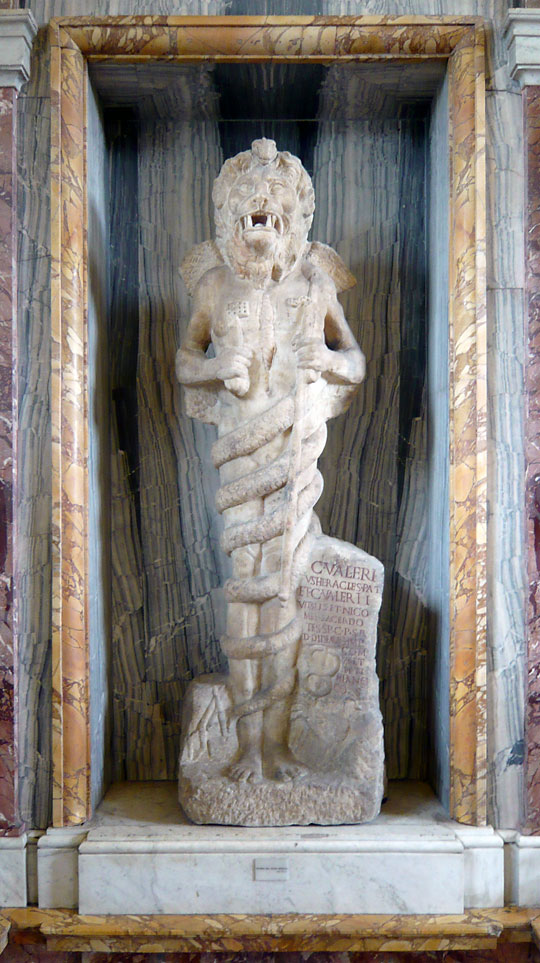
Marble leontocephalic Aion/Arimanus from the now-lost Fagan Mithraeum at Ostia, dedicated in AD 190 by three members of the local Mithraic priesthood.
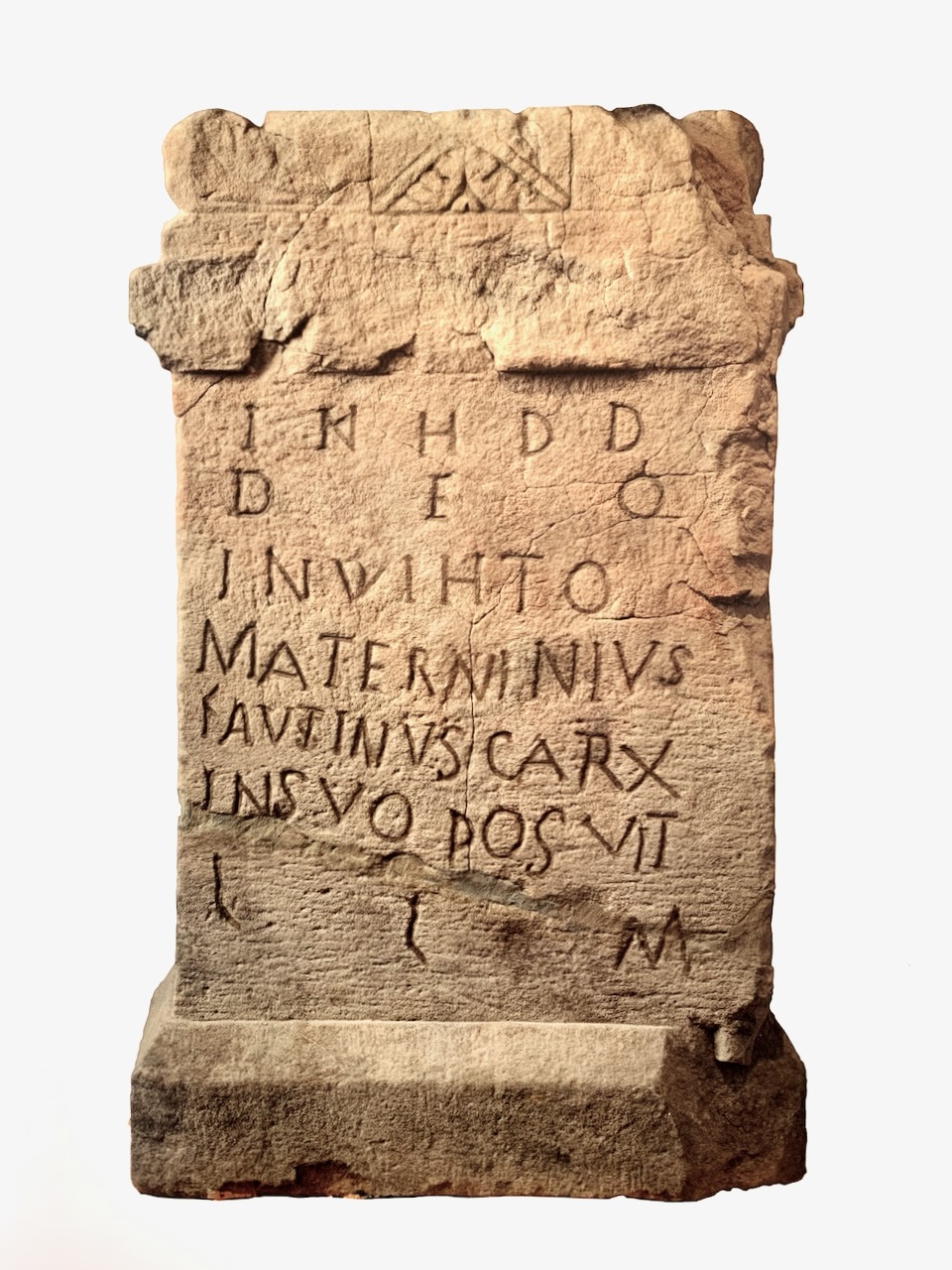
Corax Materninius Faustinus dedicated other monuments found in the same Mithraeum in Gimmeldingen.
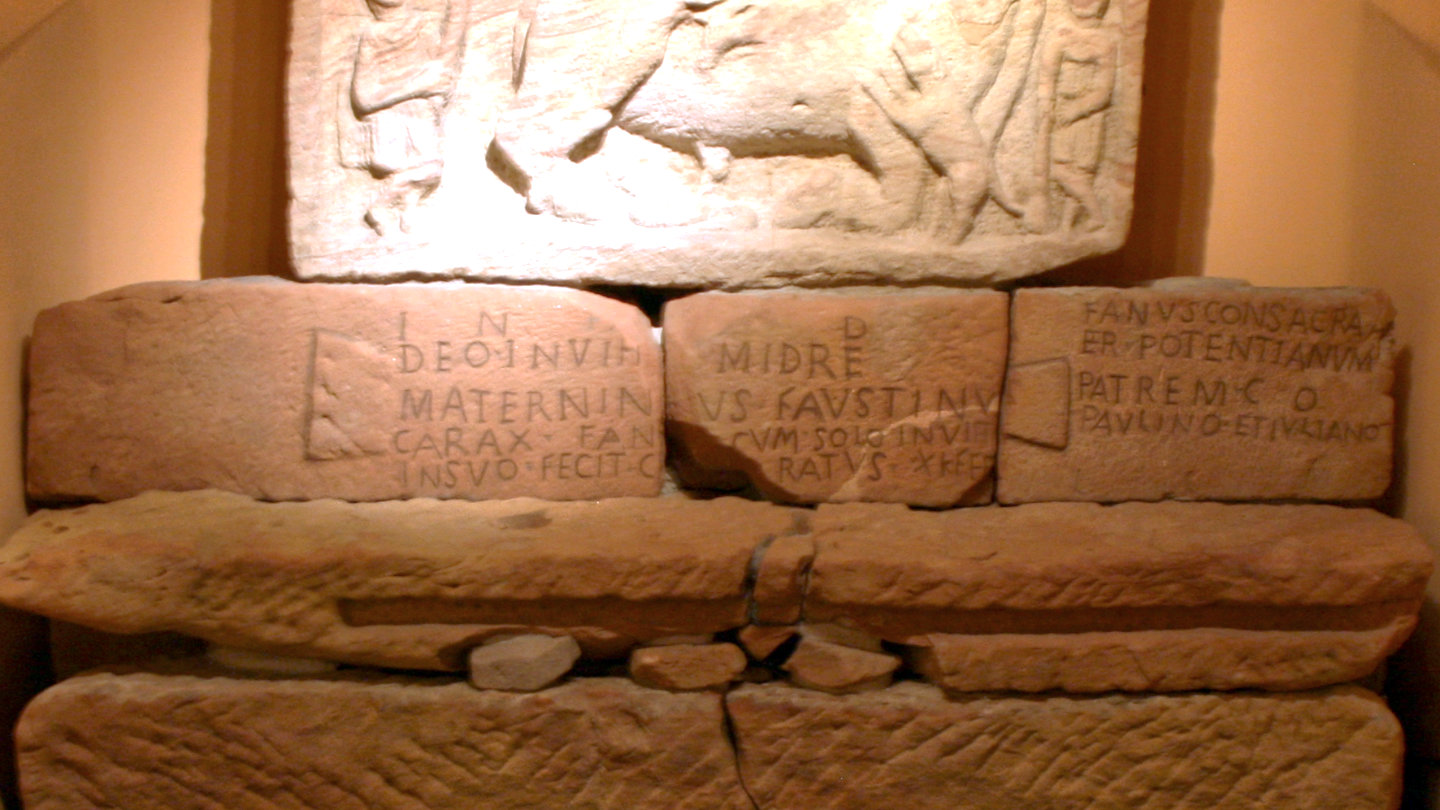
The inscription was located at the base of the main Tauroctony of the Gimmeldingen Mithraeum.
