Your search Rome gave 377 results.
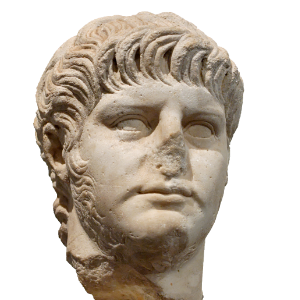
Fifth Roman emperor and last of the Julio-Claudian dynasty, reigning from 54 until his death in 68.
The Hekataion of Sidon, which depicts Hekate in her trimorphic form surrounded by three dancing girls, is the only example found to date in connection with the Mithraic cult.
Dominique Persoons proposes a reconstruction of Mithraic ritual based on archaeological remains, frescoes, and zodiacal symbolism. He interprets the mithraeum as a liturgical microcosm governing the descent, purification, and ascent of souls.
Maarten Vermaseren, qui a publié un corpus des inscriptions et des monuments de la religion mithriaque et un certain nombre d'études savantes sur le même sujet est certainement l'un des meilleurs spécialistes de la question.
Memoir by Félix Lajard analysing a Mithraic bas-relief discovered in Vienne in 1830. Based on direct examination of the fragments and their context, the study corrects an earlier misidentification and documents a rare lion-headed figure within a probable mithraeum…
The Mithraeum of Angers, excavated during a preventive operation and subsequently dismantled in 2010, yielded numerous objects, including coins, oil lamps, and a ceramic vessel bearing a votive inscription to the invincible god Mithras.
This monument with an inscription by two individuals was found in the first mithraeum of Cologne, Germany.
White marble relief depicting Mithras as bull-slayer in a grotto from the Froehner collection, now in the Cabinet des Médailles, Paris.
Currently in the Musei Vaticani, this Tauroctony includes Mithras’s birth restored as Venus anaduomene.
In these passages from his hymns and satires, Julian articulates a solar theology in which Helios governs cosmic order and time. Within this framework, Mithras appears as a personal divine guide associated with the ascent of souls.
This fragmentary relief depicts Mithras killing the bull in the usual manner, remarkably dressed in oriental attire.
Antium was an ancient coastal settlement in Latium, founded around the 11th century BC. A major stronghold of the Volsci before its conquest by Rome, its territory largely corresponds to modern Anzio and Nettuno.
Trabzon is a historic city on the Black Sea coast of northeastern Turkey, founded in 756 BC as Trapezous by Greek colonists from Miletus. It passed from Achaemenid control to the Kingdom of Pontus, then became part of the Roman and Byzantine empires.
De oorspronkelijke Nederlandse uitgave van 1959 introduceerde het werk van Vermaseren, dat als klassiek geldt in de populaire studie van het mithraïsme en dat de belangstelling voor deze cultus blijvend heeft gevormd.
Robert Turcan présente les dévotions immigrées dans le monde romain, sans négliger les cultes marginaux ou sporadiques, traitant également des courants gnostiques, occultistes et théosophiques.
Certains mythes de l'Antiquité sont probablement basés sur des récits de « mort imminente » exactement les mêmes que les nôtres. Ainsi, s'expliqueraient le Paradis, l'Enfer, l'âme, le Dieu unique, nos divers «états d'âme»..…
This volume collects the first results of the extensive and articulated research project dedicated to the Mithraeum of the Circus Maximus.
