Your search San Giovanni al Timavo gave 3161 results.
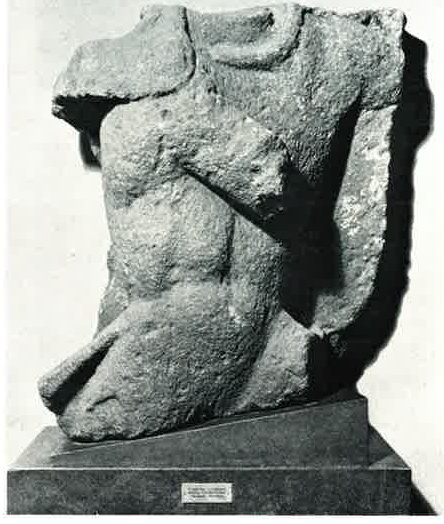
Marble relief fragment showing Mithras slaying the bull, originally belonging to a lost second Mithraeum at Friedberg.

Inscription dedicated by Caius Paulinius Iustus to the Virtus of the invincible deity within the Mithraic sanctuary.
Inscribed altar from the Friedberg Mithraeum erected by the beneficiarius consularis Caius Paulinius Iustus.
Ritual terracotta offering plate decorated with a serpent and traces of white paint from the Friedberg Mithraeum.
Sandstone statuette fragment preserving the curled head of a young figure from the Mithraeum of Taunus.
Imported limestone relief fragments showing the Mithraic torchbearers beside the podia of the sanctuary.
Large quartzite tauroctony relief with torchbearers, zodiacal imagery and traces of ancient red paint from the Friedberg Mithraeum.
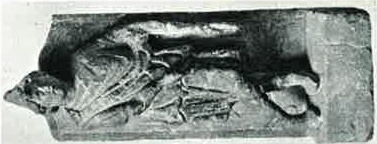
Limestone relief of the torchbearer Cautopates standing cross-legged in Oriental dress.
Complex military inscription invoking Apollo, Sol and Luna under Severus Alexander.
Mithraic altar inscription set up by the centurion Marcus Iulius Martius in 189 CE.

Colonia Ulpia Traiana Augusta Dacica Sarmizegetusa was the capital and the largest city of Roman Dacia, later named Ulpia Traiana Sarmizegetusa after the former Dacian capital, located some 40 km away. The city was destroyed by the Goths.

Subterranean sanctuary at ancient Atchana tentatively interpreted by Woolley as an early precursor to later Mithraic temples.
Antioch was the capital of Roman Syria and gateway between the Mediterranean and the eastern provinces.
Latin dedication to the invincible Mithras reportedly discovered north of ancient Colophon in Lydia.
Two marble heads from Ostia, including a youthful figure wearing a Phrygian cap and another identified as Mithras-Helios.
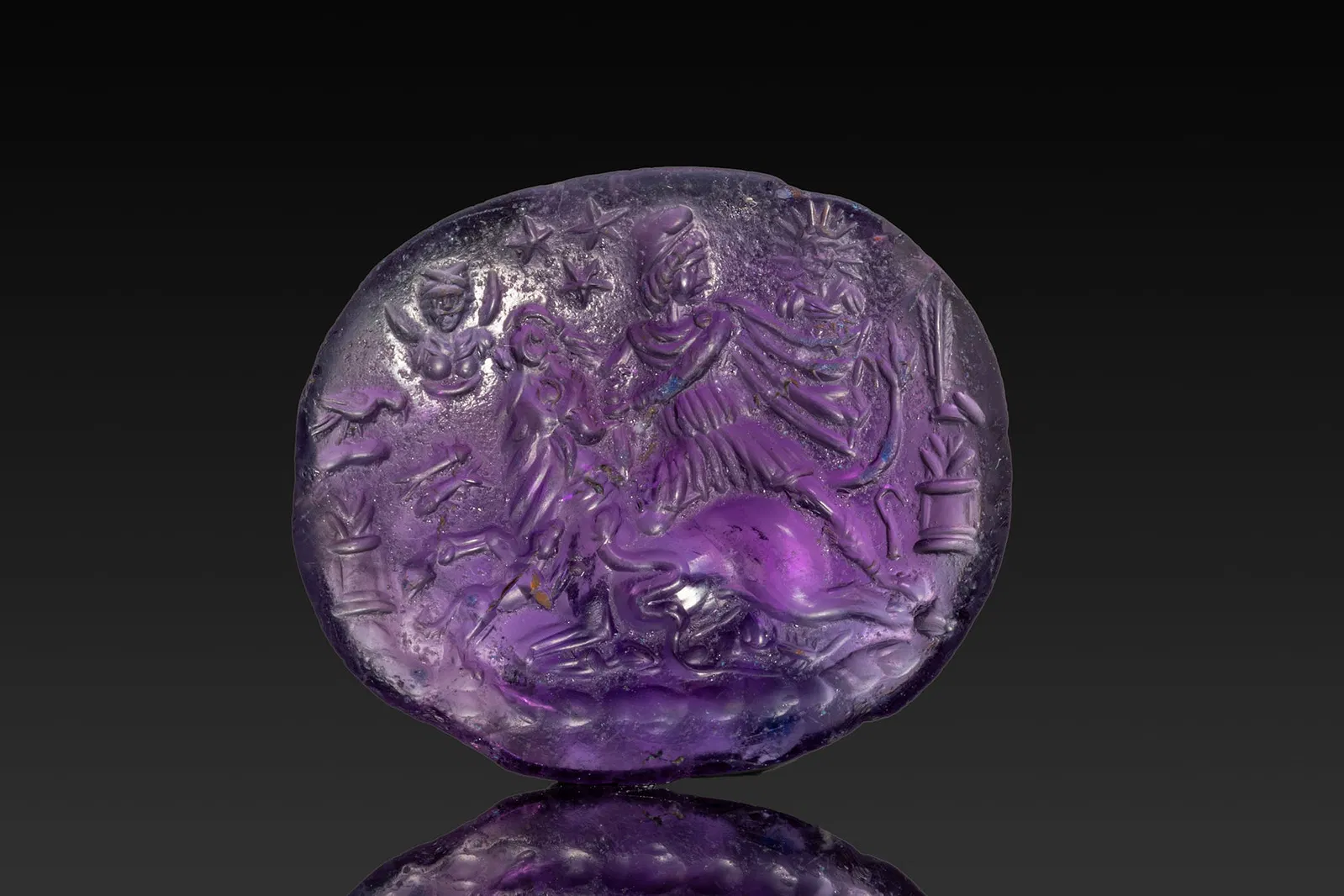
Amethyst intaglio engraved with Mithras slaying the bull, accompanied by Sol, Luna and other canonical Mithraic symbols.
Fragmentary tauroctony preserving Mithras, the torchbearers, Sol and Luna from the sanctuary at Aïtodor.
Small surviving fragment depicting Mithras as bull-slayer together with the torchbearer Cautes.
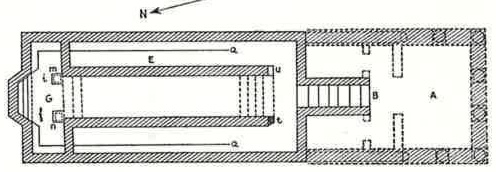
Second Mithraic sanctuary discovered in 1826 some 150 metres west of Mithraeum I at Heddernheim, ancient Nida, with finds in the Wiesbaden museum.
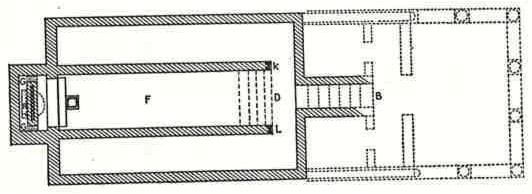
First Mithraic sanctuary discovered at Heddernheim (ancient Nida) in 1826, with finds preserved in the Städtisches Museum at Wiesbaden.
