Your search San Giovanni al Timavo gave 3645 results.

Red sandstone altar from Stockstadt, featuring a square cavity in the front that contained a fragment of crystal and a small lamp.
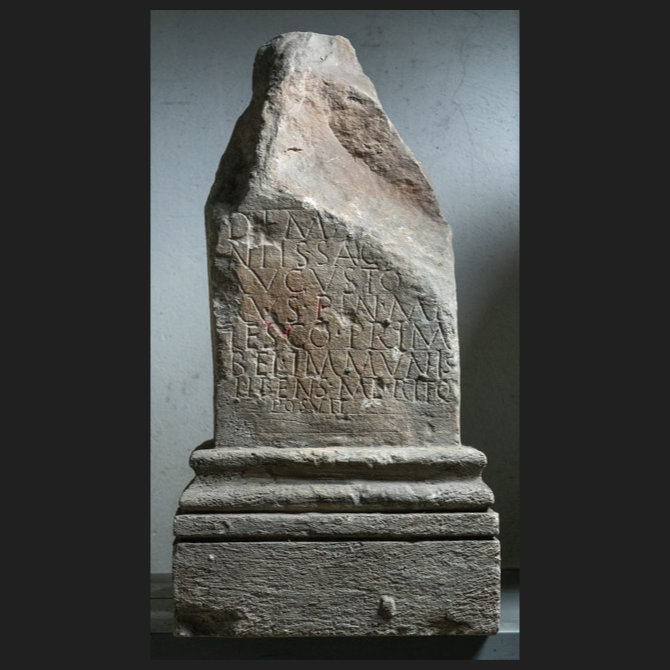
This altar, discovered in Grude, near Tihaljina, Bosnia and Herzegovina, bears an inscription by Pinnes, a soldier of the Cohors Prima Belgica.
This temple of Mithras has been discovered under the Church in Vieux-en-Val-Romey, in 1869.
This sandstone altar from the Mithraeum of Vindobala (modern Rudchester) preserves a dedication to the Invincible Mithras by P. Aelius Titullus, prefect of a cohort.
A brief inscription reading "Deo Invicto Mithrae", found in the ruins of the Castello di Tuenno near San Zeno at the entry to the Tovel valley in Trentino, alongside the decorated relief No. 723.
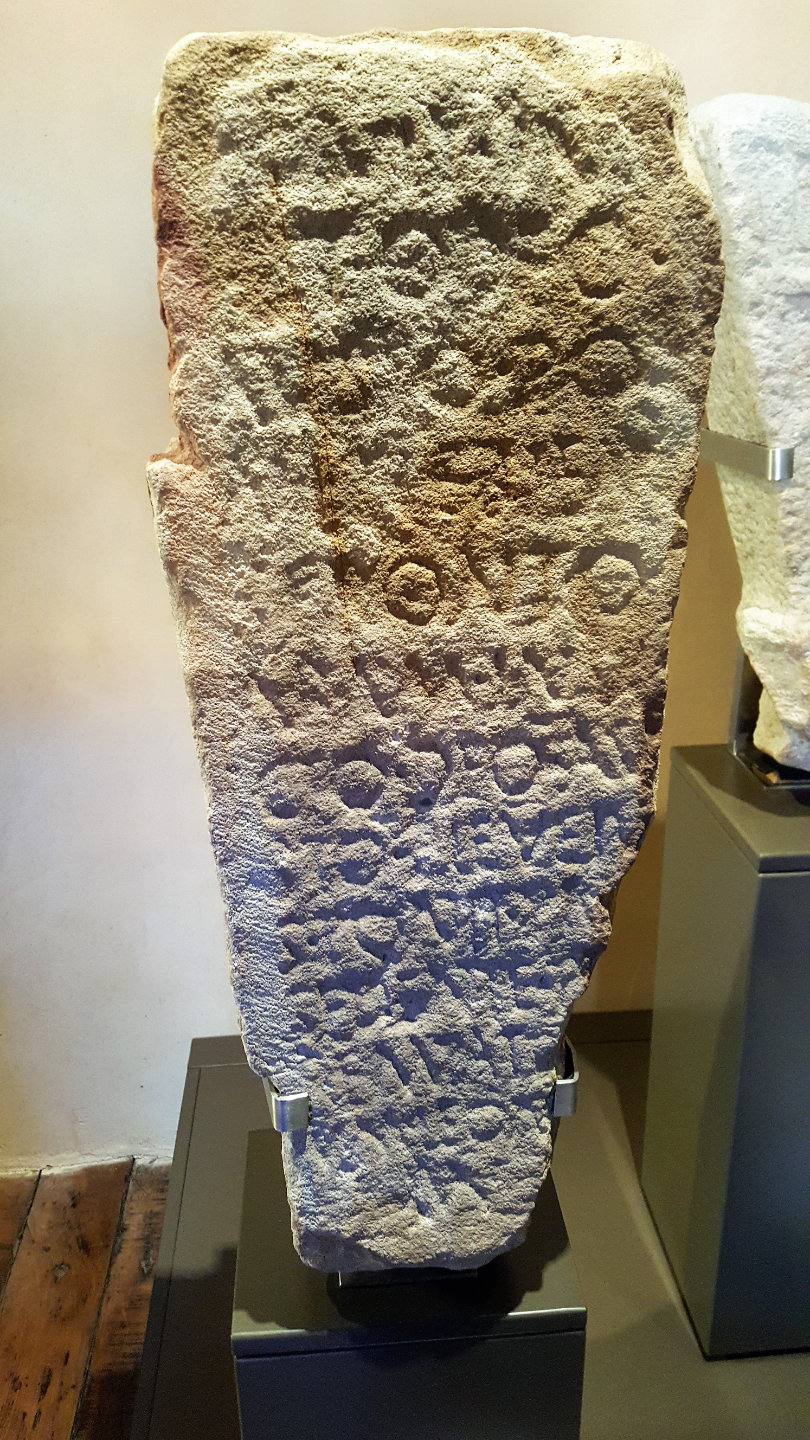
The monument of San Juan de la Isla (Asturias) devoted to Mithras was preserved in the portico of the main church until 1843.
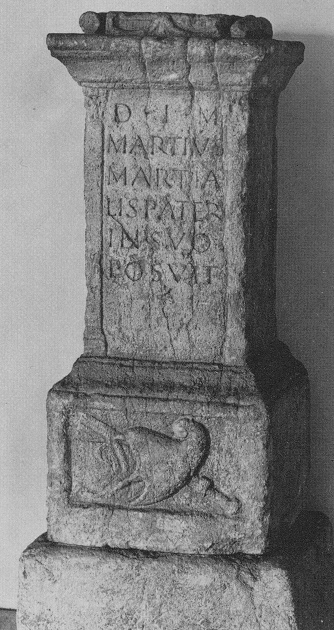
The altar with a Phrygian cap and a dagger from Trier was erected by a Pater called Martius Martialis.
A marble dedication tablet found in the Vigna Curtii Palloni outside the Porta Sant'Agnese near the Praetorian Camp in Rome, recording the construction of a sacrarium dedicated to Sol Invictus by Q. Pompeius Primigenius, pater and sacerdos, under Septimius Severus and Caracalla…
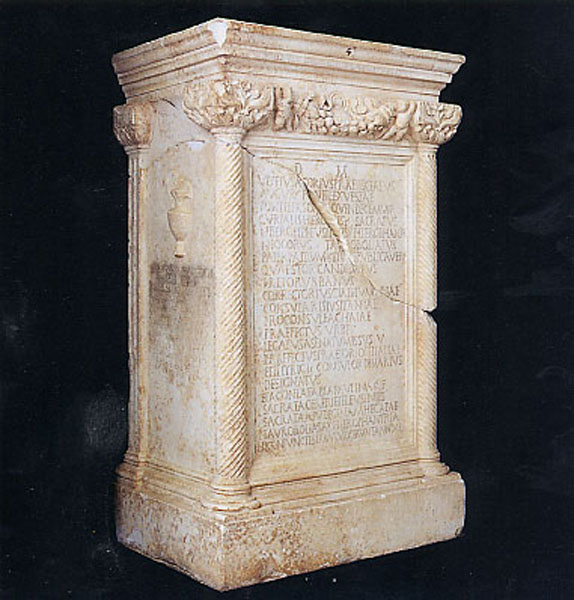
The marble altar mentions Vettius Agrorius Praetextatus as Pater Sacrorum and Patrum and his wife Aconia Fabia Paulina.
Fragment of a small white marble relief showing Mithras slaying the bull with the dog, serpent and scorpion, formerly walled in the inner court of the Palazzo Rondinini (now Palazzo Sanseverino), Corso No. 518.
Small marble base apparently found in the same Aventine sanctuary during former excavations, with a dedication to Jupiter Optimus Maximus Dolicheno and Sol digno praestantissimo.
Possible Mithraeum discovered in 1869 near the previous sanctuary in Muti's gardens, described by Lanciani as a spelaeum cut in tufa with vestibule and cell with niches and altar, at the corner of the Via Nazionale and Via Venezia.
Group of Mithraic finds distributed across different localities named San Zeno along the Verona–Brenner route.
Sandstone altar from Romula, Dacia, dedicated to Deo invicto Mithrae by Aurelius Rufus ex voto, with the busts of Sol and Luna flanking the text.
Triple-part sanctuary at Saalburg whose Mithraic interpretation remains uncertain despite serpent-vases and possible Aion fragments.
Small inscribed plaque invoking Mithras and Mercury attached to a sandstone column inside the sanctuary.
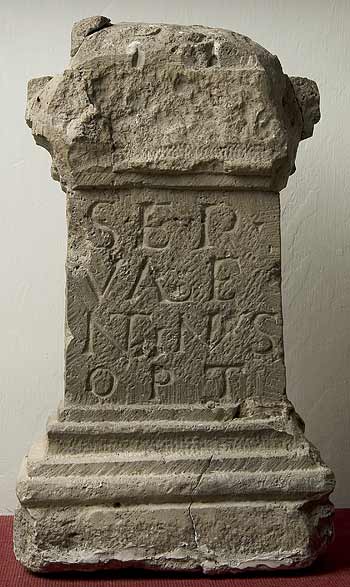
Limestone altar dedicated to Cautes by the Roman optio Septimius Valentinus, discovered in the Mithraeum of Sárkeszi in Pannonia Inferior.
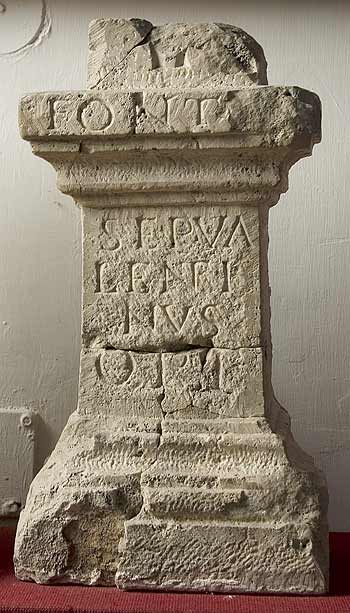
Fragmentary limestone altar dedicated by Septimius Valentinus, an optio, probably discovered in Mithraeum IV at Aquincum.
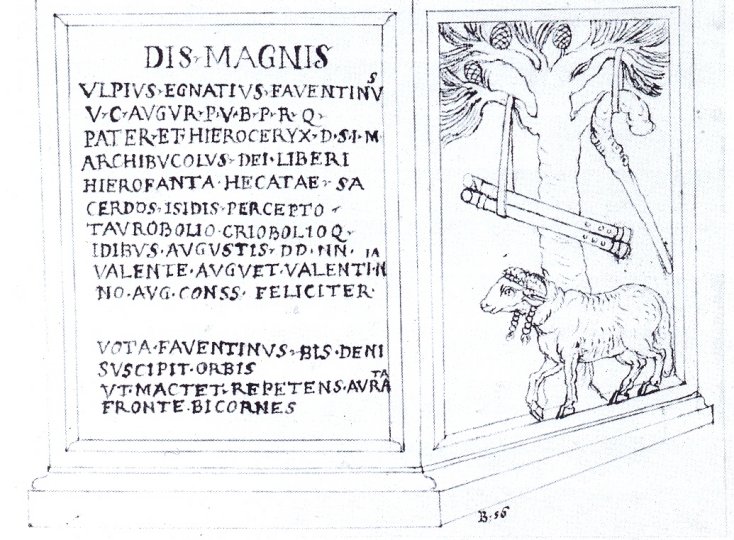
Both of them were discovered in 1609 in the foundations of the façade of the church of San Pietro, Rome.
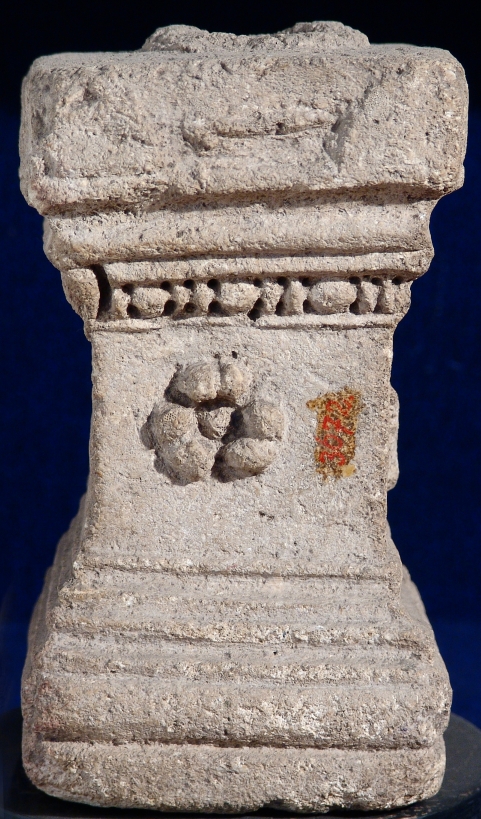
This limestone altar from Roman Dacia preserves a dedication to Mithras by a commander of the Ala II Pannoniorum.
