Your search San Valentino in Abruzzo Citeriore gave 587 results.

Two fragments of a bronze statuette of a lioness, with the head preserved but the mouth lost, from the Mithraic sanctuary at Angleur near Liège in Belgica.
A cylindrical bronze peg with a lion's head in the middle, the groove-shaped mouth fitted with a small tube from the back, from the Mithraic sanctuary at Angleur near Liège in Belgica.
A bronze statuette of a lion with an open mouth, in which a hole connects to another hole in the stomach, suggesting use as a fountain or conduit, from the Mithraic sanctuary at Angleur near Liège in Belgica.
A bronze statuette of a standing naked youth wearing a necklace and with outstretched hands, the thumb of the right hand touching the index finger, with a hole in the back for fastening, possibly representing Apollo, from the Mithraic sanctuary at Angleur near Liège in Belgica…
Two bronze statuettes of youthful women in flying cloaks with outstretched hands holding an object, possibly representing the Seasons, from the Mithraic sanctuary at Angleur near Liège in Belgica.
A small round bronze slab bearing a Medusa head, with serpents knotted below her chin and serpent heads emerging between two wings attached to the temples, with two hooks on the reverse, from the Mithraic sanctuary at Angleur near Liège in Belgica.
Four small bronze slabs with representations of zodiac signs — a leaping ram, a running lion, a scorpion, and a fish — with remnants of iron hooks, from the Mithraic sanctuary at Angleur near Liège in Belgica.
Three small bronze slabs bearing roughly modelled bearded heads of wind-gods, each with a wing on the head, with iron hooks on the reverse for fastening, found at the Mithraic sanctuary at Angleur near Liège in Belgica.
An ara thought to originate from the Mithraic sanctuary at Borcovicium (modern Housesteads), bearing a fragmentary inscription dedicated to Sol Invictus.
An altar found in 1898 in the east part of the sanctuary at Borcovicium (modern Housesteads), bearing a dedication to Mars and Victoria, possibly belonging to an adjacent shrine rather than the Mithraeum itself.
Ceramic finds from both excavations of the Mithraeum at Borcovicium (modern Housesteads), comprising red and thin black-glazed pottery fragments together with a silver coin of Faustina Minor, indicating the sanctuary was in use before 253 A.D. and was most likely destroyed by fire…
An inscription found in the church of San Felice at Aquileia, recording a vow fulfilled to Sol Deus Invictus by Feronius Censor, with a head of Sol carved between the first two words.
A fragmentary epistyle from Aquileia preserving part of the inscription [Deo In]victo [Mi]th[rae], indicating the presence of a Mithraic sanctuary in the city.
An inscription copied at San Marco's in Venice in 1829, recording a dedication by Q. Baienus Proculus, pater nomimus, to Sol.
A tauroctony statue once in the Collection Santa Croce near the Piazza Giudea in Rome, showing Mithras as bullkiller with a broad belt around the bull's body, the arms of the god and the bull's horns broken off.
Bronze lamella probably from Rome, found in 1729, bearing a dedication to Sol Sanctissimus by C. Veratius Faustinus, a soldier of the third praetorian cohort.
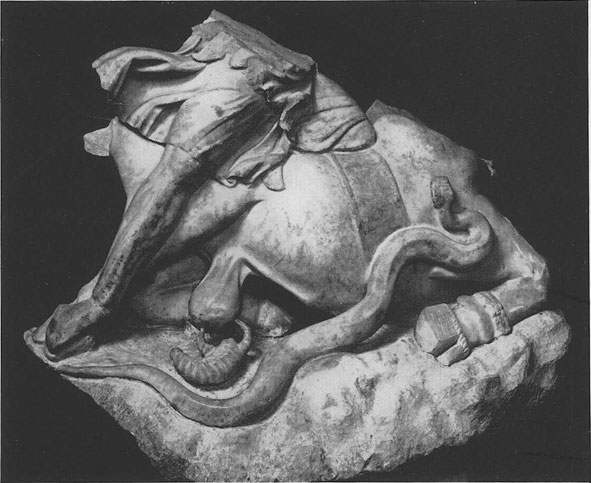
Partial marble statue of Mithras as a bullkiller found near Viale Latino, about 200 meters from Porta San Giovanni.
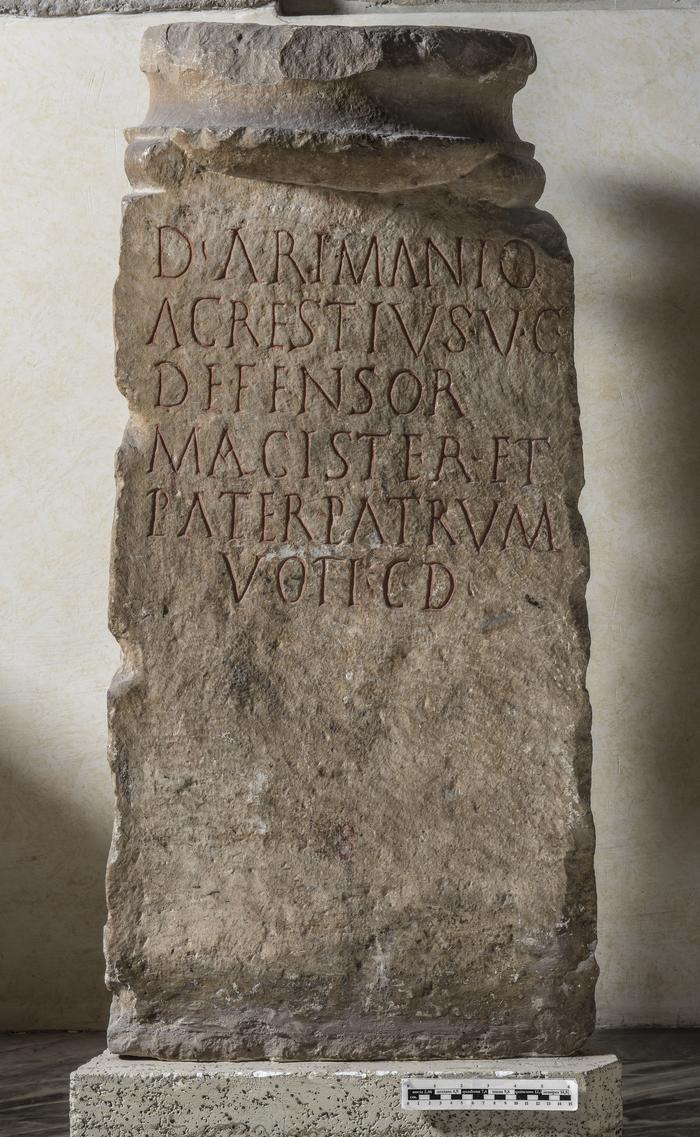
This altar mentioning the god Arimanius was found in 1655 at Porta San Giovanni, on the Esquilino.
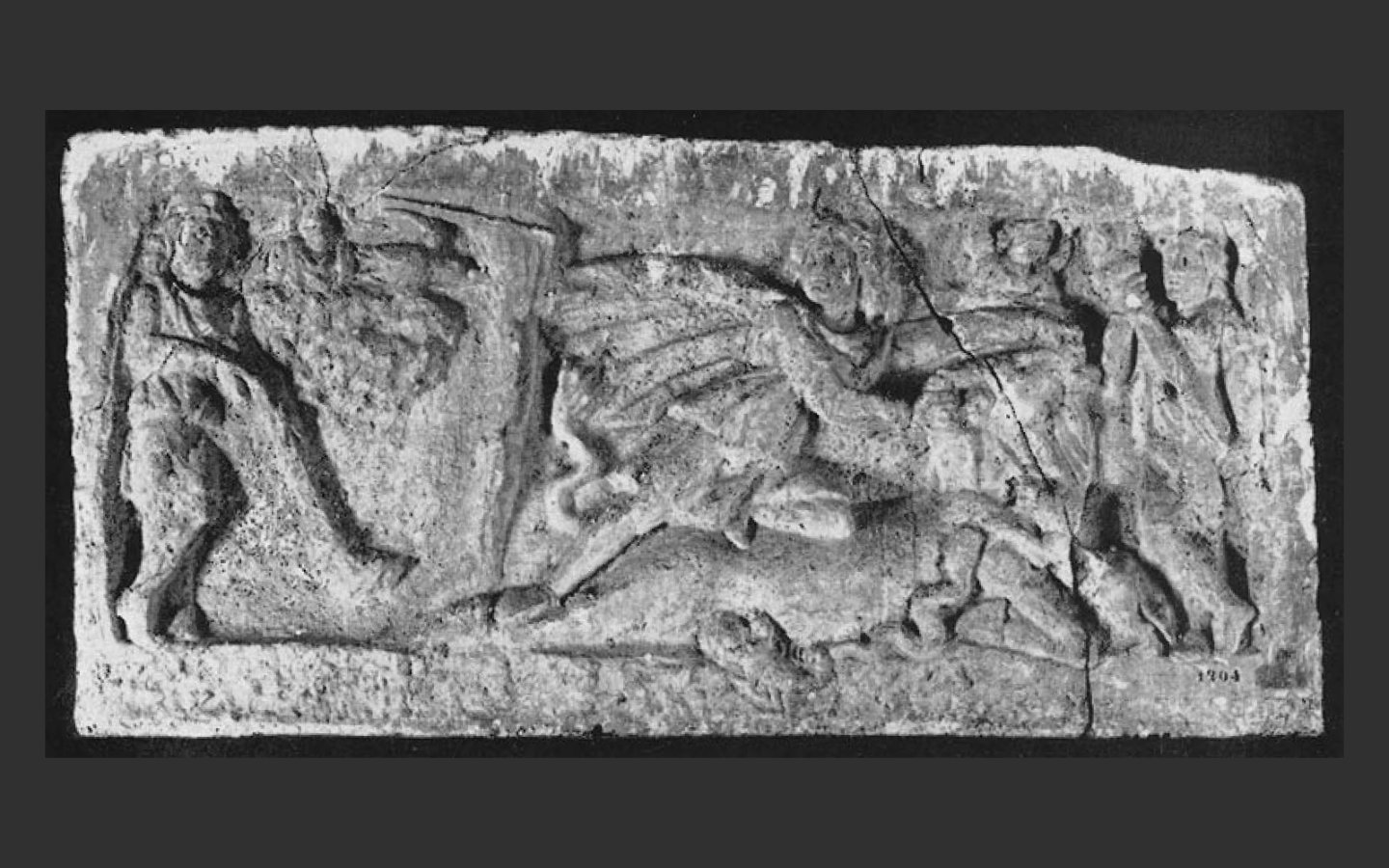
This relief of Mithras Tauroctonos from Rome bears the inscription of three brothers, two of them lions.
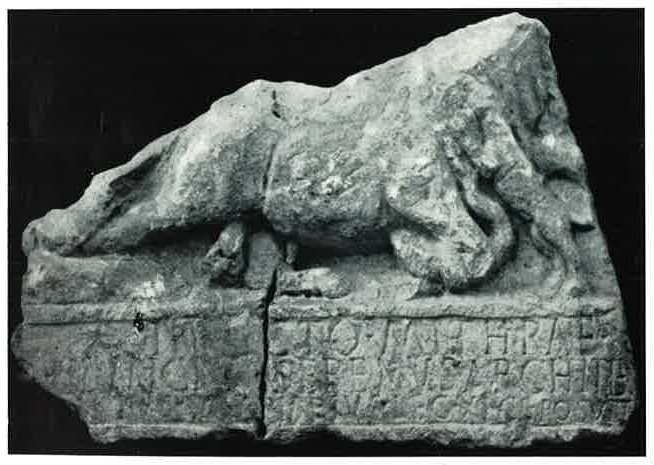
Sandstone tauroctony relief from Balcic, ancient Dionysopolis in Moesia Inferior, depicting the standard bull-slaying scene; the attribution to Dionysopolis rather than another site is disputed.
