Your search San Valentino in Abruzzo Citeriore gave 587 results.

Imported limestone relief fragments showing the Mithraic torchbearers beside the podia of the sanctuary.
Sandstone fragment of a Mercury statuette preserving part of the shoulder and caduceus.
Sculpted ram’s head discovered among the finds from the supposed Mithraic sanctuary.
Fragmentary inscribed altar dedicated to Mercury from the Saalburg sanctuary area.
Small inscribed plaque invoking Mithras and Mercury attached to a sandstone column inside the sanctuary.
Assemblage of lamps, serpent-vases and painted ritual pottery from the sanctuary complex.
Decorative bronze candlestick discovered near the entrance of the supposed Mithraic sanctuary.
Sandstone basin from the pronaos of the sanctuary originally mounted on a short column.
Cult statue base discovered with a hooked ritual sword in front of the sanctuary niche.
Assemblage of altars, lamps, coins and ritual objects discovered in the sanctuary.
Subterranean Mithraic sanctuary near Dormagen with painted walls and a cult relief at the rear.
Decorated altar with rosettes and an inscription panel from the Mithraic sanctuary at Vetera.
Group of altars and a base indicating the existence of a Mithraeum near the Roman camp of Vetera.
Commagenean sanctuary preserving relief fragments of Mithras greeting royal figures at the hierothesion of Mithridates Kallinikos.
Subterranean sanctuary at ancient Atchana tentatively interpreted by Woolley as an early precursor to later Mithraic temples.
Latin dedication to the invincible Mithras reportedly discovered north of ancient Colophon in Lydia.
Fragmentary tauroctony preserving Mithras, the torchbearers, Sol and Luna from the sanctuary at Aïtodor.
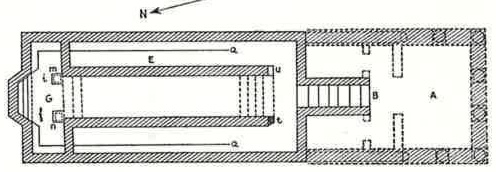
Second Mithraic sanctuary discovered in 1826 some 150 metres west of Mithraeum I at Heddernheim, ancient Nida, with finds in the Wiesbaden museum.
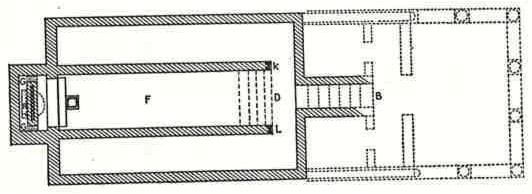
First Mithraic sanctuary discovered at Heddernheim (ancient Nida) in 1826, with finds preserved in the Städtisches Museum at Wiesbaden.
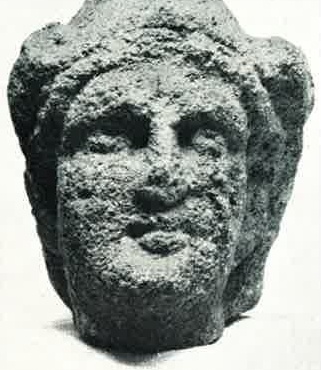
Sandstone fragment from Mithraeum I at Heddernheim, ancient Nida, probably the damaged head of a torchbearer, often misidentified as Mercury.
