Your search San Valentino in Abruzzo Citeriore gave 587 results.

An altar found in the west corner of the sanctuary at Borcovicium (modern Housesteads) in 1898, recording a dedication to Jupiter Optimus Maximus, the god Cocidius and the genius of the place by soldiers of the Second Augustan Legion on garrison duty.

Mithraic dedicant associated with the rock-cut sanctuary of Rožanec in Pannonia Superior.
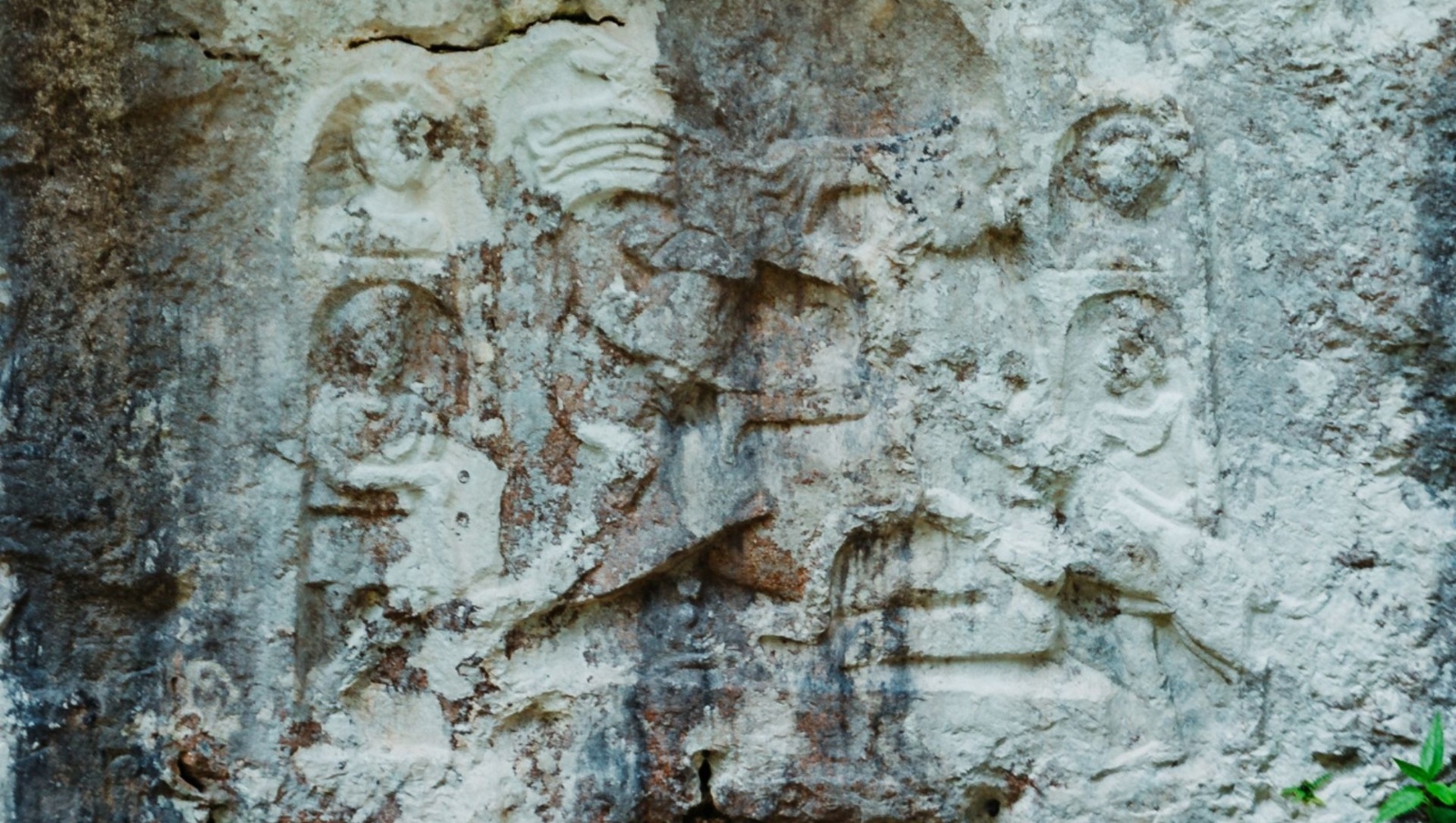
Carved directly into the rock of the Rožanec sanctuary, this tauroctony relief preserves an unusually complete composition.
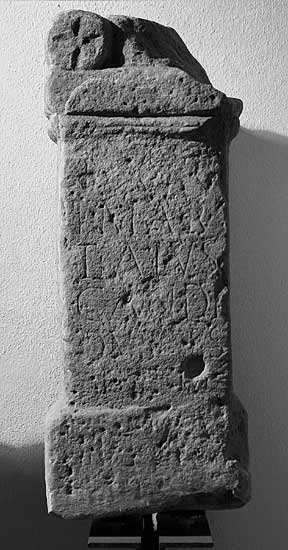
Bright red sandstone altar from Mithraeum II at Stockstadt dedicated to Deo Cauti by Titus Martialius Candidus, found near the north podium.
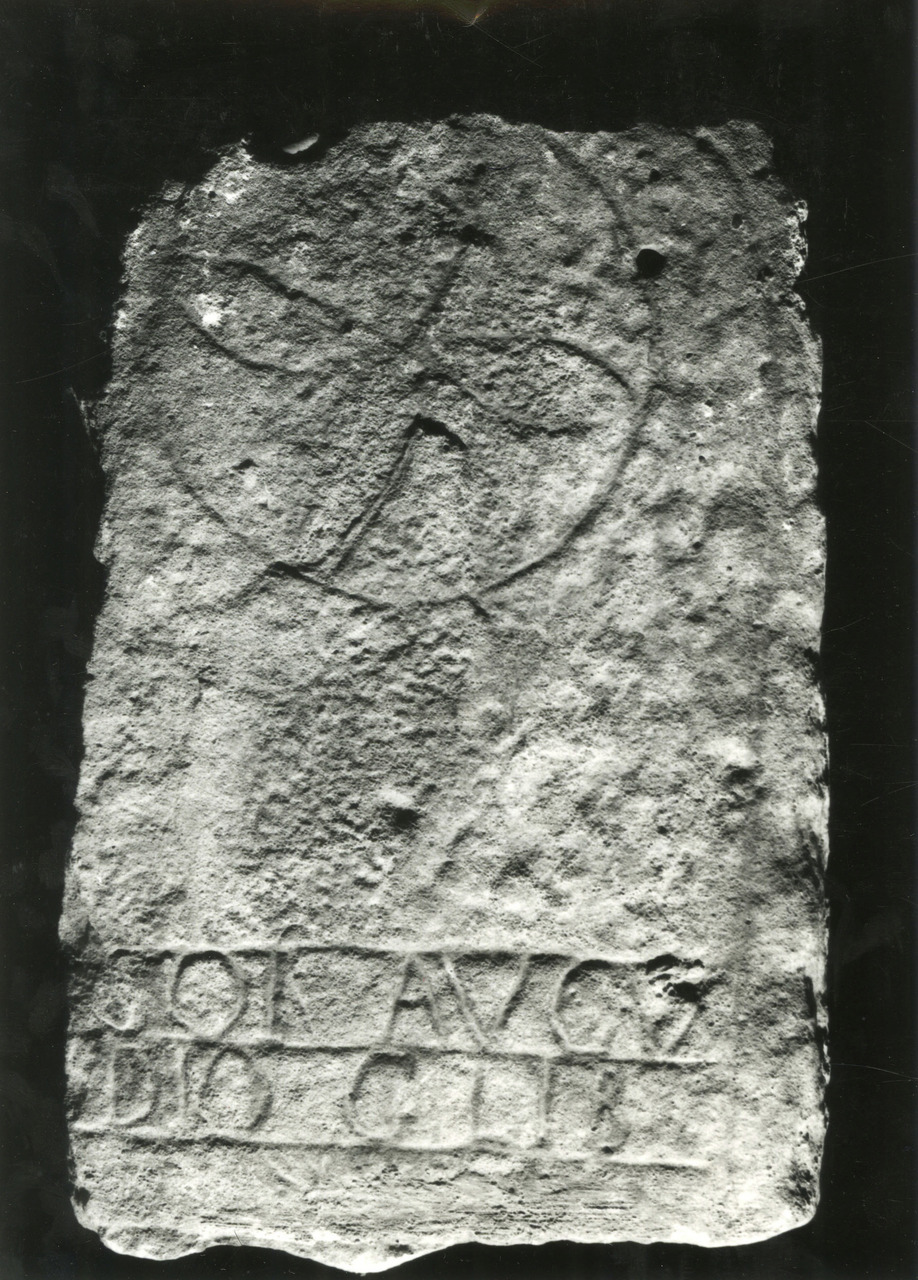
A sandstone slab found along the border of the Tagus river near Thirmarum (modern Trillo, near Cifuentes in Guadalajara), recording an inscriptoiin by a certain Cornelius, freedman of Gaius.

Aristocratic villa near Tarraco, capital of Hispania Tarraconensis, associated with Caius Valerius Avitus and a Mithraic sanctuary.
Fragment of a sandstone relief from Nida-Heddernheim depicting the torchbearer Cautopates.
Sandstone altar from the Mithraeum of Vindobala bearing a dedication to Sol Invictus and Mithras by the prefect Aponius Rogatianus.
This sandstone altar from the Mithraeum of Vindobala (modern Rudchester) preserves a dedication to the Invincible Mithras by P. Aelius Titullus, prefect of a cohort.
A small marble fragment from Augusta Emerita (modern Mérida) bearing the fragmentary inscription (S)arapi(s), attesting to the veneration of Sarapis in proximity to the Mithraic sanctuary.
A brief inscribed fragment found in the ruins of the Temple of Isis at Aquileia, attesting to the veneration of Sol in proximity to the Isiac sanctuary.
A marble relief found in 1851 built into the adjoining hall of White Friars at Chester (ancient Deva), now in the Grosvenor Museum, depicting a standing dressed figure with a sheep-hook in his left hand and possibly a downward-pointing torch in his right…
A marble relief found on the small island of San Michele di Zampanigo near Torcello in the Venetian lagoon, now in the Museum of Torcello, showing a cross-legged figure in Eastern attire resting his head in his right hand and holding a downward-pointing torch (Cautopates), framed by poppies…
A square base found in 1868 near the Sardagna waterfall at San Niccolò beside the ancient Roman road in Trento (ancient Tridentum), in ground full of debris suggesting a nearby necropolis and possibly a Mithraeum.
An inscription found in the old monastery of San Giulia in Brescia (ancient Brixia), in the arch supporting the crypt of Santa Maria in Solario, recording a dedication to Deus Sol by the res publica.
Roman military settlement in Germania superior, generally identified with present-day Ober-Florstadt and known for its well-preserved Mithraic sanctuary.
Roman settlement on the southern shore of Lacus Verbanus (Lake Maggiore) in Transpadana, known for Mithraic inscriptions and a cave sanctuary traditionally identified as a Mithraeum.
A collection of 284 coins, spanning from 254 to 395 AD and mostly of the fourth century, found in the Mithraeum at Pons Saravi (modern Saarburg) in Belgica, indicating that the sanctuary was founded under the Severan dynasty and destroyed in the fourth century…
A bronze fountain mouth and a square spout, together with other fragments of round spouts, from the Mithraic sanctuary at Angleur near Liège in Belgica.
Fragments of a small bronze vase with two handles, one of which is broken off, from the Mithraic sanctuary at Angleur near Liège in Belgica.
