Your search Santa Maria in Monticelli gave 75 results.

Minto has claimed that the time god Aion was painted on the corner of the north wall of the Mitreo de Santa Capua Vetere.
Preliminary readings of the painted Mithraic texts later revised after additional research and restoration.

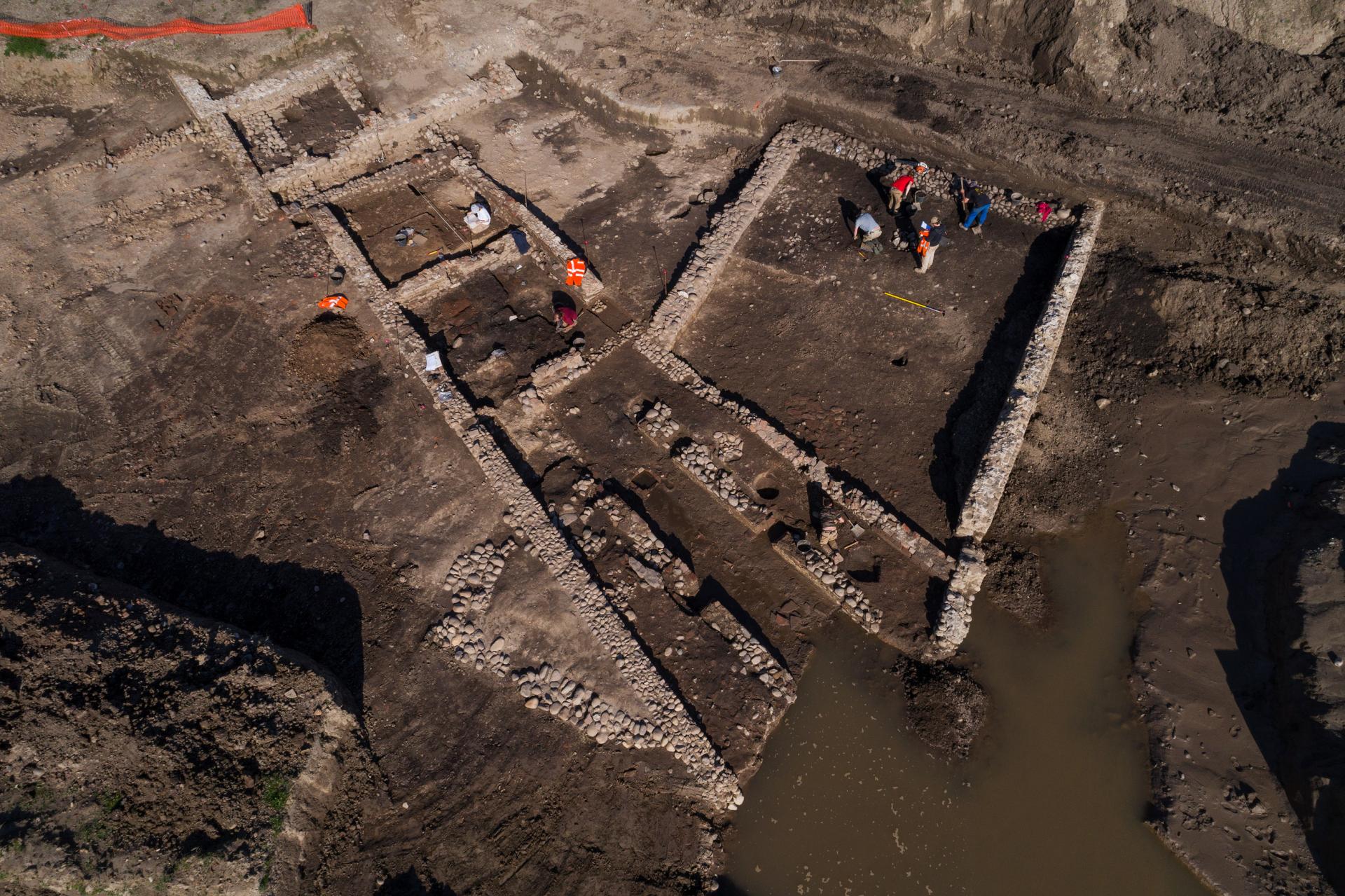
For the first time, a Mithraeum has been discovered in Corsica, at the site of Mariana, Lucciana (Haute-Corse).
An inscription found in the old monastery of San Giulia in Brescia (ancient Brixia), in the arch supporting the crypt of Santa Maria in Solario, recording a dedication to Deus Sol by the res publica.
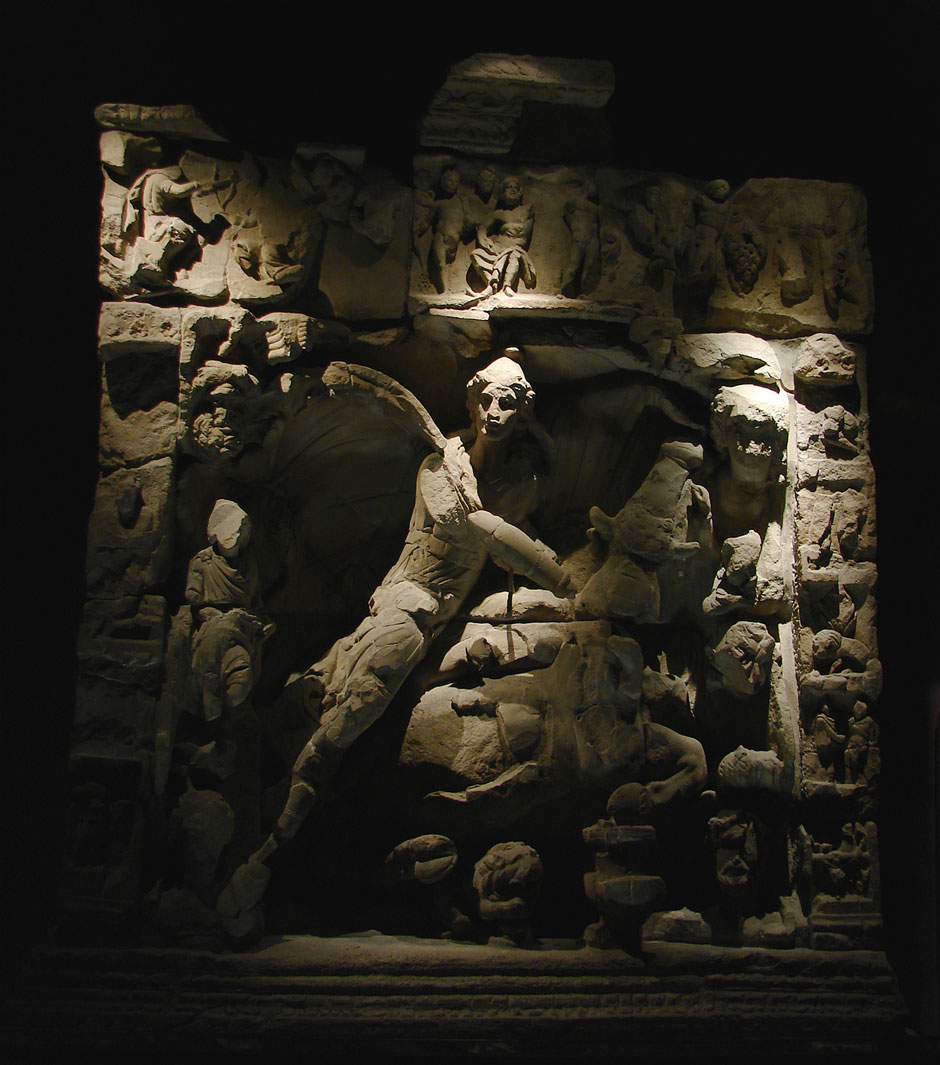
The Tauroctony of Saarbourg (Sarrebourg, ancient Pons Sarravi), France, contains most of Mithras deeds known in a single relief.
Finds discovered near the crossing of the criptoporticus of the Mithraeum at Capua, including marble plate fragments, a tuff base, red lamps, and animal bones.
Miscellaneous finds from the middle of the Mithraeum of Capua, including a terracotta antefix with centaurs, basins, marble bases, lamps with a Sol head, and coins of M. Aurelius and Constantine.
Fresco fragment from the initiation sequence of the Mithraeum of Capua, of which only the heads and parts of the white tunica of two figures remain visible.
Two scenes from the initiation sequence of the Mithraeum of Capua, now indistinguishable.
Fresco showing a mystagogus pressing down the shoulders of a kneeling myste, attended by a third figure in Phrygian cap, from the initiation sequence of the Mithraeum of Capua.
Fresco showing two persons standing behind each other, from the initiation sequence of the Mithraeum of Capua.
Fresco showing a standing figure in a small cloak approached by two other persons, from the initiation sequence of the Mithraeum of Capua.
Badly damaged fresco fragment showing a person in red attire in a kneeling position, from the initiation sequence of the Mithraeum of Capua.
Fresco depicting Cautopates in Eastern attire between two laurels, cross-legged, pointing his torch downwards over a burning altar, from the Mithraeum of Capua.
Head in Phrygian cap with a sorrowful expression, used as a protome in the Amphitheatre of Capua and interpreted as a head of Mithras.

A probable Mithraic sanctuary near Santa Maria in Domnica on the Caelian Hill, known from a group of dispersed reliefs formerly owned by Ottaviano Zeno.
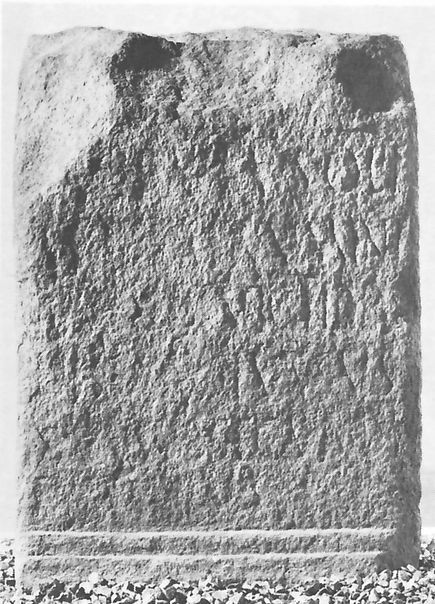
The v in this small altar found in Novaria has been interpreted by some commentators as qualifying Mithras as victorious.
This inscription, which doesn’t mention Mithras, was found near the church of Santa Balbina on the Aventine in Rome.
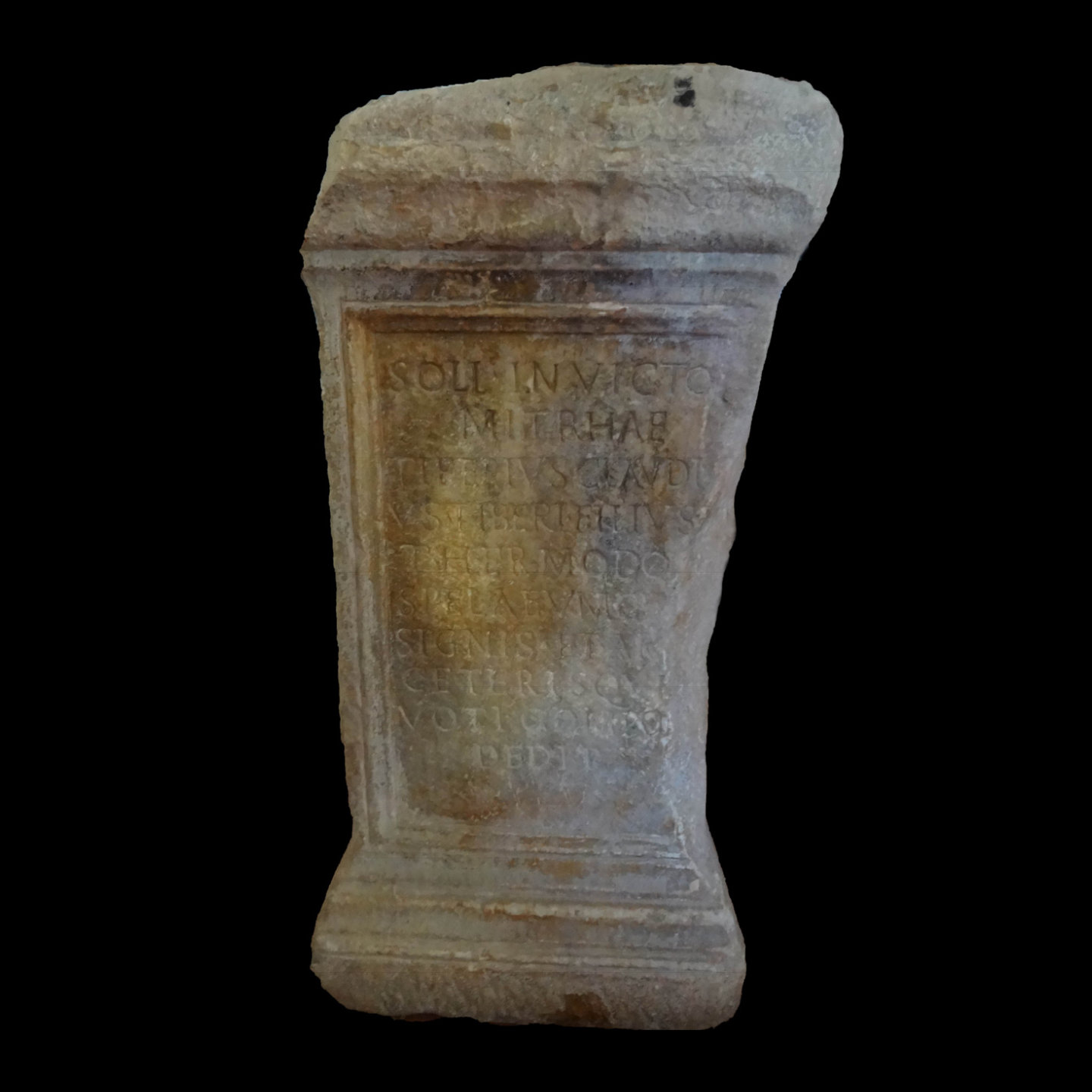
The donor of this Mithraic inscription from Bolsena, a certain Tiberius Claudius Thermoron, is known from two other monuments.
