Your search St Albans gave 3403 results.

A limestone statue from the Mithraeum at Borcovicium (modern Housesteads), depicting Cautopates in Eastern attire standing cross-legged on a base and pointing his torch downwards, with head lost.
A limestone statue from the Mithraeum at Borcovicium (modern Housesteads), representing a standing male figure in short tunic with bare legs and feet, arms held tight along the body with clenched fists once holding attributes now lost, with part of a snake on his right arm…
A large limestone tauroctony relief in several fragments from the Mithraeum at Borcovicium (modern Housesteads), the vaulted main fragment showing Mithras slaying the bull with Cautes raising his torch beside the bull's foreleg, a crescent of Luna in the upper corner…
An inscription from Asturica (modern Astorga), found beneath three military standards, recording a dedication to Jupiter Optimus Maximus, Sol Invictus and Liber Pater by Q. Mamilius Capitolinus, juridical legate and later prefect of the Treasury of Saturn…
.jpg)
This limestone statue of Cautes is now exposed at Great North Museum of Newcastle.
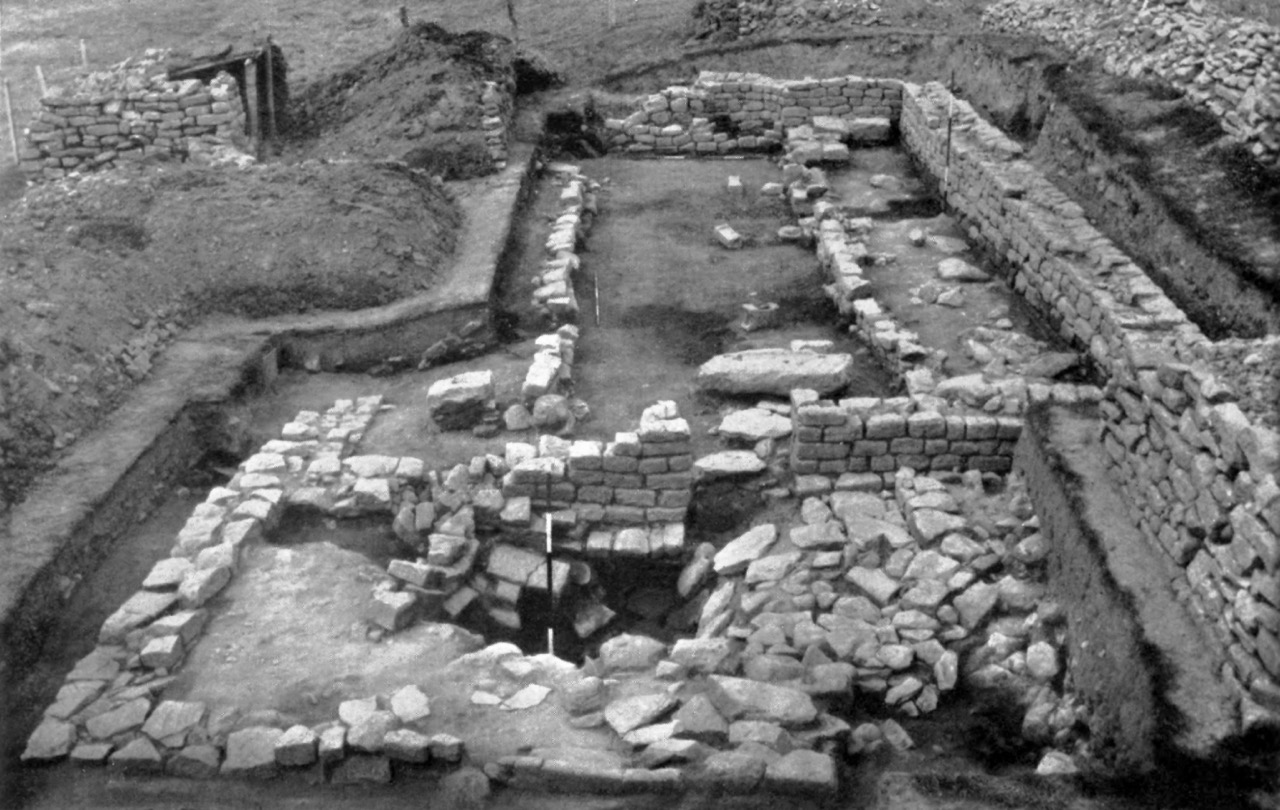
The Mithraeum of Rudchester was discovered in 1844 on the brow of the hill outside the roman station.
Marble stele from Histria, Moesia Inferior, found reused in a late wall in the southern quarter of the city, bearing a Mithraic dedication or scene.
Altar from Durostorum, Moesia Inferior, dedicated to Invicto Mithrae by Cornelius Faustus, centurion of Legio XI Claudia.
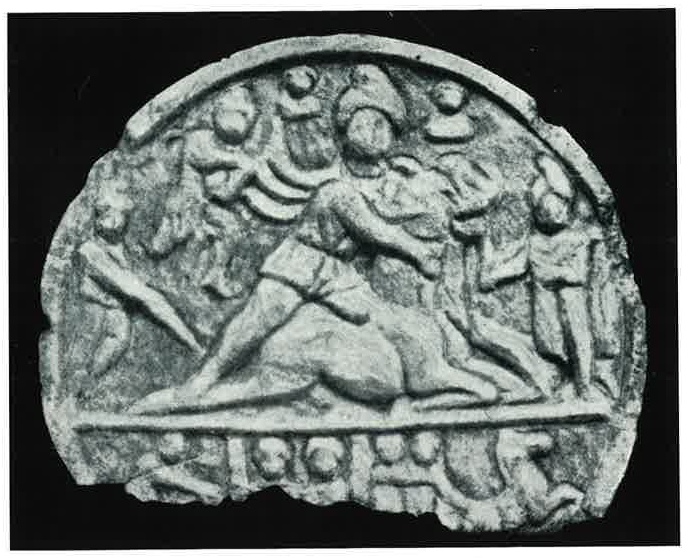
Small circular marble tauroctony relief from Kadine-Most in the Küstendil district, Moesia Superior, divided into two parts by a horizontal rim, with the bull-slaying in the upper and a figure or inscription in the lower.
Limestone altar from Stojnik, Moesia Superior, found at a house at Guberevci, dedicated to Deo Mithrae Soli for the welfare of Emperor Severus Alexander.
Fragment of a Mithras relief from Bumbești-Gorj, Dacia, bearing a partially preserved dedication to Deo Soli invicto Mithrae.

Fragment of a tauroctony relief from Botoșești-Paia near Craiova, Dacia, depicting the standard bull-slaying scene.
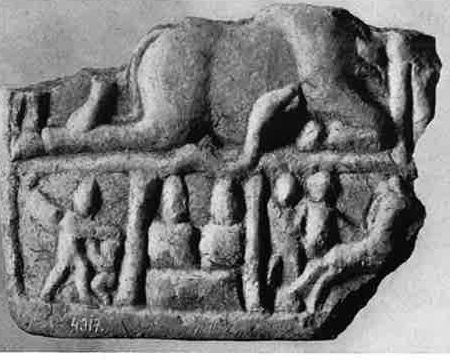
Altar from Eisenstadt, Pannonia Superior, dedicated to Deo invicto Mithrae by Titus Claudius Frontinus, centurion of Legio XIIII Gemina.
Life-sized sandstone head with long curly hair and Phrygian cap, found at the foot of the Hohenklingen near Stein am Rhein, Raetia; probably belonging to a statue of Cautes or Cautopates.
Serpent-vases (Schlangengefässe) attested at Augst, ancient Augusta Rauricorum, a ceramic type commonly associated with Mithraic cult assemblages in the Rhine provinces.
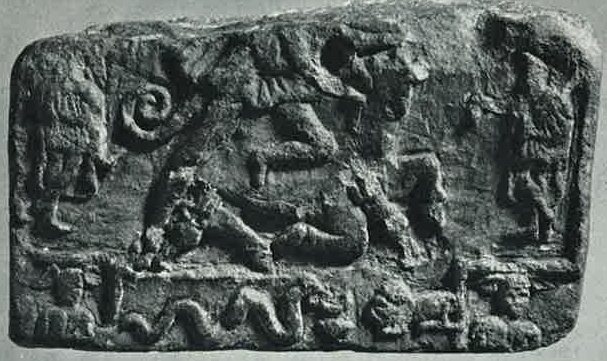
Small limestone tauroctony relief from Augst, ancient Augusta Rauricorum, depicting the bull-slaying with dog and scorpion, flanked by cross-legged torchbearers in Oriental dress; Cautes holds a pedum alongside the upraised torch.
Round perforated bronze plaque from Augst, ancient Augusta Rauricorum, bearing a dedication of an aurichalcum image of Sol to Deo invicto; interpreted by Cumont as evidence for identifying the dedicatee as Mithras.
Small altar from Augst, ancient Augusta Rauricorum, dedicated to Deo invicto by Secundus; found in the early nineteenth century and subsequently transferred to Colmar.
Lower part of a torchbearer statue, cross-legged in anaxyrides and short tunic, from one of the bases at the beginnings of the podia in the Mitreo delle Sette Porte at Ostia.
Marble altar bearing a bust of Sol in radiate crown with Cautopates on the right and Cautes on the left, both cross-legged, from the Mitreo delle Pareti Dipinte at Ostia.
