Your search Stein am Rhein gave 2070 results.
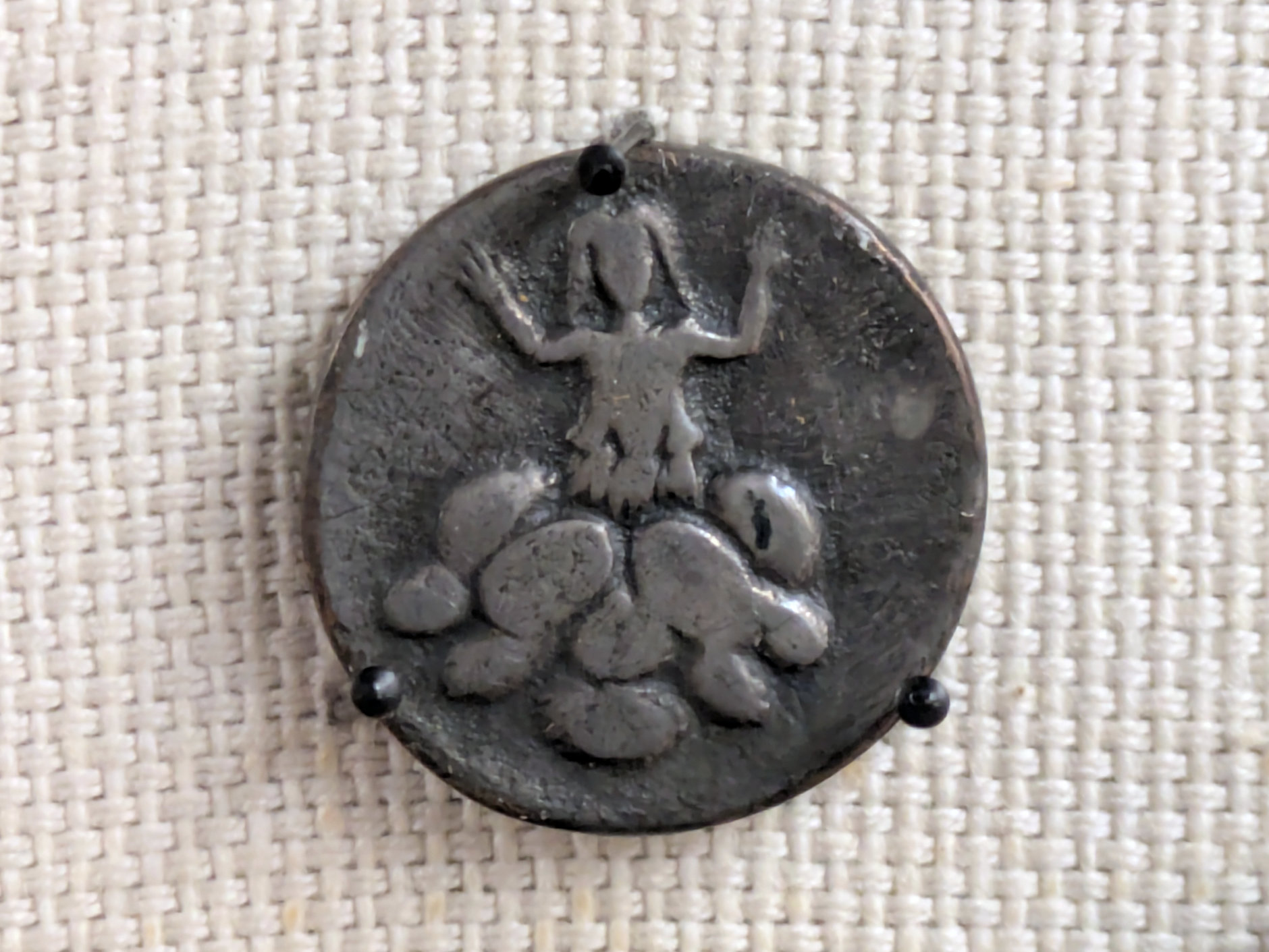
The mithraic denarius of St. Albans dates from the 2nd century.

This inscription by Luccius Crispus was found near the entrance of the Mithraeum at Pamphylia.
A votive altar dedicated to Deus Invictus Mithras by Paterna, among the few women explicitly associated with Mithraic worship.

Pergamon or Pergamum, also referred to by its modern Greek form Pergamos, was a rich and powerful ancient Greek city in Aeolis.
An inscription found in the ruins of an old stone wall at Cambeck, near Petrianae, recording a vow willingly and with merit fulfilled to Deus Sol Invictus by Sextus Severius Salvator, prefect.
Two terracotta lamps formerly in the Coll. Passeri and now probably in the Museo Olivieri at Pesaro: the first showing Mithras as a bullkiller, the second in the shape of a bull's head inscribed Μέθρα ἱερός on the horns, both regarded as probably forged…
A small bronze statuette reportedly found in Italy and now in the British Museum in London, depicting a cross-legged figure in Eastern attire (Cautopates) pointing a broken torch downwards with his right hand and holding a ram's head in his left.
A coarse-grained yellowish-white marble tauroctony relief fragment found walled in at San Zeno am Nonsberg in the Trentino in 1911, now in the Museum Ferdinandeum at Innsbruck, showing part of Mithras slaying the bull and Cautes raising a flaming torch.
A small terracotta lamp from the Mithraeum at Pons Saravi (modern Saarburg) in Belgica, bearing a beardless head on its upper surface and the inscription SOLI on its underside, found among numerous lamp fragments.
Ceramic finds from both excavations of the Mithraeum at Borcovicium (modern Housesteads), comprising red and thin black-glazed pottery fragments together with a silver coin of Faustina Minor, indicating the sanctuary was in use before 253 A.D. and was most likely destroyed by fire…
A small marble statuette of naked Mercury from the Mithraeum at Walbrook in London, sitting on a rock with the stumps of wings in his hair and a purse in his left hand, with a ram lying at his feet beside which is a tortoise.
An inscription from Asturica (modern Astorga), found beneath three military standards, recording a dedication to Jupiter Optimus Maximus, Sol Invictus and Liber Pater by Q. Mamilius Capitolinus, juridical legate and later prefect of the Treasury of Saturn…
A tauroctony relief from Rome, formerly in the Hoffmann Collection, showing Mithras slaying the bull with dog, serpent and scorpion, with the god's pupils fashioned from white enamel and the whole piece heavily restored.
Flat marble base from Rome, with fragments of statue feet still resting on it, bearing a dedication to the Lord Sol in fulfilment of a vow by Claudius Amerimnus, a lictor curiatus.
Bronze lamella probably from Rome, found in 1729, bearing a dedication to Sol Sanctissimus by C. Veratius Faustinus, a soldier of the third praetorian cohort.
Inscription from Dionysopolis, Moesia Inferior, dedicated to Invicto Mithrae by Quintus Samacius Serenus, architectus salariarius of Legio XI Claudia.
Fragment of a Mithras relief from Zsámbék near Aquincum, Pannonia Inferior, showing seven altars alternated with trees — a processional or decorative border rather than a main tauroctony scene.
Small altar preserved in the castle of Freudenberg at St. Thomas am Zeiselberg, Noricum, recording a dedication to Hermes invicto Mitrae — an unusual conflation of Hermes and the invincible Mithras.
Square altar from Zwiefalten near Ulm, Raetia, found reused in the apse of a church; local tradition places the original sanctuary on a hilltop between Zell and Zwiefalten, or alternatively near Reichenstein.
