Your search Stockstadt am Main gave 1174 results.

This inscription by Luccius Crispus was found near the entrance of the Mithraeum at Pamphylia.
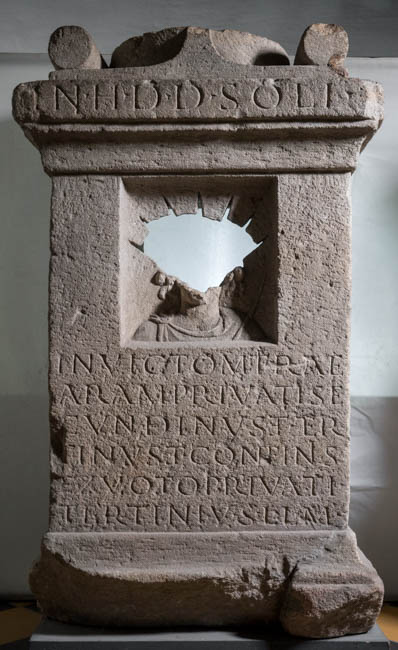
The altar of the Sun god belongs to the typology of the openwork altar to be illuminated from behind.
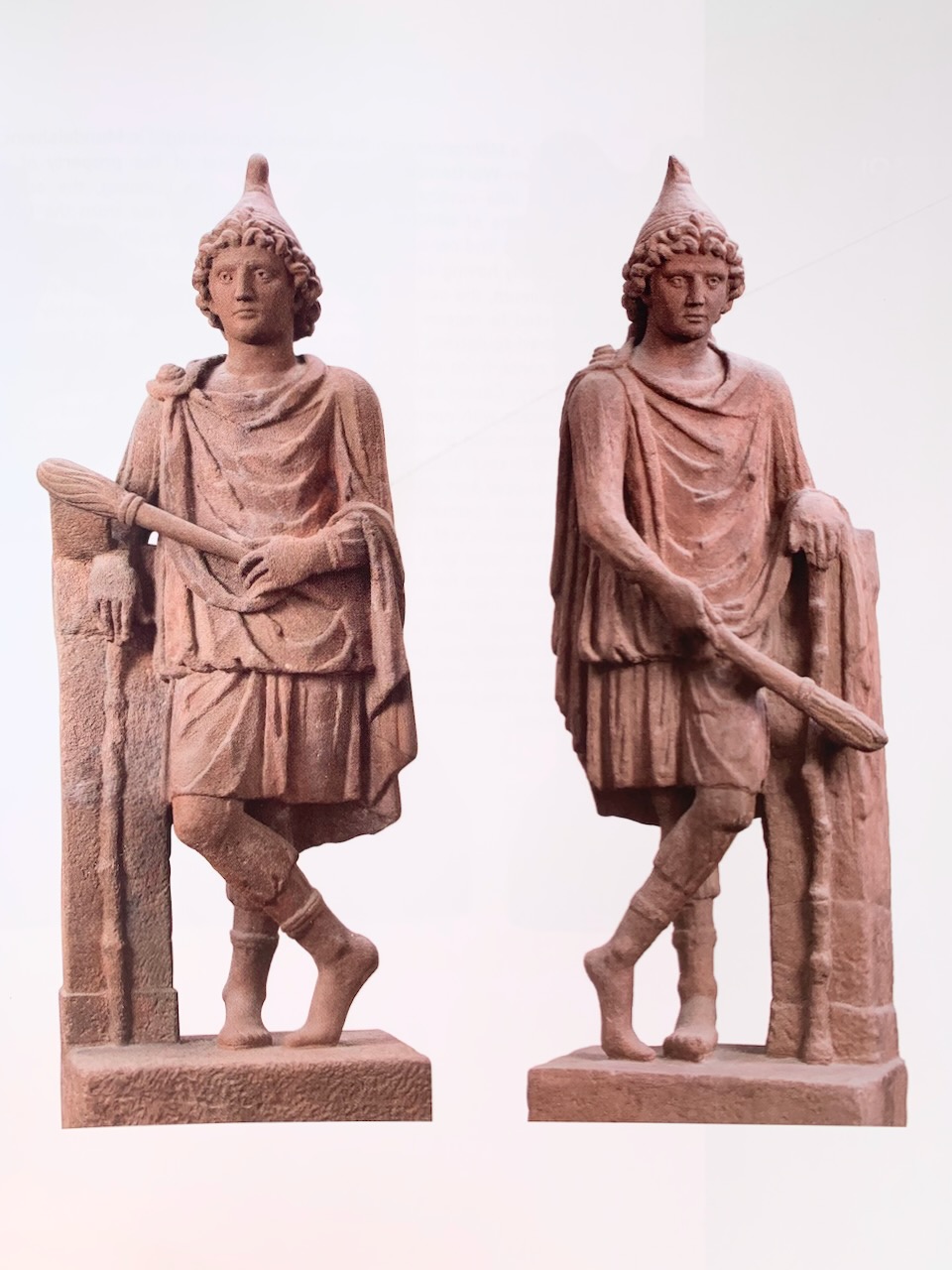
The two companions of Mithras carry a torch and a shepherd's staff at the third Mithraeum in Frankfurt-Heddernheim, formerly Nida.
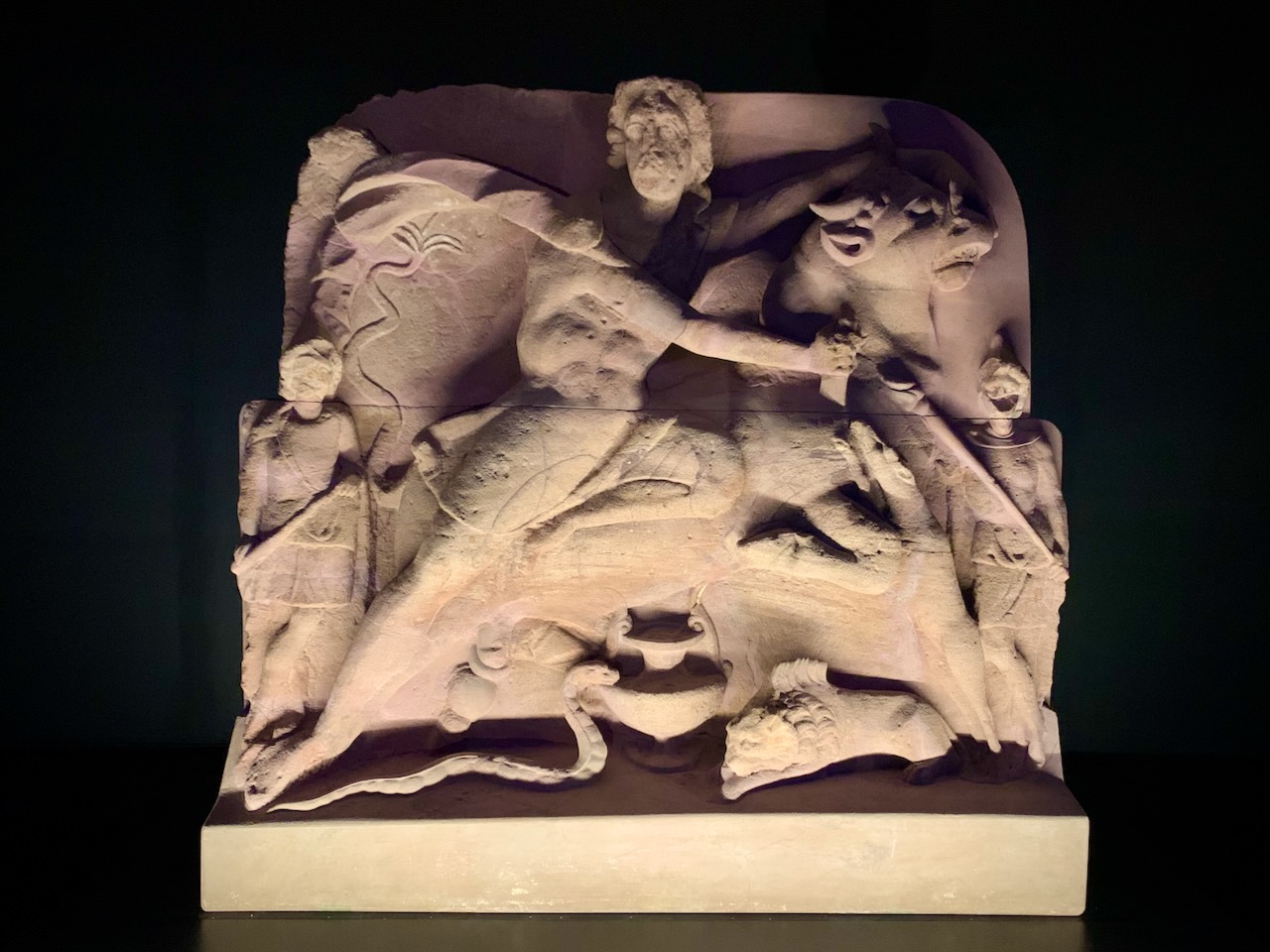
The relief of Mithras slaying the bull from Nida's Mithraeum III was found in two pieces in 1887, destroyed during an air raid on Frankfurt in 1944, and restored in 1986.

One of the few Mithraists whose progression from Nymphus to Miles and eventually to Pater may be traced epigraphically at Dura Europos.

Late Roman senator and governor of Numidia whose inscriptions present him as a Mithraic pater and initiate in several mystery cults.
Limestone slab dedicated to the invincible Sun by the governor Marcus Aurelius Decimus near the temple of Aesculapius.

Solicinium occupied an important position within the frontier region of southwestern Germania.
The Neusiedl lake region formed part of the western frontier landscape of Roman Pannonia.
Camulodunum, modern Colchester, was among the earliest coloniae established in Britannia after the Roman conquest.
Campona occupied a strategic position south of Aquincum along the Danube frontier.
Bingen occupied a strategic position at the confluence of the Rhine and Nahe rivers.
Beihingen occupied a position within the Neckar frontier communications zone.
A settlement of Cappadocia located within the inland communications network of central Anatolia during the imperial period.
Aequinoctium occupied an important position along the Danubian frontier communications routes.
Amorium, also known as Amorion, was a city in Phrygia, Asia Minor which was founded in the Hellenistic period, flourished under the Byzantine Empire, and declined after the Arab sack of 838.
Arsameia on the Nymphaios is an ancient city located in Old Kâhta in Kâhta district, Adıyaman Province, Turkey.
An inscription found in the ruins of an old stone wall at Cambeck, near Petrianae, recording a vow willingly and with merit fulfilled to Deus Sol Invictus by Sextus Severius Salvator, prefect.
Two terracotta lamps formerly in the Coll. Passeri and now probably in the Museo Olivieri at Pesaro: the first showing Mithras as a bullkiller, the second in the shape of a bull's head inscribed Μέθρα ἱερός on the horns, both regarded as probably forged…
A small bronze statuette reportedly found in Italy and now in the British Museum in London, depicting a cross-legged figure in Eastern attire (Cautopates) pointing a broken torch downwards with his right hand and holding a ram's head in his left.
