Your search Tal hal Hariri / Es-Sâlihiyeh / As Salhiyah gave 3731 results.

An imperial freedman who restored the Mithraeum of Sabazeus for the Mithraic brethren.

Slave of a certain Macus Iulius Eunicus, Hermes dedicated a monument to Silvanus found in the Mitreo della Planta Pedis.

Estate manager and slave of Caius Antonius Rufus, prefect of roads and customs collector.
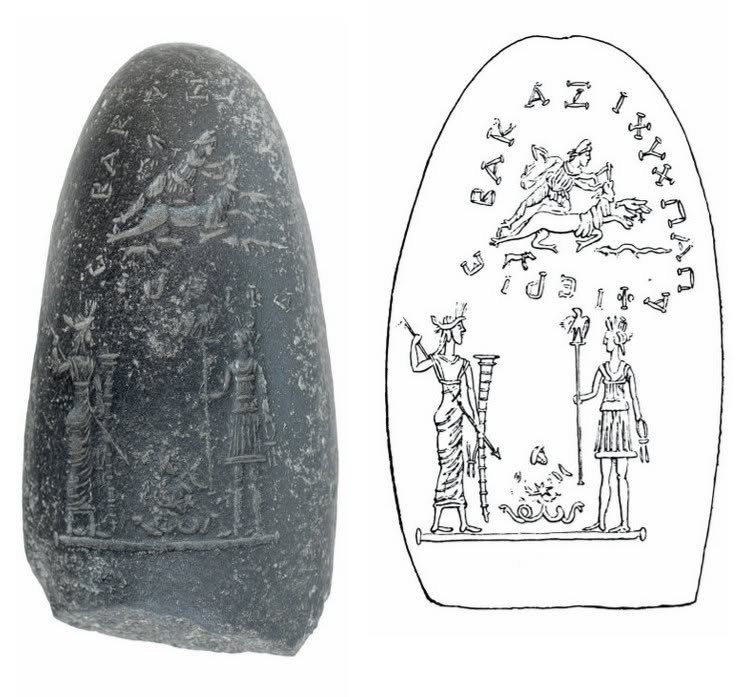
Black polished cone-shaped prehistoric axe from Argolis, now in the Athens National Museum, interpreted by some scholars as having Mithraic votive associations.


Murviel-lès-Montpellier is a commune in the Hérault department in the Occitanie region in southern France.

Black jasper gem from the Seyrig collection, depicting Mithras radiate slaying the bull, with the god grasping the muzzle with the left hand and driving a knife into the animal's neck with the right.

Yellow jasper fragment of unknown provenance, formerly in the Museo Borgiano, with a tauroctony on the obverse and a Mithraic figure on the reverse.
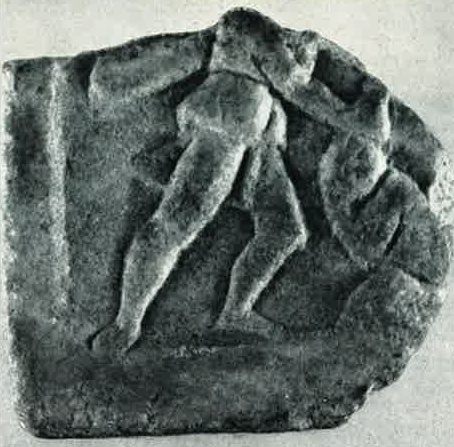
Marble relief fragment from Dacia, depicting Mithras placing a Phrygian cap on the kneeling Sol — one of the more unusual variants of the Mithraic iconographic programme.
Ulcisia Castra formed part of the fortified Danube frontier north of Aquincum.
The colonia of Iulia Equestris, modern Nyon, overlooked the shores of Lake Geneva and controlled regional routes.
Civitas Montanensium developed around the important Roman settlement at modern Montana in Bulgaria.
Isernia is a town and comune in the southern Italian region of Molise, and the capital of the province of Isernia.
Two small stone altars from Apt (ancient Apta Iulia) in Narbonensis, one bearing a carved upraised torch representing Cautes and the other a downturned torch representing Cautopates.
A fragment of a limestone relief from Interanum (modern Entrains-sur-Nohain) in Lugdunensis, with the bull best preserved showing a belt round its body, together with traces of polychromy and remnants of the dog and serpent.
An inscription on the base CIMRM 940 from Interanum (modern Entrains-sur-Nohain) in Lugdunensis, recording a dedication to Augustus and to the unconquered god Mithras Sol, made by a dedicant named Castor.
A small stone base with a rectangular decorated box on its right side, found in the bed of the river Nohain during railway construction at Interanum (modern Entrains-sur-Nohain) in Lugdunensis, bearing on its top the feet of a statue and the inscription of CIMRM 941…
A suggestion by H. Corot that a Mithraeum may have existed near the sources of the Seine (ancient Sequana) in Lugdunensis, a hypothesis awaiting archaeological confirmation.
