Your search Terme di Caracalla gave 2863 results.

Altar from the Mithraeum at Neuenheim dedicated to Iovi optimo maximo by Candidius Quartus
Two sandstone altar fragments from Mainz, ancient Mogontiacum, with a partially preserved dedication to Deo invicto Mithrae
Sandstone relief fragment from Rückingen with an indistinct standing figure, probably a woman, in an arched niche
Three basalt fragments of a standing figure in jack-boots from Mithraeum III at Heddernheim, ancient Nida, with traces of red paint on the loin-cloth
Two basalt blocks walled into the podium of Mithraeum III at Heddernheim, ancient Nida, which supported decorative sandstone bases
Sandstone relief from Ober-Florstadt featuring two arched niches each containing a naked Dioscurus wearing a shoulder cape and pilum
Small marble relief of Mithras slaying the bull within a wreath decorated with zodiac signs.
Latin dedication to the invincible Mithras reportedly discovered north of ancient Colophon in Lydia.
Fragmentary Greek graffito from Dura-Europos recording the prices of everyday goods such as wine, meat, wood and lamp wicks.
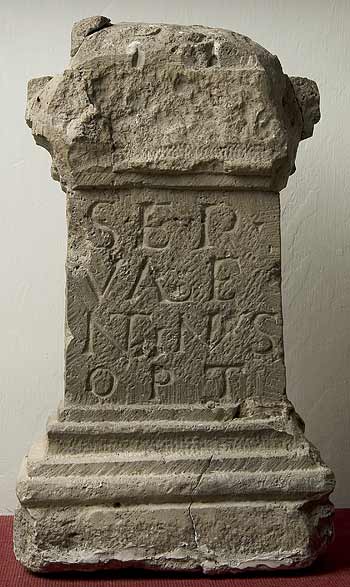
Limestone altar dedicated to Cautes by the Roman optio Septimius Valentinus, discovered in the Mithraeum of Sárkeszi in Pannonia Inferior.
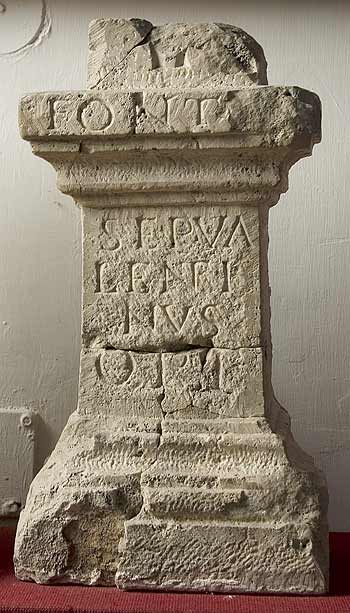
Fragmentary limestone altar dedicated by Septimius Valentinus, an optio, probably discovered in Mithraeum IV at Aquincum.

Dijon is the prefecture of the Côte-d'Or department and of the Bourgogne-Franche-Comté region in eastern France. The earliest archaeological finds within the city limits of Dijon date to the Neolithic period.
Tiddis was a Roman city that depended on Cirta and a bishopric as Tiddi, which remains a Latin Catholic titular see. It was located on the territory of the current commune of Bni Hamden in the Constantine Province of eastern Algeria.
Numidia occupied a frontier and military landscape where Mithraic cults circulated through urban settlements and imperial infrastructure.

Neapolitan senator who dedicated a tauroctonic relief to Mithras tauroctonus to the Almighty God Mithras.
Corsica et Sardinia occupied an important insular position within the maritime networks of the western Mediterranean.
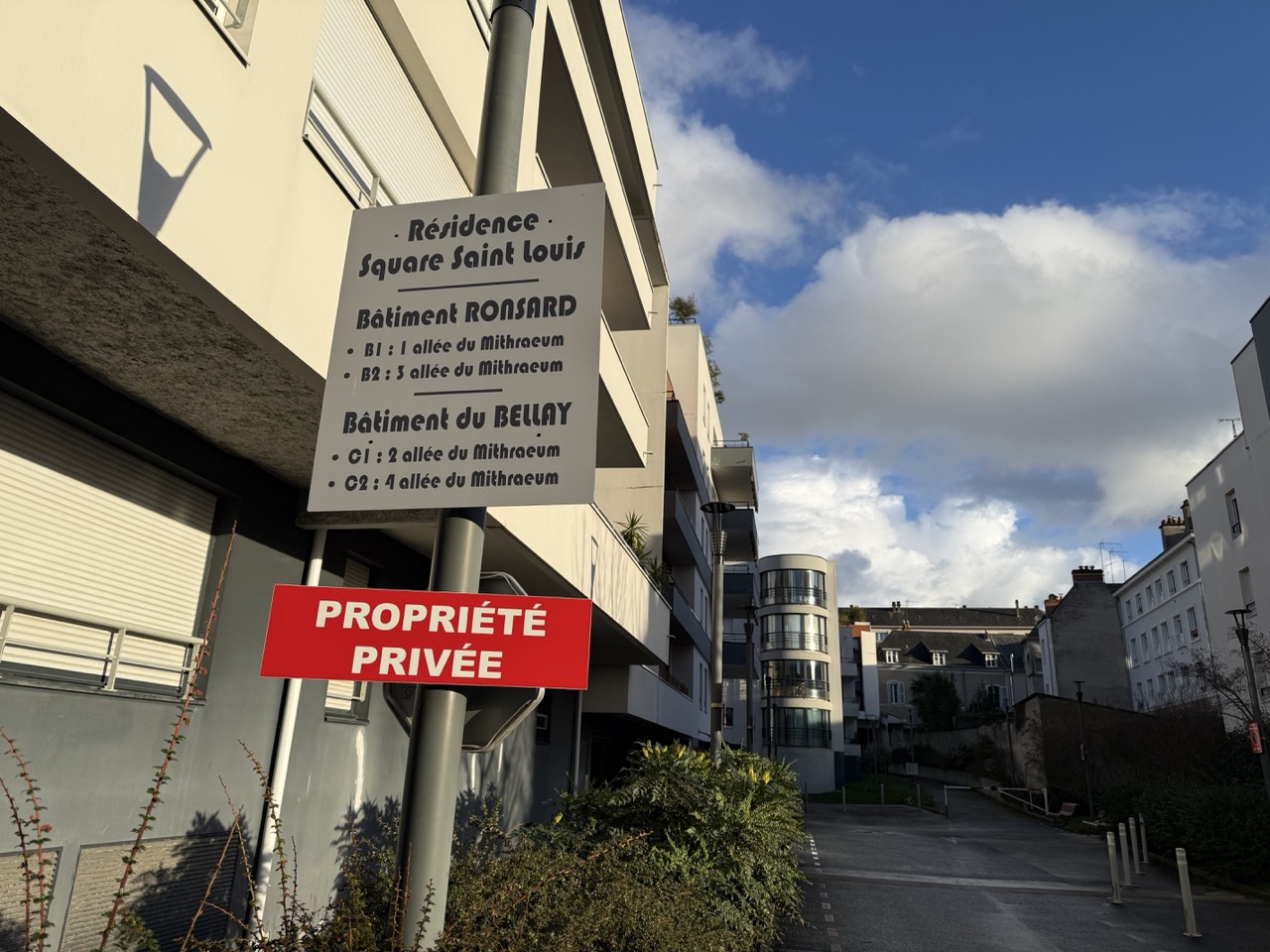
The Mithraeum of Angers, excavated during a preventive operation and subsequently dismantled in 2010, yielded numerous objects, including coins, oil lamps, and a ceramic vessel bearing a votive inscription to the invincible god Mithras.
Corsica and Sardinia preserve a small island corpus within the western Mediterranean diffusion of Mithraism.
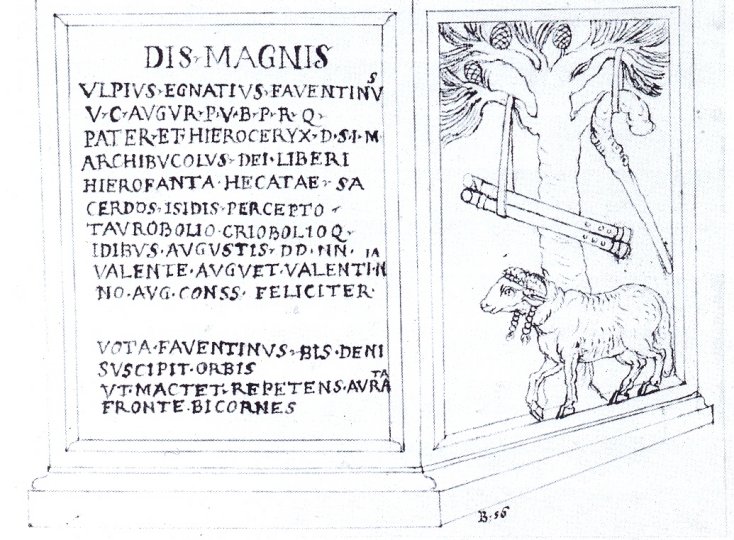
Both of them were discovered in 1609 in the foundations of the façade of the church of San Pietro, Rome.
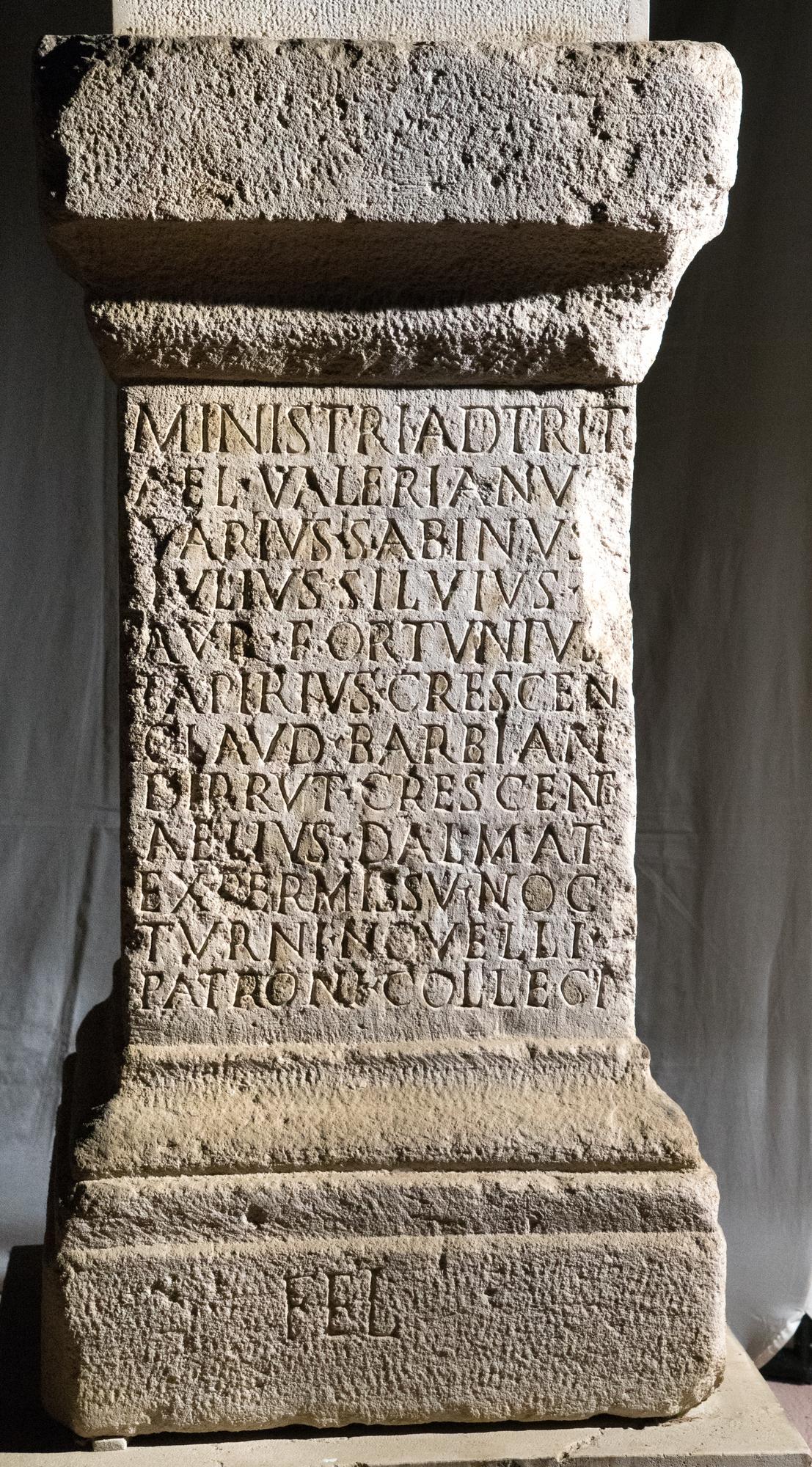
This inscribed limestone altar from Roman Salona preserves several lists of ministers associated with the Tritones collegium during the Tetrarchic period.
