This site uses cookies to offer you a better browsing experience.
Find out more on how we use cookies in our privacy policy.

 
Provincia

Mithras in Numidia

Numidia occupied a frontier and military landscape where Mithraic cults circulated through urban settlements and imperial infrastructure.

Evidence from Numidia illustrates the spread of Mithraic practices through military mobility, provincial administration and communication routes linking inland North Africa to the Mediterranean coast. The province preserves material associated with both frontier and urban environments.
Mithraic monuments of Numidia


Mithraeum of Skikda

Many of the inscriptions and sculptures of the site were kept in a museum which has been destroyed.

CIMRM 121


Mithraeum of Lambaesis

The Mithraeum of Tazoult / Lambèse is one of the best preserved Mithras’s temples in Africa.


Mithraeum of Tiddis

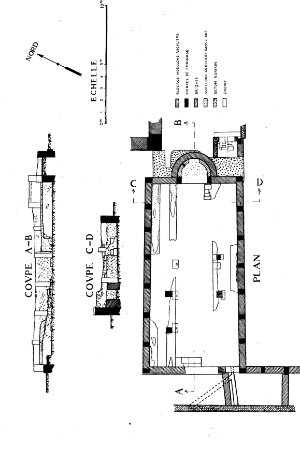
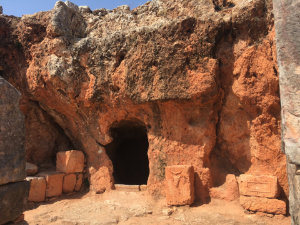
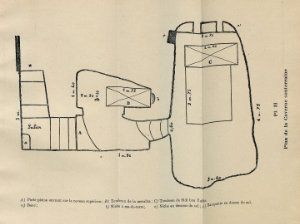
The Mithraeum was housed in a cave. The vault is almost dome-shaped and in front of the cave there is enough space for a possible adjacent temple.

CIMRM 162


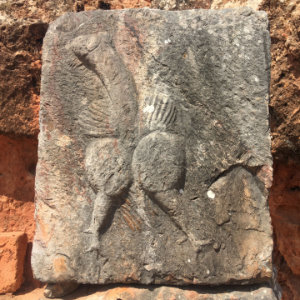
Phallus relief from the Mithraeum of Tiddis

The phallus from Tiddis, Algeria, has been represented as a cock.


Mithraeum of Cirta

An inscription mentioning a speleum decorated by Publilius Ceionius suggests the location of a mithraeum in Cirta, the capital of Numidia.

CIMRM 129


Altar from Lambaesis by Florus

This altar, found in Tazoult تازولت, Algeria, was dedicated to the god Sol Mithras by a certain Florus.


Aion of Skikda

The lion-headed figure from Rusicade, now Skikda, holds a key in both hands and features a pine cone beside his feet.

CIMRM 125


Mithraic rock and vase from Rusicade

Both objects have a snake winding itself around them.

CIMRM 127


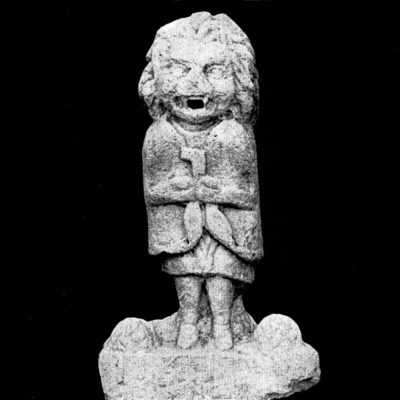
Silvanus from Skikda

The statue of Skikda has seven holes in his hair for fastening rays.

CIMRM 126


Inscriptions of Valerius Maximianus at Lambaesis

These twin inscriptions found in the Mithraeum of Tazoult were dedicated by the legate Marcus Valerius Maximianus.

CIMRM 137


Altar from Lambaesis by Celsianus

This altar found in Lambèse, now Tazoult, Algeria, bears the inscription of a certain Celsianus for the health of two men to the god Sol Unconquered Mithras.


Inscription of Aphrodisius

This inscription by a certain Aphrodisius was found under the old city hall of Algiers.

CIMRM 151

See all Mithraic monuments in Numidia

Places in Numidia


Cuicul

Roman colonial city of Numidia, later known as Djémila, renowned for its exceptionally well-preserved late antique urban remains.


Cirta

Cirta, also known by various other names in antiquity, was the ancient Berber and Roman settlement which later became Constantina, Algeria.


Diana Veteranorum

Diana Veteranorum, today a village called Ain Zana, was an ancient Roman-Berber city in Algeria.


Icosium

Icosium was a Berber city that was part of Numidia which became an important Roman colony and an early medieval bishopric in the casbah area of actual Algiers.


Lambaesis

Lambaesis, Lambaisis or Lambaesa, is a Roman archaeological site in Algeria, 11 km southeast of Batna and 27 km west of Timgad, located next to the modern village of Tazoult.


Madauros

Madauros was a Roman-Berber city in Numidia, in present-day Algeria, renowned in antiquity as an important intellectual and educational centre of Roman North Africa.


Rusicade

Skikda is a city in northeastern Algeria and a port on the Mediterranean.


Tiddis

Tiddis was a Roman city that depended on Cirta and a bishopric as Tiddi, which remains a Latin Catholic titular see. It was located on the territory of the current commune of Bni Hamden in the Constantine Province of eastern Algeria.

Inscriptions from Numidia

Mithraeum of Tiddis

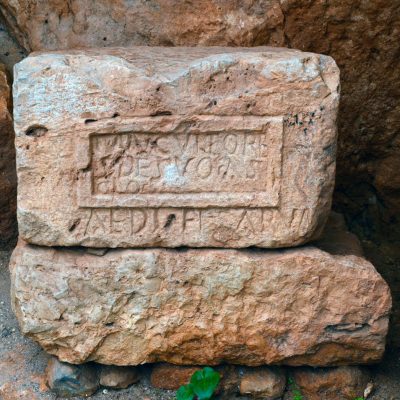
I[nvicto] M[ithrae] cultore/s de suo a s/olo / [a]edifi[c]arun[t].
The worshippers of Invictus Mithras built (this) from the ground up at their own expense.

Mithraeum of Cirta

Speleum cum [sig]/nis et omamen[tis] / Publilius Ceion[ius] / Caecina Albinu[s v[ir] c[larissimus]].
Grote with statues and decorations, [by] Publilius Ceionius Caecina Albinus, the most distinguished man.

A cave with signs and ornaments, dedicated by Publilius Ceionius Caecina Albinus, a man of eminent standing.

Altar from Lambaesis by Florus

D[eo] S[oli] I[nvicto] M[ithrae] / Val[erius] Florus / v[ir] p[erfectissimus] p[raeses] p[rovinciae] N[umidiae] M[ilitianae] / ex voto / posuit.
To the god Sol Invictus Mithras, Valerius Florus, a most perfect man, governor of the province of Numidia Militiana, placed [this] in accordance with a vow.

Inscriptions of Valerius Maximianus at Lambaesis

Deo in/victo / Mithrae / sac[rum] / M. Val[erius] Maximianus / leg[atus] aug[usti] pr[o]pr[aetore].
Sacred to the unconquered god Mithras, (set up) by Marcus Valerius Maximianus, imperial legate with praetorian authority.

Altar from Lambaesis by Celsianus

Deo Soli / Invicto / Mithr[a]e / pro salute et / incolumitate / C[ai] Fabi Fabiani / Vetili Luciliani / leg[ati] Aug[usti] pr[o] pr[aetore] c[larissimi] v[iri] / Celsianus act[or] et not[arius] v[otum] l[ibens] a[nimo].
To the god Sol Invictus Mithras, for the health and safety of Gaius Fabius Fabianus Vetilius Lucilianus, legate of the Emperor with praetorian rank, a most distinguished man. Celsianus, his agent and secretary, willingly and gladly fulfilled his vow.

Inscription of Aphrodisius

Mithrae / Aphrodisius / Corneliorum / v[otum] s[olvit] l[ibens] a[nimo].
To Mithras, Aphrodisius Corneliorum willingly fulfilled his vow.

Altar from Ain-Zana

Iovi optimo / maximo luno/ni reginae Min/ervae sanctae / Soli Mithrae / Herculi Mar/ti Mercurio / genio loci di/is deabusque / omnibus M/arcus Aureli/us Decimus v[ir] p[erfectissimus] p[raeses] / p[rovinciae] N[umidiae] ex principe
pe/regrinorum / votum solvit.
To Jupiter Optimus Maximus, to Juno Regina, to Minerva the Holy, to Sol Mithras, to Hercules, to Mars, to Mercury, to the genius of the place, to all the gods and goddesses, Marcus Aurelius Decimus, a man of perfect rank, governor of the province of Numidia, formerly a chief of foreigners, fulfilled his vow.

Slab with inscription by Publilius Ceionius of Cirta

Spel[a]eum cum [sig]/nis et omamen[tis] / Publilius Ceion[ius] / Caecina Albinu[s v[ir] c[larissimus]].
A spelaeum with its images and decorations, dedicated by Publilius Ceionius Caecina Albinus, most distinguished man.

Altar from Lambaesis by Aurelius Sabinus

Deo Sol[i] in/victo Mi/thrae / M. Aurel[ius] / M[arci] f[ilius] Sergi/s Carnu/nto Sabi/nus prae/fect[us] leg[ionis] / III aug[ustae] p[iae] v[indicis] / Maximi/nianae v[otum] s[olvit] l[ibens] m[erito].
To the invincible Sol god Mithras, Marcus Aurelius Sabinus, son of Marcus, enrolled in the Sergia tribe, [originally from] Carnuntum, prefect of the pious and vengeful legion III Augustus, [[devoted to Maximin]], has willingly and justly fulfilled his vow.

Inscription by Decimus from Lambaesis

Invicto deo Soli / Mithrae Decimus v[ir] p[erfectissimus] p[raeses] / p[rovinciae] Numidiae votum solvit / decentius feliciter.
To the invincible god Sol Mithras, Decimus, the most perfect man, governor of the province of Numidia, fulfilled his vow decently and happily.

Cultores Inscription from Tiddis

I[nvicto] M[ithrae] cultore/s de suo a s/olo // aedificarun[t].
To the Invincible Mithras, the worshippers built [this sanctuary] at their own expense, from the ground up.

References

Back to Top